The Spectator

Power failure | 31 March 2016

From our UK edition

A fortnight ago, the energy minister, Andrea Leadsom, declared grandly that Britain, alone in the world, would commit to a target of reducing net carbon emissions to zero. ‘The question is not whether but how we do it,’ she told Parliament. It is now becoming painfully clear how this target will be reached: not by eliminating our carbon emissions but by exporting them, along with thousands of jobs and much of our manufacturing industry. This week, Tata Steel announced that its entire UK business is to be put up for sale. That came after Stephen Kinnock, whose South Wales constituency includes Tata’s giant plant at Port Talbot, joined a union delegation to the headquarters of Tata Steel in India to beg the company to keep the plant open.

The Spectator podcast: Eugenics, Tory wars and poetry

From our UK edition

We're delighted to have Berry Bros sponsor our flagship podcast. For some years now their 'Good Ordinary Claret' has been The Spectator's house red, served to all our guests (who are always impressed).  It's just £9 a bottle. Lara Prendergast presents this week's podcast. She speaks to Fraser Nelson about the return of eugenics - which, according to his cover article, is back with a vengeance. He's alarmed - but Toby Young isn't. He says eugenics should be on the NHS so the poor can have more intelligent babies. Next, James Forsyth discusses the latest in the Tory wars over Brexit.

The road to remembrance

From our UK edition

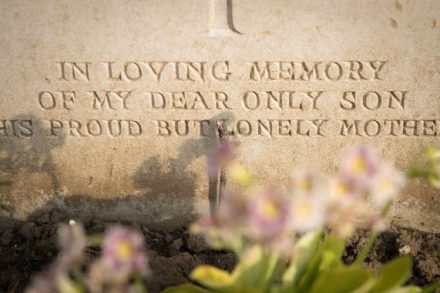
From ‘The “Via Sacra”’, The Spectator, 1 April 1916: When the war is over, France, Belgium, and Britain will be faced with the problem of finding some form of war memorial adequate to the greatest and longest battle of which the world has any record… We propose that a wide Memorial Road should be laid out in the no-man’s-land, the dead ground, between the two trench lines… from the sea to the Alps — a great road with monuments to the fallen, and to the deeds of heroism done by this or that individual company, regiment, brigade, division, and army, scattered along it.

How is Britain going green? By shutting down industry

From our UK edition

A fortnight ago, the energy minister, Andrea Leadsom, declared grandly that Britain, alone in the world, would commit to a target of reducing net carbon emissions to zero. ‘The question is not whether but how we do it,’ she told Parliament. It is now becoming painfully clear how this target will be reached: not by eliminating our carbon emissions but by exporting them, along with thousands of jobs and much of our manufacturing industry. This week, Tata Steel announced that its entire UK business is to be put up for sale. That came after Stephen Kinnock, whose South Wales constituency includes Tata’s giant plant at Port Talbot, joined a union delegation to the headquarters of Tata Steel in India to beg the company to keep the plant open.

The Spectator Podcast: Brussels, Tory wars and Brexit feminists

From our UK edition

This podcast is sponsored by Berry Bros, The Spectator’s house red. In this week’s episode of the Spectator Podcast, Isabel Hardman is joined by Douglas Murray and Haras Rafiq, managing director for the Quilliam Foundation, to discuss the Brussels attacks. ‘In the wake of a terrorist attack, everything barely worth saying will be said endlessly. And the only things that are worth saying won’t be said,’ said Douglas, writing for The Spectator after the attacks. So what can be said? And what can be done to stop Isis striking again? In his cover story this week, James Forsyth looks at the Conservative crack-up.

Letters | 23 March 2016

From our UK edition

PC and abortion Sir: It is heartwarming that Simon Barnes’s son should not suffer the stigma experienced by those with Down’s syndrome in earlier generations (‘In praise of PC’, 19 March). But is it not ironic that in this kinder, more generous and respectful age, over 90 per cent of fetuses diagnosed with Down’s are aborted? Rather than hiding the children away, we now ensure that most of them are not even born. If political correctness had really become sane, surely our kindness, generosity and respect would extend to the womb as well? Matthew Hosier Poole, Dorset Naming conditions Sir: Simon Barnes, makes a couple of assumptions which do not bear scrutiny.

Portrait of the week | 23 March 2016

From our UK edition

Home Iain Duncan Smith resigned as Work and Pensions Secretary two days after the Budget, throwing the government into a fine pickle. In his letter of resignation, he said that new changes to benefits to the disabled were ‘not defensible in the way they were placed within a Budget that benefits higher-earning taxpayers’. With a dig at George Osborne, the Chancellor of the Exchequer, he questioned whether ‘enough has been done to ensure “we are all in this together”.’ In his reply, David Cameron, the Prime Minister, wrote: ‘Today [18 March] we agreed not to proceed with the policies in their current form.’ He was, therefore ‘puzzled and disappointed’.

Barometer | 23 March 2016

From our UK edition

Bottling out Does any country have experience of a sugary drinks tax? — Denmark introduced a tax on sweetened soft drinks in the 1930s which by 2013 was being levied at a rate of €0.22 a litre and brought in €60m a year. — However, the Danish government also estimated that it was losing €38.9m in VAT from illegal soft drink sales. — In 2011, the government also introduced a fat tax, levied at 16 Kroner (£1.78) on food items with more than 2.3% saturated fat, and planned a more general sugar tax. — However, the fat tax was abandoned after 15 months when surveys suggested only 7% of Danes had reduced their fat intake. The tax was, however, blamed for 1,300 lost jobs as Danish shoppers crossed to Germany or Sweden.

Flying start

From our UK edition

From ‘Common-sense and the command of the air’, The Spectator, 25 March 1916: The Air Service will be the great fighting Service, the Service which will seal the fate of nations. We say this, not because the Air Service is a novelty, but because of a plain, undeniable physical fact — the universality of the air… No nation can ever be excluded from the air. Therefore in the last resort the right to live freely and independently will be won and secured by nations in the air.

Belgium is, again, fighting the enemy within

From our UK edition

This morning, Belgium became the latest European country to have suffered a major terrorist attack. The scenes in Brussels serve as a grotesque reminder of the war that has not gone away. After the arrest of Salah Abdeslam, chief suspect over atrocities at the Bataclan centre in Paris last November, Belgian officials warned of the prospect of revenge attacks: perhaps spectacular atrocities, aiming at killing hundreds. They came four days later in Brussels airport and Metro — a demonstration of the jihadis’ ability to act quickly. And a reminder that their capacity for atrocity is far from exhausted. After such an attack we can expect to be offered a blizzard of explanations, many of them erroneous.

Letters | 17 March 2016

From our UK edition

More things to ban Sir: In the light of Mick Hume’s piece about politically correct students (‘The left will eat itself’, 12 March), should not Cambridge University be taking immediate steps to remove the works of Cicero from its classics curriculum? After all, like George Washington, he owned slaves. I would only add that, as a former member of Jesus College, I was utterly appalled at its abject surrender to adolescent bigotry and ignorance by the removal of the Benin cockerel. The totalitarian impulse is alive and well. Chris Arthur Durham Scotland and the EU Sir: In half a dozen articles now, your writers have stated that a vote to leave the EU would precipitate Scotland voting to leave the Union.

Why Trump prevailed

From our UK edition

If the Republican party were a company, it would now file for bankruptcy. Donald Trump, arguably the most grotesque candidate ever to have run for the Oval Office, seems certain to be the party’s presidential nominee. The former favourite, Marco Rubio, lost in his home state of Florida on Tuesday and has now bowed out of the race. After seven years of deeply unimpressive government from a divisive and ineffectual Democratic president, American conservatism has been unable to offer voters a convincing alternative. A candidate as flawed as Hillary Clinton should be easy to beat.

Portrait of the week | 17 March 2016

From our UK edition

Home In the Budget, George Osborne, the Chancellor of the Exchequer, kept talking of the ‘next generation’. He outlined cuts of £3.5 billion in public spending by 2020, to be ‘on course’ to balance the books. Personal allowances edged up for lower taxpayers, with the higher-rate threshold rising to £45,000. A ‘lifetime Isa’ for under-40s would be introduced. Corporation tax would go down to 17 per cent by 2020. Small-business rate relief was raised: a ‘hairdresser in Leeds’ would pay none. Fuel, beer, cider and whisky duty would be frozen. To turn all state schools into academies (removing local authorities from education), he earmarked £1.5 billion.

Portugal’s choice

From our UK edition

From ‘Portugal and the war’, The Spectator, 18 March 1916: Portugal in coming into the war may seem to have taken a bold step, but she has really taken the only line of safety.  Our alliance with Portugal has been in existence since 1373. When German merchant vessels sought shelter in the Tagus it was known to the whole world that at any moment Britain — if the event did not come about in any other way — might call upon Portugal to fulfil the terms of one of the most ancient and best known treaties in existence and support her actively in the war.

Full text of Jeremy Corbyn’s Budget speech

From our UK edition

[audioplayer src="http://rss.acast.com/spectatorpolitics/georgeosbornesbudget-2016/media.mp3" title="Fraser Nelson, Isabel Hardman and James Forsyth discuss the Budget"] Listen [/audioplayer]Thank you Mr Deputy Speaker. The Budget the Chancellor has just delivered is actually a culmination of six years of failure. This is a recovery built on sand and a Budget built on failure. The Chancellor has failed on the budget deficit failed on debt, failed on investment, failed on productivity, failed on the trade deficit, failed on his own welfare cap and failed to tackle inequality in this country. And today Mr Deputy Speaker, he’s announced growth is revised down. Last year, this year, every year they forecast business investment revised down, government investment revised down.

George Osborne’s 2016 Budget: full audio and text

From our UK edition

Mr Deputy Speaker, Today I report on an economy set to grow faster than any other major advanced economy in the world. I report on a labour market delivering the highest employment in our history. And I report on a deficit down by two thirds, falling each year and – I can confirm today – on course for a budget surplus. The British economy is stronger because we confronted our country’s problems and took the difficult decisions. The British economy is growing because we didn’t seek short term fixes but pursued a long term economic plan. The British economy is resilient because whatever the challenge, however strong the headwinds, we have held to the course we set out.

Budget 2016 – the key announcements

From our UK edition

[audioplayer src="http://rss.acast.com/spectatorpolitics/georgeosbornesbudget-2016/media.mp3" title="Fraser Nelson, Isabel Hardman and James Forsyth discuss today's Budget"] Listen [/audioplayer] Sugar tax on drinks with over 8pc sugar from 2018. A tax on the poor. Chunky growth downgrades. This year, GDP to grow at 2.0pc (down from 2.4pc) next years at  2.2pc (down from 2.5pc) and at 2.1pc (down from 2.4pc) in 2018/19. Debt target published just six months ago has been missed already because debt/GDP ratio is still rising. Corporation tax to be cut to 17pc by 2020, an improvement on previous 18 per cent target. About the only bit of good news. A mighty £1.