The Spectator

The other leagues that Leicester tops

From our UK edition

A sneak preview from the 'Barometer' column of facts and figures in the next Spectator, out on Thursday... Other remarkable things about Leicester:  28% of the population is made up of ‘Asians’ or ‘British Asians’, higher than any other district in England and Wales.  Leicester has the highest percentage of residents born in India and also the highest percentage born in Zimbabwe. 51% of children have tooth decay, the highest in England and Wales.  41% of children reached the expected level of attainment in the Early Years Foundation Stage, the lowest in England.  Leicester has 289 tennis courts, the most in any city except London, Sheffield and Ipswich.
Letters | 28 April 2016

From our UK edition

Green reasons to stay in Sir: As Conservatives we are clear that the European Union has been central to improving the quality of the UK’s environment. European policy is not always perfect, but on environmental issues it has allowed us to move forward in leaps and bounds. The wealth of the environment on which our economy depends is not confined to national boundaries, which is why the EU has become such a vital forum for negotiating Britain’s interest in maintaining healthy seas, clean air, climate security and species protection. It is largely thanks to European agreements that we now have sewage-free beaches in Britain. Because of tough European vehicle standards, British car drivers spend less on fuel.

Portrait of the week | 28 April 2016

From our UK edition

Home Junior doctors went on strike for two days, refusing to provide even emergency treatment. The 96 Liverpool fans who died in the Hillsborough football stadium disaster in 1989 were unlawfully killed, an inquest jury found. Philip Hammond, the Foreign Secretary, contemplated British forces being sent to Libya, but said ‘if there were ever any question of a British combat role in any form — ground, sea or air — that would go to the House of Commons’. Big Ben is to be silenced for months while its clock and tower are restored.

Fear and loathing

From our UK edition

Strange as it may seem, there are still people around David Cameron who regard the Scottish referendum campaign as a great success. Yes, they say, the nationalists didn’t like the original ‘Project Fear’ — the attempt to frighten Scotland into voting no — but it worked. Alex Salmond was defeated by a 10 per cent margin — proof, it’s argued, that relentless negativity works. Those who complain about it are either losers, or too squeamish to win. Andrew Cooper, chief of the Scottish ‘in’ campaign, said afterwards that the only criticism he would accept is that it was not negative enough. This attitude is a poison in the bloodstream of the Conservative party.

How to listen to The Spectator podcast

From our UK edition

Every week, The Spectator podcast brings together a variety of people to discuss politics, culture and current affairs. Presented by Isabel Hardman, The Spectator's assistant editor, each episode focusses on three separate topics. Past guests have included everyone from doctors to dominatrixes, cab drivers to Cabinet ministers. To join some of the best British journalists, critics and authors discussing an intelligent and entertaining mix of stories, you can subscribe to our free podcast in a number of different ways. Episodes will then automatically download to your computer, phone or tablet. To subscribe using iTunes, click here. Alternatively, you can find our RSS feed here.

The Easter rising

From our UK edition

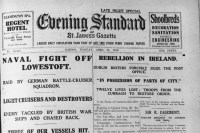
From ‘The Dublin Revolt’, The Spectator, 29 April 1916: If we are to do what will most disappoint the Germans, and that surely is a thing worth doing, we must pick up the pieces in Ireland with as little fuss as possible, and show the minimum of annoyance and disturbance… The insurrection in Ireland, seen in its true proportions, is not a great military event.

Leave wins the Spectator Brexit debate at the London Palladium

From our UK edition

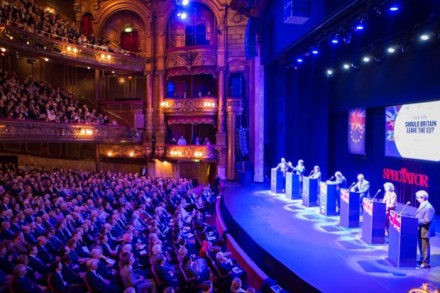
It was the largest debate in The Spectator's history: we sold out the 2,200-seat London Palladium for our debate on whether Britain should leave the EU, sponsored by Rathbones. The lineup: Dan Hannan, Nigel Farage and Kate Hoey vs Nick Clegg, Liz Kendall and Chuka Umunna. Andrew Neil chaired. Here are summaries of all the speeches, as well as the full audio: Daniel Hannan for Out. https://soundcloud.com/spectator1828/daniel-hannans-speech-in-spectator-brexit-debate Tonight, I'm inviting you to make me redundant - and, into the bargain, make Nigel redundant. And I wouldn't be doing if I were not confident that there will be plenty of openings for newly-unemployed MEPs in the boom that would follow our exit from the European Union.

The Spectator reader survey

From our UK edition

The Spectator exists to inform, entertain and infuriate. If you have a few minutes, we'd love to know more about your opinion of the magazine and the website. Which writers do you like? What would you like to see more of? What would you like to see less of? If you could change one thing, what would it be? If you would like to let us know your thoughts, we'd be delighted if you could take our survey, which takes around five minutes to complete. After finishing it, you will be entered into a prize draw to win a year's subscription to the magazine (or a year's extension if you are already a subscriber). To take the survey, please click here.

The future belongs to entrepreneurs

From our UK edition

‘Who thinks the UK is the best place in Europe to start a business?’ asked Spectator editor Fraser Nelson. Almost everyone at the table raised a hand. ‘So that’s a pretty good start…’ In the dining room of Drummonds Bank  — a fine example of 18th Century entrepreneurship — The Spectator and NatWest brought together an eclectic group of entrepreneurs, investors and Labour’s shadow business secretary Angela Eagle MP, to discuss opportunities and obstacles for start-ups and scale-ups. The question for the table was what government and banks can do better to help turn great ideas into growing businesses?

Letters | 21 April 2016

From our UK edition

Safe keeping? Sir: James Delingpole will be relieved to hear that not everyone follows the fashion for demanding repatriation of historical treasures (‘Give thanks for the tomb raiders’, 9 April). When presenting my ambassadorial letters of credence to the President of Haiti, René Preval, in 2010, I mentioned in passing that a rare (possibly unique) copy of Haiti’s Declaration of Independence had recently been discovered in our National Archives at Kew. At this point Preval’s foreign minister leaned forward and suggested that Her Majesty’s Government might wish to repatriate the document. Preval laughed at the suggestion.

Portrait of the week | 21 April 2016

From our UK edition

Home George Osborne, the Chancellor, said that if Britain left the European Union, households would be on average £4,300 a year worse off. He quoted a Treasury analysis that said the British economy would be 6 per cent smaller outside the EU by 2030 than it would have been. ‘Remain’ campaigners were treating voters ‘like children who can be frightened into obedience’, Michael Gove, the Justice Secretary, said, and declared that Britain could be part of the European free trade zone but ‘free from EU regulation which costs us billions of pounds a year’. Kenneth Clarke, the former Chancellor, said that David Cameron ‘wouldn’t last 30 seconds if he lost the referendum’.

Cut the claptrap

From our UK edition

So far the campaign for the EU referendum has resembled a contest as to which side can spin the most lurid and least plausible horror stories. On the one hand, the ‘in’ campaign claims that we’ll be £4,300 worse off if we leave; that budget airlines will stop serving Britain and that we will become more prone to terror attacks. Not to be outdone, the ‘out’ side warns that we will be crushed by a fresh avalanche of regulation and immigration, and more prone to terror attacks.

Duty calls

From our UK edition

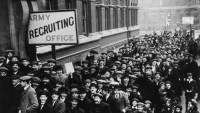
From ‘The Volunteer Training Corps’, The Spectator, 8 April 1916: If we were the Government, we would state plainly that in the opinion of His Majesty’s advisers no man over military age of good physique will be doing his duty to the nation who does not join a Volunteer battalion… it should be clearly understood that he was not performing his proper duties as a citizen, and that even if the state did not think it worth while to compel him to perform them, he would be a proper object of public censure and contempt.

Letters | 14 April 2016

From our UK edition

In defence of Charles Sir: As a former full-time member of the Prince of Wales’s office, and a part-time equerry for 20 years, I can identify with some of HRH’s interests, just like Geoffrey Wheatcroft (‘How to save the monarchy’, 9 April). In my case we share a passion for churches and other historic buildings. I also share some of Mr Wheatcroft’s frustrations — the chaos of the prince’s office has at times driven me to distraction. As the product of a Yorkshire grammar school, I have never considered myself part of any ‘Highgrove set’: the prince calls me ‘Matthew’, and I call him ‘Sir’.

Portrait of the week | 14 April 2016

From our UK edition

Home David Cameron, the Prime Minister, after spending a week parrying questions about his late father’s investment fund Blairmore, suddenly published a summary showing that on his own taxable income of £200,307 in the past year he had paid tax of £75,898. Downing Street said ‘potential prime ministers’ and chancellors should be expected to publish their tax returns in future. George Osborne, the Chancellor of the Exchequer, said he had paid £72,210 in tax on earnings or £198,738. Boris Johnson MP said he’d paid £276,505 tax on income of £612,583. Jeremy Corbyn, the leader of the opposition, had not kept a copy of his tax return, but then got hold of one which showed that he’d paid £18,902 tax on £72,645 income.

Fit to print

From our UK edition

For weeks, Westminster has been full of rumours about the private life of a certain cabinet member. It was said he had started to visit a dominatrix in Earl’s Court but ended up falling in love with her and taking her to official functions. Like a Westminster remake of the film Pretty Woman, in fact, but with the Culture Secretary, John Whitting-dale, playing the part of Richard Gere. There was much comment in Parliament about this, and jokes about what London is coming to if an MP has to travel all the way to Earl’s Court for such services, when they used to be available a stone’s throw away from the Commons. And on it went. The story did not appear in the press for a simple reason: it was, in most part, an invention.

All quiet on the Western Front

From our UK edition

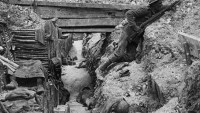
From ‘Observing: an average day’, The Spectator, 15 April 1916: 5.10 a.m. The signaller on duty at the telephone has just said cheerfully, ‘5.30, Sir.’ I agree, and ask him if the wires are all right. They are! 5.50 a.m. Unroll the mufflers round my head and the blankets and kick off the sandbags. Then get off the bed sideways into the water. 8.30 a.m. They have begun. Four ‘whizz-bangs’ have just burst very prettily over a communication trench to our right. Then silence again. 10.25 a.m. We have just had a little excitement. I suddenly saw a German — a rare thing — through the telescope. 2.15 p.m. They are shelling a trench on our left rather persistently, and the batteries behind have begun to retaliate.