The Spectator

Portrait of the week | 12 January 2017

From our UK edition

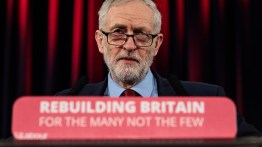
Home Jeremy Corbyn, the leader of the Labour party, proposed a limit on incomes: ‘I would like to see some kind of high earnings cap, quite honestly,’ he said on the BBC’s Today. The London Underground went on strike for a day and Southern railway workers for three. Martin McGuinness of Sinn Fein resigned as the deputy first minister of Northern Ireland in protest against the mishandling of a multi-million-pound energy scheme by Arlene Foster, the Democratic Unionist Party first minister, who was forced out of office in the power-sharing administration by his move. Mr McGuinness, who has spent a decade in the post, was also said to be suffering from a rare form of heart disease.

Bonds of friendship

From our UK edition

From ‘The Rome conference and bonds of alliance’, The Spectator, 13 January 1917: There may be the greatest possible good, nay, even salvation, in partnership or alliance; but the fact that partnerships and alliances do involve loss of free will, and that a man cannot when he is in partnership be wholly master in his own house or office, must never be forgotten. Yet, strangely enough, this is a fact which is constantly ignored even by our experts in foreign affairs, with results which are often not only exceedingly unfair to the British nation as a whole, but grossly unfair to individuals.

Full text: Jeremy Corbyn’s Brexit speech

From our UK edition

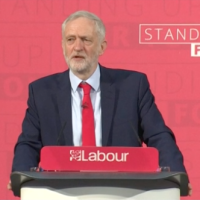
Listen to the whole speech here: Whether you voted to Leave or to Remain, you voted for a better future for Britain. One thing is clear, the Tories cannot deliver that. So today I want to set how Labour will deliver that vision of a better Britain. This government is in disarray over Brexit. As the Prime Minister made clear herself  they didn’t plan for it before the referendum and they still don’t have a plan now. I voted and campaigned to remain and reform as many of you may know I was not uncritical of the European Union. It has many failings. Some people argued that we should have a second referendum. That case was put to our party’s membership last summer and defeated. Britain is now leaving the European Union.

Full text: Theresa May’s ‘shared society’ speech

From our UK edition

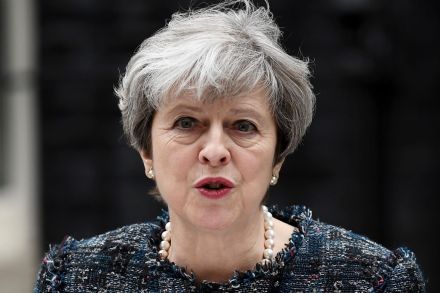
Thank you for inviting me to be here this morning to deliver the prestigious Charity Commission Annual Lecture. I am delighted to have this opportunity to express my appreciation for all those who work in our charity sector and for those who freely give their time, money and expertise in the service of others. We are a country built on the bonds of family, community and citizenship and there is no greater example of the strength of those bonds than our great movement of charities and social enterprises. But the strength of that civil society – which I believe we should treasure deeply – does not just depend on the ingenuity, generosity and commitment of countless volunteers, social entrepreneurs and philanthropists.

Letters | 5 January 2017

From our UK edition

Yet another kind of snob Sir: May I offer another definition of a ‘snob’ to the one described by Bryan Appleyard (‘A different class of snob’, 31 December)? I have always believed that a snob is someone who has risen in the world and now looks down with disdain on those they have left behind. This is an altogether more cynical and divisive form of elitism than that of the serial narcissists Mr Appleyard describes in his article. In the United Kingdom the abolition of grammar schools and the incursion of cheap foreign labour have damaged the legitimate aspirations of those wishing to improve their lot in life, stalled social mobility, and polarised society.

Portrait of the week | 5 January 2017

From our UK edition

Home Sir Ivan Rogers, Britain’s ambassador to the EU, resigned; he had been expected to play an important part in talks on Brexit. In a lengthy email to staff he said: ‘Free trade does not just happen when it is not thwarted by authorities.’ He referred to ‘ill-founded arguments and muddled thinking’ and noted that we do not know the ‘negotiating objectives for the UK’s relationship with the EU’. Southern railways advised hundreds of thousands of commuters not to try to travel during a three-day strike by train drivers, due to begin on Monday. China began a direct freight rail service to Barking in London.

Sir Ivan’s exit

From our UK edition

The wonder about Sir Ivan Rogers’s resignation as Britain’s ambassador to the EU is that he was still in the job. He may have possessed useful knowledge about the workings of the EU, but he was also heavily associated with a failed way of conducting negotiations with it. It was he who advised David Cameron last February on his unsuccessful renegotiations of Britain’s relationship with the EU, which failed to convince the British people to vote to remain in the union. It would have been better and less disruptive had he resigned in the wake of the referendum last June, along with the Prime Minister.

A killing to celebrate

From our UK edition

From ‘News of the Week’, The Spectator, 6 January 1917: The war has been crowded with romantic adventures by sea and land in every part of the world, but perhaps nothing is more sensational, more reminiscent of blue lights and the accents of warning and suspense from the orchestra, than the murder of the monk Rasputin in Petrograd… Whether those who took his life did so on the grounds of private revenge or of patriotism remains to be seen. In any case, we agree with Reuter’s correspondent that the disappearance of this sinister figure is a subject for congratulation for all true friends of Russia.

The only mystery about Sir Ivan Rogers is why he was still in his job

From our UK edition

The wonder about Sir Ivan Rogers’s resignation as Britain’s ambassador to the EU is that he was still in the job. He may have possessed useful knowledge about the workings of the EU, but he was also heavily associated with a failed way of conducting negotiations with it. It was he who advised David Cameron last February on his unsuccessful renegotiations of Britain’s relationship with the EU, which failed to convince the British people to vote to remain in the union. It would have been better and less disruptive had he resigned in the wake of the referendum last June, along with the Prime Minister.

What were the worst predictions of 2016?

From our UK edition

Some rubbish predictions made for 2016: Nikki, ‘psychic to the stars’: ‘Huge crash at Formula 1 race, killing many; Scottish riots; helicopter will crash into Empire State Building; earthquake in Denmark’. Simon Reich, ‘the man who got almost everything right about the year before’: ‘Donald Trump will not be republican candidate, but yes, Hillary will be Democratic candidate — and will be elected president’. Baba Vanga, blind Bulgarian billed as ‘Nostradamus of the Balkans’, who made her prediction before she died 20 years ago: ‘Europe will cease to exist by 2016 — will be empty spaces and wasteland’. Did anyone get anything right?

Portrait of the year | 31 December 2016

From our UK edition

January The cost of an annual season ticket from Cheltenham to London rose to £9,800. Oil fell below $30 a barrel, compared with more than $100 in January 2014. David Cameron, the Prime Minister, said that once his negotiations with the EU were done, ministers could campaign for either side in the referendum on Britain’s continued membership. Junior doctors went on strike for 24 hours. In Germany, women protested in the street after gangs of men of Arab or North African appearance assaulted dozens of women in Cologne on New Year’s Eve. David Bowie died two days after releasing an album, Blackstar, on his 69th birthday. February The World Health Organisation declared the Zika virus a global public health emergency. Junior doctors went on strike for another day.

Letters | 29 December 2016

From our UK edition

Unencumbered Sir: Matthew Parris’s bizarre reference (‘Unforgiven’, 10 December) to the UK economy as merely ‘medium-sized’ is a classic instance of Remainers’ tendency to pass Britain off expediently as a vulnerable country on the margins of Europe, which couldn’t survive without our EU umbilical cord. The UK is actually the fifth or sixth largest of the world’s nearly 200 national economies. If we are only medium-sized, how can all the world’s ‘even smaller’ economies — such as India, Canada, South Korea or Australia — possibly hack it as independent sovereign states outside any supranational governance bloc like the EU? How have they managed so far?

Keep the press free

From our UK edition

It is said that the case for freedom of expression needs to be restated in every generation, but things move faster in the digital era. Just three years after an attempt at state regulation of the press ended in ignominious failure, a fresh effort is being made. The government has begun a consultation on a plan to impose stiff financial penalties on newspapers who refuse to sign up to a state-approved regulator. Anyone wishing to give their opinion on such a regime has until 10 January. It is odd, for a start, that Theresa May’s government feels the need to consult on whether it has a duty to uphold fundamental British liberties.

Portrait of the Week – 29 December 2016

From our UK edition

Home The Queen was said by the BBC’s Laura Kuenssberg to have asked, at a private lunch before June’s referendum, about the European Union: ‘I don’t see why we can’t just get out. What’s the problem?’ Mervyn King, who was Governor of the Bank of England until 2013, said that Britain needed to be more ‘self-confident’ about its chances outside of the economically ‘pretty unsuccessful’ EU. Theresa May, the Prime Minister, issued a Christmas message: ‘As we leave the European Union we must seize an historic opportunity to forge a bold new role for ourselves in the world.’ George Michael, the singer, died aged 53. Rick Parfitt, who sang and played with Status Quo, died aged 68.

These little islands

From our UK edition

From ‘Engage the enemy more closely!’, The Spectator, 30 December 1916: Britain was never more vigorous than she is now: She has renewed her youth, and we may look forward to many years, possibly to many generations, of potent life. Still, we cannot conceal from ourselves that the destiny of these little islands in the Northern Sea must in the last resort be to lose their relative importance… To us the thought of our decline, inevitable, though it may be long postponed, brings no sense of hopelessness or misery as it did to the Roman.

Out – and into the world: Why The Spectator backed Brexit

From our UK edition

We’re closing 2016 by republishing our ten most-read articles of the year. Here’s No. 6: Our leader article from June, in which the Spectator backed Brexit The Spectator has a long record of being isolated, but right. We supported the north against the slave-owning south in the American civil war at a time when news-papers (and politicians) could not see past corporate interests. We argued for the decriminalisation of homosexuality a decade before it happened, and were denounced as the ‘bugger’s bugle’ for our troubles. We alone supported Margaret Thatcher when she first stood for the Tory leadership. And when Britain last held a referendum on Europe, every newspaper in the land advocated a ‘yes’ vote.