The Spectator

Barometer | 23 March 2017

From our UK edition

Princes among men British DJ Mark Dezzani was hoping to be elected prince of Seborga, a self-proclaimed independent state in Italy. Some other self-declared nations not recognised by others: — Hutt River in Western Australia declared independence in 1970 after farmer Leonard Casley complained he hadn’t been granted a large enough quota for growing wheat. He later proclaimed himself Prince Leonard but abdicated last month in favour of his youngest son, Prince Graeme. — Sealand, previously known as Roughs Tower, is a gun emplacement built to defend the Thames during the second world war but then abandoned. In the 1960s it was occupied by businessman Roy Bates, who ruled as Prince Roy until his death in 2012.

Portrait of the week | 23 March 2017

From our UK edition

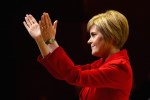
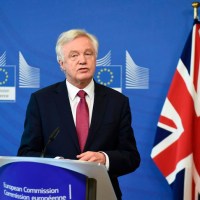
Home Theresa May, the Prime Minister, said that on 29 March she would send a letter to Donald Tusk, the president of the European Council, under Article 50 of the Lisbon Treaty, triggering the process of the United Kingdom’s departure from the European Union. A summit of EU leaders was convened for 29 April, with the aim of briefing its negotiator, Michel Barnier. Nicola Sturgeon, the first minister of Scotland, elicited the support of the Scottish Parliament for her policy of seeking a second referendum on Scottish independence ‘within a short time of’ Brexit. Mrs May had dismissed her request, saying: ‘Now is not the time.’ Ms Sturgeon said an independent Scotland would seek membership of the EU and use sterling as a ‘starting point’.

Westminster terror attack: Theresa May’s statement to the Commons

From our UK edition

Mr Speaker, yesterday an act of terrorism tried to silence our democracy. But today we meet as normal – as generations have done before us, and as future generations will continue to do – to deliver a simple message: we are not afraid. And our resolve will never waiver in the face of terrorism. And we meet here, in the oldest of all Parliaments, because we know that democracy, and the values it entails, will always prevail. Those values – free speech, liberty, human rights and the rule of law – are embodied here in this place, but they are shared by free people around the world. A terrorist came to the place where people of all nationalities and cultures gather to celebrate what it means to be free.

Up the revolution!

From our UK edition

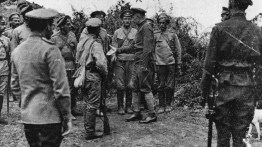
From ‘The Russian revolution’, 24 March 1917: Even now, though the Revolution is young, the Russians have proved that they are fit and worthy to exercise the full benefits of self-government. In the highest spheres of government they had hitherto been always thwarted, but no one who has watched the progress and expanding influence of the Zemstvos and the Municipalities can deny that Russians have long displayed the capacity for local self-government. Such a Revolution as has just occurred was inevitably born in violence, but the violence was much less than might have been expected.

Westminster terror attack: Theresa May’s speech

From our UK edition

I have just chaired a meeting of the Government’s emergency committee, COBRA, following the sick and depraved terrorist attack on the streets of our Capital this afternoon. The full details of exactly what happened are still emerging. But, having been updated by police and security officials, I can confirm that this appalling incident began when a single attacker drove his vehicle into pedestrians walking across Westminster Bridge, killing two people and injuring many more, including three police officers. This attacker, who was armed with a knife, then ran towards Parliament where he was confronted by the police officers who keep us – and our democratic institutions – safe. Tragically, one officer was killed. The terrorist was also shot dead.

Letters | 16 March 2017

From our UK edition

Pope Francis’s mission Sir: Despite Damian Thompson’s intimations (‘The plot against the Pope’, 11 March), Pope Francis is going nowhere except onwards and upwards. Jorge Bergoglio has a loving family background which gives him a mature, balanced personality. He is gifted with a fine, open mind, underpinned by an Ignatian spirituality which reminds him of his sinfulness and his constant need for God’s grace. He also has vast experience of the pastoral ministry in the Buenos Aires slums. No doubt there is a ‘Borgia’ element in the Vatican. This lust for power is not at all what the crucified Christ encouraged in His disciples. As the Pope presses on with the belated but vital reform of the Catholic church, we pray, and he must watch his back.

Hammond’s humiliation

From our UK edition

After Philip Hammond delivered his Budget last week, he went to speak to a meeting of Conservative backbench MPs. Several were deeply alarmed about his tearing up of their manifesto pledge not to raise National Insurance. One asked him how sure he was about all this. Would they find themselves going out to defend this tax rise to their constituents, only to find him abandoning the policy later? No, the Chancellor replied, he would not change his mind. This tax rise was the centrepiece of his Budget, and it could not be scrapped. He was not for turning. For a Chancellor to abandon his main Budget policy within a week is nothing less than extraordinary. It suggests a staggering lack of communication, forethought and basic political competence.

Portrait of the week | 16 March 2017

From our UK edition

Home Theresa May, the Prime Minister, decided to delay until later in the month the invoking of Article 50 of the Lisbon Treaty to trigger the Brexit process, even though her power to do so had been confirmed by the passing of the EU (Notification of Withdrawal) Act. The Commons had defeated two amendments added by the House of Lords: one concerning continuing rights of EU residents in Britain by 335 votes to 287; the other about Parliament having a meaningful vote on any Brexit deal by 331 to 286. The Lords quiesced once the Bill was sent back for their consideration.

Disaster in the Dardanelles

From our UK edition

From ‘The Dardanelles report’, 17 March 1917: The plan of the government in the case of the Dardanelles Expedition had the worst fault which any naval or military plan, or naval and military plan combined, can have. It had no real objective… or rather, to put it in another way, it only had a vague and general objective, not one which was clear and specific and could be carried through by a series of definite acts… To say vaguely that Constantinople was its objective was nonsense. A tourist, a mere sightseer, might have Constantinople as his objective, but not a fleet or an army, or even a commercial traveller.

School portraits | 16 March 2017

From our UK edition

Brighton College  As a mixed independent school with pupils aged 3–18, Brighton College covers the full spectrum of students. With such a wide remit, you might expect areas where it falls down, but that doesn’t seem to be the case. In 2016, every GCSE exam sat (all 2,082 of them), was passed, with A* the most common grade. The school says it is living proof that ‘co-education works’. Brighton girls do better in their exams than those at local single-sex schools. Sports are a big draw, too: Brighton is one of Britain’s top six schools for rugby with a rugby scholarship and, more surprisingly, a girls’ cricket scholarship. The unofficial motto of Brighton’s prep school is ‘Be Good. Be Kind. Be Honest.

School report | 16 March 2017

From our UK edition

CHINESE SCHOOL IS A FIRST IN EUROPE  Europe’s first bilingual English-Chinese school is due to open in London this September. Professor Hugo de Burgh, a leading authority on China, will be the chairman of Kensington Wade School and has been instrumental in its founding. He says the benefits for pupils will be numerous. Yes, it’s likely that China is the future for international business. But he also believes that learning the Chinese language is of huge benefit to children — both for the general benefits of being bilingual, but also because learning a logographic language — as well as an alphabetic one — expands their mental horizons. Finally, de Burgh believes that British education has plenty to learn from the Chinese system.

If the Tories can mess up a Budget, how will they handle Brexit?

From our UK edition

After Philip Hammond delivered his Budget last week, he went to speak to a meeting of Conservative backbench MPs. Several were deeply alarmed about his tearing up of their manifesto pledge not to raise National Insurance. One asked him how sure he was about all this. Might they find themselves going out to defend this tax rise to their constituents, only to find him abandoning the policy later? No, the Chancellor replied, he would not change his mind. This tax rise was centrepiece of Budget, so could not be scrapped. He was not for turning. For a Chancellor to abandon his main Budget policy within a week is nothing more than extraordinary. It suggests a staggering lack of communication, forethought and basic political competence.

Nicola Sturgeon announces a second Scottish referendum: full speech

From our UK edition

Before the end of this month - and very possibly as early as tomorrow - the Prime Minister will trigger Article 50 of the Lisbon Treaty, setting the UK on course to leave the EU in March 2019. It is important, therefore, for me to report now on the Scottish Government's attempts to find compromise with the UK government and set out our plan to protect Scotland's interests. Right now, Scotland stands at a hugely important crossroads. We didn't choose to be in this position. In common with most people across the country, I wish that we weren't in this position. But we are and the stakes are high - so we must have a plan for the way forward. For better or worse - depending on your point of view - the future of the UK looks very different today than it did two years ago.

Philip Hammond’s budget disaster

From our UK edition

Some Budgets are historic, most are boring and a small number can be remembered as a disaster. After just a few months, Philip Hammond has managed a budget - his first - that can be placed in this last category. Economically, it made very little difference. Politically, it is shaping up to be a disaster. His Budget was supposed to have been conducted under the pledge, issued no fewer than four times in the 2015 Conservative manifesto, that his party not raise taxes. ‘Instead, we will ease the burden of taxation,’ the Tories promised. It seems plausible enough, and the Conservatives were returned with an absolute majority.

Barometer | 9 March 2017

From our UK edition

Naming the weather Former BBC weatherman Bill Giles has said he’s fed up with storms being named. — The practice of naming storms in the UK began with storm Abigail in October 2015, although some earlier storms, like Bertha in 2014, were the remnants of hurricanes already named in the US. The St Jude’s Day storm of 2013 took its name from the saint’s day on which it fell. — The US National Hurricane Centre first named storms in 1950, when it started calling them by a phonetic alphabet: Able, Baker, Charlie etc. Three years later it switched to women’s names, starting with Alice, a damp squib with winds not exceeding 60mph. Its first male storm was Bob in 1979, a 65mph weakling.

Letters | 9 March 2017

From our UK edition

On Scottish independence Sir: Alex Massie writes of the order permitting a second Scottish independence referendum: ‘Having granted such an order in 2014, it will be difficult to refuse Mrs Sturgeon’s demand for another’ (‘Back into battle’, 4 March). Surely that is precisely why Mrs May should refuse another? It was the SNP who described the 2014 vote as a chance in a lifetime. The only thing way in which Brexit could have changed matters is if it had been a fundamental and unforeseeable upset. Alex Massie, from this and his previous writings, clearly believes it was. But the Conservatives, at the time of the Scottish vote, had promised to hold a Brexit referendum if they won the 2015 general election, so Brexit was certainly on the cards.

Ambition deficit

From our UK edition

Some Budgets are historic, most are boring and a small number can be remembered as a disaster. After just a few months, Philip Hammond has managed a budget - his first - that can be placed in this last category. Economically, it made very little difference. Politically, it is shaping up to be a disaster. His Budget was supposed to have been conducted under the pledge, issued no fewer than four times in the 2015 Conservative manifesto, that his party not raise taxes. ‘Instead, we will ease the burden of taxation,’ the Tories promised. It seems plausible enough, and the Conservatives were returned with an absolute majority.