Books and Arts – 9 November 2017
From our UK edition
From our UK edition
From our UK edition
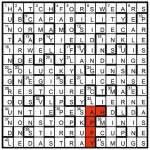
The unclued lights are preceded by HAPPY to yield phrases listed in Brewer. First prize Tony Hankey, London W4 Runners-up C.

From our UK edition
A.N. Wilson Elmet by Fiona Mozley (John Murray, £10.99). It is difficult to convey the full horror of this spellbinding first novel. The young author, a medievalist, presumably knows the no less violent Njál’s Saga. Elmet, though set in the modern age, concerns timeless protagonists who have contrived to live outside the normal modern settings. Dad is an ex-prisoner, who earns his living as a prize-fighter — at illegally organised, very bloody bare-knuckle fights. Somehow he and his children manage to build a house on land belonging to a sinister figure called Mr Price, without any bureaucrats from the local planning office materialising to ask what he is up to. Price wants his revenge, and when his own son meets a bloody end, he exacts it.
From our UK edition
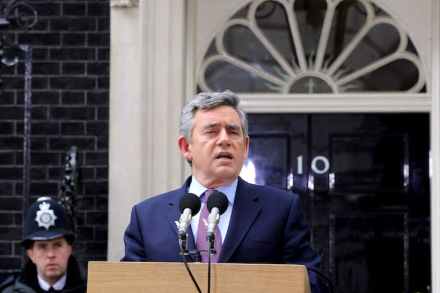
Gordon Brown has pitched his memoirs as the honest confessions of a decent man. He failed to win the one general election he fought, he asserts, due to a personality that was unsuited to an age of Twitter and emotional displays. His is the Walter Mondale response to failure — the former US vice president said of his defeat in the 1984 presidential election: ‘I think you know I’ve never really warmed up to television, and in fairness to television, it’s never really warmed up to me.’ Admitting to poor media skills is not genuine self-examination on the part of Brown, more an attempt to shift the blame for his failures on to something he considers trivial.
From our UK edition
Equality of outcome Sir: Rod Liddle exposes some deep flaws in the way children are prepared to play their part in adulthood (‘The kids aren’t all right’, 28 October). But one in particular merits further analysis. He is right to say that teachers’ imperative is to raise the D grade students at GCSE to a C, as a school is judged on the number of A-C grade passes it secures. So all the best teachers and all the extra resources are focused on the D grade children. An A grade student who could, with a bit of help, achieve an A* and thus begin their journey to Cambridge is ignored, and if he or she achieves only a B, that is a tick in the box; a success.
From our UK edition
Lynx on the loose — A Eurasian lynx escaped from a zoo in Wales, pre-empting plans to introduce six of the animals to Kielder Forest in Northumberland. The animal was once native to Britain, becoming extinct around the year 700, earlier than the wolf (possibly 1290) or the brown bear (around year 1000). — However, in continental Europe and near-Asia, numbers have been growing since a low of 700 between 1930 and 1950. There are now believed to be 50,000, spread from Uzbekistan in the east to Germany in the west. Of the smaller Iberian lynx, restricted to Spain and Portugal, numbers fell to 100 in 2002 but now stand at about 400. Collaring white collars Gordon Brown said more bankers should have been jailed for actions related to the banking crisis.
From our UK edition
Home A great ferment of accusations of sexual impropriety was made against people in Parliament and out of it. Bex Bailey, a Labour party worker, said she was raped, not by an MP, at a party event in 2011 and a senior Labour official discouraged her from reporting it. Jared O’Mara MP had the Labour whip withdrawn while claims were investigated that he had called a woman he met ‘an ugly bitch’. Tulip Siddiq, a Labour MP, said that cases of sexual misconduct cases at Westminster could run into hundreds. Sir Michael Fallon, the Defence Secretary, was even driven to apologise publicly for putting his hand on the knee of Julia Hartley-Brewer during dinner 15 years ago, although she said that she had not been ‘remotely upset or distressed’.

From our UK edition
Gordon Brown has pitched his memoirs as the honest confessions of a decent man. He failed to win the one general election he fought, he asserts, due to a personality that was unsuited to an age of Twitter and emotional displays. His is the Walter Mondale response to failure — the former US vice president said of his defeat in the 1984 presidential election: ‘I think you know I’ve never really warmed up to television, and in fairness to television, it’s never really warmed up to me.’ Admitting to poor media skills is not genuine self-examination on the part of Brown, more an attempt to shift the blame for his failures on to something he considers trivial.

From our UK edition
From our UK edition
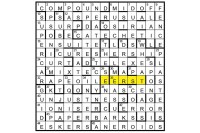
The suggested words were ESTER (1), REEST (20), TERSE (24), TREES (43), TERES (6D), RESET (9), TEERS (23), STERE (30) and STEER (36). EERST (in the ninth row) was to be shaded. First prize John Newell, Kingston-upon-Thames, Surrey Runners-up S.C.
From our UK edition
Meeting halfway Sir: If our Brexit negotiator David Davis has not read Robert Tombs’s wonderful article ‘Lost in translation’ (21 October) on how different the French and the British can be when it comes to the negotiating table, he really should, as it splendidly exemplifies how useful history can be. The trouble is, of course, that politicians are often too busy to read history, or that historians get round to writing something useful too late to exert practical influence. In this instance, however, there is still time: manufactured deadlines can be adjusted, and (given adequate cross-cultural empathy) accommodations can be reached. Brian Harrison Oxford The law in France Sir: Robert Tombs highlights the differences between the UK and France brilliantly.
From our UK edition
Littler Hitlers Cabinet secretary Damian Green appealed to commentators to halt the ‘ridiculous rise of routine comparisons to Hitler’. A small selection of examples in the past week: — Chants of ‘Go home, Nazis’ met a white supremacist rally in Florida, where at least one attendee was in a swastika T-shirt. — Ex-US vice president Joe Biden asked universities to respect free speech, saying ‘don’t give the Trumps of this world the ability to compare you with Nazis’. — An ultra-orthodox Jew protesting against military service called Israeli police ‘Nazis’. — Ex-National Front and BNP campaigner Kevin Wilshaw said he had ‘completely wasted’ his past life as a ‘Nazi’.

From our UK edition
It was always going to be difficult for Theresa May’s government to secure a legacy beyond Brexit. With the negotiations running into difficulty, it becomes all the harder. Ministers must avoid, however, resorting to well-meant gestures which open the government to ridicule. Take, for instance, the revelation that Britain has insisted on the UN’s International Covenant on Civil and Political Rights making reference to pregnant transgendered people — although it now denies that it objected to the term ‘pregnant women’. The purpose of the relevant clause is deeply serious — to dissuade malignant regimes from subjecting pregnant women to the death penalty.
From our UK edition
Home Of perhaps 400 Britons returned from the former territory of the Islamic State in Iraq and Syria, those who ‘do not justify prosecution’ should be reintegrated, Max Hill, the independent reviewer of terrorism legislation, told the BBC. Rory Stewart MP, asked about foreigners fighting for the Islamic State in Syria, said that ‘the only way of dealing with them will be, in almost every case, to kill them’. Jared O’Mara MP resigned from the Commons equalities committee after attention was directed to remarks he made online in 2004, such as that Michelle McManus had only won Pop Idol ‘because she was fat’.
From our UK edition
From our UK edition
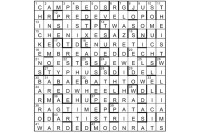
The poem ‘The Red Wheelbarrow’ (originally ‘XXII’) by William Carlos Williams is considered perhaps the foremost example of IMAGISM. First prize M. & M.
From our UK edition
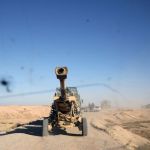
The routing of Isis in northern Iraq ought to be a time of international celebration, but as ever in the Middle East, there is no such thing as a straightforward victory. No sooner had Isis been driven away — though not quite vanquished — than the next great struggle commenced, this time between the Iraqi government and the Kurdish forces who for the past three years have been holding back Isis from the city of Kirkuk and its surrounding oilfields. This week, Iraqi forces stormed into Kirkuk and raised the country’s official flag, removing the Kurdish flag which was raised there in 2014.

From our UK edition
The great divider Sir: Niall Ferguson (‘Tech vs Trump’, 14 October) draws a parallel between the Reformation — powered by the printing press — and today’s social networks — powered by the internet — in their influence on the established hierarchy. Ferguson astutely observes that the consequence of the Reformation was not a hoped-for harmony but ‘polarisation and conflict’. The difference was then, and is now, between collectivism and individualism. Collectivists always saw the internet as a vehicle for the universal consciousness: the blending of minds. Individualists always saw the internet as an integrator: establishing facts using the principle of non-contradiction. The first is mystical.
From our UK edition
Home Theresa May, the Prime Minister, and David Davis, the Brexit Secretary, went to Brussels and had dinner with Jean-Claude Juncker, the president of the European Commission and the EU’s chief negotiator Michel Barnier. They came up with a joint statement that ‘efforts should accelerate over the months to come’. But by this week’s meeting of the European Council, Britain was deemed not to have done enough about the price it would pay to allow the EU to discuss trade matters. No great hope was held out that it would be any better by the next meeting in December. Keir Starmer, Labour’s Brexit spokesman, said: ‘There is no way we would vote for a no deal.
From our UK edition
The routing of Isis in northern Iraq ought to be a time of international celebration, but as ever in the Middle East, there is no such thing as a straightforward victory. No sooner had Isis been driven away — though not quite vanquished — than the next great struggle commenced, this time between the Iraqi government and the Kurdish forces who for the past three years have been holding back Isis from the city of Kirkuk and its surrounding oilfields. This week, Iraqi forces stormed into Kirkuk and raised the country’s official flag, removing the Kurdish flag which was raised there in 2014.