The Spectator

Coffee House Shots Live: Are the Tories toast?

From our UK edition

Watch Spectator editor Michael Gove, political editor Tim Shipman and assistant editor Isabel Hardman as they discuss where the Tories go from here, in a livestream exclusively for Spectator subscribers. The strange death of Tory England has been predicted before. But never has the ‘natural party of government’ faced a greater challenge to its survival. The Conservatives are facing attacks on all fronts from Labour, the Liberal Democrats and Reform UK. Kemi Badenoch’s six-month anniversary as leader was marked by the loss of nearly 700 councillors – and testing elections await her next year in Scotland and Wales. She has promised change with her long-awaited policy commissions, ahead of a make-or-break party conference in October.

DoGE

DoGE, alligators, public land and Mamdani mania

Daddy DoGE Despite Elon Musk and Donald Trump’s continued public fallout, DoGE is still slashing away at the federal workforce. From a peak of 3,015,000 employees on federal payroll in January, job cuts per month are as follows: February 13,000 March 11,000 April 13,000 May 25,000 June 7,000 Source: US Bureau of Labor Statistics See ya later, alligator Would migrants at Florida’s “alligator Alcatraz” detention center be eaten by the surrounding wildlife if they managed to escape? “I guess that’s the concept,” said Trump. But which species would do the snacking? There are around 1.25 million American alligators in Florida which are native to the state.

Letters: Why we need libraries

From our UK edition

NHS origins Sir: Your leading article ‘Wes or bust’ (5 July) credited Labour with founding the NHS. In fact, the NHS was founded during the second world war by the Labour, Liberal and Conservative coalition. The speech with the famous line ‘free at the point of use’ was in fact made by Winston Churchill. He made it because he was PM and it was his job. For Labour to claim to be the initiator is somewhat disingenuous. Edward Hirst Aston, Sheffield All aboard Sir: Michael Gove is quite right (‘Tracks of my tears’, 5 July): the retirement of the royal train is sad news for those of us who like trains and their history. Rather than the royal family viewing it as a liability, might it not still be a useful national asset?

2708: On the shelf – solution

From our UK edition

Bertrand RUSSELL, whose surname is hidden in the final column, said, ‘There’s a BIBLE on that shelf there. But I keep it next to VOLTAIRE – POISON and ANTIDOTE.’ The other four unclued lights are two synonyms each of ‘poison’ (VENOM, TOXIN) and ‘antidote’ (MITHRIDATE, SERUM).

Portrait of the week: Rachel Reeves cries, Rishi Sunak joins Goldman Sachs and a six-month bin strike

From our UK edition

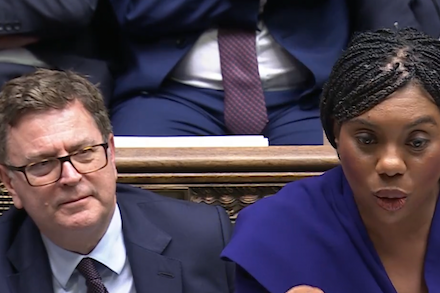
Home Rachel Reeves, the Chancellor of the Exchequer, had given a theme to the week by sitting weeping behind Sir Keir Starmer during Prime Minister’s Questions. She later said: ‘It was a personal issue.’ Sir Keir said: ‘She will be Chancellor for a very long time to come.’ No. 10 said she and the Prime Minister were ‘in lockstep’. The government found itself short of the £5 billion it had meant to save in the welfare bill, thwarted by its own MPs. The Office for Budget Responsibility said that, with rising debt, ‘The UK’s fiscal position is increasingly vulnerable’. Asked whether she would rule out tax rises in the autumn, the Chancellor said: ‘I’m not going to, because it would be irresponsible for a Chancellor to do that.

Norman Tebbit was the symbol of an age 

From our UK edition

Norman Tebbit, who died this week aged 94, was a self-made man who shouldered his way to the top of a party of old Etonians. He was, to many, the leather-clad bovver boy of Spitting Image, ordering the unemployed to get ‘on yer bike’. He was a devoted husband who stepped back from politics to care for his wife, Margaret, after they were pulled from the wreckage of Brighton’s Grand Hotel. And he was an unrepentant right-winger, who was unflinching about where his party had gone wrong, and unforgiving to the monsters who had put his wife in a wheelchair. This Middlesex grammar school boy turned airline pilot, turned cabinet minister, changed the country he loved for the better.

The Golden Bidet of Lerici

From our UK edition

Only I was allowed to sit on the Golden Bidet of Lerici. Lord Byron sat on it as well as Percy Bysshe and Mary. D.H. Lawrence swung by and perched there like a demigod – as well as Frieda von Richthofen. Virginia Woolf sat on it in 1933 knocking out a beautiful sentence – Max Beerbohm banging at the door. Henry James dropped his drawers to sit on that glittering throne, his buttocks pale and tragic. I bestraddle the cosmic rocket. Five, four, three, two, one...

Letters: What public inquiries get wrong

From our UK edition

Movers and shakers Sir: As a parish priest of 35 years, I read Francis Pike’s account of his supernatural experiences (‘Happy mediums’, 28 June) with little surprise. Over the years, I have been approached by parishioners troubled by poltergeists, apparitions, unexplained odours, ‘friendly’ spirits and, in one case, cutlery and glasses flying off tables. In every instance, my approach has been the same. Accompanied by another person, I visit the home and enquire whether the household has been involved in any occult practices – Ouija boards, tarot cards, consulting mediums and the like. Almost invariably, the answer is yes. I then encourage repentance from such practices and a turning to Christ as Lord.

2707: Get-together – solution

From our UK edition

Twelve unclued entries can be paired to make six portmanteau words: CHILLAX (CHILL + RELAX), MOTEL (MOTOR + HOTEL), DRAMEDY (DRAMA + COMEDY), BLOG (WEB + LOG), FRENEMY (FRIEND + ENEMY) and COSPLAY (COSTUME + PLAY).

For the NHS, it’s Wes or bust

From our UK edition

Labour swept to power on a pledge to ‘save the NHS’. As shadow health secretary, Wes Streeting said he would go ‘further than New Labour ever did’ to clear the health service’s backlog and, to achieve this, he claimed old taboos would be torn up, including the use of the private sector to improve services. Failure to clear the backlog now will be hugely politically consequential for this government. Partly because of how important the NHS is to the voting public, but more so because of the emotional resonance the service and its ‘free-at-the-point-of-use’ model has for Labour, both its MPs and its supporters. If the party that founded the NHS cannot save it, who can? That is why the NHS has been mostly immune to Rachel Reeves’s new austerity.

Portrait of the week: Welfare rebellions, Glastonbury chants and Lucy Letby arrests

From our UK edition

Home Sir Keir Starmer, the Prime Minister, in the face of a rebellion by 120 backbenchers over the welfare bill, undertook to limit to new claimants restrictions on personal independence payments (Pip). Modelling by the Department for Work and Pensions predicted that 150,000 people might be pushed into ‘relative poverty’ by the revised welfare cuts, compared with 250,000 before. Still fearing defeat, the government made more last-minute concessions, postponing changes to Pip rules until after a review by Sir Stephen Timms, the disability minister. The government then won the second reading by 335 to 260, with 49 Labour MPs voting against. It was not clear that the eviscerated bill would reduce spending.

The Spectator presents: Living with a Politician

From our UK edition

Exclusive to subscribers, watch our latest event Living with a Politician live.  Join Sarah Vine, (author of How Not to Be a Political Wife), with Michael Gove, Rachel Johnson (author of Rake’s Progress, her own odyssey as a political candidate) and Hugo Swire (whose wife Sasha wrote the bestselling Diary of an MP’s Wife) as they discuss the losses and laughter involved in being married to politics.

Letters: Israel’s attack on Iran was no surprise  

From our UK edition

Moral support Sir: All of Tim Shipman’s reasons for the PM’s reluctance to support Israel sound outwardly plausible, though, from my experience, the spook excuse, ‘The CIA wants us to keep the embassy open’, is plainly specious. Mossad is clearly all over Iran and they’re not relying on an embassy (‘Starmer’s war zone’, 21 June). There is concern over what might follow a regime change, but no one is asking what happens if we don’t support Israel and the US. Instead there is some cobbled-together ‘de-escalation’ which leaves a diminished but still viable theocratic terror regime in place, but one now consumed by a desire for existential revenge.

Let Kneecap play

From our UK edition

During the Troubles, some 2,500 people were victims of kneecappings – punishment shootings, dished out by paramilitaries, for perceived crimes ranging from fraternising with British soldiers to drug dealing and rape. The term is something of a misnomer. The torture entails a low-velocity gunshot to the knee from a handgun. That isn’t guaranteed to destroy one’s kneecaps but could cause tissue or nerve damage and joint fractures. At least 13 victims had to have their limbs amputated; one in five was once estimated to limp for the rest of their lives. Until recently, a mention of kneecapping was a reminder of the terror that plagued Northern Ireland within living memory. Yet this week, thousands will descend upon Glastonbury, at £373.

Portrait of the week: Assisted dying, Israel vs Iran and Zelensky’s visit

From our UK edition

Home MPs voted by a majority of 23 – 314 to 291 – for the Terminally Ill Adults (End of Life) Bill, which says people in England and Wales may lawfully ‘be provided with assistance to end their own life’. In the free vote, the Health Secretary voted against and the Prime Minister voted for. The bill now goes to the Lords. ‘Iran never be allowed to develop a nuclear weapon and the US has taken action to alleviate that threat,’ Sir Keir Starmer, the Prime Minister, said. Seven men were charged with grievous bodily harm after protestors outside the Iranian embassy in London were attacked.

Letters: How lads’ mags spawned OnlyFans

From our UK edition

Bad lads Sir: The articles on Britain’s relationship with porn were fascinating and frustrating in equal measure. Fascinating in that Louise Perry and Michael Simmons’s contributions (‘Devices and desires’ and ‘Dirty money’, 14 June) provided a thought-provoking analysis of the extraordinary growth of the industry. Frustrating in the juxtaposition of these pieces with Sean Thomas’s delusional thoughts about ‘lads’ mags’ (‘Age of innocence’). Mr Thomas seems to recall these publications with the same dewy-eyed fondness that folk of my generation reserve for Spangles and Bagpuss. He is unable to see the direct line that joins them to the worst excesses of OnlyFans.

Portrait of the week: War in the Middle East, drought in Yorkshire and a knighthood for Beckham

From our UK edition

Home Sir Keir Starmer, the Prime Minister, announced a full national statutory inquiry into grooming gangs (which he had previously opposed) on the recommendation of Baroness Casey of Blackstock, who had been asked to audit the matter. His announcement came after four men born in Pakistan and three Rochdale-born taxi drivers of Asian descent were convicted of offences against two teenage girls who were repeatedly raped and assaulted in Rochdale from 2001 to 2006. The Casey report said that Greater Manchester, South Yorkshire and West Yorkshire had ‘disproportionate numbers of men from Asian ethnic backgrounds amongst suspects for group-based child sexual exploitation’.

How often do plane crashes have sole survivors?

From our UK edition

Sole survivors A 40-year-old British man, Vishwash Kumar Ramesh, was the sole survivor of the crash of an Air India jet shortly after takeoff from Ahmedabad en route to Gatwick. A surprising number of aircraft disasters have had a sole survivor – at least five others where more than 100 were killed. — On 16 August 1987 a four-year-old girl, Cecilia Cichan, survived the crash of North West Airlines flight 255 shortly after takeoff from Detroit; it killed 156. The plane’s wing flaps had not been extended (a suggested cause of the Air India disaster). — On 6 March 2003, a 28-year-old soldier, Youcef Djillali, survived the crash of Air Algerie flight 6289 shortly after takeoff from Tamanrasset; 102 died.