The Spectator

Portrait of the week | 18 October 2018

From our UK edition

Home Brexit was in crisis as the European Council (of heads of state or government) met. Theresa May, the Prime Minister, told the House of Commons that it was time for ‘cool, calm heads to prevail’. These proved in short supply. Dominic Raab, Jeremy Hunt, Michael Gove, Penny Mordaunt, Chris Grayling, Liz Truss and Geoffrey Cox openly ate pizza in the office of Andrea Leadsom. The EU rejected Mrs May’s proposal that the UK as a whole could remain under the EU customs union for a definitely limited time after 2020 (when the planned transition period ends). Some hoped for no deal; some hoped for no Brexit. Mary Midgley, the philosopher, died aged 99. Failure of overhead electricity lines led to services from Paddington being cancelled.

to 2378: Boundary

From our UK edition

LIMES (22), a term for a boundary of the ROMAN EMPIRE (7 30), is a DEFINITION (19) of five items reading clockwise in the perimeter.   First prize Geoff Telfer, Shipley, W. Yorks Runners-up R.B.

Barometer | 11 October 2018

From our UK edition

Global warnings How much time do we have to save the world from catastrophic climate change? 5 years         (according to the WWF, 2007) 5 years         (International Energy Agency, 2011) 3 years      (Christiana Figueres of the United Nations, 2017) 12 years   (IPCC, 2018) Doctor the figures The NHS estimated it had been defrauded of £1.29 billion in 2016-17. By whom? Patients £341m NHS staff £94m Opticians £79m Dentists £126m Chemists £111m GPs £88m   Home stretch What percentage of 25-34-year-olds can afford the cheapest local properties with the aid of a mortgage worth 4.

Director’s cut | 11 October 2018

From our UK edition

‘The role of government is not to pick favourites and subsidise them or protect them.’ So says the government’s industrial strategy, published last year — a document which was supposed to distinguish between a free-market approach and the interventionism favoured by Jeremy Corbyn. Yet in one industry, at least, the government is doing exactly what it says it should not: it is showering firms with subsidies in the hope of generating growth. This week the British Film Institute (BFI) published a report making grand claims for the government’s ‘tax reliefs’ for the film industry.

Portrait of the week | 11 October 2018

From our UK edition

Home EU officials were suspiciously cheerful over the prospects of Brexit negotiations running up to the next summit on 18 October. ‘I think there is a chance to have an accord by the end of the year,’ said Donald Tusk, the president of the European Council. Jean-Claude Juncker, the president of the European Commission, did a little dance in humorous emulation of Theresa May’s dance moves the week before at the Conservative party conference. British ministers invented the concept of the ‘hybrid backstop’ for Northern Ireland, involving some more checks and an extension of the United Kingdom’s membership of the customs union.

to 2377: Service book

From our UK edition

The twelve unclued lights can be arranged into the sequence yielding phrases from ‘First’ to ‘Twelfth’. First 21, Second 24, Third 4A, Fourth 37, Fifth 30, Sixth 15A, Seventh 3, Eighth 9, 19 Ninth, Tenth 34D, Eleventh 25, 29 Twelfth. ‘Second’ in the solutions at 8D and 17D indicates the sequence.

Letters | 4 October 2018

From our UK edition

What would Smith say? Sir: Adam Smith’s writings were so definitive that it is said one can find the kernel of every modern branch of economics within them. But Jesse Norman is surely wrong to imply Smith would see merit in Trump’s tariffs (‘Politics trumps trade’, 29 September). Not only did Smith, as Norman points out, regard import taxes as ‘unnecessary’ and ‘absurd’, but he also derided the ‘man of system [who] seems to imagine that he can arrange the different members of a great society with as much ease as the hand arranges the different pieces upon a chessboard’. Smith knew humans behave in ways unpredictable to the government planner.

Portrait of the week | 4 October 2018

From our UK edition

Home Boris Johnson, the former foreign secretary, played a well-nourished Banquo’s Ghost at the Conservative party conference, where Theresa May, the Prime Minister, declared that Britain after Brexit would be ‘full of promise’. She had insisted that the Chequers proposals for Brexit were the only ones possible. Mr Johnson called them ‘deranged’. Mrs May felt obliged to tell Andrew Marr on television: ‘I do believe in Brexit.’ Philip Hammond, the Chancellor of the Exchequer, mocked Mr Johnson’s way of speaking: ‘Boris sits there,’ he told the Mail on Sunday, ‘and at the end of it he says, “Yeah but, er, there must be a way, I mean, if you just, if you, erm, come on, we can do it, Phil, we can do it.

to 2376: Somewhere XI

From our UK edition

On 15 September, Costa Rica, bordered by PANAMA (31) and NICARAGUA (5), and whose capital is SAN JOSÉ (40/10), celebrated its INDEPENDENCE (43) from SPAIN (35). Its main exports are BANANAS (36) and COFFEE (19D) and, unusually, it has no STANDING ARMY (1). CR (in the twelfth column) was to be shaded.   First prize Revd Anne Kiggell, Headington, Oxford Runners-up Frank Anstis, Truro, Cornwall; D.G.

The decisive moment

From our UK edition

From ‘News of the week’, 5 October 1918: The Western Front is now aflame from the sea to Verdun. This week has seen the hardest fighting of the war. Marshal Foch has launched not one offensive but a whole series, in one sector after another, so that now the battle is joined along a front of over two hundred miles. The enemy is thus hotly engaged at almost every point, and can no longer weaken one part of his line to strengthen another, since a breach at any place would be disastrous. The decisive moment has come.

Conservative party conference, day three: The Spectator guide | 2 October 2018

From our UK edition

All eyes will be on Boris Johnson when he addresses the Tory fringes this afternoon. Expect the former foreign secretary to offer plenty of advice for the Prime Minister as she prepares for her keynote speech tomorrow. And on the main stage, Sajid Javid is the pick of the speakers: Conference listings: 10.00 – 12.30 Symphony Hall A STRONGER, FAIRER UNITED KINGDOM Secretary of State for Scotland Secretary of State for Wales Secretary of State for Northern Ireland Chancellor of the Duchy of Lancaster, Minister for the Cabinet Office Lord Chancellor and Secretary of State for Justice Secretary of State for the Home DepartmentSession to include contributions from Party members 14.00 – 16.

Conservative party conference, day two: The Spectator guide | 1 October 2018

From our UK edition

Brexit secretary Dominic Raab and the Chancellor Philip Hammond are the big draws on day two of the Conservative conference, but there is plenty of action on the fringes too. Here are the highlights to watch out for: Conference listings: 10.00 – 12.30 Symphony Hall AN ECONOMY THAT WORKS FOR EVERYONE Secretary of State for Work and Pensions Secretary of State for Transport Secretary of State for Exiting the European Union Secretary of State for Business, Energy and Industrial Strategy Chancellor of the ExchequerSession to include contributions from Party members 14.00 – 16.

Conservative party conference, day one: The Spectator guide | 30 September 2018

From our UK edition

The Conservatives return to Birmingham and Theresa May has defied some predictions by even making it this far. But can she keep the show on the road? Or will the Tory party conference be as big a disaster as last year's gathering? Here are the highlights to keep an eye out for today: Conference listings: 10.00 – 12.00 Hall 1, ICC Birmingham MEETING OF THE NATIONAL CONSERVATIVE CONVENTION 14.00 – 14.45 Symphony Hall WELCOME TO CONFERENCE Chairman of the Conservative Party Mayor of the West Midlands 14.45 – 16.30 Symphony Hall GLOBAL BRITAIN Secretary of State for International Trade Secretary of State for International Development Secretary of State for Defence Secretary of State for Foreign Commonwealth Affairs 16.30 – 17.

Letters | 27 September 2018

From our UK edition

Neutral technology Sir: Jenny McCartney’s ‘wake-up call’ (22 September) reminded me of a 19th-century Scientific American piece I discovered describing a dangerous new trend ‘which robs the mind of valuable time that might be devoted to nobler acquirements, while it affords no benefit whatever to the body’. The fad? Chess. I grew up bingeing on video games and cable TV. I heard similar concerns to Jenny’s from my parents, who were scolded for listening to The Beatles. Before them, books were seen as promoting sedentary behaviour. New technologies are neutral — they reflect both the light and dark sides of human nature.

Barometer | 27 September 2018

From our UK edition

Beastly crimes Police in Croydon stopped investigating a series of cat killings after concluding that foxes were likely to blame. Other crimes which turned out to be the work of animals: — In 2016 a crow named Canuck swooped down and took a knife which Vancouver police had been guarding as evidence. A year later Canuck attacked a postman. — In 2008, a vandal was suspected of repeatedly fusing the lights at an aquarium in Coburg, Germany, putting many creatures at risk. In fact it was an octopus called Otto who found he could extinguish the light on his tank by squirting water at it. — Novelist Michael Peterson served eight years in jail for murdering his wife in North Carolina in 2001.

Portrait of the Week – 27 September 2018

From our UK edition

Home Theresa May, the Prime Minister, held a special cabinet to retrieve something from the wreckage of the Brexit policy she had imposed at Chequers this summer. Mrs May had shown surprise at a summit in Salzburg four days earlier when the EU rejected her proposals. ‘The suggested framework for economic cooperation will not work,’ said Donald Tusk, the President of the European Council. He then posted a picture on Instagram of himself and Mrs May with a cakestand and the caption: ‘A piece of cake, perhaps? Sorry, no cherries.’ Jeremy Hunt, the Foreign Secretary, said that this was ‘insulting the British people’.

Left in charge

From our UK edition

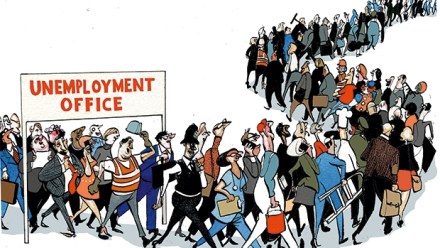
The worst of Britain’s post-war mistakes, ideas we thought long dead, are once more in the air. Yet again there are plans for ‘workers on boards’ (the govern-ment, of course decides who’s a worker), and for mandatory price caps, based on the delusion that government can make things cheaper by diktat. Intelligent people are once more agreed that British employers should pay the highest minimum wage in the developed world — a policy estimated to condemn tens of thousands to unemployment. The tax burden is at a 30-year high, yet many assume we should make that burden still heavier — as if the country can be taxed to prosperity. The Labour party has been pontificating along these lines in Liverpool all week, but these are in fact Tory ideas.