to 2408: End of the Line
From our UK edition
Unclued lights are TSAR (12) NICHOLAS (5A), his son ALEXEI (33), and his predecessors PETER (3) and CATHERINE (20) THE GREAT (23), BORIS (35) GODUNOV (21) and IVAN THE (6) TERRIBLE (43).

From our UK edition
Unclued lights are TSAR (12) NICHOLAS (5A), his son ALEXEI (33), and his predecessors PETER (3) and CATHERINE (20) THE GREAT (23), BORIS (35) GODUNOV (21) and IVAN THE (6) TERRIBLE (43).
From our UK edition
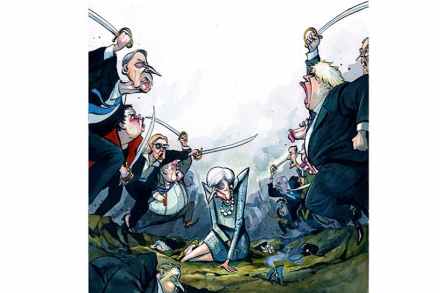
Leavers only, please Sir: Your leading article (‘The end of May’, 25 May) correctly calls for the Conservative party to establish itself as ‘unequivocally the party of Brexit’. The meltdown at the EU elections confirmed this is now the only course of action open to it, if it wishes to survive. Conservative MPs should show they have finally woken up to reality. They need to send the membership two candidates with impeccable Leave credentials, and who are not in the current cabinet. Placing any Remain-tainted candidates on the shortlist would display MPs’ continuing contempt for the party’s activists, supporters and donors. It would also show a curious lack of interest in their own job security.

From our UK edition
Tears for fears Theresa May welled up while announcing her resignation in Downing Street. How often do leaders cry? — Lady Thatcher was seen to have tears in her eyes while being driven away from Downing Street for the last time. — Tony Blair nearly broke down in public, but not while in office — while responding to the publication of the Chilcot Report in 2016. — Several US presidents have been witnessed crying — and at a time when it was rare for men to be seen showing emotion in public. Dwight Eisenhower had to cover his face with a napkin to hide his tears in 1952, when recalling wartime experiences. — In the same year Richard Nixon was seen crying after surviving a funding scandal and being retained as vice-presidential candidate.
From our UK edition
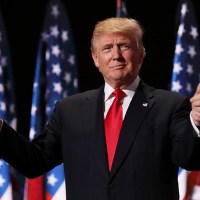
The day after Britain voted to leave the European Union, Donald Trump arrived by helicopter at Turnberry, his golf course in Scotland. The financial markets were in crisis and David Cameron had resigned in a panic. The Dutch Prime Minister, Mark Rutte, said that Britain had ‘collapsed: politically, monetarily, constitutionally and economically’. The then candidate (still not even party nominee) Trump put it differently. ‘You just have to embrace it,’ he said. ‘It’s the will of the people. I love to see people take their countries back.’ Perhaps his advice should have been taken more seriously. Huge numbers of people, including many Americans, think that Trump is unfit for the office of president. But why do so many support him?
From our UK edition
Home The Brexit party, led by Nigel Farage, received 5,248,533 votes (out of 17,199,701 cast) in the European parliament elections, securing 29 seats — more than twice the seats won by the Conservatives (in fifth place, down from 19 seats in 2014 to four now) and Labour (down from 20 seats to ten) put together. The Liberal Democrats, with 3,367,284 votes, pushed Labour into third place by winning 16 seats (up from one). The Greens won seven seats (up from three). The Yorkshire party secured more votes than the right-wing English Democrats did in the whole country. The Animal Welfare party received more votes than the Women’s Equality party. Ukip won no seat and nor did Change UK. The turnout was 36.9 per cent, the second highest since the elections began in 1979.
From our UK edition
From our UK edition
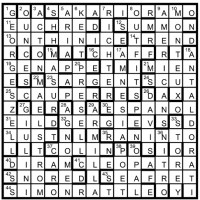
The unclued lights (with the pair at 37/26) are orchestral CONDUCTORS.
From our UK edition
From our UK edition
The Tory leadership has two stages: MPs will choose two finalists from what might be more than a dozen candidates, a process that should take about ten days. Then the final two will embark on a five-week campaign to win over the 125,000 Conservative Party members. If Boris Johnson makes it into the second stage, it is widely predicted that he will be selected by local members – making the first part of the race crucial. Coffee House will be tracking which Conservative MPs are backing which leadership candidates in the race. As the number of entrants in the field reduces, expect big swings as MPs switch their allegiances once their favourites have been knocked out.
From our UK edition
Nigel’s nakedness Sir: Rod Liddle is right to be wary of the hubris that Nigel Farage, the Brexit party leader, is beginning to show (‘The Brexit party delusion’, 18 May). His wish to smash the mould of British politics clearly shows that he expects his disciples to follow him into the promised land. The Andrew Marr interview and a recent Question Time appearance showed that under close questioning Farage gets rattled and resorts to dismissing his opponents and shouting them down. When will the public realise that this emperor has no clothes? Stan Labovitch Windsor, Berks Nato expansion Sir: Alan Judd writes of the ‘allegedly broken promise not to enlarge Nato following the collapse of the Soviet Union’ (‘Disputes over Putin’, 18 May).

From our UK edition
This week’s European election was always going to be pointless, at least from a British perspective. It is possible that the elected candidates will never even take up their seats. In one important sense, however, the election campaign has been useful: as a reminder of where public opinion stands on Brexit. A few weeks ago, many believed that Change UK, the party founded by Labour and Conservative dissidents spoiling for a revocation of Article 50, would capture the public mood. Instead, another new political party would appear to have triumphed — a party set up with the sole purpose of expressing anger at the failure of Parliament to effect Britain’s departure from the EU on the date which had been set into law.

From our UK edition
Home The country went to the polls to elect Members of the European Parliament and express its loathing for the two main political parties. On the eve of polling, Theresa May, the Prime Minister, appealed for MPs’ support for the Withdrawal Agreement Bill to be introduced shortly, saying that it would contain a provision for a vote on another referendum. In response, those she meant to woo reacted with hostility. The 1922 Committee had promised to have another little word with her about resigning after the bill’s fortunes became clear. Lord Heseltine had the Tory whip removed after saying he would vote for the Lib Dems in the EU elections.
From our UK edition
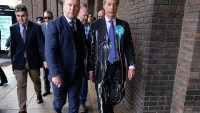
Milkshakes and other missiles What can the man who threw a milkshake over Nigel Farage in Newcastle expect as a punishment, from past precedent? — Tony Blair was struck by a tomato in Bristol in 2001. His attacker was given a two-year conditional discharge. — In the same year, John Prescott had an egg thrown at him in Wales. The attacker was punched in the face by Prescott. — In 2004 Tony Blair had a condom full of purple-dyed flour thrown at him in the House of Commons. The assailant was given a two-year conditional discharge. — In March, a man was jailed for 28 days for throwing an egg at Jeremy Corbyn. Eurovision failures Did the UK come last in Eurovision because of Brexit?
From our UK edition
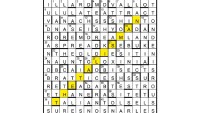
The group is ‘Les Nabis’ (anagram of ALBINESS (18)). Its members were VALLOTTON, DENIS, ROUSSEL, RANSON, SÉRUSIER, BONNARD and VUILLARD. The seminal work was THE TALISMAN (appearing diagonally from row thirteen). THE TALISMAN was to be shaded.
From our UK edition
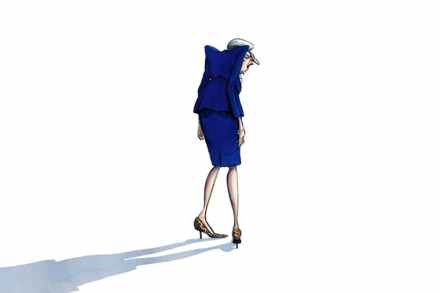
Theresa May's latest Brexit bill is set to come back to the Commons early next month, but already the signs are that it won't be fourth time lucky for the Prime Minister and her Withdrawal Agreement.
From our UK edition
Royal name games Will more children be called Archie following the birth of the Duke and Duchess of Sussex’s son? How have other names fared after being picked by royalty? — George was the 6th most popular boy’s name in 2012, the year before Prince George was born. In 2014 it fell to 18th. — Charlotte was the 17th most popular girl’s name in 2014, the year before Princess Charlotte was born. In 2016 it rose to 15th. — Louis did not make the 50 most popular boys’ names in 2017, the year before Prince Louis was born, although Louie was 36th. We haven’t got figures for a full year since his birth last April, but it failed to make the top 50 in 2018. — Archie was the 15th most popular boy’s name in 2018.

From our UK edition
Labour’s fence-sitting Sir: James Forsyth writes that Mrs May and Mr Corbyn are ‘not, in fact, that far apart’ (‘May’s compromising position’, 11 May). To many, the Labour left is simply playing its very old game of sitting on the fence over the EU. The electorate have spotted it, and Labour paid for it in the local elections. Some of us are old enough to remember Harold Macmillan’s withering mockery of the Labour attitude to the then Common Market in the early 1960s. It recalls the words of the old song: ‘She didn’t say yes and she didn’t say no; she didn’t say stay and she didn’t say go!’ The reason for Labour’s contorted behaviour was the same then as now.

From our UK edition
Home Theresa May, the Prime Minister, said that the EU withdrawal bill would be introduced in the Commons in the first week of June (just when President Donald Trump of the United States is making his state visit). If parliament did not vote for it, Britain would leave without an agreement, or its notice to leave under Article 50 would be revoked. Parliament sat for its 301st day, the longest session since the Long Parliament in the English Civil War. Olly Robbins, the civil servant who is chief negotiator for exiting the European Union, was sent to Brussels for no clear reason. May had a meeting with Jeremy Corbyn, the leader of the opposition, after the cabinet agreed to let talks with Labour on Brexit continue.
From our UK edition
This week the Institute for Fiscal Studies announced a five-year study into inequality in Britain, to be led by the economist Sir Angus Deaton, a Scottish academic who recently won the Nobel prize for economics. It is to be welcomed, because it will widen the scope of a debate that has been too narrow for too long. Britain’s problems with inequality stem not from an unfair distribution of income but from patchy provision of public services, which are often far better in wealthier areas than in poorer ones. As the IFS makes clear in a report to launch its initiative, income inequality in Britain is not rising — how-ever much the Labour party would like to tell us it is.
From our UK edition