The Spectator

Barometer | 28 March 2019

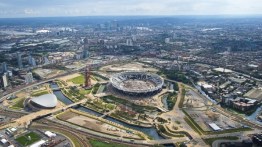
Silly signs The Department for Transport ordered councils to remove ‘obsolete and unnecessary’ road signs. Some examples of the art from around the world: — ‘Sign not in use’ (UK) — ‘Please do not throw stones at this sign’ (Ireland) — ‘Road unsafe when this sign is under water’ (US) — ‘Caution: water on road during rain’ (US) — ‘Caution: road unsuitable for some types of vehicle’ (UK) — ‘Caution: no warning signs’ (US) — ‘Caution: this sign has sharp edges’ (US) Packing in fans Tottenham Hotspur held the first match in its new stadium. Which English clubs can pack in the greatest number of fans?

Healthy debate

It is not hard to make the case that vaccination programmes have been one of the greatest contributions to mankind over the past century. It is sufficient simply to list the most common causes of death in 1915 of British children aged under five, in descending order: measles, bronchitis, whooping cough, diphtheria, tuberculosis, pneumonia, infective enteritis and scarlet fever. Few parents in Britain now have to undergo the trauma of nursing a child suffering from any of these conditions, still less of burying a child who has died from one. That these diseases have receded into history is down entirely to advances in medicine and public health.

Portrait of the week | 28 March 2019

Home The House of Commons voted to take Brexit business into its own hands, passing by 329 to 302 an amendment by Sir Oliver Letwin. This was immediately described by Sir Bill Cash in the House as ‘constitutional revolution’. Three ministers resigned so as to vote for the amendment: Alistair Burt, Richard Harrington and Steve Brine. The Commons move followed a sorry visit to the EU summit of the other 27 heads of government by Theresa May, the Prime Minister, who ate pizza outside the room where they all enjoyed dinner. She had asked for Brexit to be delayed till the end of June, but was told that it would take place on 22 May if parliament voted for her withdrawal agreement.

MPs reject every option: the full results of the indicative votes

Parliamentarians were given the opportunity today to take control of the negotiations, after holding indicative votes on their preferred Brexit strategy. Now, the results are in, and we have found out that they don't support any option at all. For Oliver Letwin's vote, each MP was presented with eight Brexit motions, selected by the Speaker earlier today, on a piece of green voting paper. Inside the division lobby, they could either vote for, against, or abstain on each position, with no limit on the number they could support. Below are the number of votes for each option.

The Tories have squandered Brexit – they must not waste the extension too

For many people, next Friday was supposed to be a celebration. Boris Johnson spoke about an ‘independence day’ marking the beginning of a new era of national self-confidence. But as we approach 29 March, not even ardent Brexiteers can claim that there is anything to celebrate. Theresa May has been reduced to asking, or rather begging, the EU for an extension to Article 50 — something that the EU has said it will grant only if Britain can provide a good reason for needing the extra time. So far, the Prime Minister has not provided one, apart from the prolonging of every-one’s agony. When parliament voted to enact Article 50 two years ago, the challenge seemed daunting but perfectly possible.

Full list: the opposition MPs who back May’s deal

Speaker Bercow may have thrown a grenade in the works with his surprise decision to block a vote on May's deal, but now the PM has returned from Brussels with an extension, a third meaningful vote looks set to go ahead next week. Before the vote, Coffee House is keeping track of the Tory MPs May needs to win over to pass her deal. Here, we will monitor the opposition MPs she will need to persuade as well. For every rebel within her own party, May will need a similar number of these opposition votes. Below are the Labour and independent MPs who have said they will support the deal, and those Number 10 are hoping to win round. Many are in seats which heavily voted Leave in the 2016 referendum, or have indicated that they might back the withdrawal agreement.

Barometer | 21 March 2019

The march of time If we leave the EU on 29 March, with which historic events will that date be shared? 845 A Norse fleet sailing up the Seine reached Paris, sacking the city and extracting a ransom from Charles the Bald. 1461 The Battle of Towton, just south of Tadcaster, one of the bloodiest battles fought on English soil, with more than 20,000 men estimated to have been killed. Yorkist victory confirmed Edward IV as king. 1871 Royal Albert Hall officially opened. 1936 Hitler wins plebiscite to annex the Rhineland. 1945 Last recorded strike of a V1 bomb on Britain. Where are you safe? The mosque attacks in Christchurch were especially shocking because New Zealand is perceived to be among the world’s safest countries.

Agony prolonged

For many people, next Friday was supposed to be a celebration. Boris Johnson spoke about an ‘independence day’ marking the beginning of a new era of national self-confidence. But as we approach 29 March, not even ardent Brexiteers can claim that there is anything to celebrate. Theresa May has been reduced to asking, or rather begging, the EU for an extension to Article 50 — something that the EU has said it will grant only if Britain can provide a good reason for needing the extra time. So far, the Prime Minister has not provided one, apart from the prolonging of every-one’s agony. When parliament voted to enact Article 50 two years ago, the challenge seemed daunting but perfectly possible.

Portrait of the week | 21 March 2019

Home Theresa May, the Prime Minister, wrote to Donald Tusk, the President of the European Council, asking for a delay of the date for Brexit. She had been wondering whether to solicit a third ‘meaningful vote’ before or after going off to the EU summit in Brussels on Thursday. Heaps of money had been put aside to buy off the DUP and unreal talk had been launched about the Vienna Convention providing a way out of the Irish backstop. But now, asked if Britain was in a crisis, a No. 10 spokesman said: ‘That situation has come to pass.

to 2397: Obit V

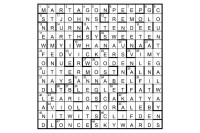
Albert Finney, a fine ACTOR (13), died on 7 February 2019. His legacy includes SATURDAY NIGHT (10) and SUNDAY MORNING (9), and TOM JONES (1), THE DRESSER (27/24) and SKYFALL (28). BYTE (20), FAR (17) and LINEN (40) give an anagram of ALBERT FINNEY. LINEN was to be shaded.

The Tories are squandering the opportunity of Brexit

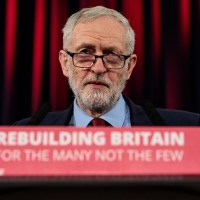
In all the madness of the Brexit voting, it's easy to forget that Philip Hammond revealed a mini-Budget this week. Even the Chancellor started his speech by promising not to talk for long, so MPs could discuss the no-deal Brexit which he has so lamentably failed to prepare for. Ever since the referendum result, he has been expecting economic gloom. It has refused to follow: the figures in his statement seemed to mock his general pessimism. Disaster has struck Westminster though. Theresa May has lost control of her party and her government and yet her opponent, Jeremy Corbyn, is so weak that he strikes most voters as an even worse option. It’s hard to think of a time when our politics looked more dismal.

Letters | 14 March 2019

Turn it off and on again Sir: The conclusion of your leading article of 9 March (‘Close the deal’) that MPs should ‘hold their noses and vote for May’s deal’ is understandable, but deeply disappointing that this seems to be the best choice left. It occurs to me, however, that there is another solution which might remove many of the obstacles we are currently facing. Could we not revoke Article 50 (as we are unilaterally permitted to do), but then immediately trigger it again? This would wipe the slate clean and give us two years to negotiate in the way you think it should have been done in the first place — hopefully under a new prime minister with a modicum of negotiating nous.

Portrait of the Week – 14 March 2019

Home The government was defeated by 149 votes — 391 to 242 — on the EU withdrawal agreement presented by Theresa May, the Prime Minister. In a croaking voice she announced a free vote on leaving without a deal. Mrs May had come back from Strasbourg with two documents: a ‘joint instrument’, or interpretive tool agreed by Britain and the EU on the effect of the Irish backstop, and a 365-word ‘unilateral declaration’ by Britain, not agreed by the EU, asserting the right to take the persistence of the backstop to arbitration. The joint instrument said that the EU shared the UK’s aspirations for ‘alternative arrangements’ concerning the Irish border (such as technological monitoring) to be in place by 31 December 2020.

Barometer | 14 March 2019

Cox’s codpiece Attorney general Geoffrey Cox returned from Brussels without even a ‘codpiece’, the name used by some Tories for the concession on the backstop which he was hoping to win from the EU. — Why is a codpiece called by that name? The expression is traced by the Oxford English Dictionary to the year 1460, a pivotal year in the Wars of the Roses, when the Battles of Northampton and Wakefield were fought — It has survived in spite of the fact that the word ‘cod’, to indicate scrotum, has since fallen into disuse. This itself can be traced back to Old Norse, which used ‘kodd’ to describe something distended and unevenly shaped.

The leadership deficit

In all the madness of the Brexit voting, it's easy to forget that Philip Hammond revealed a mini-Budget this week. Even the Chancellor started his speech by promising not to talk for long, so MPs could discuss the no-deal Brexit which he has so lamentably failed to prepare for. Ever since the referendum result, he has been expecting economic gloom. It has refused to follow: the figures in his statement seemed to mock his general pessimism. Disaster has struck Westminster though. Theresa May has lost control of her party and her government and yet her opponent, Jeremy Corbyn, is so weak that he strikes most voters as an even worse option. It’s hard to think of a time when our politics looked more dismal.