Books and Arts – 9 January 2020
From our UK edition
From our UK edition
From our UK edition
The unclued lights are PAINTING terms. First prize Martina Fabian, Bourne End, Bucks Runners-up Phillip Wickens, Faygate, West Sussex; A.H.
From our UK edition
From our UK edition
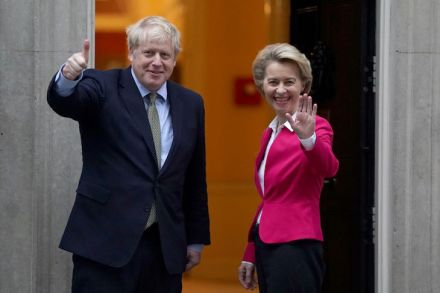
The new president of the European Commission Ursula von der Leyen made a speech to the London School of Economics earlier today. During the speech, von der Leyen said: 'Without an extension of the transition period beyond 2020, you cannot expect to agree on every single aspect of our new partnership. We will have to prioritise.' You can listen to the speech and read the full transcript below: Ladies and Gentlemen, It is a great pleasure to be back here at the London School of Economics – a place which brings back so many happy memories for me. The year I spent here taught me so much – both in and out of LSE. As anyone who knew me at the time will tell you, I spent more time in Soho bars and Camden record stores than I did reading books in Senate House Library.
From our UK edition
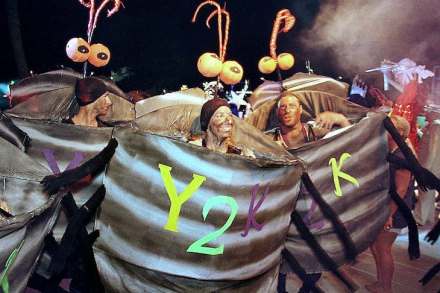
With just 35 minutes of 1999 to go, and as most of the country was preparing to celebrate the arrival of the new millennium, Peter Snow was desperately trying to fill airtime. He was the BBC’s Millennium Bug correspondent on a marathon 28-hour live broadcast called '2000 Today', and every hour or two he would update viewers on which countries had fallen victim while standing in front of a large world map. The only problem was that the bug did not appear to be striking…anywhere. At the time the bug was a major worry. The concern was that when the date rolled over to 2000, because computers may only store the date as two digits – '99' instead of '1999' – suddenly systems across the world could revert to thinking that it was 1900.
From our UK edition
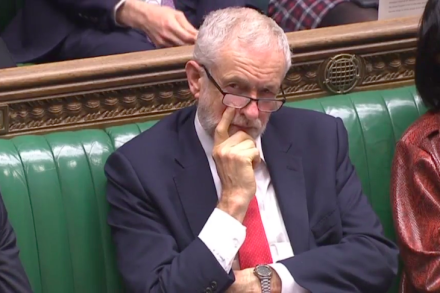
The House of Commons has voted to back Boris Johnson's Withdrawal Agreement Bill, setting the country on course to leaving the European Union at the end of January. The Bill was passed by the Commons by 358 votes to 234, a majority of 124 (substantially higher than the majority the government won at the election).
From our UK edition
My Lords and Members of the House of Commons. My Government’s priority is to deliver the United Kingdom’s departure from the European Union on 31 January. My Ministers will bring forward legislation to ensure the United Kingdom’s exit on that date and to make the most of the opportunities that this brings for all the people of the United Kingdom. Thereafter, my Ministers will seek a future relationship with the European Union based on a free trade agreement that benefits the whole of the United Kingdom. They will also begin trade negotiations with other leading global economies. The integrity and prosperity of the United Kingdom is of the utmost importance to my Government.

From our UK edition
My father’s imprisonment Sir: Harald Maass’s piece on the plight of Uyghurs in China (‘A cultural genocide’, December 14) captures the grim reality of what has been happening. Articles like this draw vital attention to the crisis. I am an ethnic Uyghur and live in Belgium with my wife and children. My father, a 58-year-old secondary school teacher from Xinjiang, was jailed in China in April 2018. No reason was provided by the authorities as to why, and there was no trial or any other legal procedure. He was obviously imprisoned just because he is a Uyghur. After 18 months in prison, he was finally released recently and is at home in Xinjiang. Even so, we have only been in touch once — he and all my family members in China are too afraid to be open with me.
From our UK edition
January ‘If parliament backs a deal, Britain can turn a corner,’ Theresa May, the Prime Minister, said. The Commons defeated her withdrawal agreement with the EU by 432 to 202. Patrols found 15 people on inflatable craft off Kent. The Argentine footballer, Emiliano Sala, 28, died when a light aircraft crashed into the Channel. Off Libya and Morocco, 170 migrants drowned in two shipwrecks. Patisserie Valerie went into administration. US President Donald Trump refused to approve a federal budget without funds for a wall with Mexico. A fatberg 210ft long was found blocking a sewer beneath Sidmouth. February Seven MPs resigned from the Labour party, objecting to anti-Semitism and lukewarmness towards a second referendum on Brexit.
From our UK edition
Bah humbug Some of the things reported to have been banned this Christmas: — Mulled wine banned from being sold by street traders at Christmas fayres in Castleford, West Yorkshire, on the grounds it would break a Public Spaces Protection Order designed to stop street drinkers. — Christmas lights banned by health and safety officers in Pembury, Kent, on the grounds they each weighed more than 4kg. — Children banned from sending more than one Christmas card each to classmates at Belton Lane Primary School, Grantham, on the grounds that cards are environmentally unfriendly. — Glitter banned from Marks and Spencer cards, wrapping paper and decorations.
From our UK edition
Britain’s parliamentary democracy is easily mocked: the medievalisms, the men in tights, the ayes to the right. But it has been preserved because it tends to work. It focuses minds and makes order out of chaos. Yet again we have a general election result that almost no one predicted — and one that offers plenty of lessons for those with an eye to see them. The communities so often patronised as ‘left behind’, typically in northern and coastal towns, have now demonstrated that they are powerful enough to decide elections. During the Blair and Cameron eras they were written off as a declining demographic: older, poorer, less educated and often stuck in the past. The ‘modernising’ politicians, it was argued, needn’t worry too much about them.
From our UK edition
From our UK edition
The unclued lights are all words derived from names in the work of Charles Dickens. First prize David Brewis, Windsor, Berks Runners-up F.A.
From our UK edition
P.J. O’Rourke I love poems but hate poetasters, love wine but detest oenophiles, love food but can’t stand foodies. Therefore my favourite passage about food in fiction is Lionel Shriver’s entire book Big Brother. In her tale of obese totalitarianism and comestible fascists Shriver destroys every pretention and abstract conception about food — starves it to death or fattens it for the kill. And she does so in prose that is poetry: ‘You have to ask yourself if there was ever a time people just ate something and got on with it. Every time I open the refrigerator I feel like I’m staring into a library of self-help books with air-conditioning.
From our UK edition
Grayson Perry In 1992 I created a graphic novel called Cycle of Violence. Reading it now, the initially striking thing is that it predicts the rise of cycling culture in the UK and a working-class boy called Bradley winning the Tour de France. But it mainly reflected the state of my mind at the time — it contained a lot of perverted sex, dysfunctional parenting and mercilessly mocked the process of psychotherapy. In 1992 our daughter Flo had just been born and my wife Philippa seemed to have read every parenting book under the sun. Our house was full of the jargon and ideas associated with psychotherapy.
From our UK edition
They said it 1. Greta Thunberg (to the UN) 2. The Duke of York 3. Dawn Butler, as the shadow secretary for women and equalities 4. Donald Tusk, as the President of the European Council 5. Sir Lindsay Hoyle, as his first words as the newly elected Speaker 6. Boris Johnson, of applying for delay to Brexit 7. Xi Jinping, the ruler of China 8. The Queen at Sandringham Women’s Institute 9. President Donald Trump of the United States, in a tweet 10. Philip Hammond, in a speech in Washington. Crown me! 1. Fur 2. The Prince of Wales and the Duchess of Cornwall 3. The heavy Imperial State Crown 4. Archie Harrison Mountbatten-Windsor (though he is by courtesy the Earl of Dumbarton) 5. John Henry Newman 6. The Duke of York 7. Olivia Colman 8.
From our UK edition
From our UK edition
From 16 June 1866: Mr Stanley Jevons, Mr Mill, and the Chancellor of the Exchequer are all agreed that there is imminent danger of exhausting the British store of coal, are almost willing to legislate upon that annoying datum… The philosopher may of course argue that it is all a question of time, that the coal must be exhausted some day, and that a few hundred years make no difference to his argument, but this is not a political view.
From our UK edition
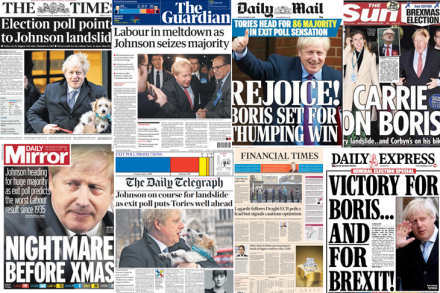
The nation's newspapers reflect what is the largest political revolution in a generation. Boris Johnson has been able to turn the tide and return a majority of 76 seats after an election in which he promised to 'Get Brexit Done'.
From our UK edition
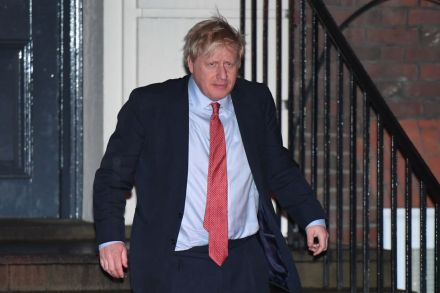
Boris Johnson has just addressed Tory HQ following the Tories's huge election win. Here is the full text of what he had to say: Well this is the most incredible...It is a day that many of us have dreamed of, a day when the Conservative party genuinely speaks for every part of the country. We have won from Workington to Woking, we have won in Bishop Auckland, in Darlington, in seats that Conservatives have not won for 100 years or more. Wrexham! Tony Blair's old seat in Sedgefield. We have turned Redcar 'Blue-car'. We have won in Clwyd South, which I first contested 22 years ago and was soundly thrashed. We win in Kensington and we win in Clwyd South – that is a party that speaks for the entire country and it is a tribute to all of you here, all of you unbelievable young thrusters.