The Spectator

London: A celebration

From our UK edition

Albanian gangsters with rice flails and Uzis, Ukrainian pimps with high-cheekboned floozies, Jamaicans with handguns, Somalis with knives — just some of the people enriching our lives. Jew-hating Imams from Rabat and Homs, Stockpiling their basements with ricin and bombs, Rich Saudi princes with cowering slaves, Slovakian hooligans, Romanian knaves, A fat lady from Lagos looking quite glum With five kilos of gak stashed away up her bum, Levantine maniacs beating up gays, Young girls from Thailand whose skills quite amaze, Grim Kurdish separatists from the shores of Lake Van, Strange Russian men with a nuclear tan, From Romford to Ruislip a myriad show Of cultural diversity — so mind how you go.
Portrait of the week: Drought declared, Manchester elects new mayor and 70,000 enter Ceuta 

From our UK edition

Home In 19 English counties 1mm or less rain fell in July. Tom Bradshaw, the president of the National Farmers’ Union, said that yields of wheat and oats were ‘very, very poor’. Fire affected 375 acres of Suffolk at Dunwich Heath. Shell agreed to sell its European onshore renewables arm, including solar farms, to France’s TotalEnergies. BP’s profits rose to the highest since 2022, after the war in the Middle East pushed up oil prices. BP put its UK offshore oil and gas business up for sale. A trial by researchers at King’s College London started recruiting 220 children aged 11 to 16 to assess puberty blockers after the High Court rejected a legal challenge.

Cambridge has fallen

From our UK edition

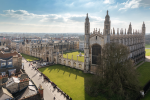
‘What distinguishes Cambridge from Oxford,’ A.A. Milne said in 1939, ‘is that nobody who has been to Cambridge feels impelled to write about it.’ Four decades later, Tom Sharpe would prove him wrong about Cantabrigian reticence with Porterhouse Blue – his riotous satire of the conflict between an idealistic new master and the stuffed shirts of the senior common room. It’s a shame that Sharpe isn’t around to enjoy the Jason Arday scandal – a farce so absurd that even he may have dismissed it as being too silly. When Arday was announced as Cambridge’s professor of sociology of education, he was lauded as the university’s youngest-ever black professor. His biography had a whiff of Hollywood. Arday had been diagnosed with a developmental disorder at the age of three.

Letters: the insanity of Labour’s attack on private schools

From our UK edition

Bad education Sir: Lara Brown (‘Class warfare’, 1 August) lays bare the baleful consequences – intended and unintended – of Labour’s vandalistic attack on private schools. It borders on the insane for a government to seek to destroy a sector which is a world leader. An administration genuinely committed to economic growth would champion industries where the country retains comparative advantage. Consumed by an outmoded class ideology, and seemingly unconcerned about the effects of its policies on the educational prospects for many young people, Labour seems determined to do the opposite.

Portrait of the week: No. 10 North, Burnham meets Zelensky and European wildfires  

From our UK edition

Home Andy Burnham, the Prime Minister, summoned cabinet ministers for a day at No. 10 North – Heron House in central Manchester, shared with intelligence agencies – which he reached by private jet to Glasgow, where he had an appointment, and another private jet south to Manchester. President Volodymyr Zelensky of Ukraine became the first international visitor to Mr Burnham, who told him: ‘You can count on the UK for as long as it takes.’ He decided to speed up the independent review of adult social care being undertaken by Baroness Casey of Blackstock. He said that he wanted schools to offer technical courses to children aged 14 and over.

2760: Metalwork – solution

From our UK edition

‘IN THIS WORLD A MAN MUST EITHER BE ANVIL OR HAMMER’ from HYPERION (extra letters from mixtures, marked [B]) by LONGFELLOW. First prize Maddy Coelho, Winchelsea Runners-up Charlotte Blundell, Richmond, Twickenham; Rob Hardcastle, Harrogate, N.

How many people drown in Britain?

From our UK edition

Common ground The Commonwealth Games began as the British Empire Games in 1930, yet they did not originate in Britain. The event was instigated by a Bobby Robinson, a sports reporter on a local newspaper in Hamilton, Ontario, who also acted as manager for the Canadian track and field team at the 1928 Olympics in Amsterdam. The games were held in his home town, Hamilton, and 11 countries participated: Canada, England, Scotland, Wales, Ireland (which meant the Irish Free State as well as Northern Ireland), Australia, New Zealand, South Africa, British Guiana, Newfoundland and Bermuda. The only women’s events were in swimming.

How to approach women successfully 

From our UK edition

Rights and wrongs Sir: As one of those centre-left weirdos who reads your magazine to see what the other side is thinking, I was surprised by your assertions regarding Britain’s wrong economic turn (‘Labour’s inheritance’, 25 July). There is a reason why Britain’s economy has grown so slowly since 2008 and it is directly related to the financial crisis you mention in the same paragraph – the bailout for which was laid on the taxpayer, resulting in the austerity agenda, both of which significantly dragged on GDP. There was a cross-party faith that the financial system would regulate itself. The same thinking applied to Margaret Thatcher’s Right to Buy policy on council houses: buy your house and let the market sort the rest.

Livestream: An evening with Rory Sutherland

From our UK edition

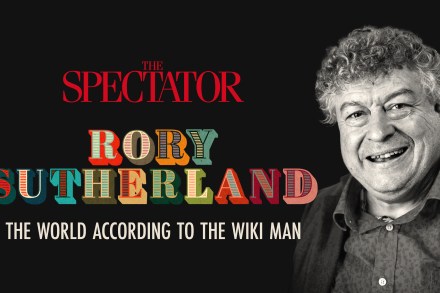
Watch the livestream of An evening with Rory Sutherland: The world according to the Wiki Man here. Rory Sutherland – renowned advertising executive and author – is widely regarded as one of the most original and entertaining thinkers of our time. Since launching his Wiki Man column in The Spectator nearly two decades ago, his blend of behavioural psychology, advertising savvy and sharp social observation has made him a favourite with readers worldwide.

Can Burnham end rough sleeping?

From our UK edition

Lost counties Rutland is to be abolished for the second time, having first been taken off the map in 1974 but then reinstated in the mid-1990s. Some other lost counties of England: Middlesex: Abolished in 1965 and subsumed into Greater London. Huntingdonshire: Merged with Peterborough in 1965 and then subsumed into Cambridgeshire in 1974, though it lives on as the name of a district. Soke of Peterborough: Semi-detached part of Northamptonshire with its own county council until merged with Huntingdonshire. Winchcombeshire: Area of what is now Gloucestershire, abolished shortly before the Norman Conquest. Hallamshire: Area centred on Sheffield which was taken into Yorkshire. Hullshire: Became the borough of Kingston upon Hull before becoming Humberside in 1974.

Burnham is already drifting towards defeat

From our UK edition

Nothing so became Keir Starmer’s premiership as his leaving of it. Farewell remarks outside Downing Street, unpunctuated by the odious Steve Bray; a brief goodbye in Buckingham Palace, before the King welcomed his fourth new prime minister in four years; then to the pub to drown his sorrows with Rachel Reeves, leaving Andy Burnham and John Healey to pick up the national tab. There is an irony to Healey’s appointment as Chancellor. Burnham blames Margaret Thatcher for so many of the country’s ills but her time in office was devoted to clearing up the dreadful inheritance left by the last Healey at the Treasury: a top rate of income tax at 98 per cent, untamed inflation, union disarray, socialist sclerosis. Rather than take a wrong turn in the 1980s, Britain flourished.

Portrait of the week: Burnham becomes PM, America strikes Iran and Spain wins World Cup 

From our UK edition

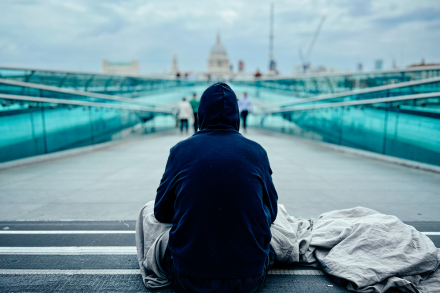
Home The King accepted Sir Keir Starmer’s resignation as Prime Minister and asked Andy Burnham to form an administration. In Downing Street, he made a short speech without notes, saying that his first instruction would be to end rough sleeping. He invited President Donald Trump to Manchester. He also spoke to President Volodymyr Zelensky of Ukraine and President Emmanuel Macron of France. He promised a ‘cost of living government’, and removed VAT from domestic energy bills for six months from October, giving an average saving of 86p a week. Bus fares in England would be capped at £2 from 2027. Mr Burnham appointed a cabinet of 12 women and 11 men, gunning for Starmer loyalists.

Letters: Bring back hat wearing

From our UK edition

That’s the spirit Sir: What a wonderful young man Michael Simmons is (‘Sick of it’, 18 July). His stubborn refusal to be held back by disability and illness sets him apart from a generation encouraged to erect mental barriers and create artificial limits. He shows that determination, stoicism and a little bloodymindedness go a long way toward a better life. Our society has improved: we no longer mock disabilities. However, is the kindness culture that discourages growth and aspiration not far crueller in terms of a life well spent? Ewen Melling London Seal their fate Sir: It would be wonderful if Matt Ridley would add the Atlantic salmon to his list of endangered species whose recovery we should be supporting (‘Wild ambitions’, 18 July).

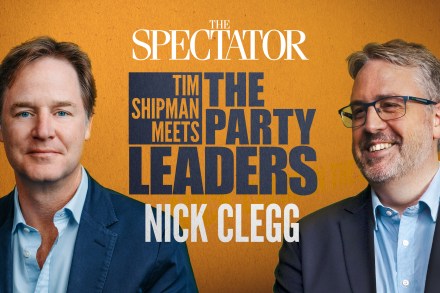
Livestream: Tim Shipman meets Nick Clegg

From our UK edition

Watch the live recording of Tim Shipman meets Nick Clegg here. With a journalism career spanning nearly three decades, Tim Shipman has broken some of the biggest stories in modern British politics. In our event series, Tim Shipman Meets the Party Leaders, The Spectator’s political editor learns the triumphs and setbacks of party leaders, past and present, as well as reveals the behind-the-scenes stories that you won’t hear anywhere else. In the second instalment of this series, we’re joined by former Liberal Democrat leader Nick Clegg. Shipman and Clegg will discuss the decline of the two-party system, the upending of global alliances, his move to Meta and even the opportunities and threats of AI.

How many people get arrested for terrorism?

From our UK edition

Dying of heat Have this year’s heatwaves really killed 2,700 people? The claim has been made in a paper by Imperial College. – The figure was arrived at by taking the temperature recordings and modelling the theoretical number of deaths based on past heatwave events. However, actual data on deaths tells a different story. The UK Health Security Agency, which measures recorded deaths against a five-year average, declares there was ‘no signal of high mortality above the baseline’ for the week ending 31 May, the first heatwave this year. – As for the second heatwave, provisional data shows there were 768 fewer deaths (or 7.4%) than would have been expected from the five-year average. The later figures might yet be revised upwards.