Taylor Millard

The creeping authoritarianism of facial recognition

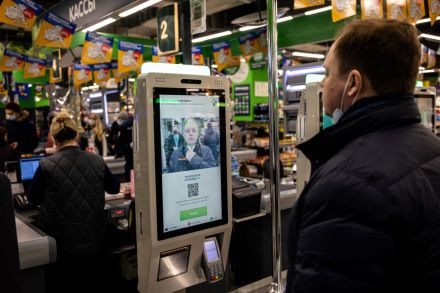
In an effort to lower crime rates, American law enforcement is pushing to combine facial recognition with expanded video surveillance. Politicians worried about their re-election chances due to a perceived crime wave see the expansion as necessary. It’s a sharp swing from 2019 and 2020, when cities like San Francisco and New Orleans were banning or at least enacting limits on facial recognition technology due to privacy concerns. Now, New Orleans plans to roll back its facial recognition prohibition. The Virginia State Senate gave law enforcement a late Valentine’s Day gift by passing a facial recognition expansion bill on February 15 — the Democrats who unanimously approved a ban on facial recognition last year suddenly changed their minds, as did five Republicans.
Democracy and economic freedom are in decline

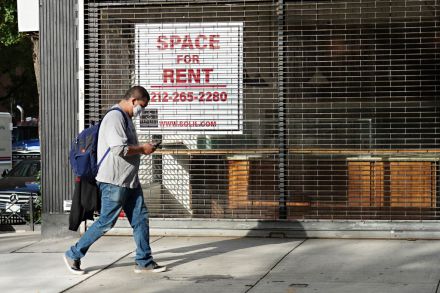
The first report cards on democracy and economic freedom for 2021 are out and the results are not good. Economic Intelligence Unit, the sister company of The Economist magazine, found that last year’s Democracy Index had fallen by almost a tenth of a percent. That’s the biggest drop in the index’s 15-year history. The Heritage Foundation’s Index of Economic Freedom, meanwhile, saw a similar albeit larger decline of 1.6 points out of 100. Heritage looked at economic policies and conditions in 177 countries while the Democracy Index looked at 167 countries. Both reports blame government-enforced COVID restrictions for the declines.

mask

Congress’s latest assault on internet freedom

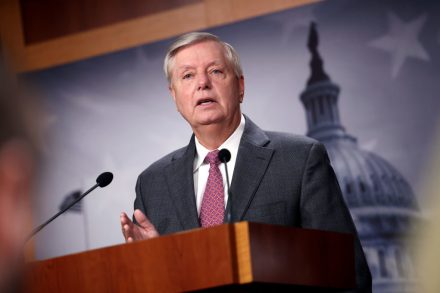
Another assault on internet freedom and constitutional rights is underway this week as the Senate Judiciary Committee considers the EARN IT Act of 2022. The bill is presented as a potential solution to internet luring by creating a new National Commission on Online Child Sexual Exploitation Prevention. The nineteen-member commission is tasked with coming up with best practices that internet companies can adapt to allegedly keep children safe from online predators. Yet tucked in the bill are more changes to Section 230 of the Communications Decency Act, the law that keeps online platforms from being civilly liable for hosting and moderating third-party content. The first change involves reaffirming that victims of child sexual abuse can civilly sue interactive computer services.

lindsey graham earn

The research is in and lockdowns don’t work

A new Johns Hopkins systematic review cuts in two the narrative that government-imposed mandates meaningfully prevent coronavirus deaths. The review looked at 34 different studies analyzing business and school closings, shelter-in-place orders, and international travel bans. It included data from US and European Covid mitigation efforts, along with endeavors in India, South Africa and China. Almost two dozen of these studies were peer-reviewed, while the other 12 were working papers. The results of this meta-analysis are striking. Lockdowns reduced Covid mortality by an average of only .02 percent. Shelter-in-place orders were slightly better at a 2.9 percent average, but nothing worth crowing about.

Sanctions on Russia won’t work

Another battle in the West’s sanctions war against Russia is set to begin. The US and its NATO allies have put together what they’re calling a strong package of economic restrictions on Russia in response to its military buildup near Ukraine’s border. What’s in the package remains a secret but it appears to focus on Russia’s energy sector. A State Department spokesperson told NPR on Thursday that the Nord Stream 2 pipeline from Russia to Germany would remain inoperable if an invasion happened. The Financial Times suggested that other new Russian gas developments are also on the sanctions list. The UK wants Russia booted from SWIFT, the Belgian financial messenger services company, while the West also floated the idea of sanctioning Russian President Vladimir Putin.

Congress’s half-baked assault on Big Tech

A major anti-Big Tech bill is heading to the floor of the Senate after a frustrating markup session in the Judiciary Committee. The American Innovation and Choice Online Act, as it's called, majorly changes how online retailers can sell and promote their own branded wares and apps. It even bans Amazon and Google from suggesting their own products over those of a third party. Supporters from both sides of the aisle are portraying the bill as a great leveler of sorts. They believe it helps consumers and the so-called “little guy” against the Big Tech companies.

antitrust hipsters

Blame Congress, not companies, for staggering inflation

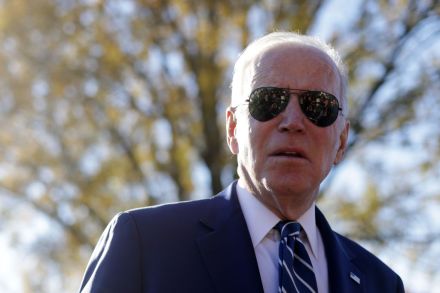
Observers had mixed reactions to yesterday’s announcement that inflation rose 7 percent last year. It all depended on where they fell on the ideological spectrum. President Joe Biden attempted to spin the report, saying that gas and fuel price growth was starting to slow, while acknowledging that more work needed to be done. He’d previously blamed rising inflation on used car prices and supply chain issues, swearing that increased government spending had nothing to do with it. The White House also compared America's Consumer Price Index report to indices in other countries, calling inflation a global phenomenon. Other Democrats blamed big business for the inflation jump.

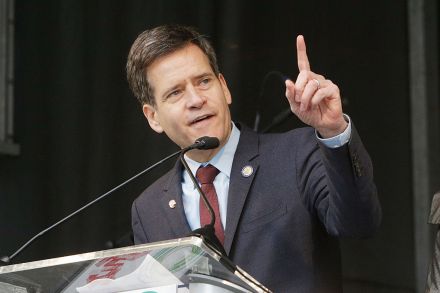
A New York senator declares war on the First Amendment

A new year, a new assault on free speech in America. New York Senator Brad Hoylman claims that legislation he's introduced into the state senate targets Big Tech algorithms to keep them from promoting “controversial and harmful content.” Yet the bill seeks to “protect” public health by making almost any social media comment going against Hoylman’s beliefs illegal. Hoylman passes himself off as a defender of the public good by vowing to take on Big Tech, which he accuses of profiting by deliberately stoking controversy. He specifically mentions anti-coronavirus vaccine posts “as a false statement of fact or fraudulent medical theory that is likely to endanger the safety or health of the public.

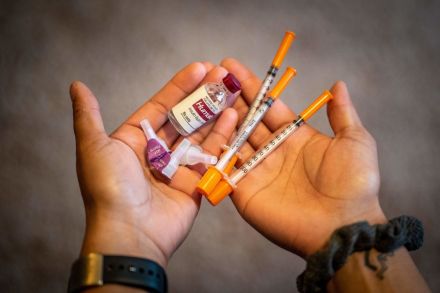
Build Back Better won’t make insulin more affordable

Language about insulin is supposed to be one of the bigger selling points of the Build Back Better Act. Democrats say prices would be capped at $35, which is true from a certain point of view. Insulin co-pay prices get capped at $35 — starting in 2023 — for Medicare Part D and Medicare Advantage plans. Individual and private insurers face different rules, however, only having to charge $35 for either a vial or a pen. They can also pick one kind of insulin to cover. Insulin price controls are a hot topic right now for good reason. Over the last twenty-three years, Humalog brand insulin has gone from $21 a vial to $275. The generic version of insulin called Semglee costs almost the same.

insulin

Both parties want to control what you say on the internet

The long slog towards government regulation of social media is snaking its way towards reality. The House and Senate hold hearings this week on bills enacting rules on Facebook, Twitter, TikTok and YouTube. Many of these proposals revolve around Section 230 of the Communications Decency Act, a rather innocuous 1996 law protecting online platforms from civil liability for hosting and moderating third-party content. Section 230 includes language praising “the vibrant and competitive free market” existing for the internet and tech companies, without state or federal government rules. It’s all about to change twenty-five years later, with both major parties seeking to get their pound of ideological flesh from Big Tech.

control

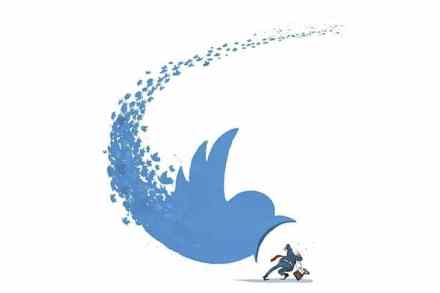
Is Twitter about to step up its censorship?

From our UK edition

Farewell then @jack. Jack Dorsey’s departure from Twitter on Monday came as no surprise given that the firm Elliott Management, one of Twitter’s activist investors, almost ousted him last year. Only the coronavirus may have prolonged the inevitable. Twitter’s stock keeps dropping. It may not reach the revenue and daily user projections for 2023 that it set last February. It also has the smallest ‘Big Tech’ user base, behind Facebook, YouTube and TikTok. The prevailing theory is that Dorsey’s departure involves Elliott Management, which controls two board seats and over $1 billion in stock shares, and which flexed enough muscle to boot Dorsey out.

The Federal Reserve is still political

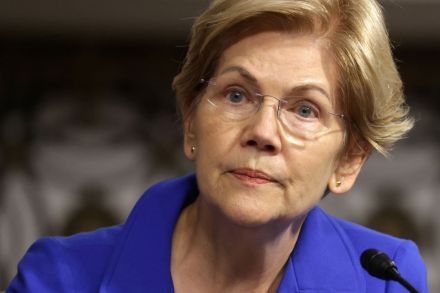
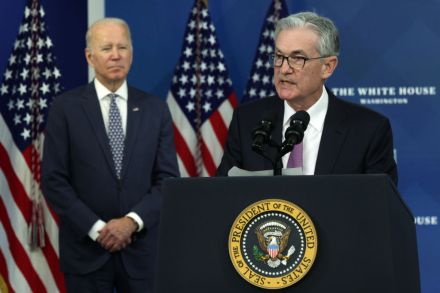
President Joe Biden’s re-nomination of Jerome Powell as Federal Reserve chairman came as no surprise to financial analysts. Powell remained the most likely candidate given his ability to schmooze and glad-hand with politicians within and outside the administration. He earned the title of “best bureaucrat in Washington, DC” by receiving endorsements from both National Review and the American Prospect despite their divergent policy views. A corresponding vote in the Senate seems preordained, unless Massachusetts Senator Elizabeth Warren gets her way and forces a new pick. “Reappointing Powell is the safest route here,” the Cato Institute’s Norbert Michel told me in an email after Powell’s nomination on Monday.

Yes, Build Back Better will raise the deficit

The fate of the Build Back Better plan is now in the hands of the Senate. The House approved the gargantuan $1.85 trillion bill on Friday despite efforts from Republicans to delay the vote. House Minority Leader Kevin McCarthy played the role of Rand Paul or Ted Cruz, railing against the legislation in an over eight-hour-long speech. The Associated Press suggests that McCarthy viewed his talk-a-thon as an opportunity to show his conservative bona fides should Republicans take control of the House in 2022 and he decide to push for the speakership. “This is a tipping point,” McCarthy said on Friday morning as he wrapped up the speech. “This is a point of not coming back. The American people have spoken, but unfortunately, the Democrats have not listened.” Which Americans?

Democrats’ new tobacco tax would hit the poor hard

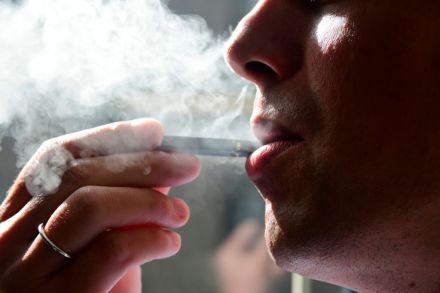
President Joe Biden during his 2020 campaign vowed not to raise taxes on anyone earning less than $400,000 a year. That promise recently hit an iceberg in the form of a new excise tax on nicotine. Kentucky Congressman John Yarmuth inserted the tax into the tome-like Build Back Better Plan bill last week. Yarmuth’s amendment appears to focus on e-cigarettes, vape juice, and other non-tobacco items by classifying them as extracted nicotine products with a max levy of over $50. That’s like the current tobacco tax. It’s unknown how much revenue Yarmuth hopes to raise, though the original Build Back Better Plan included $96 billion in tobacco and e-cigs taxes. Any nicotine tax will hit the lower and middle classes harder than anyone else.

vape

Blame Trump for Texas’s ban on vaccine mandates

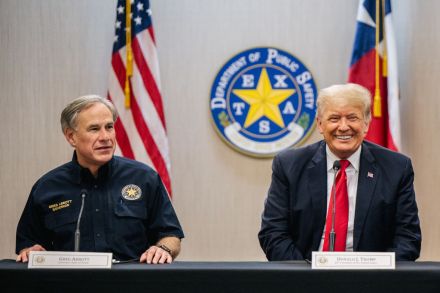
Political brains detonated last week after Texas governor Greg Abbott signed a new executive order that effectively banned vaccine mandates by any institution. The timing of the order seemed extraordinarily odd. Abbott, a Republican, has long advocated for private business rights and inoculation efficacy, especially after President Joe Biden announced a federal vaccine mandate. Abbott also didn't comment when Texas hospitals enacted COVID shot requirements over the summer. Why the change? Texas Democrats and Houston Chronicle columnist Erica Grieder blame Abbott’s 2022 GOP primary fight against Allen West and Don Huffines.

texas