Svitlana Morenets

Svitlana Morenets

Svitlana Morenets is a Ukrainian journalist and a staff writer at The Spectator. She was named Young Journalist of the Year in the 2024 UK Press Awards. Subscribe to her free weekly email, Ukraine in Focus, here

How is the government helping Ukrainians in Britain?

From our UK edition

14 min listen

Today marks one year since Putin sent the Russian army into Kyiv. Since then, what has been the experience of the Ukrainians who fled their homes and came over to the UK? Svitlana Morenets, a staff writer at The Spectator speaks to Kate Andrews about the year reporting on her war-torn country from Britain. Also joining the podcast is Matt Downie, chief executive of Crisis UK whose work involves helping those 4000 Ukrainians who arrived on the Homes for Ukraine scheme and are now at risk of homelessness.

Why Ukrainians won’t settle for a ceasefire

From our UK edition

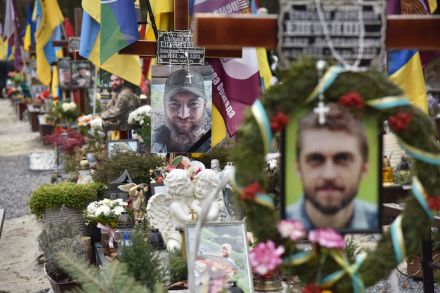
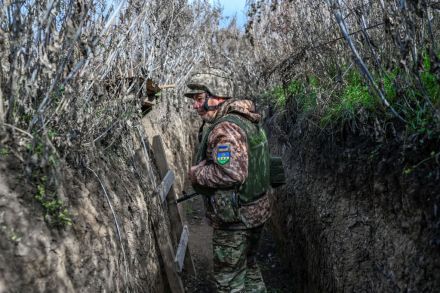
Growing up as a Ukrainian means being acquainted with death when you are too young to know much about life. When I was a teenager, I saw dozens of coffins being brought to my hometown from Vladimir Putin’s war in the Donbas. Now, I am seeing my friends go to war – and, like so many thousands of Ukrainians, die. One was buried last month: Maksym Burda, a 25-year-old wedding photographer. Another friend went to war this week. This friend, an artist, had just five weeks of accelerated training: now he’s an infantry soldier in one of the hottest spots on the Dobas front. He has been provided with a weapon, bulletproof vest, a helmet and a second-hand first-aid kit – far more than soldiers were given after the 2014 invasion. I doubt that the first owner of that kit is still alive.

Will Britain send Ukraine jets?

From our UK edition

10 min listen

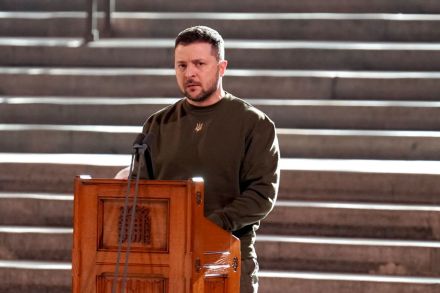
President Zelensky was in Westminster today to address Parliament. The Ukrainian leader came to London to ask MPs to give Ukraine fighter jets. Will Rishi Sunak agree to?  Max Jeffery speaks to Svitlana Morenets and Isabel Hardman.  Produced by Max Jeffery.

Why Ukraine needs British war planes

From our UK edition

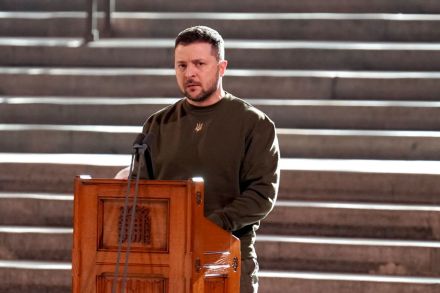
‘We have freedom,’ said Zelensky in his address to Westminster Hall. 'Give us wings to protect it!' This sums up the message of his visit to the UK: to thank Britain for the weapons, without which Ukraine would not have survived so far, but to ask for planes. The last time he was in London, he said, he left enjoying delicious English tea. ‘I will be leaving parliament today, thanking you in advance for powerful English planes’. His audience laughed – but Zelensky is certainly not joking. Zelensky spoke about Ukrainian troops going 'deep into occupied territory' but he believes this cannot be done without bombers. Ukraine’s Soviet-era air force is not enough. For Zelensky, this is the next step. So far, the US and its Nato allies have drawn the line at sending jets.

Svitlana Morenets, Rana Mitter and Mia Levitin

From our UK edition

20 min listen

This week: Svitlana Morenets explains why Ukraine won't accept compromise in any form (00:56), Rana Mitter details Japan's plans for an anti-China coalition (05:43), and Mia Levitin reads her review of Muppets in Moscow by Natasha Lance Rogoff (13:17).  Produced and presented by Oscar Edmondson.

Ukraine will not compromise

From our UK edition

Among Ukrainians, there is little debate about how the war will end. The overwhelming consensus is that it cannot conclude until Russia has been fully repelled, and Ukraine’s borders are returned to the 1991 frontier when independence was declared after the Soviet Union collapsed. This means removing Russian troops from Crimea and the self-proclaimed republics of Luhansk and Donetsk in the Donbas region. Of course this is not an easy mission. But for Ukrainians, the alternative is unthinkable. The mass graves uncovered in Bucha have shown us what Russian occupation means. We have also seen, in the broken promises of the Minsk agreements, what any truce with Vladimir Putin is worth.

Zelensky’s corruption crackdown is working

From our UK edition

Ukraine has been shaken by a wave of corruption scandals in recent days. Zelensky’s deputy chief of staff, six deputy ministers and five regional governors all left their posts today after a string of controversies left their positions untenable. Some were fired by the President, others left of their own accord – the number may yet grow.  The first scandal broke on Sunday after Vasyl Lozynsky, Ukraine's deputy minister of infrastructure, was accused of receiving a bribe worth £285,000 to procure generators at an inflated price for the government’s war relief efforts. Then Oleksiy Symonenko, a deputy prosecutor general, was caught holidaying in Spain despite Zelensky’s restriction on fighting-age men leaving the country.

Ukraine’s interior minister dies in helicopter crash

From our UK edition

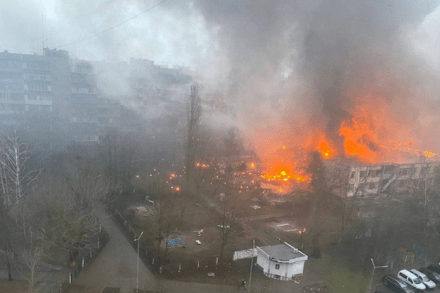
Denys Monastyrsky, Ukraine’s interior minister was amongst 17 people killed in a helicopter crash in the outskirts of Kyiv this morning. He was heading out of the city with colleagues when his helicopter crashed near a nursery in Brovary. Four children, who were on the ground, are also reported to be amongst the dead with 11 others being treated in hospital. So far 25 people have been reported injured. Monastyrsky, 42, was travelling with Yevhen Yenin, his first deputy, and Yuriy Lubkovich, State Secretary and six others. All are reported dead. They were in a Super Puma helicopter belonging to the State Emergency Service.

Has Soledar fallen to the Russians?

From our UK edition

Moscow this morning hailed the ‘liberation’ of Soledar, a strategic point in the battle for control of the eastern Donbas region of Ukraine. The Wagner Group’s Yevgeny Prigozhin said on Wednesday that his mercenaries – who are spearheading the offensive – were in control of the salt-mining town (or what remains of it). It was denied at the time, but the Washington-based Institute for the Study of War (ISW) has said it believes Russian forces have taken ‘most, if not all’ of the town.

Return to Ukraine: will I recognise my own country?

From our UK edition

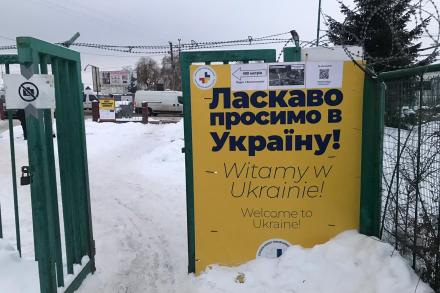
‘You are safe here,’ says a sign at the railway station in Przemysl, less than ten miles from the Ukrainian border. The city was one of the first in Poland to open its doors to those fleeing the war – but I’m travelling through it in the opposite direction. Last year, I was one of 152,000 Ukrainian refugees to end up in Britain. Now, I’m going home to see my family again, flying to Poland, then taking the train to Lviv. At least, that was my plan. At the station, I learn that Russian missiles have delayed the train. Six hours later, I’m told it may not arrive at all. So Plan B: take a taxi as close as possible to the pedestrian border and then trudge the final mile or so through the snow. As I walk, I wonder what I’ll see on the other side. Will I recognise my own country?

Was Zelensky’s visit to the US a success?

From our UK edition

8 min listen

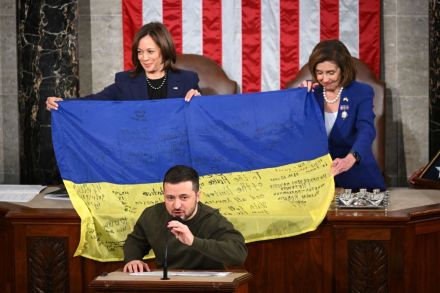
On this special podcast, Cindy Yu speaks to Svitlana Morenets, author of The Spectator's Ukraine in Focus newsletter. Whilst Zelensky's visit to the US yesterday was his first trip outside Ukraine since the start of the invasion, Svitlana has recently arrived home for the first time since the war began to spend Christmas with her family. They discuss whether Zelensky struck the right tone, how decisive US Patriot missiles could be and why this Christmas in Ukraine will be different.  Produced by Cindy Yu and Oscar Edmondson.

Christmas Special

From our UK edition

65 min listen

Welcome to the special Christmas episode of The Edition! Up first: What a year in politics it has been. 2022 has seen five education secretaries, four chancellors, three prime ministers and two monarchs. But there is only one political team that can make sense of it all. The Spectator's editor Fraser Nelson, deputy political editor Katy Balls and assistant editor Isabel Hardman discuss what has surely been one of the most dramatic years in British political history (01:13). Then: Christmas is a time to spare a thought for our neighbours. While in the UK we have our own hardships, families in Ukraine are facing a Christmas under siege.

The missile strike on Poland will be a test for Nato

From our UK edition

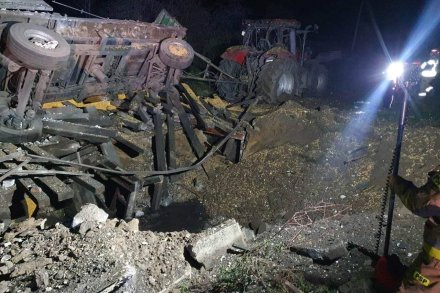
Since the start of the war, there has been a risk of Ukraine’s neighbours being caught in crossfire – especially when Russia turned to a missile-based strategy. This now seems to have happened, with two rockets hitting the Polish village of Przewodów, nearly six miles from Ukraine’s border, killing two farm workers. The stakes are obviously high: if Russian missiles struck a Nato member for the first time, that has implications. US president Joe Biden has said it is ‘unlikely’ that the missile was fired from Russia while Turkey said it must ‘respect’ Moscow’s fervent denial that Russia (which had just fired 100 missiles at Ukraine in a third wave of attacks) had anything to do with the strike.

Third wave of Russian shelling blitz begins in Ukraine

From our UK edition

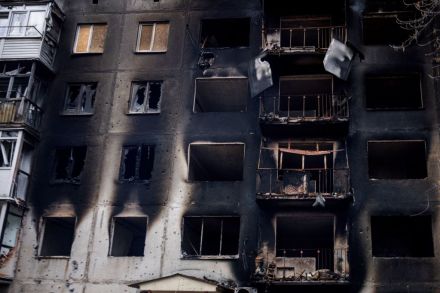
A third wave of Russian missile attacks consisting of approximately 100 shells was launched against Ukraine today. Kyiv has taken a direct hit, with three blocks of flats on fire in the district of Pechersk in the city centre. Other explosions have also been confirmed in Lviv, Kharkiv, Vinnytsia, Khmelnytsky, Zhytomyr, Kryvyi Rih and Rivne, and some cities have been cut off from electricity. Critical infrastructure and power plants appear once again to be Russia's main target. The Ukrainian government has already declared that emergency power cuts must be implemented across the whole country. Most of the missile hits have been reported in central Ukraine and the north of the country. President Zelensky's office has described the situation as 'critical'.

Ukraine’s huge victory in Kherson

From our UK edition

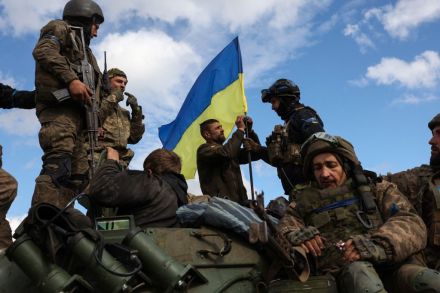
Less than two months ago, Putin declared four occupied regions of Ukraine as part of Russia. Some speculated that Moscow would view any attempt to liberate those territories as equivalent to an attack on Russian soil. Yet today Volodymyr Zelensky visited the recently liberated Kherson, awarded Ukrainian soldiers and watched them raise the country’s flag. Kremlin spokesman Dmitry Peskov refused to comment on Zelensky's visit to Kherson and reiterated that it was ‘Russian territory’. Zelensky did what Putin couldn’t manage to do in eight months of Russian control over the city – he faced its residents. Asked where Ukrainian forces might advance next, Zelensky said: ‘Not Moscow… We’re not interested in the territories of another country.

The last hours of the Russian occupation of Kherson

From our UK edition

The only large Ukrainian city Russia has been able to capture since February’s invasion – Kherson – has now been liberated. But something else extraordinary happened: Russian reports emerged of thousands of troops being left on the right bank of the Dnipro river after the occupiers blew up the mile-long Antonivsky bridge. Moscow flatly denies this, saying: ‘Not a single unit of soldiers, military equipment and weapons was left on the right bank of the Dnipro.’ But pro-Kremlin military blogs are full of reports to the contrary, some saying that thousands of Russians have been left on the wrong side of the river. If even some are captured, they could be exchanged for Ukrainian prisoners of war. Ukraine has been shelling the river all night, to discourage attempts at escape.

How Russia is surrendering Kherson

From our UK edition

The Russian evacuation of Kherson is now well underway, leaving an expected trail of destruction in its wake. Russian soldiers are publishing bitter videos as they retreat, with one saying that ‘defending the city with these supplies would be complete madness’ and another adding ‘I hope we will return’. Local reports say fleeing Russians are destroying infrastructure in the area – the region’s energy supplier and TV centre were reportedly blown up today. Russian troops are also placing mines on roads and settlements, in preparation for the Ukrainian army. Meanwhile the Ukrainian advance continues, with dozens of settlements west and north of Kherson liberated today.

Why Russia pulled out of Kherson

From our UK edition

In one of the biggest developments of the Ukraine war, Russia’s Defence Minister Sergei Shoigu has just announced the evacuation of his troops from Kherson. The city, located on the western bank of the Dnipro river, is the capital of one of the 'oblasts' (or regions) that Vladimir Putin recently declared to be part of Russia. Kherson is also the only major Ukrainian city that Russian forces have captured intact. Ukraine’s troops have been closing in for months on the city, making sustained Russian occupation impossible. The city has now been surrendered without a fight – assuming, that is, the retreat is not a bluff. The question is whether Russia intends to bomb Kherson when Ukrainian troops move in.

How Turkey and Ukraine called Putin’s grain deal bluff

From our UK edition

Earlier this week, Vladimir Putin declared an end to the deal allowing Ukraine to export its grain to the world. This threatened to send prices surging, with a potentially devastating impact on world hunger. But his bluff was called. Turkey, Ukraine and the UN held talks and continued a deal without Russia – and three days later, Putin returned to the agreement. Why? And what does this tell us about Russian vulnerabilities? The trigger for Putin pulling out was a drone strike on Russian ships near Sevastopol last Saturday. This was devastating for Moscow: until recently, Ukraine simply didn’t have such military capabilities. Now, suddenly, it does.

Ukraine braces itself for Russia’s cold war

From our UK edition

So far this week, 128 Russian missiles have been fired at Ukraine. Half were intercepted by air defences, according to figures from Ukrainian authorities, but all too many of the others hit their target: power stations. This is a new phase in war, an anti-humanitarian campaign to cut supplies of water, electricity and leave the notoriously cold Ukrainian winter to do its worst.  ‘Ukraine is about to face the hardest winter in all the years of independence,’ said Volodymyr Zelensky in one of his nightly addresses to the nation. About a third of Ukraine’s energy infrastructure has been hit by Russian missiles and Iranian kamikaze drones. Kyiv had expected Russia to start shelling Ukraine’s critical infrastructure as soon as the first snow fell.