Susanna Gross

Bridge | 5 September 2020

From our UK edition

A major pandemic has been sweeping through the bridge world since the game went online — and it’s called cheating. Who would have thought so many people would succumb to temptation, and what does it say about human nature? ‘Self-kibbitzing’ — that weirdly euphemistic term which means logging on under a different name to see all four hands at your table — has been rife, from club players to world champions (such as the two Janet named in her recent column). Even worse, some pairs have been cheating collusively — yes, actually texting or phoning each other to convey information. Things are so bad that almost half my bridge friends seem to be employed as cheat-catchers by various bridge bodies.

Bridge | 22 August 2020

From our UK edition

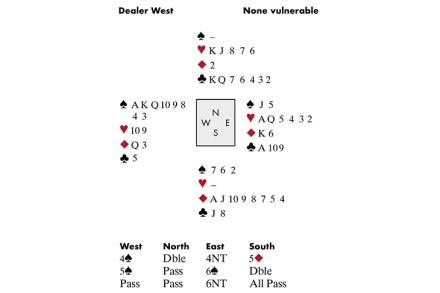
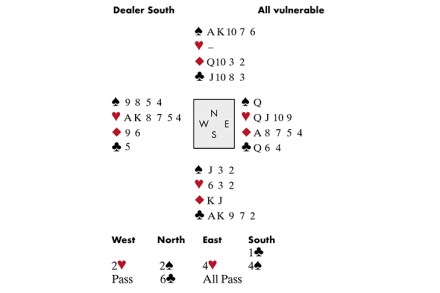
There are some experts — like my friend Sally Brock — who think Blackwood is an overrated convention, and that slams can be bid just as well without wheeling out 4NT to ask for aces. That’s often true. At the Portland Club, Blackwood isn’t even allowed, and players don’t seem to have much trouble bidding slams. However, I’m firmly in the camp that believes Blackwood is indispensable in some auctions; there’s no other way of finding out whether partner holds the precise cards you need. It does have to be used with care though. One of the dangers of Blackwood is that it can take you too high: you check for aces, find you’re missing two and — whoops — are forced to bid trumps at the six level.

Bridge | 8 August 2020

From our UK edition

Stuart Wheeler was a true original. I was lucky enough to be a friend (we met playing bridge), and will miss him greatly. He was often referred to as a spread-betting ‘tycoon’ but the word feels quite wrong: he was modest and unassuming, and his fierce intelligence was matched by a childlike guilelessness. While his political views could be contentious, there was no doubting his integrity: unswayed by fashion, he relied on logic and probability to guide him. Indeed, his whole life was about calculating odds and taking risks — hence his passion for gambling. He was also extraordinarily generous. After selling his shares in his company, IG Index, he bought Chilham Castle in Kent, where he entertained large groups of friends every weekend for decades.

Bridge | 25 July 2020

From our UK edition

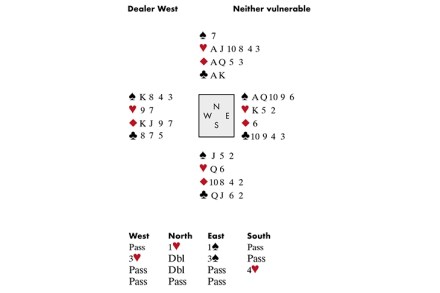
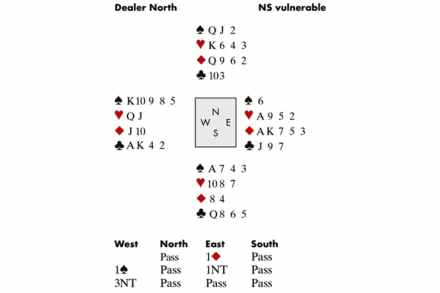
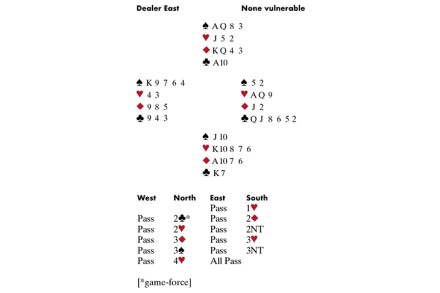
Gunnar Hallberg moved to England from Sweden 25 years ago to play professional bridge, and made such a success of it he never went back. Now, at 75, he remains a hero to many younger players, not just because of his outstanding talent, but also because of his passion for sharing his knowledge and helping them improve. Indeed, he seems as happy partnering a 13-year-old at his local club as he does winning yet another medal on the international stage. Last week, I came across a fascinating interview with Gunnar on a new online bridge channel, Tricks of the Trade. He describes a couple of his favourite hands, including this one. It may look like a boring part-score, but his defence was simply inspired (he was East). West led the ♠10.

Bridge | 11 July 2020

From our UK edition

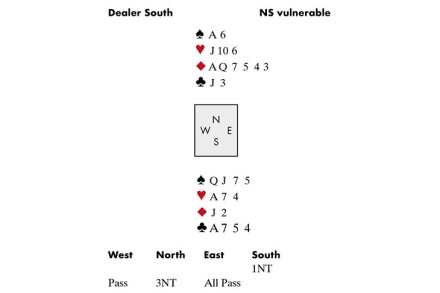
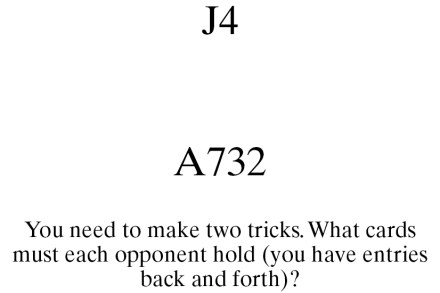
What goes through a world-class player’s mind when he or she stops to think for an age during a hand? I always find it slightly humbling: are they calculating probabilities, spotting chances, and creating contingency plans that mere mortals would find hard to grasp? Almost certainly that’s true, but they’re also doing something else: sizing up their opponents. I’ve lost count of the times I’ve presented a declarer-problem to a top player, only to be asked: ‘Who am I playing against?’ Take this hand. When I asked David Gold how he would tackle the diamond suit, his immediate response was: ‘How good is my left-hand opponent? How good is my right?’ (see diagram) The ♠10 is led. You play low.

Bridge | 27 June 2020

From our UK edition

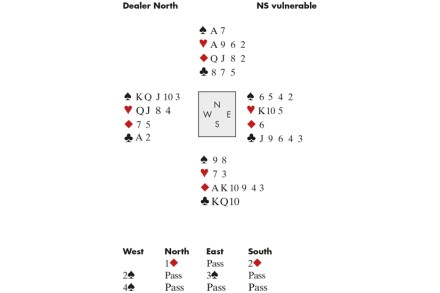
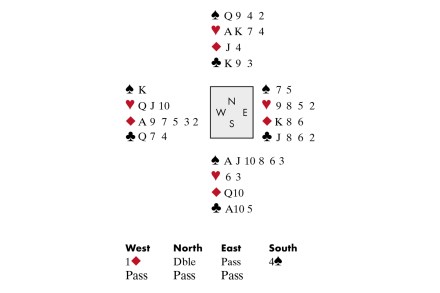
I’m not a great fan of online bridge but I must admit, lockdown has provided a real opportunity for players to improve their game. The endless choice of duplicates, and the ease with which they can be played, means many people are playing far more than they used to. That includes the international stars of the game, who can be seen battling it out daily in invitational tournaments. It’s never been easier to watch and learn; in fact, it’s downright addictive. I spend most evenings flitting between matches to compare how they bid and play the same hands. This seemingly dull hand cropped up during the recent ‘Alt Invitational open Teams’. At most tables, the contract was 3♠ by W or 4◆ by S.

Bridge | 13 June 2020

From our UK edition

Have you ever been at a bridge event and heard someone exclaim: ‘He Grosvenor’d me!’ They are referring to a Grosvenor Coup. Normally, they’ve just realised — too late — that an opponent played an idiotic card in defence that could have enabled them to make their contract. But because it didn’t occur to them that the opponent would make such a blunder, they got a false picture of the hand and chose a line of play that failed. We’ve all been there. But in fact, a Grosvenor Coup doesn’t refer to a comically bad piece of defence at all. Quite the opposite: it’s a card played with mischievous intent. It was invented around 60 years ago by Philip Grosvenor for the sheer pleasure of annoying another player.

Bridge | 30 May 2020

From our UK edition

One of the drawbacks of online bridge is the lack of après-bridge fun — those spontaneous drinking sessions where we go through the hands and laugh at what went wrong. Mind you, it does mean I’m getting to bed earlier; a few of us have a habit of leading each other astray. Perhaps my most extreme memory of post-bridge excess is an evening spent with the Swedish pro Gunnar Hallberg and the French player Catherine Fishpool. We’d been playing rubber bridge at TGRs and decided to go on to the nearby Grosvenor Victoria Casino in Edgware Road. We all chose different games (Gunnar the slot machines, Catherine poker, me blackjack), and eventually lost sight of one another. I had a disgracefully late night, getting home at 4.30 a.m.

Bridge | 16 May 2020

From our UK edition

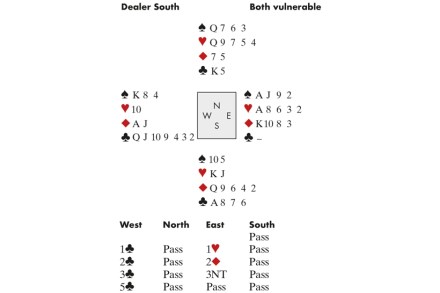
My entertainment last week was watching the NN-Cup, a ‘Goulash’ tournament normally held in Moscow, now played online for the first time. Goulash is a rare form of bridge, typically played at rubber. When a deal has been passed out, everyone places their cards (still sorted) on top of everyone else’s, and they are dealt unshuffled to produce extreme distributions. Picking up 10-card suits or encountering 7–0 breaks are par for the course. The computer-generated deals in the NN-Cup were absolutely wild; watching the top-class teams battling it out was like being on a rollercoaster ride. This hand comes from the final between Teams ‘Vitas’ and ‘We Will Squash You’ (who did indeed go on to win).

Bridge | 2 May 2020

From our UK edition

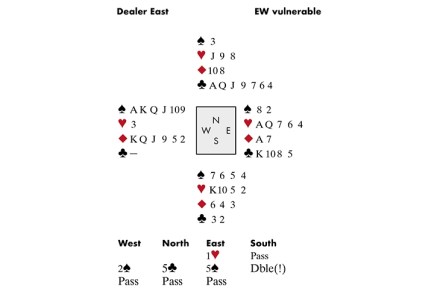
I’m aware that this column is in danger of turning into the Alex Hydes fanzine, but after writing about his performance on Janet’s team a couple of weeks ago, I was lucky enough to partner him myself last Saturday. We played in the Young Chelsea cross-IMP pairs tournament — which, incidentally, I hope becomes a regular event, as it’s hugely enjoyable, and a good standard too. Alex Hydes is not just a wonderful mentor; he’s also sheer fun. Everything I enjoy about him as a friend — his maverick, risk-taking personality — is reflected in the way he plays bridge. He brings a psychological edge and fearlessness to the game which reminds me of Zia Mahmood and Peter Fredin. We won on Saturday, not least because of some superb doubles he made.

Bridge | 18 April 2020

From our UK edition

While chatting on the phone to my friend Alex Hydes a couple of weeks ago, I asked whether he was playing any online bridge. For a bridge superstar, Alex is unusually down to earth and self-deprecating. ‘I’m rubbish at it,’ he replied. ‘Cards on screen don’t register with me like real cards.’ But only a week later, he proved himself spectacularly wrong. Eight top international teams were invited to compete in the second ‘Alt Invitational’ — the most prestigious online bridge tournament so far — and Alex joined Janet de Botton’s team. They ended up winning in style, and Alex had clearly lost none of his acuity or flair.

Bridge | 4 April 2020

From our UK edition

I’m finding it harder than I thought to concentrate while playing bridge online. And not just because my two children are constantly at home. No, my worst distraction turns out to be… myself. Until now, I’ve never fully appreciated the importance of sitting patiently while you’re dummy. Often, I’ve found myself wishing it wasn’t considered rude to read a magazine or stretch your legs when a hand is taking ages. During my first ever online game last week — a Young Chelsea duplicate with Peter Taylor — I took full advantage of my invisibility. Whenever I was dummy, I would reply to an email, or fetch a snack; at one point, I even started mucking out the guinea pig cage.

Bridge | 21 March 2020

From our UK edition

Bridge is obviously another casualty of the coronavirus. Clubs have closed their doors; tournaments have been cancelled; championships have been postponed. Safety, of course, comes first. But for many of us, the prospect of life without the constant challenge and stimulation of the game, or the companionship of our fellow players, is pretty miserable. There is a silver lining, though: we can still play and practise online. In fact, I intend to do a lot of it — especially bidding with my regular partners. Thank God for BBO (Bridge Base Online)! To keep our bridge brains sharp, we can also browse through BBO’s Vugraph archives and re-live the action of world-class players in recent tournaments.

Bridge | 07 March 2020

From our UK edition

I love the French expression esprit de l’escalier (‘wit of the staircase’); it perfectly captures that moment of frustration when a clever remark or retort comes to us just too late — as we’re leaving, or on the stairs. I’ve always thought there should be some equivalent expression in bridge: how often do we realise in a flash — once a hand is over, naturally — that we should have taken a different line? But I found myself wishing for yet another term of regret the other day: one to describe the even more frustrating experience of knowing you actually had the right thought at the right time, and yet dismissed it as being too fanciful to act upon! Here’s the hand.

Bridge 22 February 2020

From our UK edition

I’d love to be a fly on the wall when the Rimstedts and their children get together over supper. One thing’s for sure: when the discussion turns to bridge, no other family in the world could match them. The parents, Magnus and Ann Rimstedt, are well-known Swedish players; they imparted their love of the game to their eldest two children, Cecilia and Sandra, when the girls were growing up in the small village of Halmstad. Both women are now celebrated internationals, in particular Cecilia, 31, who last year won the European women’s championship. The sisters, in turn, taught their younger twin brothers when they were just five. You may have heard of them: Ola and Mikael Rimstedt are the reigning world pairs champions.

Bridge 8 February 2020

From our UK edition

As hosts of this year’s Lady Milne Trophy — the women’s home international series — England get to field two teams. At the last minute, I decided to compete with a young and talented player, Qian Li — despite the fact that we’d never played together before. We managed to fit in just two practice games, so we were obviously delighted to end up coming fifth in the trials, winning a place on the second England team. Now we can put some proper time into our partnership before April’s championship! Another new(ish) partnership — Nicola Smith and Sarah Bell — also took part, and came second. Just weeks earlier, they’d come second in the European women’s trials, securing their place on the England team.

Bridge | 25 January 2020

From our UK edition

Sad to say, the length of time you’ve been playing bridge is no indication of how good you are. Indeed, you can play with gusto every day of your life, but if you never venture outside your same circle, or take lessons or read books, then — to put it bluntly — you probably have no idea how bad you are. I recently read an amusing article about this by the Scottish novelist Alexander McCall Smith, author of the hugely popular No. 1 Ladies Detective Agency series. He and his wife love bridge, and some years ago took a cruise which offered classes. His wife, a ‘much stronger player’, chose the intermediate class. She soon realised she was out of her depth: she belonged with ‘the novices’.

Bridge | 09 January 2020

From our UK edition

The new year is a daunting prospect in terms of the sheer amount of bridge taking place. Rather like buses, all the England trials seem to be coming at once: the European open, women’s and mixed, the Lady Milne, the various Olympiad trials… my head’s swimming just thinking about it. Unlike most of the hardcore players I know, I’m only entering three, but each with a different partner. The endless discussions needed to agree on system and style are rather like starting a new relationship every time. How much easier it would be to have just one partner, or indeed to play rubber bridge where almost no conventions are allowed. I shouldn’t moan, as systemic agreements are vital.

Bridge | 12 December 2019

From our UK edition

These days, young people expect to learn new skills online, for free. So how do we introduce a new generation to the joys of bridge? The most exciting initiative for a long time is the New Tricks Bridge Club, whose aim is to propel the game back into the modern age through the internet. The team behind New Tricks has produced a series of excellent YouTube videos, from tutorials for beginners to ‘tournament masterclasses’ featuring world-class stars like Zia Mahmood and Dennis Bilde.   I recently watched the first of these (www.newtricksbridge.club), and was immediately hooked. The players talk us through their thinking — always fascinating — but what was so refreshing was that, far from acting like infallible masters, they readily admitted to their mistakes.

Bridge | 28 November 2019

From our UK edition

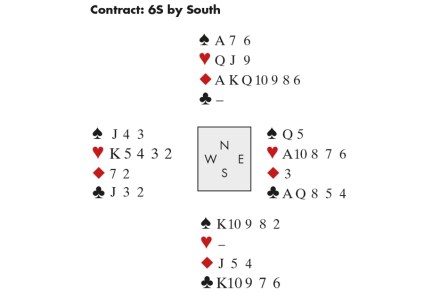
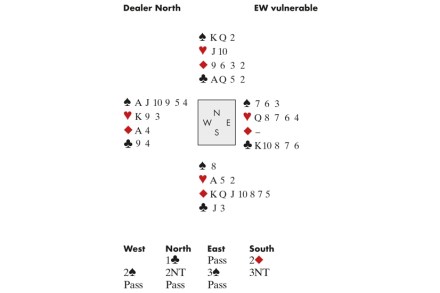
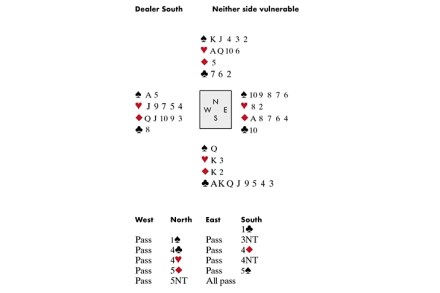
Nothing is ever routine or boring when Alex Hydes is at the table. One of England’s best players, he’s a master at bluffing and pressurising opponents. His bidding may sometimes seem enjoyably eccentric, but in fact it’s the result of perfect logic and judgment. And he combines all this with wonderful humour and an eye for the absurd. Occasionally, he sends me texts about amusing hands. Last weekend, while competing in the second stage of the European Open Trials with his partner Ben Handley-Pritchard, he sent this message: ‘We just bid and made a grand slam, despite both passing on the first round of the auction. That’s got to be almost unheard of.’ Of course, I was intrigued and asked for the details (see diagram).