Susanna Gross

Bridge | 19 April 2018

If I had to name my favourite bridge player… actually, I can’t, there are too many. But the young Danish superstar Dennis Bilde is certainly a contender. I’ve always been struck by his charm, his lack of arrogance, and his limitless energy — especially for fun. Even during major tournaments he’s been known to stay up all night partying or gambling; yet he still manages to play flawless bridge the next day.   Bilde was brought up on a farm, and taught to play by his parents; at 18 he became Junior World Champion; now, ten years on, he’s a member of the mighty Team Lavazza (sponsored by Madam Lavazza — think coffee). He’s wonderful to watch: speedy and fluid.

Bridge | 5 April 2018

It was about 20 years ago that I first became friends with Janet de Botton, and urged her to take up bridge. Although I knew she’d love it, I didn’t hold out much hope that she’d get beyond ‘social’ bridge; the club scene was (and still is) pretty weird and intimidating. But Janet amazed me: as soon as she’d mastered the rudiments, she insisted on coming with me to play for low-stakes at St John’s Wood Bridge Club. I warned her: some of these people aren’t nice, they’ll yell at you. But she came, they did yell, she lost all her loose change — and she still had the pluck and drive to keep coming back. Soon we graduated to higher-stake bridge at TGR’s; then she started playing in tournaments and got a top team together.

Bridge | 22 March 2018

Colin Simpson, who has died after a long illness at the age of 69, was a star both at the bridge table and away from it. I vividly remember first meeting him when I started playing rubber bridge at TGRs about 20 years ago. He was tall, with a commanding presence, and despite playing for very high stakes, unusually even-tempered. He was also a rarity among bridge professionals for having a proper job — and what a job! For more than 30 years, Colin was a special branch detective in counterterrorism. In 1982, he was assigned to protect Shlomo Argov, the Israeli ambassador in London. One evening in June, as Argov was leaving the Dorchester, a terrorist opened fire. Argov fell, and Colin began chasing the gunman.

Bridge | 8 March 2018

I’ve never forgotten a conversation I had some years ago with the talented, blunt-talking Norwegian player Espen Erichsen. We were discussing the dangers of getting demoralised at the bridge table. You make a couple of idiotic mistakes, your confidence takes a knock, your judgment grows cloudy, and soon you’re playing worse than ever. We’ve all been there. Well, not all. Espen is a top professional: he would never succumb to those sort of emotions. But he recognises them in others. And far from expressing any sympathy, he gave me a piece of advice which I must say took me aback: ‘When a man is down, you must kick him.’ I suppose that’s what you call the killer instinct, and it’s what makes champions.

Bridge | 22 February 2018

It’s nice being part of a community. That’s how bridge is: over the years, you get to know, or recognise, pretty much everyone on the tournament scene. Even when you play abroad, you see the same faces again and again. I’m think I’m on friendly, or nodding, terms with at least one player from every country on the globe. At home in London, it’s positively incestuous: we’re like one huge, dysfunctional family. And with bridge being broadcast online, we can follow each other wherever we are.   For instance, I’ve just come back from a family holiday in Tenerife, where I spent as much time as I could following my bridge pals competing in the Winter Games in Monaco.

Bridge | 8 February 2018

The England ladies trials, two weekends ago, were as exciting as ever, but also rather heartbreaking for me and my partner Marusa Basa. We took an early lead and kept it up until Sunday morning, when our match against Heather Dhondy and Abbey Smith (the eventual winners) turned into a car crash, setting us back five places. We never recovered after that. Many congratulations to Heather and Abbey though, and I’m not saying that through gritted teeth — it was well deserved and they’re two of the nicest women in bridge.   As for Marusa and me, time to pick ourselves up, dust ourselves off, and start practising for the European women’s pairs in June.

Bridge | 25 January 2018

As Janet said last week, the recent European Open trials made for compulsive viewing. Ten pairs took part; first and second place would join Andrew Robson and Tony Forrester (the only pre-selected pair) to represent England in the European championships in June.   At the end of four gruelling days, the winners were Jeffrey Allerton/Chris Jagger, and Artur Malinowski/David Bakshi. They played brilliantly, but in all honesty, so did almost everyone. I was reminded time and again that at the top level, it’s not so much perfect technique that gives you the edge — every player is an expert — but bold and accurate bidding.

Bridge | 11 January 2018

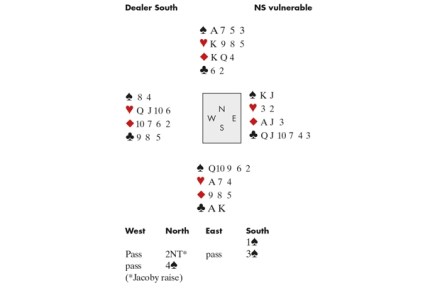
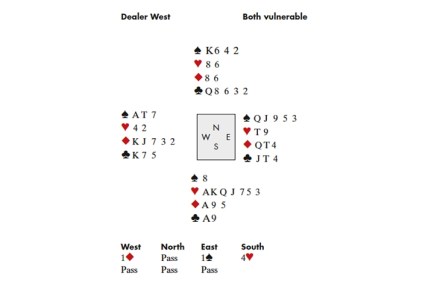
My friend Neil Mendoza and I had a great finish to 2017 when we won the Portland Club’s annual Auction Pairs (which is always a highlight of my year). I can’t pretend we had any real expectation of winning, but a combination of good luck, good play and flawless bidding by Neil meant we scooped the £8,000 jackpot (actually we only got half, as Stuart Wheeler had bought 50 per cent of us). Since then, alas, things have been slipping downhill: I had a poor result with David Gold at the Year End mixed pairs, and last Sunday, a solid beating at the Young Chelsea’s ‘pivot’ teams. Time to buck up for 2018! On Sunday, amid a host of poor decisions, this hand sticks most in mind.

Bridge | 13 December 2017

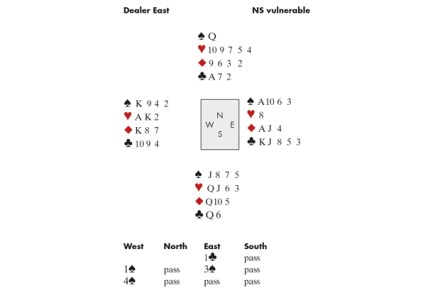
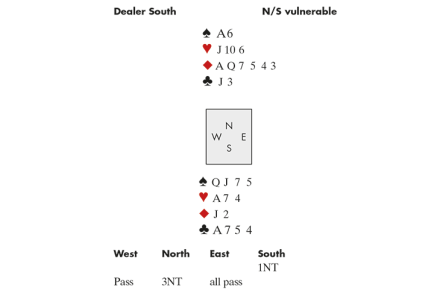
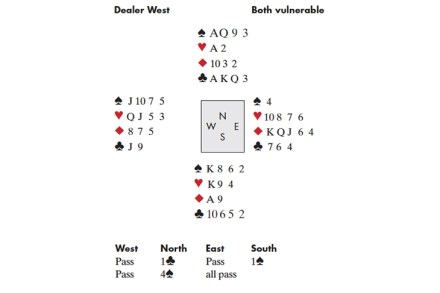
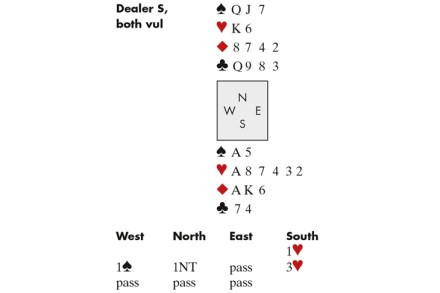
Know thy opponents — experts make a point of it. When you’re at the bridge table, it’s just as important as knowing your partner, or indeed yourself. Strong players, after all, are far more likely to duck tricks, or play false-cards; weak players are altogether more predictable.   An interesting declarer problem came up during a game the other evening, and the following day I bumped into Zia Mahmood and asked what he would have done. ‘I can’t possibly answer,’ he replied, ‘unless you tell me how good my right-hand opponent is, and how good my left.’   West leads the ♠10. You play low. East wins with the ♠K and returns a spade to dummy’s ♠A.

Bridge | 30 November 2017

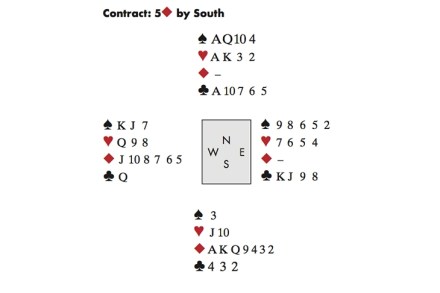
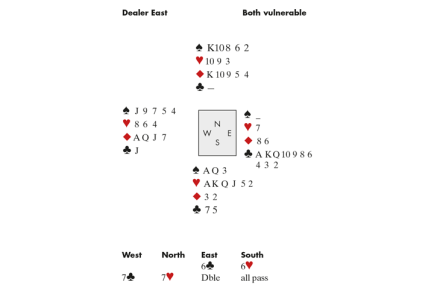
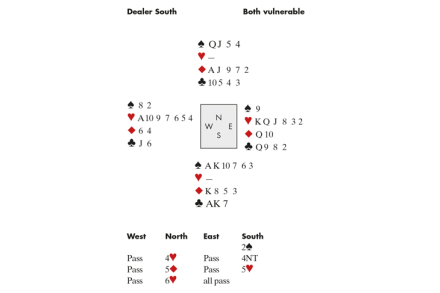
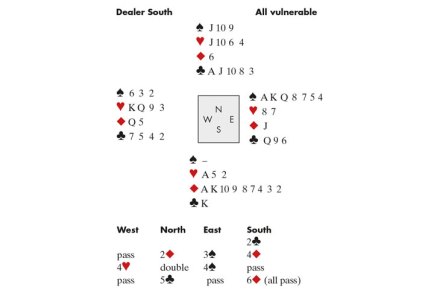
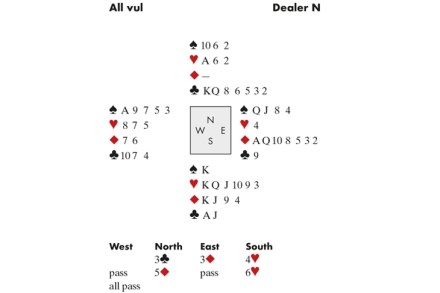
Being on lead against a grand slam is bad for your blood pressure. So much is at stake (not least, having to face the self-satisfaction of your opponents). Luckily, there is a rule of thumb which obviates the need to stress too much: always lead a trump. This is sensible advice: it’s normally the best or safest lead. But not always; especially not when the bidding is screaming out against it. And yet, at that giddy height, some players seem just too fearful to break the rule.   England international Brian Callaghan (‘Binky’) showed me this hand from a recent Tollemache match (the inter-county teams championships). Sit tight for the bidding!   East opened the bidding at the six-level. Binky, sitting South, countered with a brave 6♥.

Bridge | 16 November 2017

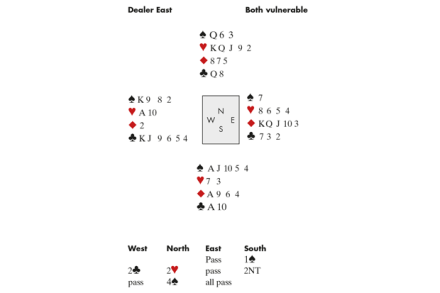
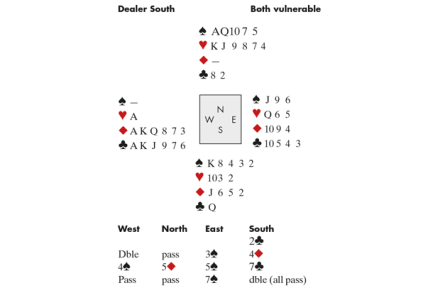
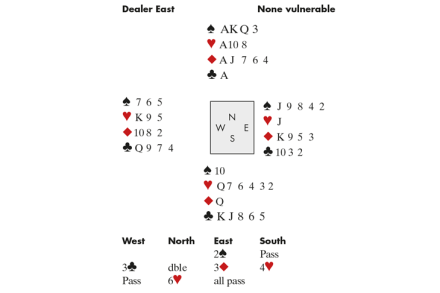
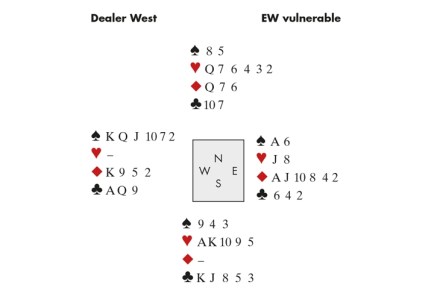
I spent last weekend glued to Bridge Base Online, watching the 16th European Champions Cup taking place in Latvia, and waving my little St George’s flag. England’s Allfrey team produced some spellbinding bridge, and after 11 rounds they topped the round-robin. Unfortunately, they went on to lose the semi-final to Norway, and ended up coming a disappointing fourth (the Netherlands won). Still, that was the best performance by England’s team in the history of the competition. All six pairs played superbly — but Alexander Allfrey and Andrew Robson in particular were on fire. I enjoyed this slam against Monaco: (see above). East (Pierre Zimmerman) opened a weak 2♠, and West (Frank Multon) tried to obstruct the opposition further by bidding 3♣.

Bridge | 2 November 2017

Call me middle-aged, but the days when I enjoyed playing bridge all night are long gone — which is why I opted out of last weekend’s 24-hour marathon at the Young Chelsea Bridge Club. Thankfully, 27 brave pairs did play, starting at midday on Saturday, and ending at midday on Sunday (without a break). By all accounts, no one struggled — apart from poor David Muller, who had heroically offered to direct. Without the stimulation of playing, he fell asleep at his desk a few times — meaning the usual cry of ‘Director!’, became a crescendo of cries: ‘Director! Director! Director!!’. Four of the ‘pairs’ chose to enter as a threesome, as at least one of them wanted a break.

Bridge | 19 October 2017

Bridge is a partnership game — but haven’t you sometimes wished you could file for a quick divorce mid-rubber? The problem is that however maddening your partner, if you try to give him a taste of his own medicine — by overbidding wildly, for instance, or ignoring his suit-preference signals — it would be like pushing him into a river and forgetting you’re tethered to him. Still, it has been known. Geoffrey Breskal was once playing for England in a Camrose match with the late, great (but highly volatile) John Collings. Collings opened a forcing two spades; Geoffrey, with a Yarborough, decided to pass. His left-hand opponent doubled and Collings, with gleeful fury, bid straight to six spades. Just to punish Geoffrey! While playing for England!

Bridge | 5 October 2017

Twenty-five years ago, Zia Mahmood offered a £1 million bet that no team of his choosing could ever be beaten by computers. A mere four years later, he withdrew the bet: robots were already exceeding expectations, and who knew how rapidly things would progress? In fact, computer bridge still hasn’t reached world-class levels (unlike computer chess). But it’s not that far off. For the past two decades, robots have even competed in their own world championship, which runs alongside the human one, and although it gets next to no coverage, it’s well worth watching. Robots may lack a certain flair and imagination, but you can be sure that every move they make has been analysed to perfection.

Bridge | 21 September 2017

I’m writing this from Stuart Wheeler’s beautiful villa in Tangier, in the hills just above the bay, where for a week every September he hosts a high-stake rubber bridge game. There are sometimes one or two new faces, but usually it’s the lucky old regulars who return, like Patrick Lawrence, Alexander Allfrey, and none other than the great Andrew Robson. This is my sixth visit, and I love it: the company, the food, the booze, the distant call of the muezzins. Of course, Andrew’s presence adds an extra layer of magic: it’s a treat to play with and against him, even if he does win our money, and even more so to have him on tap to discuss hands. The fun started before we’d even got here.

Bridge | 7 September 2017

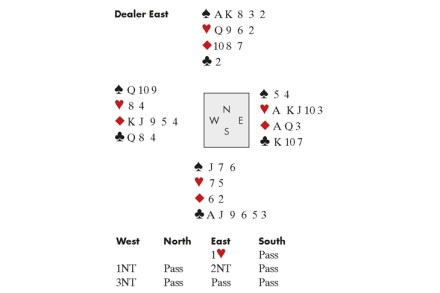
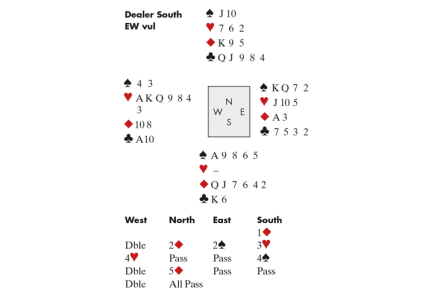
Aren’t the Irish supposed to be lucky? The Irish open team are having no luck at all at the moment. They’re such a funny and talented bunch, but they seem doomed to fall at the final hurdle. I recently saw them at the Spring Fours in Stratford-on-Avon — they reached the final, only to be knocked out by Team Allfrey. Last weekend I saw them again at the Crockford’s Cup final in Solihull: they were pipped to the post by one agonising point. Well done to the winners — Anita Sinclair, Zia Mahmood, Dennis Bilde, Simon Cope and Peter Crouch. This hand comes from the last session. Zia and Bilde were playing against Tom Paske and Ed Jones of Team Penfold.

Bridge | 24 August 2017

The ‘Lightner double’ is perfectly named: a bolt out of the blue which strikes fear into your heart. There you are, having bid confidently to slam, when suddenly one of your opponents pulls out the red card. Eek! It’s a Lightner double, which means they want their partner to make an unusual lead: either the doubler has a void and can ruff, or wants dummy’s first-bid suit led (partner needs to work out which). The point is that without the double, the killing lead might never be found. I used to assume it was a clever made-up name, until I discovered it really was the invention of one Theodore ‘Teddy’ Lightner, an American lawyer who was Ely Culbetson’s favourite partner, and who won the world championships in 1953.

Bridge | 10 August 2017

The Andrew Robson Bridge Club in Parsons Green deserves its huge success. The standard may not be as high as at some other London clubs, but the atmosphere is always great. It is the place to learn bridge: the staff are friendly and fun; the rooms are large, airy and bright; the daily duplicates are jam-packed, and no one ever calls for the tournament director. Recently my friend Guy Hart was playing a morning duplicate there. He was in 3NT, and when the woman to his left led a spade, her partner immediately gave her a big thumbs-up. ‘I guess that’s one way of playing attitude signals,’ Guy laughed. ‘Or do you play reverse-attitude: thumbs up means you don’t like the lead, thumbs down you do?

Bridge | 27 July 2017

This is a great time to be a bridge professional — not just for the world’s top players, who have their pick of super-rich sponsors, but also for those a good few notches below them. In London, there seems to be an ever-growing list of clients willing to spend £100 or more for a game at their local club. I’ve never given much thought to what it’s like to be a professional, but recently I came across a fascinating article by the bridge pro August Boehm which made me realise how approaches differ vastly. Some clients don’t particularly want to improve; they don’t even want their mistakes pointed out.

Bridge | 13 July 2017

Here’s one of my favourite hands from the European Open Championships — although it caused David Gold to spend the next hour kicking himself. David is a world-class player, but even Homer nods, and after days competing in a sweltering tent in the Tuscan countryside, he made a small error which led him to go down in a slam. He realised it a second later — exactly the same time as one of our opponents, the Russian champion Andrey Gromov, who leaned over to point it out, only for David to cut him short with a forlorn ‘I know’. Mind you, only an expert would consider it an error; most of us would never have spotted it.