Sunder Katwala

At sea: can Sunak navigate the migrant crisis?

From our UK edition

36 min listen

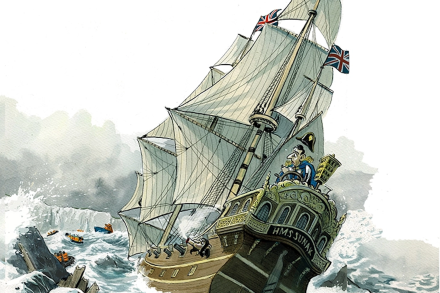
On this week's podcast: Can Rishi Sunak steady the ship? Patrick O'Flynn argues in his cover piece for The Spectator that the asylum system is broken. He is joined by Sunder Katwala, director of the think tank British Future, to consider what potential solutions are open to the Prime Minister to solve the small boats crisis (00:52). Also this week: Should we give Elon Musk a break? In the aftermath of his sensational purchase of Twitter, Mary Wakefield writes in defence of the tech billionaire. She is joined by James Ball, global editor of The Bureau of Investigative Journalism, to ask what his plans are for the social media platform (14:27). And finally: Ysenda Maxtone Graham writes in the magazine this week about the joy of hating the Qatar World Cup.
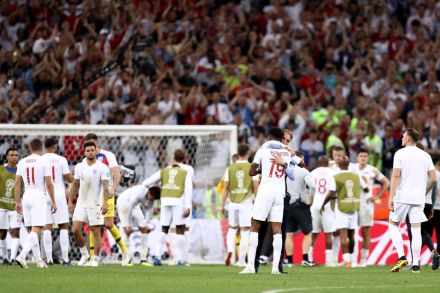
How football united a nation

From our UK edition

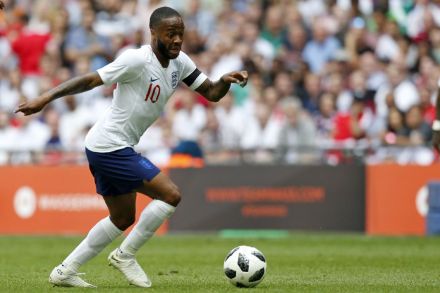
England did not expect. That was the key to this summer's World Cup. Last night's defeat by Croatia was a gut-wrenching disappointment. Yet four weeks ago, any England fan told that the World Cup run would end in extra-time in the semi-finals would have jumped at the prospect. On and off the pitch, it has been a summer that has changed how we think about England. Is football just sport? Yes. But sport can do things that nothing else can. Nations are imagined communities of millions where we share something with people we do not know. There are few other things than sport that thirty million of us can share that captures such an idea so powerfully. England embraced Gareth Southgate as a national leader because he told us things about ourselves that we needed to hear in 2018.

England’s diverse World Cup team is something to celebrate

From our UK edition

England kick off their World Cup campaign today by putting their faith in youth as they take on Tunisia: Gareth Southgate's squad have the lowest average age and the fewest caps won of any of the 32 teams at the tournament. Only three of the squad – Gary Cahill, Ashley Young and Jamie Vardy – had even been born when Gazza’s tears captured a nation’s hearts at Italia ’90. Yet while the team's youth has been the subject of much hype, another factor about this England squad has not captured any headlines: this is the most ethnically diverse squad that England has ever taken to the World Cup.

Debunking the ‘Brexodus’ myth

From our UK edition

A new word has entered the lexicon – Brexodus – to reflect the claim that Europeans are leaving in droves as they shun post-Brexit Britain. But it is a funny sort of Brexodus which leaves the number of European nationals in Britain at an all-time high. While the quarterly immigration figures did show a significant reduction in the scale of EU immigration to the UK, and a rise in the number of Europeans departing, those figures also showed that twice as many Europeans came to the UK as departed from it, with an estimated 122,000 EU nationals leaving the UK while 249,000 arrived in the year to March 2017. There have been significant changes to migration from eastern Europe.

Will Ukip survive as an anti-Islam party?

From our UK edition

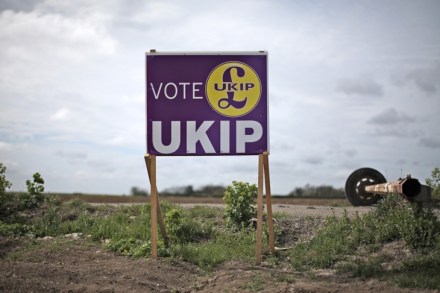
The decision to allow Anne Marie Waters – co-founder of anti-Islam group Pegida UK alongside former EDL leader Tommy Robinson – to stand for leadership of Ukip has created fresh fractures within a party that is preparing for its third leadership contest in a turbulent twelve months. Criticism of Waters’ candidacy has come not only from the modernising wing of Ukip, but also from strong supporters of Nigel Farage’s robust line on immigration and integration. Farage loyalist Bill Etheridge MEP warned against hardliners using the party 'as a vehicle for the views of the EDL and the BNP' while Scottish MEP David Coburn has warned against 'entryism'.

Michael Fallon marks century of Muslim service in British armed forces

From our UK edition

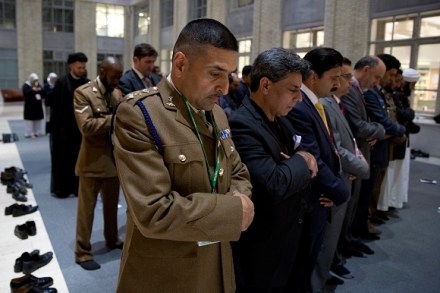
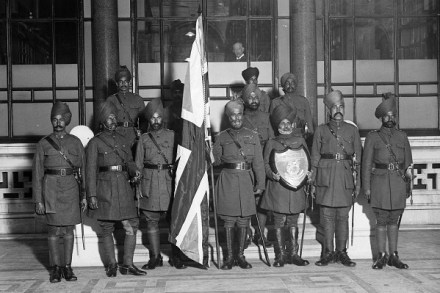
After nineteen hours without food, nor even a drop of water, the prospect of the single succulent date which breaks the fast looms ever larger in the mind as sunset nears. A few minutes after nine o’clock last night, similar scenes were doubtless playing out in mosques and Muslim homes around Britain. But this event was a little different. As the imam’s prayer rang out across the high ceilinged courtyard, many of those kneeling to pray were in khaki uniforms while others wore headscarves. The Ministry of Defence had invited Muslim soldiers and civic Muslim groups to break their Ramadan fast with a celebratory feast in the Whitehall citadel of the British defence establishment.

It’s easier to win an argument with Ukip if you admit it’s not a racist party

From our UK edition

There have been one or two calls to brand Ukip a racist party, and some media debate about whether it is. But what’s become clear during the last fortnight is that there is a strong, cross-party consensus both that Ukip isn’t a 'racist party' – and that it must get better at keeping out individuals that hold racist views. On debates such as the BBC's Question Time, you can clearly see that this consensus has extended across the front and backbenches of the different parties. Just one or two MPs take a different view. Labour left-winger Diane Abbott told the BBC that she did not regard Ukip as racist but saw it as having US ‘tea party’ tendencies.

First XI of the Fallen

From our UK edition

Who was the greatest sporting star who fought in the first world war? It is a difficult argument to settle at a century’s distance, with nobody still alive who saw them play and only fleeting glimpses from the very first steps of the newsreel era. The names are less familiar now, but contemporary accounts of their exploits and the sporting record books prove that they belong in the first rank of British sporting history. British Future has selected an inevitably subjective ‘1st XI’ of the fallen, to help to bring the names of these sporting greats back into our public consciousness.

How should we mark the Great War’s centenary?

From our UK edition

It seems strange now to recall that, it was not so many years ago, around the time of the millennium, that some in Whitehall were talking about how to scale down Remembrance Sunday. One theory was that marking the centenaries of the start and end of the Great War could also mark an appropriate moment to bring the solemn Cenotaph ceremonials to a gentle end. The assumption was that Remembrance would gradually lose its resonance and relevance once the generations who fought the Great War had all passed on. Such thinking did also reflect the mistaken New Labour view of the Dome era: that Britain would be able to face the future more confidently if it let go of the historical baggage which could weigh us down. That is not how things turned out.

Richard III should be buried in the north

From our UK edition

History is written by the victors. So Richard III might have anticipated that his death at Bosworth Field in 1485, the last English monarch to be killed on the battlefield, would only be the start of a downward reputational spiral. The last five hundred years have not been good for the man whose remains may just have been found under a Leicester car-park yesterday. Shakespeare did much of the damage, forever fixing our image of this hunched Machiavellian schemer and his ignominious downfall – 'my Kingdom for a horse' – though the Bard was popularising an existing Tudor narrative.

Let’s remember McDonald Bailey in 2012

From our UK edition

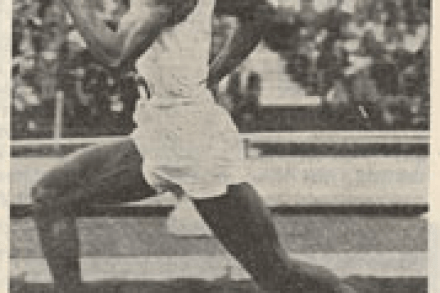
McDonald Bailey was certainly among the most famous names in British sport when Britain last hosted the Olympics, in 1948. Yet today he has almost been forgotten. It's not how it should have been. He should have been our Jesse Owens. Look at a photo of the British Olympic team of 1948 and Bailey stands out as the only black face in a monochrome sea. He was, you see, from Trinidad. He could have run for them in the Games had they decided earlier whether or not to send a team. But instead he took up the British offer, and became a crowd favourite and the face of British athletics at the time. This fame, however, had little to do with his race, but more because he was among the fastest men on earth, jointly holding the 100m world record (of 10.2 seconds) with Owens himself.