Sue Prideaux

Football vs opera, and the terror of being considered highbrow

From our UK edition

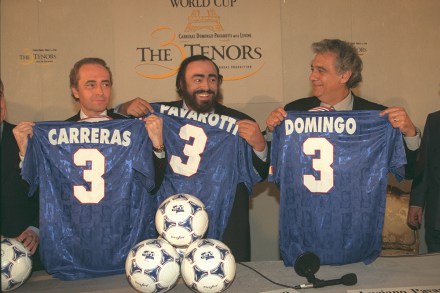
After Handel introduced Italian opera to London, Georgians and Victorians went to performances to wear their diamonds and meet friends. As Victoria’s reign progressed, opera percolated down, via brass bands, organ grinders, music hall warblers and whistling delivery boys. In 1869, the Leeds impresario Carl Rosa set up ‘a sort of operatic Woolworths’, a touring
The making of Van Gogh as an artist came at a terrible cost

From our UK edition

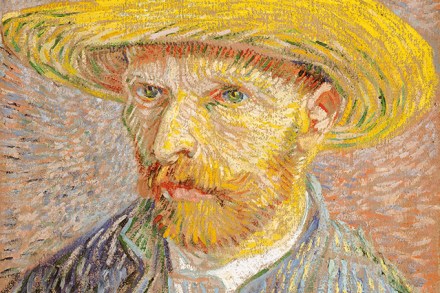
Six months before Vincent van Gogh’s death, the critic Albert Aurier, waxing poetical, wrote an article entitled Les Isolés on the then unknown painter. It raised to sainthood the solitary genius driven to insanity by an uncomprehending world. ‘Is he not one of the noble and immortal race which the common people call madmen but

A struggle not to scream

From our UK edition

Norway doesn’t have a world-class philosopher (Kierkegaard was Danish). Karl Ove Knausgaard declared at the end of his previous book that he is no longer a writer, and it looks as though he’s moving in to fill that space. A very modern space: a selfie space. Nietzsche observed that all philosophy is autobiography, and Knausgaard

Wagner’s Ring is a mythic mishmash

From our UK edition

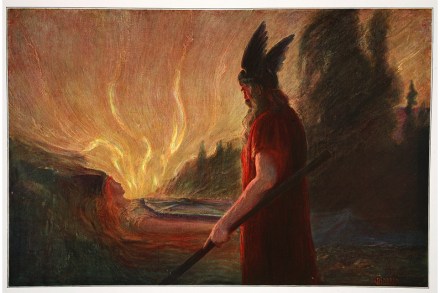
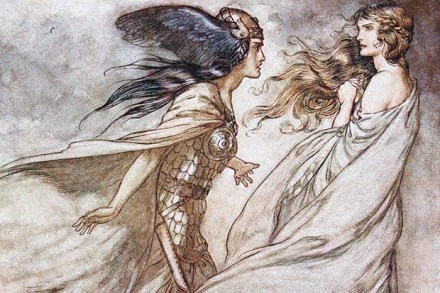
Wagner’s Ring is an ambitious cycle of four operas relating world history from Primal Swirl to End of Days. It took 26 years to write, takes 15 hours to perform, a double-size orchestra to play and a specially built opera house to stage. Michael Downes, the director of music at St Andrews University, places the

Sue Prideaux: Wild Thing, A Life of Paul Gaugin

From our UK edition

41 min listen

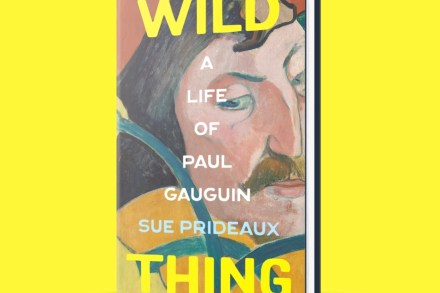
In this week’s Book Club podcast Sam Leith’s guest is the great Sue Prideaux who, after her prize-winning biographies of Nietzsche, Munch and Strindberg, has turned her attention to Gauguin in Wild Thing: A Life of Paul Gauguin. She tells me about the great man’s unexpected brief career as an investment banker, his highly unusual marriage and his

Nietzsche’s thinking seems destined to be mangled and misunderstood

From our UK edition

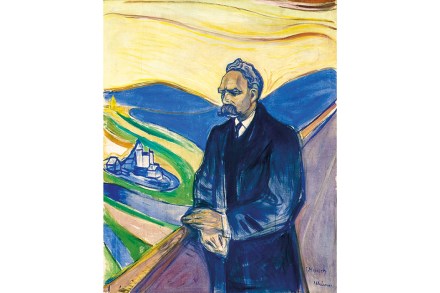
For Mussolini’s 60th birthday, Hitler gave him a de luxe edition of Friedrich Nietzsche’s complete works, bound in blue pigskin. After the war, writers vied to revile the philosopher. Then, in the 1960s, he suddenly became philosophy’s darling. How come? Enter two erotically entangled Italians: Georgio Colli, a philosophy teacher at Lucca from 1942, and

Roger Scruton’s swan song: salvation through Parsifal

From our UK edition

This is Roger Scruton’s final book. Parsifal was Wagner’s final opera. Both works are intended to be taken as Last Words: testaments of belief at the end of a long spiritual journey. In the introduction, Scruton identifies the enduring problem in his life, and ours, as: ‘How to live in right relation with others, even

The Redeemer

From our UK edition

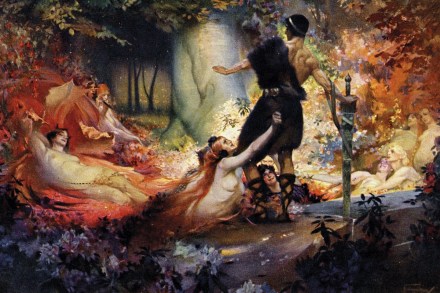
The political trigger for the Ring was the 1849 Dresden uprising, when the young freedom fighter Richard Wagner financed the hand grenades and debated ethics with his co-revolutionary Bakunin. According to Bernard Shaw, the Russian stood model for Siegfried, the Ring’s hero who would overthrow the old order and install a new realm of personal

Hiding in Moominland: the conflicted life of Tove Jansson

From our UK edition

Tove Jansson’s father was a sculptor specialising in war memorials to the heroes of the White Guard of the Finnish civil war. He did not like women. They were too noisy, wore large hats at the cinema and would not obey orders in wartime. Tove used to hide to spy on his all-male parties, where