Stuart Kelly

The serious business of games: Seven, by Joanna Kavenna, reviewed

From our UK edition

Joanna Kavenna is very serious about games. Her novels have a certain playful quality, even her debut Inglorious, where the humour and allusions are Mittel-european. More markedly ludic are her Lewis Carroll-esque fantasy about quantum physics, A Field Guide to Getting Lost and the Philip K. Dickish tech-dystopia of Zed. In Seven, however, it’s not

Hauntingly re-readable: Autocorrect, by Etgar Keret, reviewed

From our UK edition

How to describe the Israeli writer Etgar Keret’s stories? Sci-fi scenarios, vignettes, thought experiments, fables, parables? They do not have plots so much as premises from which consequences, extrapolations and ironic complications stem. Unfortunately, the joy of these pieces makes them resistant to reviewing. You have to tell not show their ingenuity. For example, the

A double loss: The Möbius Strip, by Catherine Lacey, reviewed

From our UK edition

The Möbius Book has been variously described as ‘a hybrid work that is both fiction and non-fiction’ and a ‘memoir-cum-novel’. Catherine Lacey herself asserts that it is a work of non-fiction, but with a qualifying ‘however’. It comprises two narratives, first- and third-person, and is published to be flipped 180 degrees. Ali Smith’s How to

Out of this world: The Suicides, by Antonio di Benedetto, reviewed

From our UK edition

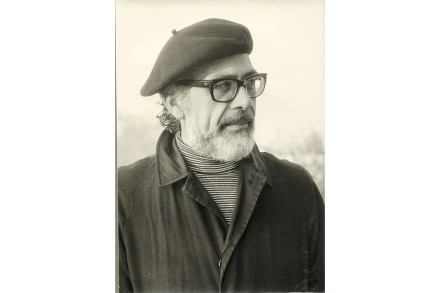
The NYRB logo is now something my eye leaps to when browsing, and the publisher’s eclectic range has proved consistently rewarding. The Argentine writer Antonio di Benedetto was praised by Borges, Bolaño, Cortázar and Coetzee. He was born in 1922, on 2 November, the Day of the Dead – which he made much of –

An unlikely comeback: Rare Singles, by Benjamin Myers, reviewed

From our UK edition

Last year, the Proms had a ‘Northern Soul’ special concert; and Benjamin Myers won the Goldsmith’s Prize for Cuddy, his polyphonic novel about St Cuthbert’s afterlife. I do not think he will win the prize again this year for Rare Singles, his novel about Northern Soul. I am glad about the Prom though, since I

Kapows and wisecracks: Fight Me, by Austin Grossman, reviewed

From our UK edition

Superheroes are the trump card of genres. As a rule of thumb, if a novel has a murder, it’s ‘Crime’; if it has a murder on a space station, it’s ‘Science Fiction’; and if it has a murder on a haunted space station, it’s ‘Horror’. But a novel with crimes, robots, faeries, cavemen, magic, cyborgs

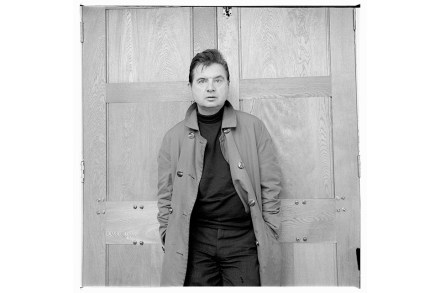
John Deakin: the perfect anti-hero of the tawdry Soho scene

From our UK edition

During the various lockdowns I found myself wondering how Iain Sinclair was coping with the restrictions. It seemed unthinkable that this unflinching punisher of pavements could be stuck with 30 minutes round the park. But, as it turns out, sequestering, in a fashion that only the Scots word ‘thrawn’ can do justice to, has resulted

At home in the multiverse: Bridge, by Lauren Beukes, reviewed

From our UK edition

Lauren Beukes is a writer who puts cerebral propositions into breakneck thrillers: structural misogyny in The Shining Girls; the flipside of patriarchy in Afterland. In Bridge, she investigates the depressive’s favourite hypotheticals – could have, should have, would have, might have. The protagonist is Bridget, whose mother, Jo, has recently died from brain cancer. Jo

Close to extinction: Venomous Lumpsucker, by Ned Beauman, reviewed

From our UK edition

Ned Beauman’s novels are like strange attractors for words with the letter ‘Z’. They zip, zing, fizz, dazzle and sizzle. They are a bizarre bazaar of pizzazz. Some readers no doubt might find his form of literary hyperactivity exhausting. Personally, I find it exhilarating. In part this is because the novels do not just have

At last, a book about James Joyce that makes you laugh

From our UK edition

I do not think I am alone in confessing that I had read critical works on James Joyce before I got around to reading him. As a schoolboy I drew up my own private curriculum, and one influential book was Malcolm Bradbury’s The Modern World, where I first encountered Joyce; and then moved on to

Only Iain Sinclair could glimpse Hackney in the wilds of Peru

From our UK edition

It seemed like a preposterous proposition. For decades, Iain Sinclair has been an assiduous psychogeographer of London, an eldritch cartographer mapping ley lines between Hawksmoor churches and Ripper tours, skulking around the torque of the M25 and fulminating about the Millennium Dome and the gentrification (and gerrymandering) around the Olympic Stadium. So when I learned

The poet with many lives

From our UK edition

This is an ingenious and infuriating book about an ingenious and infuriating writer. I first encountered Fernando Pessoa in the wonderful and lamented Penguin International Poets series, and what intrigued me was that he was more than one person. There was his poetry, but also sections attributed to his heteronyms, or imaginary alter egos. Stylistically

Puzzle Pieces: Cowboy Graves, by Roberto Bolaño, reviewed

From our UK edition

This might seem an odd confession, but the work of Roberto Bolaño gives me very good bad dreams. When I first read his epic masterpiece 2666 I had three nights of fractured nightmares. This happened with every other book as well — usually dreams about reading a book by Roberto Bolaño, except the words melt