Stuart Jeffries

Stuart Jeffries is a former Guardian journalist and author of Mrs Slocombe’s Pussy and Grand Hotel Abyss.

Henry Avery, the pirate king of Madagascar

From our UK edition

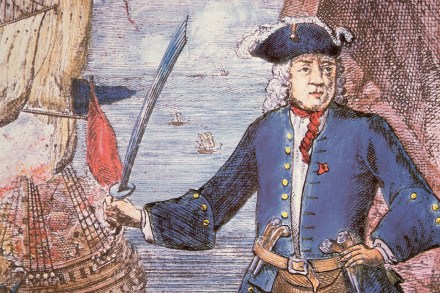
On 7 September 1695, the 25-ship Grand Mughal fleet was returning through the Red Sea after its annual pilgrimage to Mecca when it was attacked by five pirate ships.  In the ensuing battle, the pirates’ leader, an Englishman variously known as Henry Avery, Henry Every, the King of Pirates and Long Ben, seized precious jewels and metals worth £600,000 – equivalent to around £97.1 million today. The British government, hoping to appease the furious emperor, declared Avery ‘an enemy of all mankind’ The furious Mughal emperor Aurengzeb accused Britain of complicity in the raid and threatened to expel East India Company representatives from India.

In praise of Birmingham, Britain’s maligned second city

From our UK edition

During my gap year in 1981, I worked on the 24th floor of Birmingham’s Alpha Tower for the Regional Manpower Intelligence Unit. The city below, with its express ways racing past the Venetian Gothic of Joseph Chamberlain’s house and the Roman Revival of the town hall, were the realisation of the city planner Herbert Manzoni’s dream of creating a Midlands Motown. The Rotunda, the acres of systems-built tower blocks, even the inverted ziggurat of a modernist central library, together amounted to the antithesis of the smoky, tweedy, horse-powered, cut-throat Birmingham the world now knows from Peaky Blinders. That year, though, was the one which went wrong for Birmingham, Richard Vinen argues.

Stop tearing down controversial statues, says British-Guyanan artist Hew Locke

From our UK edition

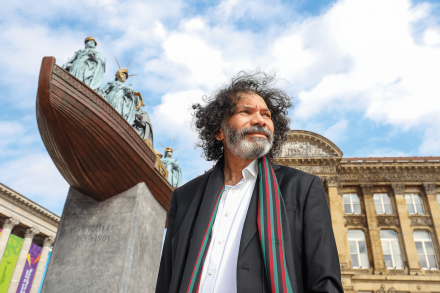
When Hew Locke was growing up in Guyana, he would pass by the statue of Queen Victoria in front of Georgetown’s law courts. Henry Richard Hope-Pinker’s 1894 statue had been commissioned to mark the monarch’s golden jubilee, but not long after Guyana became independent from British rule in 1970, the statue was beheaded and the remains thrown into bushes in the botanical gardens. ‘I remember being shocked that such a sacrilegious thing could happen,’ says the Edinburgh-born, Guyana-raised, London-based 62-year-old artist. ‘It set me thinking about what public statues are for. Who are these people? How come we pass by them without noticing every day?’ Half a century later and thousands of miles away, Locke is still thinking about these questions.

We must all become Doctor Dolittles and listen to the wisdom of animals

From our UK edition

One day the writer and artist James Bridle rented a hatchback, taped a smartphone to the steering wheel and installed some webcams in order to make his own self-driving car. Armed with software cut-and-pasted from the internet, his aim was to collaborate with the AI he’d thus devised and travel to Mount Parnassus, sacred to Dionysus and home of the Muses, ‘to be elevated to the peak of knowledge, craft and skill’. Just try telling that to the traffic cops. This batty project had a serious point. Bridle wanted to subvert the idea that we cede control to our dismal robot overlords every time we plug co-ordinates into the GPS. To that end, he went about training the car, which he had rigged up with what amounted to a neural network that functioned like a simplified brain.

Renaissance radical: Carlo Crivelli – Shadows on the Sky at Ikon Gallery reviewed

From our UK edition

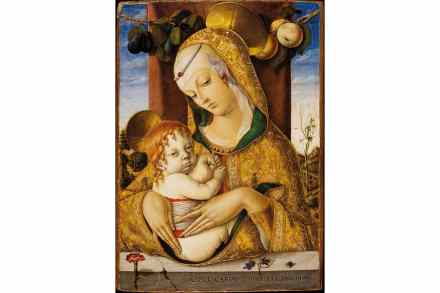
‘Camp,’ wrote Susan Sontag, ‘is the paintings of Carlo Crivelli, with their real jewels and trompe-l’oeil insects and cracks in the masonry.’ She didn’t even mention the renaissance painter’s curious cucumber fetish. Nor the unwittingly comedic homoeroticism of his portrait of Saint Roch, one stocking rolled down coquettishly to reveal a decorous inner-thigh wound. Nor the extraordinarily ugly baby Jesus clutching an apple as big as his head while his mother, understandably, averts her eyes. ‘Camp is playful, anti-serious,’ argued Sontag. Sontag wasn’t alone in not taking Crivelli (c.1430–95) seriously.

Saudi Arabia’s burgeoning art scene

From our UK edition

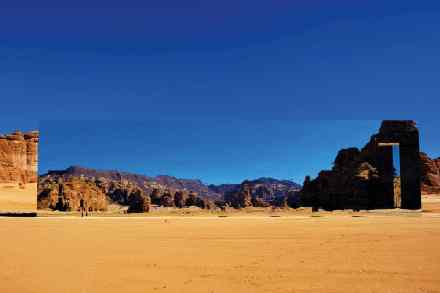
A little more than a century ago, a charismatic British army captain called T.E. Lawrence and fearsome Bedouin warriors swept through the sublime canyons around the desert city of Al-’Ula where I stroll today. They blew up the Hejaz railway, built to transport hajjis from Damascus towards Mecca but repurposed during the first world war by Turks to ferry munitions and troops. Such was the 1916-18 Arab Revolt that threw off Arabia’s Ottoman yoke. Today a very different kind of Arab uprising is sweeping through Al-’Ula. The canyons resonate not with bombs but with art. Dubai-based Zeinab Alhashemi has constructed boulders made from camel hides for a piece called ‘Camouflage 2.0’.

The 17th-century Huron chief Kondiaronk can still teach us valuable lessons

From our UK edition

Ten years ago, David Graeber was a leading figure of the Occupy Wall Street movement. He and his fellow protesters camped out in Zucotti Park, storing $800,000 of donations in trash bags because they didn’t believe in banks. The American anthropologist and anarchist activist called this an experiment in ‘post-bureaucratic living’. But such politics made Graeber persona non grata at US universities, so he moved to Britain where, in 2013, he became a full professor at the LSE. There, until his death last year aged 59, he imagined anarchist utopias and indicted what he took to be an oxymoron: western civilisation.

The tyranny of the visual

From our UK edition

In 1450, the Duke of Urbino, Federico da Montefeltro, became monocular after losing vision in his right eye following a jousting accident. In order to improve the peripheral vision of his left eye, he had surgeons cut off the bridge of his nose. In Piero della Francesca’s 1472 portrait, the Duke is depicted in profile, so we can see that an equilateral triangle of flesh and bone has been chopped from what must have been an elegant aquiline beak. I have been more fortunate. In the past year I’ve had four operations at Moorfields Eye Hospital in London to repair a detached retina that made me blind in one eye. I didn’t have to cut off my nose to spite my face and improve my vision. What was impossible in the 15th century has become routine in the 21st.

How the Beano shaped art

From our UK edition

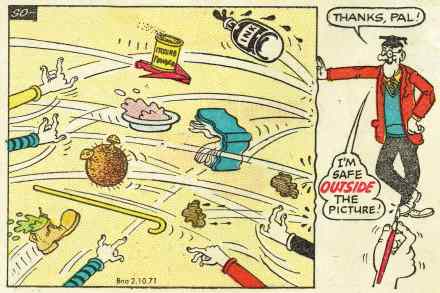
Superman and the Beano are both 83 years old. The American superhero first pulled on his tights for Action Comics No. 1 in June 1938. The following month, roughly 443,000 copies were sold of the Beano’s first issue, featuring Pansy Potter (the Strongman’s Daughter), Big Fat Joe, Wee Peem (He’s a Proper Scream) and, my personal role model, Lord Snooty. Not until Grand Theft Auto launched in 1997 has anything so culturally significant come out of Dundee. But there is a key difference between Superman and the Beano. While American heroes in general and Superman in particular uphold rules, the Beano’s success — its 4,000th edition in 2019 made it the world’s longest-running weekly comic — is predicated on characters who break them.

The art world is cashing in on anti-capitalism

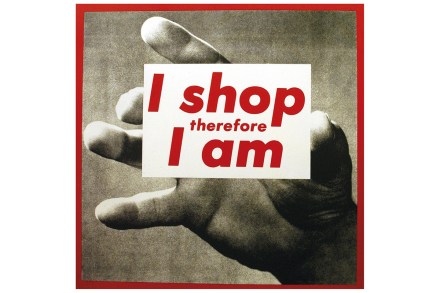
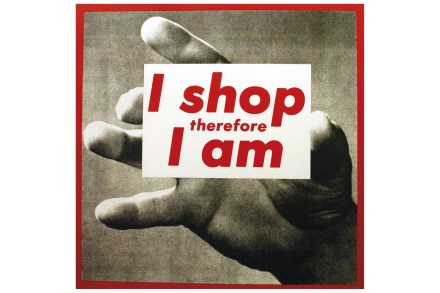
A few years ago, the American artist Barbara Kruger covered the facade of Frankfurt’s Kaufhof department store with a pair of huge eyes. It was as if Big Brother had come out of retirement. Above that unsparing gaze was the slogan, in Kruger’s signature Futura bold italic font: ‘You want it. You buy it. You forget it.’ It was a typical work of art by Kruger. She made her career from what’s called culture jamming, subverting media messages by transforming them into their own anti-messages and by indicting the business of capitalism. In 1987, for instance, she took an advertising image of an all-American boy flexing his juvenile biceps before his admiring sister and subverted that message with the overlaid words ‘We don’t need another hero’ for a billboard.

kruger art

Hugely pleasurable – a vision of summer: Jennifer Packer at the Serpentine Gallery reviewed

From our UK edition

We need to talk about Eric. In Jennifer Packer’s portrait of her friend and fellow artist, Eric N. Mack sits on a yellow chair that might have been borrowed from Van Gogh’s bedroom. He’s wearing excellent odd socks, one pink to rhyme with his shoes, the other yellow matching his trousers and chair. But it’s Eric’s face that’s most compelling. Like the ‘Mona Lisa’, Eric’s expression is inscrutable. He might be thinking about what’s for tea, the crisis in pictorial representation or, quite likely, nodding off. This enigmatic quality is intentional. ‘When I painted Eric, I wanted accuracy, but I also wanted to privilege his subjectivity and privacy,’ says Packer.

What really went on at Britain’s Bikini Atoll?

From our UK edition

Nearly a century ago, some Chinese water deer swam the River Ore to Orford Ness. They had escaped from the ornamental deer park at Woburn Abbey in Bedfordshire and, perhaps through ancestral homing instinct, headed as far east as possible without falling into the North Sea. They climbed unsteadily on to this strange shingle spit at the end of England and made it home, along with the gulls, thistles, wild poppies and the brown hares who, reportedly, are too burly to be airlifted by the Ness’s marsh harriers and barn owls. The pioneering deers’ descendants have borne witness since to many faces of human folly. From the first world war to the end of the Cold War, the Ness was home to experiments with airborne weaponry, radar and atom bombs.

How Foucault was shielded from scandal by French reverence for intellectuals

From our UK edition

Consider the hare and the hyena. The hare, Clement of Alexandria told readers of his 2nd-century sexual self-help manual Paedagogus, was thought to possess both male and female sexes and swapped their roles from year to year. As for the hyena, it was believed to acquire an extra anus annually and ‘to make the worst use of these added orifices’, as Michel Foucault puts it in the newly translated fourth volume of his History of Sexuality. For early church theologians the moral lesson was clear: we must not emulate gender-bending hares or randy hyenas. Rather, sex should be procreative, not pleasurable; we must go forth and multiply, borne by duty, not ecstasy.

Liberate yourself from sexual repression the Wilhelm Reich way

From our UK edition

When she was 22, Olivia Laing had a sensual epiphany in Brighton. She’d been drawn into a herbalist’s massage parlour by the sign outside claiming that headaches, anger, depression and colds — in fact any symptoms at all — were caused by stuck energy from past traumas that body psychotherapy could release. ‘The idea of the body as a storage unit for emotional distress excited me,’ she writes. Just as well she didn’t present with cancer or the symptoms of Covid. At the time, Laing’s body was, she thought, a cataclysm of inaccessible traumas: ‘I was so rigid and stiff I flinched when anyone touched me, like a mousetrap going off. The massages of Anna, a herbalist, helped.

Lisa Bjurwald, Douglas Murray and Stuart Jeffries

From our UK edition

29 min listen

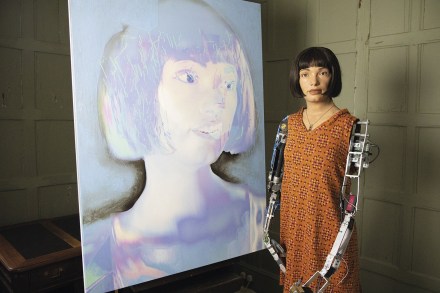
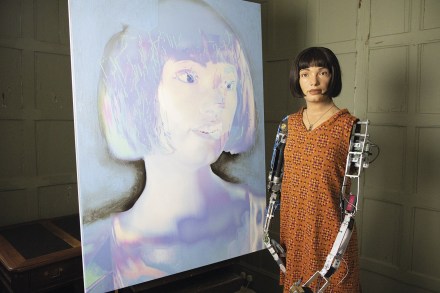
On this week's episode, Lisa Bjurwald reports on the Swedish monarchy going woke (01:20); Douglas Murray argues that the culture wars fit the UK even less well than the US (07:00); and Stuart Jeffries interviews the world's first AI artist.Also on the podcast: a complaints letter to the Times after their March 2020 story that Carrie Symonds and Boris Johnson were considering giving their dog up for adoption. The letter, though never sent, was revealed on Friday.

The world’s first robot artist discusses beauty, Yoko Ono and the perils of AI

From our UK edition

Like a slippery politician on the Today programme, the world’s first robot artist answers the questions she wants rather than the ones she’s been asked. I never had this trouble with Tracey Emin or Maggi Hambling. As we stand before a display of her paintings at London’s Design Museum, I ask Ai-Da whether she thinks her self-portraits are beautiful. What I want to get at, you see, is that, while it’s quite possible for a machine to make something beautiful, it’s hardly comprehensible for a thing made from metal, algorithms and circuitry to appreciate that beauty. ‘I want to see art as a means for us to become more aware of what’s going on in our lives. Art is a way to come together and a way to address problems. Art begins a conversation.

The artists ensnared by the capitalist system they affect to despise

From our UK edition

A few years ago, the American artist Barbara Kruger covered the façade of Frankfurt’s Kaufhof department store with a pair of huge eyes. It was as if Big Brother had come out of retirement. Above that unsparing gaze was the slogan, in Kruger’s signature Futura bold italic font: ‘You want it. You buy it. You forget it.’ It was a typical work of art by Kruger. She made her career from what’s called culture jamming, subverting media messages by transforming them into their own anti-messages and by indicting the business of capitalism.

The dark history of dance marathons

From our UK edition

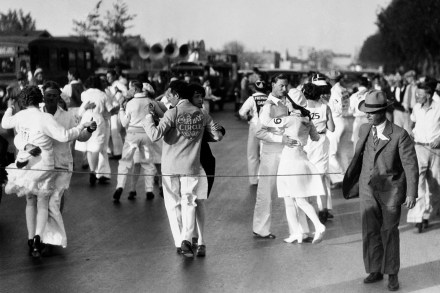
On 31 March 1923, Alma Cummings put her feet into a bowl of cold water. Then, tired-eyed but smiling obligingly for the photographer, she held up her dancing shoes. There were holes in both soles. Cummings had just finished a 27-hour stint of waltzing at a Manhattan ballroom, wearing out not just her shoes, but six male partners in the process. The dance instructor was one of the Americans responsible for a strange cultural phenomenon that swept the United States over the next two decades — dance marathons. Cummings’s record was soon beaten and within a few years promoters were organising public competitions across the States in which couples danced for hours, days, months even, to win prize money. Some collapsed and even died in the process.

Skyscraper squats and a lesson from India: the future of British architecture

From our UK edition

Not long ago, if you asked discreetly in the right Hackney pub, you would be put in touch with a character called Syd the Squatbroker. For as little as £150, he would gain access to the roof of an abandoned council tower block with a set of fireman’s keys. Then Syd (nom de guerre of a carpenter from Harlow) would abseil down to a window, gain entry and open an empty flat. Sometimes he would cut through heavy steel squat guards using oxyacetylene cutting gear. Latter-day squatbrokers aren’t yet abseiling down the Shard or Canary Wharf’s glass and steel phalluses to liberate underused office spaces and thereby help solve London’s housing crisis, but you’d think they must be tempted. Post-Covid, home working is becoming permanent.

The guileful, soulful art of Khadija Saye

From our UK edition

Gwyneth Paltrow has a new neighbour. On the same block in Notting Hill as Gwynie’s Goop store, with its This Smells Like My Vagina scented candles and must-have child-calming essential oil sprays, a shopfront has been taken over to display a poignant series of self-portraits by a rather different woman. Khadija Saye died three summers ago with her mother in the Grenfell Tower fire. Much of the 24-year-old artist’s work was destroyed in the blaze, including three tintype images from a series of nine called ‘in this space we breathe’. The other six were displayed that summer in the Diaspora Pavilion at the Venice Biennale in Saye’s first major international exhibition.