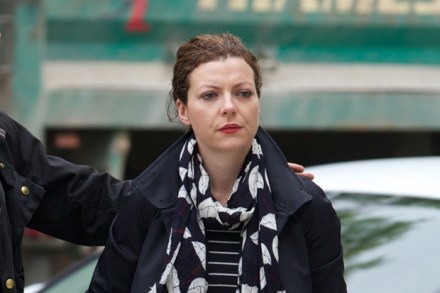
Stig Abell

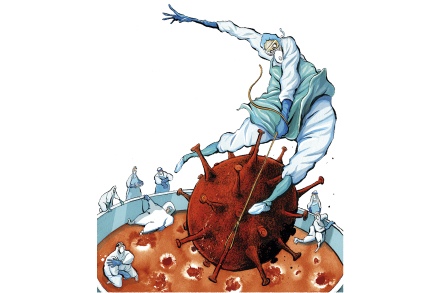
Who can tame the virus?

From our UK edition

32 min listen

The government is looking at easing the lockdown, but how much remains unknown about the coronavirus (00:40)? In the meantime, Joe Biden is batting off sexual assault allegations (10:15), and we take a look at the upside of lockdown for new parents (21:30).With science writer Matt Ridley, virologist Elisabetta Groppelli, Spectator USA editor Freddy Gray, host of the 'Democratically: 2020' podcast Karin Robinson, the Spectator's Assistant Editor Lara Prendergast, and Editor of the Times Literary Supplement Stig Abell.
Part sermon, part crossword puzzle

From our UK edition

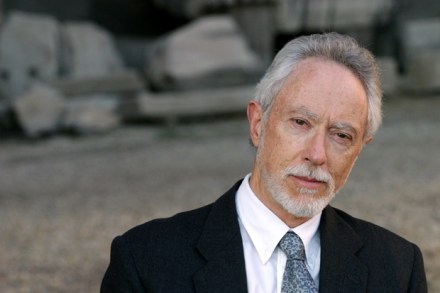
The Schooldays of Jesus is not, as it happens, about the schooldays of Jesus. It is the Man Booker-nominated sequel to The Childhood of Jesus (which, you guessed it, did not once refer to the childhood of Jesus either). J.M. Coetzee is now so much part of the literary pantheon, so liable to be rewarded by the critical classes and the academic industry surrounding him, that he no longer needs to worry about basics such as having a title that makes sense. He should still worry, one feels, about telling a story worth following. Like its predecessor, his new novel is set in a nameless Spanish-speaking province; a Kafkaesque, ‘featureless’ and ‘dreary’ place.

Umbrella, by Will Self

From our UK edition

James Joyce once described Ulysses — in dog Italian — as a ‘maledettisimo romanzaccione’, or monstrously big novel. It has come to stand as a modernist masterpiece, and also the acme of difficult, inaccessible, unwieldy fiction. It is to be read (if at all) effortfully, in sweaty admiration, and mercifully short chunks. One cannot help recalling Joyce when grappling with Will Self’s big new monster of a novel. And just occasionally, Self allows his formidable phrasemaking to drift towards bad Joycean pastiche: breastfeeding seen in terms of ‘hawsers and pipelines coiled away into milky fartysteam’, the ‘jewfoody stench’ of an old apartment, and the like. But no matter.

Stig Abell’s diary: My days in court with the Sun

From our UK edition

Soon after I joined the Sun as managing editor (among other things, I used to review novels for The Spectator), I read an interview with Keir Starmer, the outgoing head of the Crown Prosecution Service. What an unhealthy thing it would be, he said, if journalists had to consult with lawyers every time they pursued a story or asked a question. He was right — yet this is precisely what it is now like for most people in the business of trying to break stories in Britain. More journalists are on trial or facing prosecution here than in many banana republics around the world — as my newspaper knows to its cost. Last week, Clodagh Hartley, the Sun’s Whitehall editor, was finally cleared of paying a source within HMRC.

The Scent of Death, by Andrew Taylor – review

From our UK edition

Raymond Chandler once said that ‘the detective story, even in its most conventional form, is difficult to write well. Good specimens of the art are much rarer than good serious novels.’ This holds true for genre writing generally. Historical fictions, like murder mysteries, can often be dismissed as the thoughtless product of the hack, not the artist. For every ‘good specimen’ (and one might nominate Gore Vidal and Hilary Mantel as practitioners of this art), there are shelves groaning with the mediocre, the outright bad, and even the so-bad-it-is-good (Dennis Wheatley). Andrew Taylor, an expert in the realm of murder and mystery fiction (he reviews crime novels for this magazine), must know the potential pitfalls.

The growing pains of spirited youth

From our UK edition

It is initially unsettling to read a new novel by an acclaimed author that is not really new at all, merely available in an English translation for the first time. Orhan Pamuk, the Nobel Prize winner, wrote Silent House way back in 1983. It was his second novel, and helped to cement his reputation as the rising star of Turkish fiction. It has since been translated into a variety of European languages, and has already lived its literary life as a multilingual triumph and mused-over example of Pamuk’s ‘early’ period. It is rather thrilling for us monoglot Brits to be able now to share in the experience.

Nothing connects

From our UK edition

This is a slight book containing short stories about minor characters. And it is about to receive some fairly faint praise. A Possible Life, Sebastian Faulks’ 12th novel, does little to confirm exactly where he sits in the modern British canon. It probably does not matter greatly; on this showing, he is a competent creator of unmemorable prose, but there is little more to conclude than that. His resolutely low-key approach is certainly deliberate. A Possible Life tells five separate life stories of individuals (two from the 19th century, two from the 20th, and one from the 21st), who struggle in their attempts to establish a meaningful existence.