Stephen Pollard

Warrant for alarm

From our UK edition

A concerted effort is under way to make sure that, when it comes to the European Arrest Warrant, Brexit does not mean Brexit. The Police Federation, for example, will hear no ill spoken of the system. And the same might be said of the Prime Minister, who as home secretary praised it to the skies. As she put it in October 2014, without the European Arrest Warrant, ‘British criminals would be able to hop on to the Eurostar or fly to Spain, safe in the knowledge we wouldn’t be able to get them back to prosecute them.’ Without it, the UK would become ‘a honeypot for all of Europe’s criminals on the run from justice’. The statistics appear to back her.

The Queen’s speech can’t repeal the Law of Unintended Consequences

From our UK edition

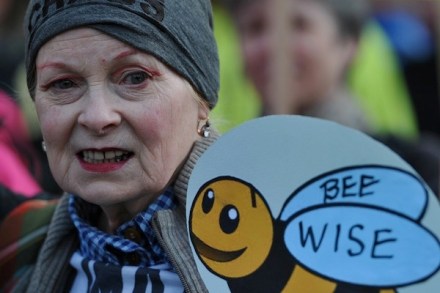
Last week, the European Commission voted to ban three pesticides which are said to harm bees. Everyone loves bees, so perhaps we should all be rejoicing? Well, I’m afraid my reaction was not joy, but to think: here we go again, this is bound to mean more dead bees. It’s inevitable: whether it’s a ban, an order or a reform, it doesn’t matter. When governments act they almost always forget the golden rule of public policy: the Law of Unintended -Consequences. And guess what? Just a few days after the vote, scientists are pointing out that the ban will mean farmers using older chemicals that are even more harmful to bees. For good measure, the alternative pesticides are more expensive to use and not as good at protecting crops.

Dead Jews don’t make news

From our UK edition

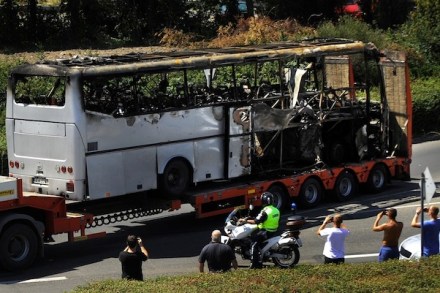
I’ve a question. You’ll see in a moment why I’m tempted to call it a Trivial Pursuit question. Can you tell me when the worst suicide bombing in Europe since the 7/7 murders took place? I doubt you’d believe me if I said it was last week. I can hear your response: ‘What suicide bombing? What murders?’ Last week, six people died and nearly 30 were injured when a suicide bomber, widely thought to be acting on ­Iranian orders, set off a device on a bus taking a group of tourists from their charter flight to their hotel. But if you got your news from the British media — the story was huge elsewhere — you would know almost nothing about it. The BBC news channel did mention the incident for a short while.

Theatre of rudeness

From our UK edition

I’m told that the new production of Dvorˇák’s Rusalka at the Royal Opera House is controversial. There were boos at the first night and reports of audience members walking out in disgust. I too walked out in disgust. Mine, however, had nothing to do with what was happening on stage. It was prompted by the man sitting next to me, who arrived trailing BO the impact of which could alone knock out any Iranian nuclear bomb. The odour was so powerful that I had to get out as soon as possible. No part of my mind could focus on the performance; I had to hold myself together until the first pause when I could flee. When I mentioned this to friends the next morning, the floodgates opened. Almost everyone had had a similar experience.

The end of Israel?

From our UK edition

Perhaps the least important aspect of Sunday night’s events in international waters off Israel is what actually happened. In the world in which Israel operates, the rights or wrongs of what Israel actually does are irrelevant. Reaction to Israeli behaviour is no longer governed by facts or by rational responses. The country is judged — and found guilty in advance — in the context of a perception on which all right-thinking people agree — that Israel is the enemy of peace. Whenever Israel acts, the default response is to condemn first and inquire later. That has certainly been the pattern this week. The pattern is well established. Remember the Jenin ‘massacre’ in April 2002?

It was Mandy wot lost it

From our UK edition

It’s time to drop the myth of Lord Mandelson as a political genius, says Stephen Pollard. No one has done more to wreck the Labour party Whatever the election result, one thing is sure: industrial quantities of obloquy will be heaped on Gordon Brown as the man responsible for Labour’s result. But if the party is after the real villain of the piece, it is looking in the wrong place. Mr Brown was, it was clear from the start, never suitable for the job of Prime Minister. By last summer, such a conclusion was not merely clear, it was being beamed in blinding neon lighting from the door of 10 Downing Street. So long as Gordon Brown remained leader, Labour was guaranteed defeat.

Stick to making your schmaltzy films, Mr Curtis

From our UK edition

Richard Curtis’s films — rose-tinted, upper-middle-class parodies of modern Britain — are bad enough, says Stephen Pollard. But his politics are even worse There are few film-makers whose name instantly conjures up a style, an atmosphere, a set of recognisable characters, even a plot. Richard Curtis is one of them. From Four Weddings and a Funeral and Notting Hill to Love Actually and Bridget Jones’s Diary, the label ‘Richard Curtis’ on a film tells you straightaway pretty much all you need to know. For myself, I’d rather boil my eyeballs than spend another second of my life being sucked in to his film-making-by-numbers Disney-Britain.

Why do we kowtow to the MCB?

From our UK edition

Last week, the Department for Communities and Local Government announced that it was lifting its ban on Whitehall contact with the Muslim Council of Britain, the self-proclaimed umbrella group of British Muslims. Quite apart from the tactical mistake of such a move — far from being an ally in the fight against extremism, the MCB is part of the problem — the group’s return to the Whitehall fold is a story of breathtaking cynicism and mind-boggling incompetence. In March 2009, the then communities secretary, Hazel Blears, suspended relations with the MCB.

Nick Clegg or Chris Huhne: no one can change the Lib Dems’ failure to find a niche

From our UK edition

The past week has seen history repeating itself, skipping the tragedy and moving straight to farce. Two weeks ago a Scottish MP, tipped from his first days in the Commons as a future leader of his party and hyped for years as his party’s one true statesman, stood exposed as a leader with a reputation built on so much hot air, and took a decision which plunged his party into chaos. On Monday a Scottish MP, tipped from his first days in the Commons as a future leader of his party and hyped for years as his party’s one true statesman, stood exposed as a leader with a reputation built on so much hot air, and took a decision which plunged his party into chaos. The hype surrounding both Gordon Brown and Sir Menzies Campbell has always been puzzling.

Why Europe may soon split along religious lines

From our UK edition

Stephen Pollard says that if embryonic stem cell research is banned in some parts of Europe — as it might be under the new EU treaty — old hostilities will resurface I wouldn’t care to estimate how many words have been written so far on the draft EU reform treaty. If and when it becomes a legal document, the English language will have been near exhausted for new terms to express the fundamental theme of almost every comment — that it is the old constitution in another guise. But for all the words and all the assertions, almost everyone has ignored one of the most important elements of the treaty — unsurprisingly, given that it’s buried in a footnote.

Campbell holds a mirror up to shallow Britain

From our UK edition

Stephen Pollard, who as David Blunkett’s biographer longed to see Alastair Campbell’s journal, says it tells us as much about the nation as it does about New Labour Alastair Campbell may be no Chips Channon or Alan Clark, but his diaries are at least readable. Very readable. And that is not something one can take for granted with New Labour diarists. The last set, from David Blunkett, managed to turn one of the most melodramatic political stories of all time into a turgid cure for insomnia. The Campbell diaries’ importance lies not in any great revelations but as the final part of a New Labour Trilogy. More than just telling us about modern politics, however, they act as a guide to modern Britain. Two previous books have been essential reading about The Project.

We already know what the political event of 2007 will be, so let’s move on

From our UK edition

It is clear from the Prime Minister’s new year message (issued somewhat surreally from the Florida home of the Bee Gee Robin Gibb) that he has already entered elder statesman mode. His theme was that Mr Brown must continue along the path which Mr Blair claims to have set: ‘[Labour] is dominating the battle of ideas. It will continue to do so provided it continues to be New Labour. This isn’t just about policy, though it is certainly about taking the tough decisions that prepare Britain for the future. It is also about our instincts, our ability to keep the core coalition together.’ In other words, the Prime Minister was telling Mr Brown to be like him or face the electoral consequences.

The soggy consensus of our times is about the very future of Western civilisation

From our UK edition

The image of Tony Blair and David Cameron exchanging frilly skirts and pearls is certainly arresting, but the Prime Minister’s reference in California last weekend to rampant cross-dressing was, disappointingly, political. For all the comment that his remarks have engendered, however, we have been here before. When the Economist coined the term ‘Butskellism’ in 1954, it was simply observing that, as Gaitskell wrote after being succeeded by Butler as chancellor, the Conservatives ‘have really done exactly what we would have done, and have followed the same lines on controls, economic planning, etc....’ Both parties were effectively interchangeable, working within the same framework of a mixed economy and government responsibility for full employment.