Stephen Glover

An eye for sensationalism

From our UK edition

According to Private Eye, executives at the Daily Mail were alarmed by the impending publication of Adrian Addison’s new history of the paper. They expected an onslaught. So their hearts must have sunk when they saw the cover of Mail Men. Stephen Fry, who may hate the Mail more than anyone alive, pronounces it ‘a
Why does the BBC so love lefty journalists?

From our UK edition

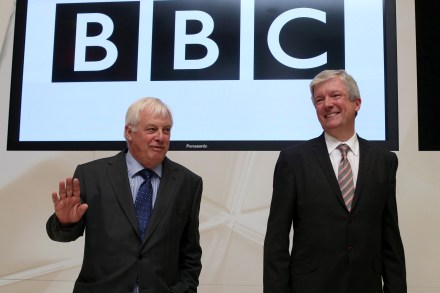
My response to the appointment of Ian Katz, deputy editor of the Guardian, to the editorship of BBC2’s Newsnight has been one of disbelief and amusement. Of course there’s nothing new in the Beeb hiring a paid-up Guardian-ista. It’s what we have come to expect. But one might have expected its new director-general, Tony Hall,

Farewell, Independent on Sunday

From our UK edition

On Tuesday the Culture Secretary Maria Miller announced to a breathless world the latest development in the Leveson saga. The government wants a royal charter to oversee a new press watchdog. I say ‘the government’, but the Liberal Democrats are only half on board. Like Labour, they seem still to hanker after some sort of

Save our speech

From our UK edition

In 1644 John Milton appealed to parliament in the Areopagitica to rescind its order to bring publishing under government control by creating official censors. I wonder what he would make of Lord Justice Leveson’s report, due to be published next week, which is expected to re-introduce statutory control of the press into English law after

The Times it is a-changin’

From our UK edition

Because the Times is, or was, a newspaper like no other, it has enjoyed the distinction of successive volumes of official history. The last, written by John Grigg, covered the years 1966 to 1981, when the Times was bought by Rupert Murdoch. Volume seven, entitled ‘The Murdoch Years’, takes us up almost to the present

Is Murdoch about to cut the cover price of the dumbed-down Times?

From our UK edition

To read the mind of Rupert Murdoch is difficult and not necessarily pleasant — difficult because he is cleverer than almost any other publisher who has ever lived, and not necessarily pleasant because he is nearly always planning to do someone down. But students of the man generally agree that the only thing that drives

However bad things may seem, the news for newspapers is good

From our UK edition

As another year looms, I cannot remember such despondency in what used to be called Fleet Street. It is not just that several newspaper groups are losing money: it was ever thus. There is talk of a general decline in newspapers. Some even suggest that the written word — as it appears in a bundle

The who, what, where, when of the Blunkett-Quinn business

From our UK edition

Who is more in the wrong, David Blunkett or Kimberly Quinn? Everyone has a view. Let me tell the story. I have deliberately chosen not to talk to Kimberly Quinn, who is publisher of The Spectator. Nor have I spoken to David Blunkett, or anyone who works for him. Last July Kimberly Quinn (she then

Why might Dr O’Reilly want to sell 30 per cent of the Independent?

From our UK edition

The news that Tony O’Reilly may be willing to sell 30 per cent of the Independent newspaper seems utterly astounding. It has enjoyed a considerable succès d’estime by going tabloid. From being a catch-up sort of newspaper which did not excel in any particular area, it has become a trendsetter. First the Times followed suit

Why poor Mr Howard can’t get a good press, even from Tory newspapers

From our UK edition

The Tory party conference began on Monday, and Radio 4’s Today programme gave it the kind of send-off reserved for truly hopeless causes. Item after item emphasised the Tories’ unfitness to govern, their uniformly low spirits and their enduring unpopularity. One excited reporter even suggested that the party might slide off the political map as

The work of P.G. Wodehouse is immortal, but he was guilty of a moral lapse

From our UK edition

The debate about P.G. Wodehouse’s wartime radio broadcasts from Nazi Germany has been raging for more than 60 years. It is re-ignited by Robert McCrum’s admirable new biography of the great writer. Most reviewers have taken the line that ‘Plum’s’ talks were inconsequential. Though sympathetic to his subject, Mr McCrum is a little sterner. ‘His