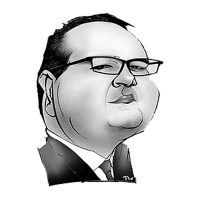
Stephen Daisley

Stephen Daisley

Stephen Daisley is a Spectator regular and a columnist for the Scottish Daily Mail

Do Donald Trump’s fans like South Park or not?

From our UK edition

Eric Cartman, the antihero of South Park, is a disgusting bigot who mocks disabled people, demeans women and says hateful things about Jews. When the series debuted in 1997, much of what offended parents, educators and religious groups came out of the mouth of this school-aged Alf Garnett. Later, it was the forces of coercive progressivism who bridled, especially at its derision of the trans creed. Suddenly, the median South Park disapprover was Emily, 30 ans, who worked in HR, actually met a black person once, and renamed her dachshund because ‘Dumbledore’ made her feel complicit in JK Rowling’s gendercide. Now the series is displeasing MAGA groupies after its 27th season debuted with a mild satire of Donald Trump.

The problems with a state of Palestine

From our UK edition

France intends to recognise a state of Palestine at the United Nations, which I’m sure will be followed by UK recognition of the same. We can be sure of this because the UK does not have an independent foreign policy when it comes to the Middle East. Inside or outside of the European Union, London’s stance on Israel and the Palestinians has become indistinguishable from the position of the European Commission. The European Commission simps for the Palestinians and Britain simps for the European Commission. I take the somewhat contentious view that Britain should simp for itself, which is why in my occasional (read: incessant) Coffee House posts recommending, beseeching, UK recognition of Jerusalem as the capital of Israel I have made a case based on the British national interest.

It’s time to overthrow the lanyardocracy

From our UK edition

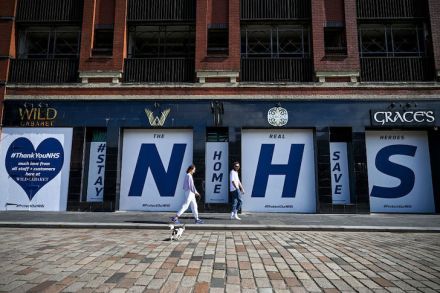
The trials of Sandie Peggie are a parable of where power lies in a country when lies are power. Peggie is a nurse from Fife, by all accounts a hard-working professional dedicated to her vocation and her patients. Things went awry, however, when she objected to undressing in a changing room in front of Dr Beth Upton, a male medic who identifies as a woman. If that sentence sounds absurd, that’s because it is, but we are supposed to pretend otherwise – especially if we want to be considered good people. Dishonesty is the best policy. Following a complaint from Dr Upton, Peggie was suspended by NHS Fife in January 2024, and she took the health board and Dr Upton to an employment tribunal.

Why Ross Greer would be good for the Scottish Green party

From our UK edition

Ross Greer is for Palestine, trans rights and riling up the Daily Express, making him the ideal candidate to lead the Scottish Greens. At an event in Glasgow today, the West Scotland MSP put himself forward as a successor to Patrick Harvie, who is standing down after 17 years at the helm of the environmentalist party that occasionally takes an interest in the environment. Under Harvie’s leadership, the Greens have prioritised cultural and identity politics over economics and ecology, helping to push the Gender Recognition Reform Bill through Holyrood and press for free bus travel for asylum seekers (an idea pinched by the SNP-run Scottish government).

What was missing from the 7/7 commemorations

From our UK edition

Something was scarce, if not absent, in the commemorations of the 7/7 Islamist attacks yesterday, and that is the fact that these were Islamist attacks. The word did not appear in the Prime Minister’s official statement to mark the anniversary. Keir Starmer commended ‘the unity of Londoners in the face of terror’, but what kind of terror? Far-right? Far-left? The IRA? Eco-warriors? The trouble is that if you specify the nature of the attacks, you specify the nature of the perpetrators. They were: Mohammad Sidique Khan (born in Leeds, parents from Pakistan); Shehzad Tanweer (born in Bradford, parents from Pakistan); Hasib Hussain (born in Leeds, parents from Pakistan); and Germaine Lindsay (born in Jamaica, family converted to Islam after settling in Yorkshire).

Rachel Reeves, Winston Churchill and a short history of crying in politics

From our UK edition

The scenes of a tearful Rachel Reeves are all anyone is likely to remember from yesterday’s Prime Minister’s Questions. The Chancellor wept openly, her expression distraught; it was difficult to watch. The death of Princess Diana and the extraordinary outpourings of public grief that followed marked the end of stiff-upper-lip Britain. Vestiges remain, however, and we still become uncomfortable at the sight of the prominent and powerful brought to tears. It triggers a Pavlovian response in much the same way that the mention of religion in polite company has our toes scrunching in our shoes, as we try to dig a hole to escape the awkwardness. The tearful politician has been with us for some time In fact, the tearful politician has been with us for some time.

Being a Christian isn’t easy

From our UK edition

Spare a thought for Chris Coghlan, who has learned to his horror that not only is the Pope a Catholic, his own priest is one too. The Liberal Democrat MP, who voted to legalise assisted suicide, attends St Joseph’s Catholic Church in Dorking. He complains to the Observer that Father Ian Vane ‘publicly announced at Mass that he was… denying me Holy Communion as I had breached Canon Law’. Coghlan believes this represents a ‘completely inappropriate interference in democracy by religious authorities’. If you’re not a Catholic, at this point you’re thinking one of two things: ‘No thanks, I’ll leave the Papists to their internal disputes’, or ‘Canon Law would be a cracking name for a courtroom series about a priest turned barrister’.

Nigel Farage and George Galloway share a common problem

From our UK edition

A more gracious person would refrain from saying, ‘I told you so’, but I’m not a gracious person. So, as George Galloway announces his backing for another Scottish independence referendum, allow me to say – nay, crow – I told you so.  Galloway, leader of the Workers party, says he and his party ‘support the right of the Scots to self-determination’ and that ‘the time for another referendum is close’. He adds: ‘Speaking personally, I can no longer support the British state as presently constituted.

Trump is making the world a safer place

From our UK edition

Strength works. It’s a foreign policy lesson that sounds too simple to be true and too unequivocal to be wise, and yet there is much truth and a good deal of wisdom in it. Strength does not mean wanton thuggery or hubristic swagger, it must be considered, well-regulated and guided by reflection and sober analysis. But when it is properly deployed to clear and realistic ends, strength can achieve results that negotiation, compromise and avoidance cannot. Strength, when put in service of just goals, can sometimes be the preferable moral option, checking threats, risks and baneful intentions.

Stephen Fry could do with a lesson in ‘radicalisation’

From our UK edition

Stephen Fry has accused J.K. Rowling of being ‘inflammatory and contemptuous’, ‘mocking’ and adding to ‘a terribly distressing time for trans people’. Fry, who narrated the Harry Potter audiobooks, has damned their author for saying ‘cruel’ and ‘wrong’ things and for failing to ‘disavow some of the more revolting and truly horrible, destructive – violently destructive – things that people say’. He suspects that she’s been ‘radicalised by Terfs’, charged her with kicking up ‘a hornet's nest of transphobia which has been entirely destructive’, and dismissed her as ‘a lost cause’.

How the SNP wrecked Scottish education

From our UK edition

A small but not insignificant morsel of data on the state of education after 18 years of the SNP running Scotland. New figures show the gap between the poorest and wealthiest school leavers has widened to a five-year high. In the least deprived areas, just 3 per cent of school leavers fail to go to a ‘positive destination’, the Scottish Government’s term for higher or further education, training, employment or voluntary work. Yet in the most deprived areas, areas like the former Lanarkshire industrial town from which I’m writing this, more than one in ten children leave school to what is euphemistically called ‘other destinations’, i.e. unemployment.

Why is the US so reluctant to fight Iran?

From our UK edition

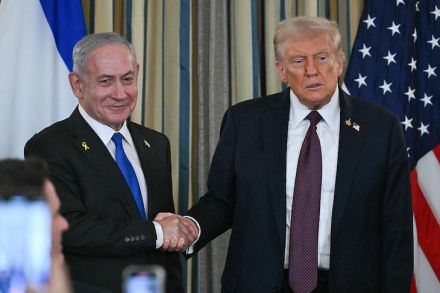
MAGA (Make America Great Again) isolationists all agree: the United States must not be drawn into the Israel-Iran war. Donald Trump was not elected president to become entangled in pointless foreign conflicts. Over on Truth Social, Trump's hokey-pokey routine continues – in, out, in, out, send the Fifth Fleet out? – and America Firsters despair at the prospect of the US fighting ‘a war for Israel’. In Jerusalem, the thinking is the exact opposite: Israeli leader Benjamin Netanyahu is reportedly concerned that the unpredictable Trump could push Israel to conclude Operation Rising Lion before its military objectives are met. This is all very interesting as Kremlinology, but it also throws up a point of curiosity: why is the US so reluctant to get involved?

Israel’s Iran attack has done the West a favour

From our UK edition

Israel’s overnight strikes on the Islamic Republic of Iran represent the initial salvo of what Jerusalem is calling Operation Rising Lion. In Genesis 49, Jacob tells his sons: ‘Judah is a lion’s cub/ from the prey, my son, you rise up/ He lies down and crouches like a lion/ like a lioness — who dares disturb him?’ Jerusalem is bracing itself for painful reprisals and has put its citizens on alert Israel rose up after years of warning the world of Iran’s plot to acquire nuclear weapons. In a series of daring precision strikes, it has targeted key regime figures, ballistic missile supplies and the Natanz nuclear facility.

SNP plotters should think twice before moving against John Swinney

From our UK edition

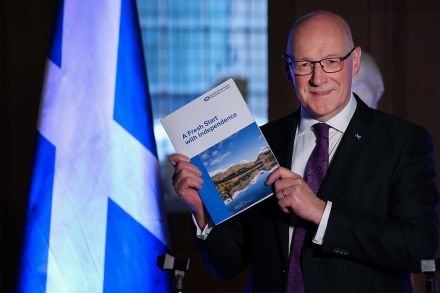
For those who feel Scottish politics has become a little dull of late, fear not: a rebel faction within the SNP is plotting to make things very interesting again. Today’s Glasgow Herald brings the news of a secret summit of top SNP insiders at which plans to remove incumbent party leader (and Holyrood first minister) John Swinney were discussed. The paper says 25 ‘senior’ figures gathered on Monday to consider the boss’s future after the SNP’s surprise defeat in last week’s by-election in Hamilton, Larkhall and Stonehouse, a seat they had held uninterrupted since 2011.

How has the media wronged Nadiya Hussain?

From our UK edition

Nadiya Hussain’s recipes have become staples in households across the country and acquired for the TV presenter and cookery writer the status of national treasure. However, her reaction to the BBC’s decision not to commission a new series from her leaves a bitter taste and prompts the thought that her secret ingredient all along might have been celebrity entitlement.  Over the weekend, the Great British Bake Off winner posted a video update on Instagram for her 950,000 followers.

Is Reform a right-wing party?

From our UK edition

If the problem with Labour is that it believes in nothing, the problem with Reform is that it believes in everything. The dispute over the burqa is only the latest example. Few things unite supporters of Reform like opposition to benefits for anyone other than themselves In pushing Keir Starmer to ban the burqa ‘in the interests of public safety’, new MP Sarah Pochin undoubtedly spoke for a significant section of the party’s supporters. For that matter, polling has previously indicated the British public’s backing for a ban. For some, it is indeed a safety issue: presented with a stranger, covered head-to-foot, identifiable only by their eyes, how can we know who that person is, whether they ought to be there, and what their intentions are?

Scottish voters are tired of devolution

From our UK edition

For some time now, I’ve been documenting a growing devoscepticism in Scotland, only to be assured, variously, that voters are not sceptical of devolution, that some are but their number isn’t growing, and that some are and their number is growing but it’s all just boomers and so it doesn’t matter anyway. It ought to trouble devolutionists that one in three Scots would shutter the Scottish parliament tomorrow Eight years ago, I wrote about a poll showing one in five Scottish voters supported the abolition of the Scottish Parliament. Last year, it was a poll recording satisfaction with devolution at just 50 per cent, with 26 per cent of voters and 49 per cent of Unionist voters expressing disillusionment.

Hamilton is just the beginning for Reform in Scotland

From our UK edition

In less than 72 hours, the polls will open in Hamilton, Larkhall and Stonehouse for a Scottish by-election like no other in recent memory. The Holyrood seat is located in the Central Belt, once unshakeably Labour and now firmly SNP. What makes this by-election so extraordinary is that Reform, a party which has never won an election in Scotland, has come from nowhere to mount a credible challenge to the mainstream parties. The bookmakers have Nigel Farage’s outfit as second-favourite to win on Thursday, and inside Labour and the SNP there are some who fear a drop in turnout and an electorate scunnered with the major parties could hand a narrow victory to Reform.  The likeliest outcome is that the SNP retains the seat.

Is Reform trying to race-bait Scottish Labour’s leader?

From our UK edition

Nigel Farage’s party is taking heat for a Meta ad it has run as part of the Hamilton, Larkhall & Stonehouse by-election. (The incumbent MSP, the SNP’s Christina McKelvie, died from breast cancer in March.) Reform is pushing its candidate, local councillor Ross Lambie, and claims it stands a chance of capturing the seat, which would have been ludicrous not so long ago and is still hard to fathom today. A Reform victory here in Lanarkshire would be a historic upset and would give credence to a series of polls which suggest the party is on course to make gains in next year’s Holyrood elections.

Are there more Chagos-style surrenders to come?

From our UK edition

Broadly speaking, there are two responses to Keir Starmer’s surrender of the Chagos Islands. The first is indignation. This is sovereign British territory and yet the Prime Minister has handed it over to a foreign country. The constitutional scholar Yuan Yi Zhu asserts that this decision ‘cannot be defended on any authoritative legal grounds’, and nor does it make much political sense. In exchange for being gifted territory that has never been under its sovereignty, the Republic of Mauritius has agreed to lease the Diego Garcia military base to the UK for the modest sum of £101 million a year for the next 99 years. The UK government has arranged for Britain to lose land and gain a landlord.