Stephen Daisley

Stephen Daisley

Stephen Daisley is a Spectator regular and a columnist for the Scottish Daily Mail

The Internal Market Bill isn’t radical enough

From our UK edition

The more the SNP decries the Internal Market Bill, the more I warm to it. Initially, I considered it sensible enough but wholly insufficient given the constitutional threat facing the United Kingdom. (Less keen on the law-breaking bit, mind.) But now Mike Russell, SNP constitution minister and professional hysteric, says the Bill will ‘undercut the existing settlement’ by allowing devolved administrations to be ‘overridden by the whim of the UK Secretary of State’ and by permitting ministers to spend ‘in opposition to the Scottish government’ in what he calls ‘an enormous assault on the devolved powers’. Now, that’s more like it.

Does Trump deserve a Nobel Peace Prize?

From our UK edition

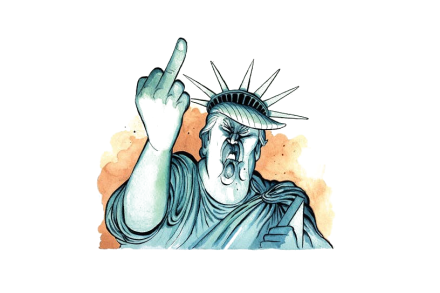
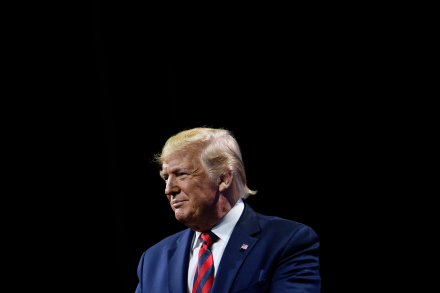
Should Donald Trump be awarded the Nobel Peace Prize? So far the President has notched up two nominations in a twist that all but confirms my suspicions that 2020 is being directed by M Night Shyamalan. We appear to be witnessing a hinge moment in the Middle East, a region that has left successive US presidents battered, bruised and bitter. Now, in the space of two months, Trump has secured agreements from the United Arab Emirates and Bahrain to normalise relations with Israel, with more Arab and Muslim states expected to follow.

The real problem with the Internal Market bill

From our UK edition

In a very specific and limited way, I have concerns about the Internal Market bill. It’s not a bad bill; on the whole, it is a welcome piece of legislation that attempts to bring some cogency to regulation and practice as we exit the EU. The bill will make it easier to trade and contract with and within the UK, standardising and simplifying a regulatory terrain that currently resembles the obstacle course at Sandhurst. It also establishes in black and white UK ministers’ power to invest directly in devolved nations, including via transfers to local authorities. Since the first hint of the bill’s contents, the SNP has been squalling that the UK government is mounting a ‘power grab’ to undermine their bailiwick of belligerence at Holyrood.

Israel is a true ally – it’s time Boris remembered that

From our UK edition

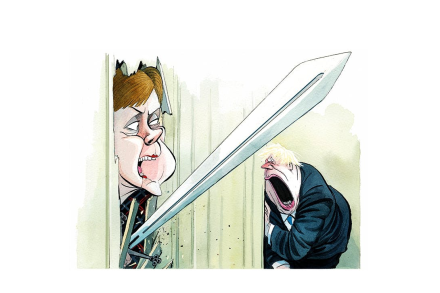
Boris Johnson has described himself as ‘a passionate defender of Israel’ and, what’s more, ‘a life-long friend, admirer and supporter of Israel’. He says the UK ‘has always stood by Israel and its right to live, as any nation should be able to, in peace and security’. That recognition that the Jewish state should be treated like every other does not, however, extend to a very basic courtesy: we refuse to recognise its capital and place our embassy there. There is a UK embassy in the capital of China, inflicter of coronavirus and mass incarcerator of Uyghurs. There is a UK embassy in the capital of Iran, one of the world’s leading state sponsors of terrorism.

How the Tories can stop the SNP’s hate crime bill

From our UK edition

Free speech concerns about the SNP’s Hate Crime Bill have been mounting for months now, so it was inevitable that the Scottish Parliament would eventually take notice. The Scottish Conservatives plan to force a vote there tomorrow calling on the Nationalist administration to withdraw the legislation. The Tory motion is unlikely to pass given the numbers at Holyrood. The SNP parliamentary group operates essentially as a single bloc vote while the sole function of the Scottish Greens is getting Nicola Sturgeon’s government out of the latest trouble it’s gotten itself into. What the resolution will do is compel MSPs to take a side.

Keir Starmer’s hypocritical attack on Tony Abbott

From our UK edition

One of the most impressive qualities of Sir Keir Starmer’s leadership so far has been his ability to land blows on the government without seeming political. He’s a lawyer with the demeanour of a bank manager: he’s just telling you how things are. That has served him well in his broadsides against ministers’ handling of Covid-19. But in his rounding on the Prime Minister’s preferred trade envoy, Tony Abbott, he has faltered. The charge that the former Australian PM’s views make him unsuitable for the role sounds like something cooked up by younger, less worldly advisors and foisted upon the Labour leader. I like to tell myself the same thing about his taking a knee in the Shadow Cabinet room. Abbott stands accused of sexism, misogyny and homophobia.

Could Scotland’s hate crime bill make depictions of Mohammed illegal?

From our UK edition

Charlie Hebdo’s decision to republish the Mohammed cartoons has the media a-fretting. Al-Jazeera called the illustrations ‘offensive’. The Daily Telegraph brands them ‘notorious’. For the BBC, they are ‘controversial’. I consider gunning down Parisian cartoonists in the middle of an editorial meeting somewhat controversial, but maybe I’m overly sensitive. The satirical magazine reissued the drawings to coincide with the trial of 14 suspects in connection with the 2015 terrorist attacks on Hebdo’s headquarters and a Jewish market. In all, 17 people were killed.  France is putting those accused of involvement in the Charlie Hebdo killings in the dock but in Scotland it could soon be illustrators themselves facing trial.

Richard Leonard must go

From our UK edition

They’re all it at. The dust has barely settled on the ruthless removal of Jackson Carlaw from the Scottish Conservative leadership yet it seems the Caledonian branch of the People’s Party are in rebellious mood too. Three Labour MSPs have called on Holyrood chief Richard Leonard to stand down, with moderate Jenny Marra describing his leadership as ‘tied from the start to the disaster of Jeremy Corbyn's project’. Leonard was chosen to replace Kezia Dugdale in 2017 but his lacklustre style, as much as his left-wing leanings, has seen him make no impact in almost three years. Well, no impact on the SNP; he’s certainly left his mark on Scottish Labour.

The case for cancellation insurance

From our UK edition

That thing that isn’t happening has happened again. Cancel culture has seemingly claimed its latest victim in Sasha White, a literary agent reportedly fired by her employer after trans activists complained about her retweeting a social media post that said ‘being vulnerable to male violence does not make you women’. Her biography on a previously anonymous Twitter account asserted that ‘gender non conformity is wonderful; denying biological sex not so’ and she had also expressed support for J.K. Rowling, a hate-figure for gender extremists. That’s that.

Scexit has become a matter of faith, not fact

From our UK edition

There is a satirical flowchart that sums up Scottish nationalism better than a thousand articles. It begins with the question: ‘Did Scotland do good?’ The chart branches off to the left for ‘Yes’ and the right for ‘No’. Answer ‘Yes’ and you are led to the outcome ‘proof that Scotland doesn’t need the UK’. Answer ‘No’ and you are assured it is ‘proof that the UK is holding Scotland’ back. Both branches then lead to the same end: ‘Independence’. Andrew Wilson is a walking, talking, but above all, believing version of this flowchart. In fact, it should be christened the ‘Wilson Diagram of Infinite Nationalism’.

The legal battle over how Scots define ‘woman’

From our UK edition

The law on gender is a mess and could either be about to get much clearer or messier still. The Scottish government is being taken to court by feminist campaigners over its plans to increase women’s representation on public boards. That’s not the sort of thing feminist campaigners typically take governments to court over so you might have already guessed what’s coming next. For Women Scotland (FWS) believes the SNP is using the Gender Representation on Public Boards Act 2018 (GRPBA) to change the law on gender recognition by stealth. That’s already too many acronyms, which is always a sure sign that a given law is a bad idea.

It’s time for Boris to back Israel

From our UK edition

Dominic Raab has visited Israel for his first trip as Foreign Secretary. By all accounts, he was made very welcome, despite the UK’s craven abstention at the UN over extending an arms embargo on Iran, a country where they arrest our ambassador, burn our flag and chat ‘Death to Britain’. Quite the dilemma we faced in that vote. According to the Foreign Office, Raab met Israeli prime minister Benjamin Netanyahu and Mahmoud Abbas, now in the 16th year of his four-year term as president of the Palestinian Authority. He was keen to 'reinforce UK commitment to preventing annexation and pursuing a negotiated two-state solution’.

Scots poll in favour of free expression

From our UK edition

The SNP’s determination to push on with its draconian Hate Crime Bill has put it on the wrong side of Scottish public opinion. A new poll indicates popular unease with plans to criminalise speech on everything from religion to ‘transgender identity’ if it is deemed ‘likely that hatred would be stirred up’. The Savanta ComRes poll of 1,008 Scottish adults found both generalised endorsement of classical liberal precepts such as free expression, open debate and the absence of a right not to be offended, as well as more specific concerns about the Bill itself.

Scotland’s Hate Crime Bill would have a chilling effect on free speech

From our UK edition

Among the encroachments on Milton’s three supreme liberties contained in Humza Yousaf’s Hate Crime Bill is a cloturing of the debate on gender identity and the law. Proposals to remove medical expertise from the gender recognition process have either stalled or been shelved, but not before their radical scope prompted a lively dispute about the ethics of gender identity, sex-based rights and the freedom to dissent. That freedom will be meaningfully reduced in Scotland if the Hate Crime Bill becomes law because it is a piece of legislation that begins from the position that all legitimate debate has already concluded. The Bill creates an offence of ‘stirring up hatred’ against a list of protected characteristics, including ‘transgender identity’.

Have Arab nations forgotten about Palestine by accepting Israel?

From our UK edition

The Palestinians are entering one of the most precarious periods in their nation’s history. The normalisation of relations between Israel and the United Arab Emirates is only the beginning as other Arab and Muslim states are expected to follow. Yesterday, Haidar Badawi Sadiq, spokesman for the Sudanese foreign ministry, confirmed talks between Khartoum and Jerusalem and predicted a treaty before the end of the year. Today, Sadiq was fired and the ministry denied all knowledge of secret negotiations. Maybe Sadiq spoke out of turn; maybe he jumped the gun; maybe he floated the test balloon that he was told to. No matter.

The rise of Scotland’s Covid nationalism

From our UK edition

Whenever some London celebrity with a hamster’s grasp of Scottish politics simpers about moving north to escape the flaxen-fringed Franco in No. 10, the cybernat rank-and-file briefly down pitchforks to assure them ‘we’ll get the kettle on’. Like all megachurches, Scottish nationalism loves nothing more than a convert and English progressives all the more so for their loathing of the political and cultural character of England today. In so far as Scottish nationalism has anything as coherent as a philosophy, it is that Scotland is more politically progressive and therefore more virtuous than England.

The joyous Israel-UAE peace deal

From our UK edition

There is a time for war and a time for peace, Ecclesiastes tells us. Joyously, in the middle of a joyless year, a time for peace is upon us. For only the third occasion since 1948, Israel has secured a deal for peace with an Arab state. The United Arab Emirates will put an ambassador in Israel and accept one in Abu Dhabi. Relations will reportedly go beyond formalities and include economic and scientific cooperation, in particular on developing a vaccine for Covid-19. The normalisation of relations with the UAE follows a courtship at first clandestine but in recent years open and candid. Israel and the Gulf states share a common security threat in the Iranian regime and have figured that cooperation will strengthen their hand against Tehran.

The case for a new Act of Union

From our UK edition

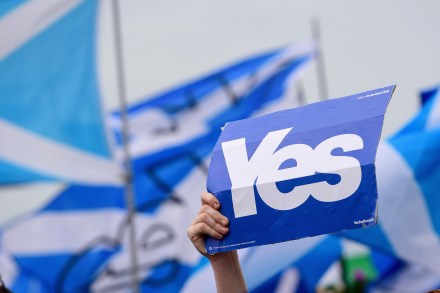
Scexit, not Brexit, will be the word that defines Boris Johnson’s premiership. The Times has a new poll from YouGov showing the SNP on 57 per cent with nine months to go until devolved elections. The same poll puts support for Scotland’s exit from the United Kingdom at 53 per cent. This confirms earlier polls from Panelbase: Scexit is now the majority position. That support for the SNP has leapt along with Nicola Sturgeon’s approval ratings (up 45 per cent on this time last year) is confounding observers, not least given the Scottish exam results scandal of the past week. Sturgeon has, of course, benefited from fronting televised daily Covid-19 briefings, carried live on the BBC, but her polling is as much to do with longer trends in Scottish politics.

The SNP’s Hate Crime Bill is turning the law into a culture war

From our UK edition

Every time I re-read the SNP’s Hate Crime Bill, I become more convinced that its author, Humza Yousaf, is trying his hand at a Titania McGrath style satire of wokeness. Scotland’s justice secretary is woke but his draft legislation is such a smash-’n’-grab of every item on the wishlist of coercive progressivism that he can’t be entirely serious. It’s not everyone who can forge common cause between the Catholic Church and the National Secular Society, the Law Society and the Scottish Police Federation, so Yousaf is gifted in that regard. Now the Faculty of Advocates, Scotland’s answer to the Inns of Court, has issued a 35-page examination of the Bill, warning among other things of serious ‘potential unintended consequences’.

Can Douglas Ross stop Scexit?

From our UK edition

Douglas Ross is the new leader of the Scottish Conservatives and since his predecessor lasted all of 167 days, best of luck might be more in order than congratulations. The Moray MP was awarded the position unopposed after Jackson Carlaw resigned entirely of his own volition and without any input from Downing Street. Ross inherits a party 35 points behind in the polls with a Holyrood election on the cards for next May. The SNP currently controls the Scottish parliament with the help of the nationalist Greens but, on present polling trends, would likely win a majority of seats in its own right. Worse, during Carlaw’s tenure, support for Scexit — Scotland’s exit from the United Kingdom — crossed over into the majority.