Stephen Daisley

Stephen Daisley

Stephen Daisley is a Spectator regular and a columnist for the Scottish Daily Mail

From Neil to Nigel: the descent of GB News

From our UK edition

I can’t claim to know any behind-the-scenes rivalries or boardroom brouhaha motivating Andrew Neil’s departure from GB News but I am glad to see him go. Neil is out at the still ill-defined channel which can’t decide whether it’s a populist classical-liberal network, standing up to authoritarian cancel culture, or a British version of Fox News. It excels at neither. Given wobbly ratings, staff departures and one instance of very off-brand knee-taking, it's not entirely surprising that Neil has finally had his fill and walked away. He was not only chairman but the underwriter of the promise — issued in his opening monologue — that the channel would dissent from the broadcasting mainstream with quality, rigour, open-mindedness and intelligence.

Sturgeon is indulging her conspiratorial supporters

From our UK edition

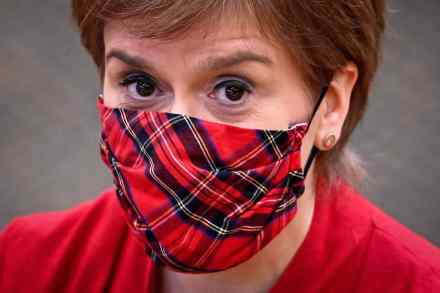
Nicola Sturgeon’s speech to the SNP’s conference earlier this afternoon was mostly standard fare (Covid, climate, coalition with the Greens, Universal Credit) but towards the end, a section on Brexit and independence stood out. She told the faithful: Westminster will use all that damage that they have inflicted as an argument for yet more Westminster control.By making us poorer, they’ll say we can’t afford to be independent. By cutting our trade with the EU, they’ll say we are too dependent on the rest of the UK. By causing our working population to fall, they’ll say the country is ageing too fast.They want us to believe we are powerless in the face of the disastrous decisions they have taken for us and the damage those decisions are doing.

Boris Johnson is the ‘Queen of Mean’

From our UK edition

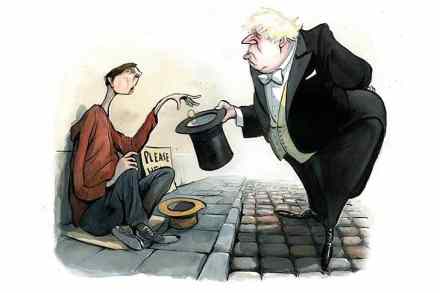
Leona Helmsley died 14 years ago so it is surprising to find her setting fiscal policy for the UK Government. When the New York real estate billionaire, dubbed the ‘Queen of Mean’, was on trial for tax evasion in 1989, her housekeeper testified that Helmsley had told her ‘only the little people pay taxes’.  This government, lacking any discernible philosophy of its own, appears to have adopted Helmsleyism, for it too believes it is the little people who should bear the tax burden. Indeed Helmsley, who commissioned upgrades to her $11m mansion then tried to leave the contractors with the bill, would probably admire the sheer chutzpah of what No. 10 is proposing.

The shame of the SNP’s grubby power-sharing deal with the Scottish Greens

From our UK edition

This afternoon Patrick Harvie and Lorna Slater, co-leaders of the Scottish Greens, will become ministers in Nicola Sturgeon’s government. The appointments come after Green members ratified a cooperation agreement over the weekend. The unity pact is a strategic masterstroke by Sturgeon, handing her an overall majority at Holyrood, insulating her from internal SNP criticism and coopting a rival nationalist party. There is one midge in the porridge, however, and it’s this: the Scottish Greens are unhinged. Not merely eccentric or a little outside the mainstream, but full-blown, solar-powered, honest-to-Gaia cranks. For an illustration, consider a motion debated at their autumn 2015 conference in Glasgow.

Sturgeon’s coalition deal is a masterstroke

From our UK edition

The deal struck between Nicola Sturgeon and the Scottish Greens takes Scotland’s devolved government into new territory. For one, it is the first time a Green party has been part of a ruling administration anywhere in the UK. For another, it is a different kind of governing alliance from that which we’re used to in Britain (though less so in Northern Ireland). It is not quite a full-blown coalition like the Cameron-Clegg government — the pact, published this afternoon, outlines areas where the two parties will continue to express separate positions — but nor is it a mere confidence and supply arrangement like the one Theresa May secured with Arlene Foster after the 2017 election.

The blind spot in the SNP’s ‘war on drink’

From our UK edition

Scotland’s grim reputation for abnormally high drug fatalities has become embedded in the public consciousness over the past year. The fact that fake benzodiazepines (‘street valium’) can be procured for 50p a pill on the streets of Dundee and Glasgow is now common knowledge, as is Scotland’s unenviable place at the top of Europe’s drug deaths league table. However, belated attention to this crisis should not allow signs of another to slip below the radar. New figures from National Records of Scotland (NRS) show a 17 per cent surge in alcohol-specific deaths between 2019 and 2020, a rise from 1,020 to 1,190 in the space of 12 months, what NRS terms ‘a marked increase’.

The rise of the Nationalist deficit conspiracy

From our UK edition

On the face of it, the numbers are damning. The Scottish government has released the latest annual edition of Scotland’s public finances. It does not paint a pretty picture. Scotland’s notional deficit has more than doubled from £15.8 billion to £36.3 billion, taking the nation’s fiscal shortfall from 8.8 per cent of GDP to 22.4 per cent. This figure factors in a geographical share of North Sea oil revenue and compares to a UK deficit of 14.2 per cent. That is not only the largest deficit of the devolved era but more than double that seen in the wake of the global financial crisis in 2009/10.

A papal visit would be another blow to Scottish anti-Catholicism

From our UK edition

You wait 2,000 years for a papal visit and three come along almost at once. Reports in the Scottish press suggest that Pope Francis would like to say Holy Mass while in Glasgow for the COP26 climate summit in November. It would mark the third time a sitting pope has visited Scotland and celebrated Mass there. Saint John Paul II was the first to come, in 1982, and led an estimated 300,000 in worship at Glasgow’s Bellahouston Park, then in 2010 his apostolic successor Benedict XVI gave an open-air Mass in the same park to a crowd of 70,000. Both events were seen as successes, attracting interest from non-Catholics and prompting reams of favourable media coverage.

Why are Labour politicians siding with Ken Loach?

From our UK edition

Richard Leonard, former leader of the Scottish Labour party, has posted a photograph of himself standing beside Ken Loach on his public Facebook page. The Central Scotland MSP, who was succeeded by Anas Sarwar as leader of Labour’s Holyrood wing in February, commented:  ‘Ken Loach is guilty of applying his rare talent to exposing the real life impact of poverty, inequality and injustice.’ Loach, director of Poor Cow and Cathy Come Home, claims to have been expelled from the party. The Guardian quotes Loach as saying:  ‘Labour HQ finally decided I’m not fit to be a member of their party, as I will not disown those already expelled.

How do we stop the next David Cameron?

From our UK edition

One of the enduring charms of British politics is how slight the pecuniary rewards are for taking up the job of prime minister. American presidents can look forward to stonking great advances on their memoirs. (Barack and Michelle Obama received a joint up-front payment of £47 million from Crown publishing group.) They claim rock-star appearance fees in exchange for a few platitudes to sandalled Silicon Valley execs. (Bill and Hillary Clinton raked in £110 million in speaking fees between 2001 and 2015.) A stint in the White House boosted George H W Bush’s net worth by 475 per cent and Richard Nixon’s by 650 per cent, pocket change compared to Bill Clinton’s 6,150 per cent. Unlike 1600 Pennsylvania Avenue, no one enters No.

The horror of Scotland’s drug death epidemic

From our UK edition

Drug deaths in Scotland have reached their highest-ever level, with Scottish government figures recording 1,339 fatalities in 2020. When the statistics for 2019 were published last December, confirming Scotland as the drug death capital of Europe, Nicola Sturgeon was forced to sack her drugs minister and pledge a £250 million investment in support and treatment services. The current drugs minister, Angela Constance, need not worry about her position just yet. Today’s numbers reflect the final year of her predecessor’s watch, but they nonetheless make for brutal reading. Constance has called them ‘heart-breaking’ but that is far from adequate. 2020 was the seventh year in a row in which the death rate went up. For a country with a population of only 5.

Can Cole-Hamilton prevent the death of the Scottish Lib Dems?

From our UK edition

As expected, Alex Cole-Hamilton has put himself forward to lead the Scottish Lib Dems, announcing his candidacy with an obligatory walking-and-talking video introducing himself to party members. It’s unclear whether anyone else will stand before the August 20 nominations deadline and it could well be that Cole-Hamilton wins by default. The rules certainly favour that outcome, with only Members of the Scottish Parliament allowed to stand, and the party having only four of those. Cole-Hamilton represents a generational shift from outgoing leader Willie Rennie, an old-fashioned social democrat at a loss to keep up with — or, frankly, understand — the lively array of identity-centric grievances threatening to replace liberalism as the party’s guiding philosophy.

Boris could make devolution reform his legacy – if he has the ambition

From our UK edition

Today marks two years since Boris Johnson accepted Her Majesty’s invitation to serve as her fourteenth Prime Minister. His tenure was meant to be all about Brexit but so far has mostly been about Covid, yet the invisible theme running under it all is the constitution. Britain is almost a quarter-century on from the legislative devolution experiments in Scotland, Wales and London, which leeched power away from Parliament and created rival seats of political authority to Westminster. Scotland is where devolution has taken its most aggressive form and where it has done the most to undermine the Union, parliamentary sovereignty and even the continued existence of the United Kingdom itself. Two years in, the Boris era has brought modest relief from the policy of ever-weaker Union.

What are the limits of Boris’s ‘levelling-up’ agenda?

From our UK edition

No doubt Boris Johnson has many qualities but the only one that comes to mind is this: he is not a conservative. That realisation may be dawning a little late on his more spirited supporters, who gave short shrift to anyone making this point during the flaxen-haired dauphin’s campaign for the crown, but it sunk in some time ago with his savvier opponents.  Boris’s non-conservatism is not the primary obstacle to the Labour party (or the broader left) regaining parliamentary power. But it is an added hindrance that could be done without. However, it also presents an opportunity to use a nominally Tory government to advance policies that wouldn’t ordinarily appear in a Tory election manifesto.

Kicking out the cranks won’t save Labour

From our UK edition

There is a problem with Sir Keir Starmer’s reported plan to expel 1,000 Labour members associated with ‘poisonous’ groups, and not just that there are way more than a thousand poisonous people in the Labour party. The problem – and it’s a common error – is that Sir Keir exaggerates the role played by the far-left in bringing Labour to the point where it has lost four general elections in a row and last led the Tories in a poll almost six months ago. The cranks became more visible after Ed Miliband’s election as leader, more numerous thanks to his three-quid revolution and more powerful when that policy put Jeremy Corbyn in charge, but they alone are not to blame for the party's current malaise.

Revealed: The SNP strategy for a second independence vote

From our UK edition

A new leaflet from the SNP says another referendum on independence is ‘an issue of basic democracy’ and that Boris Johnson ‘is seeking to block the democratic right of the people of Scotland to decide our own future’. The eight-page missive, which I understand is being distributed initially to party members, is entitled ‘A Referendum for Recovery’ and features the ‘Yes’ branding of the SNP’s campaign for indyref2. The booklet is anchored by a short essay by Mike Russell, party president and former constitution minister in Nicola Sturgeon’s devolved administration at Holyrood.

Who can make the Scottish Lib Dems great again?

From our UK edition

Willie Rennie's resignation — announced, as only he could, via a self-shot video while climbing Benarty Hill in western Fife — means there's now a vacancy at the top of the Scottish Liberal Democrats. Given the party holds just four seats at Holyrood and four at Westminster, the summit of Benarty enjoys a more elevated position than the Lib Dem leadership. But can Rennie's replacement have any more luck in reviving the party's fortunes? The party was in government at Holyrood from 1999 to 2007 as Scottish Labour's junior partner but Nick Clegg's coalition with David Cameron, the rise of the SNP and the political realignment brought about by the 2014 independence referendum all did for the Lib Dems' fortunes.

‘Anyone But England’ is a sad reflection of Scottish society

From our UK edition

My name is Stephen and I am a Bad Scot. At least that’s how I feel. For the past week Italian flags have been popping up all over Scotland ahead of tonight’s Euro 2020 final. Music station Pure Radio Scotland rebranded itself ‘Pure Radio Italy’ for the weekend. A shopper in Glasgow complained that Tesco was failing to ‘help boost national pride’ after their local branch played the England fan anthem ‘Vindaloo’. A pub in the city centre had the moment Gareth Southgate missed the decisive penalty against Germany in Euro 1996 blown up into a giant poster and is displaying it next to the bar’s entrance.

Cummings reveals the Unionist heart of darkness

From our UK edition

Like Walter Kurtz, Dominic Cummings had immense plans but was tripped on the threshold of greatness by the weaknesses of his superiors. Now he holds court from his fortress temple of Substack where, in the fashion of Martin Sheen's Captain Willard, subscribers receive his glum musings on Covid strategy, systems management and judicial review. Cummings is sometimes regarded as a brilliant sociopath and while I sway back and forth on whether the emphasis belongs on the adjective or the noun, his insights into how government really works are immensely valuable to understanding policy-making, implementation and the impotence of power.

Why has the NHS been awarded the George Cross?

From our UK edition

Awarding the George Cross to the NHS seems a bit much, though in keeping with our devotion to the aspirin-dispensing national religion. The health service has been bestowed the highest civilian gallantry medal for its public service and its handling of the Covid-19 pandemic. It’s not that health professionals don’t deserve recognition. They do, though I’d have thought paying nurses better would be a more tangible nod. And it’s not as if there is no precedent for an institutional recipient, with the entire nation of Malta honoured in 1942. Still, admirable though the NHS’s pandemic response has been in places, it’s not quite single-handedly holding back the Luftwaffe and the Regia Marina.