Stephen Daisley

Stephen Daisley

Stephen Daisley is a Spectator regular and a columnist for the Scottish Daily Mail

Who governs Britain? Not ministers, it seems

From our UK edition

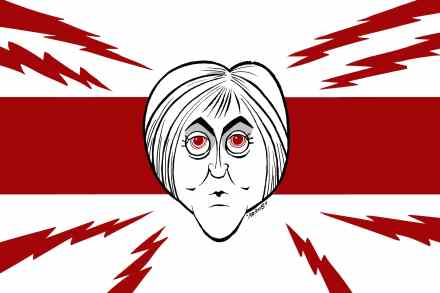
Who governs Britain? It’s a dangerous question, as Ted Heath learned half a century ago. But while he was concerned with untrammelled unions, ministers today must contend with another unelected cadre calling the shots. The difference is that now, like in so many horror movies, the calls are coming from inside the house.  The Telegraph reports that the Ministry of Justice has appointed a ‘transgender employee support officer’. That in itself is hardly surprising. What does stand out is the reason for the appointment.

Douglas Ross has become Boris Johnson’s human shield

From our UK edition

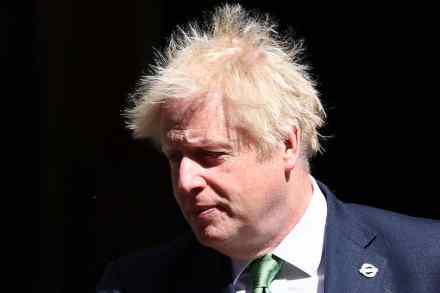
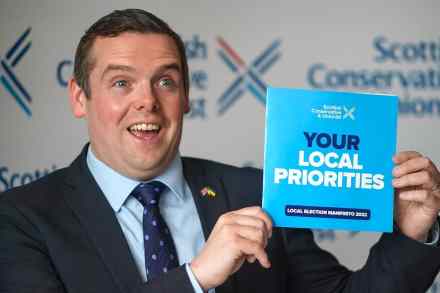
If Boris Johnson has a superpower, it is the ability to make others pay the price for his wrongdoing. Today the whipping boy is Scottish Conservative leader Douglas Ross, though it must be said Ross walked clear-eyed into the path of the scourge. That’s another of the Prime Minister’s skills: he can convince people that it would be in everyone’s interest if they maximised their exposure to political risk so that he may minimise his. In the run-up to the Iraq War, a bunch of peace-mongering oddballs flew to Baghdad to offer themselves as human shields and Tories who volunteer to take flak for Boris give off much the same energy.

Boris deserves credit for his Ukraine response

From our UK edition

Boris Johnson’s visit to Kyiv is notable not only for its unannounced nature but for the additional package of support for Ukraine it has heralded. The Prime Minister pledged 120 armoured vehicles, new anti-ship missile technology, and a further £385 million in World Bank lending. The government will also permit tariff-free imports of Ukrainian goods to the UK, something requested by Volodymyr Zelensky. The announcement followed on the heels of extra military hardware, set out yesterday, which included anti-aircraft and anti-tank missiles, as well as precision-strike kamikaze drones. That package totalled £100 million and is additional to the £394 million in grant aid to fund humanitarian services.

Is Israel facing a new Intifada?

From our UK edition

Dizengoff Street is one of the busiest thoroughfares in Tel Aviv, a strip of bars, restaurants and Bauhaus architecture that is typically bustling with young people on a Thursday evening. Last night, it was the scene of the latest Palestinian terror attack when a gunman opened fire outside the Ilka bar, killing three and wounding nine. One of those killed was Olympic kayaker Barak Lopen, who represented Israel at Beijing 2008 and London 2012. In the past two weeks, 14 Israelis have been killed by a mixture of Palestinian and Israeli-Arab terrorists. For comparison, there were 17 terrorism-related fatalities in the entirety of last year. I asked on Coffee House last week if Israel was in the midst of another wave of terrorist violence. Dizengoff Street answers that question.

The revealing backlash to Boris’s Channel 4 sell off

From our UK edition

Why is there so much anger over the sale of Channel 4? Tonnes of slebs are very cross and have signed a petition. But there’s no guarantee it will actually happen now that some Tory backbenchers have expressed their misgivings. If I were a Tory and cared at all about this issue — which, to be clear, you shouldn't — I’d be mindful of the Prime Minister's track record when it comes to matters requiring a backbone. Grassroots and instinctive Tories bear the brunt of his laziness and disloyalty. It is, after all, the things they care about – the things they love and hate and believe in and fear – that are sidelined by a Prime Minister who doesn't govern like a conservative for the wholly legitimate reason that he isn’t one.

It’s time to bring the Falklands into the United Kingdom

From our UK edition

Today marks 40 years since Operation Rosario, when Leopoldo Galtieri’s commandos landed on the Falkland Islands and began an invasion that prompted the Falklands War. The Guardian has commemorated the occasion with an unapologetic op-ed by the Argentinian government swearing itself to reasserting control over the islands. Foreign minister Santiago Cafiero, author of the op-ed, declares that ‘the recovery of sovereignty is an inalienable objective of the Argentine people’ and says ‘no Argentine government will cease in its pursuit of our sovereign claim’.  Cafiero’s op-ed is full of self-pity but utterly lacking in self-reflection.

Israel is facing a new wave of terror

From our UK edition

Is Israel in the midst of another wave of terrorist violence? Five Israelis were killed in a terrorist incident on Tuesday evening. The attack struck the adjacent cities of Bnei Brak and Ramat Gan; one shooter has so far been identified, a second person has been arrested and the security services reportedly suspect a third might still be at large. It is the third terror attack in a week. Two Border Police officers were shot dead in Hadera on Sunday and four Israelis were stabbed to death in a terrorist incident in Beersheba last Tuesday. That is 11 people killed in seven days and the Jerusalem Post counts the latest killings as the tenth attack this month. What is particularly concerning for the Israelis is the character of the attackers.

A letter won’t educate Afghan girls

From our UK edition

Well, that’ll show ‘em. Liz Truss has released a joint statement with US Secretary of State Antony Blinken declaring themselves ‘united in our condemnation of the Taliban’s decision not to reopen secondary schools to Afghan girls’. Also united are the EU high representative and the foreign ministers of Canada, France, Italy, Japan and Norway. The authorities in Afghanistan issued an order earlier this week suspending the planned return to school of female pupils, citing the need for a decision on uniforms for girls that are compliant with ‘Sharia law and Afghan tradition’. Team Euro-America: World Police say the Taliban’s U-turn ‘contradicted its public assurances to the Afghan people and to the international community’.

The SNP’s ferry mess

From our UK edition

Eight years ago, and with the independence referendum one month away, the Clyde’s last commercial shipyard went into administration. The collapse of Ferguson's not only threatened the jobs of 70 shipbuilders: it was an inconvenient symbol of industrial decline right as the SNP was trying to parlay rhetoric about an independent Scotland being ‘one of the world’s wealthiest nations’ into a Yes vote on polling day. The Scottish government intervened and quickly arranged for a billionaire adviser to then First Minister Alex Salmond to buy Ferguson’s.

Why is Biden copying Obama’s mistakes with Iran?

From our UK edition

There was a picture taken on Tuesday that says more than just a thousand words. The photograph was snapped in Sharm el-Sheikh and shows Abu Dhabi Crown Prince Mohamed bin Zayed Al Nahyan and Israeli Prime Minister Naftali Bennett seated either side of Egyptian president Abdel Fattah el-Sisi. According to the Egyptian president’s office, they met to discuss ‘the repercussions of global developments, especially with regard to energy, market stability, and food security’ but ‘they also exchanged visions and views on the latest developments of several international and regional issues’. That’s a very wordy way of saying ‘Iran’.

The naive idealism of Gordon Brown’s Nuremberg trial

From our UK edition

Vladimir Putin hasn’t won the Ukraine war yet and already they're talking about putting him in the dock. Gordon Brown’s call for the establishment of Nuremberg-style trials, ‘indicting President Putin and his inner circle for the crime of aggression against Ukraine’, is well-meaning and emerges from a sincere Christian socialist worldview. I once termed Brown a ‘moral romantic’ and his Nuremberg proposal is pure moral romanticism. In a world governed by right and wrong, he is obviously right but in the world as it is, fallen and wicked, his plan to bring Putin before an international tribunal is little more than wishful thinking.

The uncertain future of the Equality Act

From our UK edition

Sir Keir Starmer's interpretation of the Equality Act has caused something of a stir. The Labour leader cited the Brown-era legislation to support his assertion that 'trans women are women' and that this 'happens to be the law in the United Kingdom'. This reading of the Act has drawn criticism from gender-critical feminists, including the trans writer Debbie Hayton, who states: If Keir Starmer thinks that I am a woman, I am delighted to tell him the truth. Transwomen (like me) are male, while women (like my wife) are female. Biology does not lie, male is not female, and therefore transwomen are not women. For all my many other sins, I am not a lawyer.

Nicola Sturgeon’s Potemkin parliament

From our UK edition

Is the word of a Scottish government minister worth anything? The question arises in the wake of the SNP’s Hate Crime Act which, among much else, creates the offence of ‘stirring up hatred’ against ‘transgender identity’. Feminist groups warned early on that the Bill’s language could see people who don't believe that men can become women (or vice versa) prosecuted for what had hitherto been treated in law as legitimate expression. Prominent among these groups was MurrayBlackburnMackenzie (MBM), a policy analysis outfit whose principals boast extensive scholarship and years of experience inside the civil service.

Julie Burchill has found a new way to provoke: she’s turned sincere

From our UK edition

The greatest ever social media spat took place before the first tweet was sent, and was conducted via fax, which was like email but with the satisfyingly tangible tear of a fresh missive just arrived from across the planet. It was early 1993 and Julie Burchill, then of the Modern Review, was locked in a war with Camille Paglia, then of any US talk show you cared to tune into. The conflict began with a disobliging review Burchill filed of Paglia’s Sexual Personae, before shifting to the Xerox front, where Paglia made the mistake of questioning her interlocutor’s working-class credentials. Burchill brought hostilities to an abrupt close with her final communiqué, which read in toto: ‘Dear Professor Paglia, Fuck off, you crazy old dyke. Always, Julie Burchill.

No, Scottish independence is not like the war in Ukraine

From our UK edition

Perhaps it’s the absence of any oppression of their own country that compels Scottish nationalists to latch onto the oppression of others. On Monday, Michelle Thomson, an SNP MSP, retweeted news of Ukraine’s emergency application for EU membership, adding: ‘Delighted for Ukraine. It’s [sic] just goes to show what political will can achieve. Remember this Scotland!’ The SNP’s current position is for Scotland to secede from the UK then apply for membership of the EU, a process nationalists have previously suggested Brussels would fast-track. Thomson came in for a barrage of criticism and later deleted the tweet, admitting it was ‘insensitive’. She is taking all the flack but she’s hardly alone in dabbling in such rhetoric.

What is the point of the UN?

From our UK edition

When all this is over, we will have to hold a grown-up and perhaps very difficult conversation about the United Nations. No institution is perfect, or has supernatural powers to stop war or despotism, and perhaps nothing could have dissuaded Vladimir Putin from invading Ukraine. But the UN’s failure to prevent one fifth of its permanent security council from overrunning another member state should give us pause. There are the hard realities of realpolitik, of course, but there is also the question of endemic institutional failure. It may be that we will either have to change how we think about the UN or change the UN itself.

Putin must look at the West and laugh

From our UK edition

Whatever the West’s response to Russia’s attack on Ukraine’s sovereignty, the crisis demonstrates the limitations of western politics and policy across the board. If Vladimir Putin understands any demographic better than the Russian people, it is the governing class of the West: that Harvard-Oxbridge-Sciences Po axis of toweringly smug and practically interchangeable global-liberals who weep for international norms they weren’t prepared to defend. Their ideas and their sanctions are tired because they are civilisationally tired. Putin knows this, but none of the rival ideologies aiming to replace liberalism have anything better to offer.

P.J. O’Rourke: the finest satirist of his generation

From our UK edition

P.J. O’Rourke was the finest conservative satirist of his generation and therefore the finest of any political persuasion. Satire, an impertinent and mean-spirited attack on authority, is generally and perhaps even inherently a left-wing genre but O’Rourke came into his own in the wake of the 1960s, when the counterculture tried to overthrow authority but ended up replacing it instead. Richard Nixon and Ronald Reagan may have swept the ballot boxes but where real power lay — in the newsrooms and the entertainment industry, on the campuses and in the publishing houses — the radicals won in a landslide.

In praise of Deborah Lipstadt

From our UK edition

The United States Senate is not a body commonly associated with alacrity but its sluggishness in considering the nomination of Deborah Lipstadt has been noticeable. On Tuesday, the Senate Foreign Relations Committee finally heard from Dr Lipstadt, who has been nominated by President Biden to serve as the United States’ special envoy to monitor and combat anti-Semitism. If confirmed Dr Lipstadt will be the first to hold the title since it was elevated to an ambassadorial position, a reflection of growing concern in Washington DC about rising levels of Jew-hatred within the United States and overseas.

Lock them up? Not in Sturgeon’s Scotland

From our UK edition

One of the great disappointments of devolution has been the failure of the Scottish parliament to pursue novel ways of fixing political problems. Whether on educational attainment, health indicators, waiting times or economic development, it’s difficult to argue that Scotland under devolution is fundamentally different from how it would have looked had the country voted no in 1997. But one area where that observation is becoming harder to sustain is criminal justice: the SNP has grown in confidence in recent years and a more liberal — or at least a more nuanced — policy is taking shape.