Stephen Daisley

Stephen Daisley

Stephen Daisley is a Spectator regular and a columnist for the Scottish Daily Mail

Now we know how Keir Starmer will fall

From our UK edition

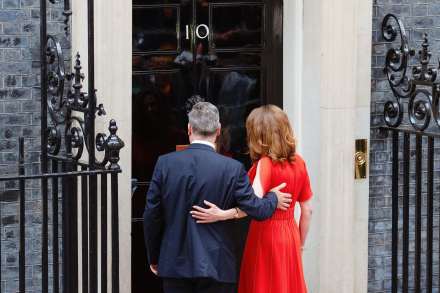
After coasting his way to No. 10, Sir Keir Starmer’s premiership has got off to a pretty cursed start. Some of this wasn’t his fault, such as the Southport riots, and some has come from enacting policies that, while controversial, represent rational political choices, such as means-testing the winter fuel payment and early release of prisoners. But alongside these there has been a gradual piling up of missteps, miscalculations and unforced errors. The most headline-grabbing have involved the Prime Minister, his wife and the running of Downing Street. Sir Keir Starmer’s premiership has got off to a pretty cursed start The last five years of Tory government weren’t the only political gifts Sir Keir has been handed.
The real significance of the winter fuel row

From our UK edition

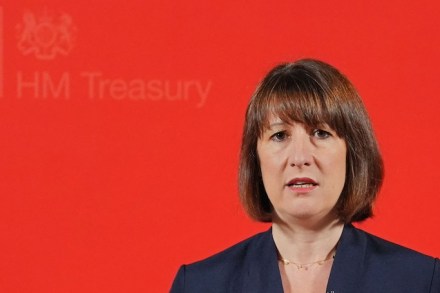
The question of whether to scrap winter fuel payments to all but the poorest retirees is a very British debate, in that it’s any sort of debate at all. Rachel Reeves’s reforms are estimated to save £1.3 billion this year and £1.5 billion in subsequent years. That’s not nothing but, for a sense of scale, it’s equivalent to half the devolved Welsh government’s annual climate change budget. Meanwhile, the UK has a fiscal deficit of £120 billion and the Treasury is borrowing £1,780 per capita to meet public expenditure priorities. Government borrowing is at its fourth-highest level since 1993. Public sector net debt stands at 99.4 per cent of GDP, a level last seen in the early 1960s.

The Greens are turning on the SNP

From our UK edition

The SNP hasn’t wanted for its woes lately but now there is fresh trouble on the way. Lorna Slater, co-leader of the Scottish Greens, tells the BBC it is ‘unlikely’ that her party will vote for the next Scottish government budget after the Nationalists unveiled £500 million in cuts aimed at balancing Holyrood’s books. Many of the services reduced or scrapped in SNP finance minister Shona Robison’s announcement last week were originally put in place by the Greens when they were in coalition between 2021 and 2024. Humza Yousaf’s decision in April to end the governing pact brought a vote of no confidence and the announcement of his resignation four days later.

This could be the first right-wing Scottish Tory leader in years

From our UK edition

The Scottish Conservative leadership election is now Russell Findlay’s to lose. The West Scotland MSP has secured three big endorsements: former Scottish Secretaries Lord Forsyth and David Mundell, and shadow Scottish Secretary John Lamont. It means all five Scottish Tory MPs support his campaign, alongside 12 MSPs, two council leaders and leading party donors Alasdair Locke, Alan Massie and Robert Kilgour. Right-winger Forsyth has an op-ed in today’s Scottish Mail on Sunday hailing Findlay’s ‘courage, competence, conviction and compassion’ and predicting that his leadership would see the Tories shift focus to ‘the real day-to-day concerns of every voter’.

Why are people so shocked that Starmer isn’t perfect?

From our UK edition

The 1997 Christmas special of The Mrs Merton Show probably doesn’t feature in many people’s formative political memories, but it remains with me more than a quarter-century later. Caroline Aherne, as the bitchy old biddy who made celebrities squirm, turned her smiling-assassin interview style on Edwina Currie, there to flog a book. After introducing her guest as ‘the female Margaret Thatcher’ and asking to check the back of her head for a 666 tattoo, Aherne invited Horace Mendelsohn, a Stockport pensioner and Mrs Merton regular, down onto the sofa. The old boy proceeded to harangue the ex-minister on her party’s record in office before the two sparred over the new Labour government’s pledge to cut NHS waiting lists.

The Scottish Conservatives leadership race is surprisingly interesting

From our UK edition

Something interesting is happening in the Scottish Conservative leadership election, and while I appreciate you might be sceptical about the juxtaposition of ‘interesting’ and ‘Scottish Conservative’, there is a certain dynamic at play. Unlike the race for UK Tory leader, the contest is not between left and right, for there isn’t really a right to speak of in the Scottish Tory party. Nor is it a battle between reform and the status quo, for all three candidates are chirping incessantly about ‘change’. The real dynamic is insiders versus outsiders. Russell Findlay is not a central casting Tory I’ve written about this in an essay in the Mail today, but I think it’s worth fleshing out a little further.

The SNP is learning there’s no such thing as a free lunch

From our UK edition

During his time as Scotland’s First Minister, Alex Salmond was accused by the Scottish Labour leader Johann Lamont of fostering a ‘something for nothing’ culture with vote-grabbing policies like free university tuition, free prescriptions and a council tax freeze – expensive gimmicks that took cash away from where it was needed most. Lamont’s analysis was sound and reflected the consensus among Scottish economists but she was pilloried for her speech and her leadership never really recovered. Vindication twelve years after the fact might be cold comfort for Lamont but the SNP government has seemingly come around to her way of thinking. A week ago, it scrapped the devolved version of the winter fuel payment, following in the footsteps of Chancellor Rachel Reeves.

Will Russell Findlay be a ‘fighter’?

From our UK edition

Russell Findlay has launched his bid to be the next Scottish Tory leader as the party descends into a civil war over the propriety of the electoral process. The UK Conservative leadership race has thus far been a pretty staid affair. Not so the Scottish party, which is on the hunt for a new figurehead now that Douglas Ross is returning to the backbenches.  That’s not soon enough for some of his colleagues. He was already in the dog house after Aberdeenshire North and Moray East MP David Duguid was deselected by party HQ and his candidacy given to Ross. What’s worse, Duguid, a gentlemanly champion of oil workers and the fishing industry, was in hospital recovering from illness at the time.

Will the SNP allow debate on Gaza?

From our UK edition

Every now and then, I find myself in the strange position of trying to convince Scottish nationalists not to train their pitchforks on SNP MSP John Mason, who is known for his mercurial pronouncements. This time he has been suspended from the party whip for disputing the assertion that Israel is conducting a genocide in Gaza. In a post on Twitter, Mason said: ‘If Israel wanted to commit genocide, they would have killed ten times as many.’ This was a response to a sharply worded post from former colleague Sandra White. White, who served as a nationalist MSP between 1999 and 2021, apologised in 2015 after reposting an anti-Semitic meme on Twitter, claiming to have done so inadvertently.

Are Scottish nationalists having delusions of grandeur?

From our UK edition

The Scottish nationalists are aggrieved. What’s new, I hear you ask. Well, a diplomatic row, one which has prompted some decidedly undiplomatic language. The Scottish establishment is worked up after it emerged that Angus Robertson, the Scottish government’s pretendy foreign secretary, met with Daniela Grudsky. Who’s she? Why, Israel’s deputy ambassador to the United Kingdom. Their confab took place on 8 August but word has only just got out.  The pair discussed fairly routine and low-level matters like cultural cooperation and renewables. To hear the howls from politicos and activists, you’d think Robertson leapt into a tank and rolled into Gaza.

The oldest hatred is thriving in Britain

From our UK edition

Britain’s antisemitism problem continues to grow. A report from the Community Security Trust (CST), a charity that monitors racist attacks and abuse against British Jews, documents 1,978 incidents in the first six months of 2024. That is the highest figure ever recorded for the first half of any year and a 105 per cent increase on the same period in 2023. It is no coincidence that this comes after the October 7 attack, in which Palestinian terrorists invaded Israel, killed 1,200 people, raped women and took 250 hostages. As the CST noted in a previous report, October 7 occasioned an outbreak of antisemitic activity in the UK long before any Israeli military response was under way.

What is Murdo Fraser’s plan for Scotland?

From our UK edition

With just 24 hours until nominations open in the Scottish Conservative leadership contest, Murdo Fraser has stuck his hand up. That makes six contenders so far to replace outgoing leader Douglas Ross. Fraser has stood for the post before, in 2011, but lost out to Ruth Davidson. Perhaps the pivotal reason for Fraser’s defeat was his radical proposal to scrap the Scottish Tories and set up a new centre-right party separate from the UK Tories but sitting alongside them in government and opposition. The sort of long-running coalition seen between the CSU and the CDU in Germany or the National Party and the Liberals in Australia.

The UN would have Israel accept attacks on its citizens

From our UK edition

The slaughter of 12 children on an Israeli soccer pitch was awful, of course, but it’s important not to overreact to these things. That is the takeaway from the Majdal Shams attack for United Nations Secretary-General António Guterres. Via his spokesperson, Guterres condemned the killings but called for ‘maximum restraint’ to avoid ‘any further escalation’ and urged all parties to ‘recommit to the full implementation of Security Council resolution 1701’ and ‘a cessation of hostilities’. Wise words indeed, and I’m sure we all hope that Hezbollah will heed them. It was the Lebanon-based Islamist organisation that carried out the attack using an Iranian-made Falaq-1 rocket. It’s fair to say dropping 110lbs of explosives on children shows only minimum restraint.

Keir Starmer has made his first misstep as Prime Minister

From our UK edition

In dodging calls from his party to remove the two-child cap, Sir Keir Starmer is making one of his first noteworthy mistakes as Prime Minister. Both John McDonnell, the far-left former shadow chancellor, and Anas Sarwar, the soft-left Scottish Labour leader, have called for the Coalition-era policy to go. The cap limits the payment of Universal Credit to a family’s first two children, with subsequent offspring meriting no additional payment. According to the Institute for Fiscal Studies, keeping the cap will mean an extra 670,000 children worse off by the end of this Parliament while scrapping it would reduce relative child poverty by half a million. The annual cost of abolishing the cap would be around £3.

Israel hits back at Houthi drone attack

From our UK edition

Operation Long Arm, the code name for Israel’s counter-terror strikes in Yemen, sends a message almost as forceful as the payload of its F-15s. Iran may have an extensive network of proxies through which to attack Israel but the IDF will go whatever distance necessary to defend itself. In this instance 1,200 miles to Al Hudaydah, a port city controlled by Ansar Allah, more commonly known as the Houthis, where a fuel depot was turned into a fireball on Saturday. If Operation Long Arm disrupts the Houthis’ activities significantly, the world will owe a debt to Israel, not that it is likely to be acknowledged It marks the first time Israel has hit Yemeni territory and comes one day after the Houthis assaulted Tel Aviv with an Iranian-manufactured drone, killing one and injuring ten.

Europe should prepare for president Vance

From our UK edition

Foreign policy will have been low on Donald Trump’s list of considerations when deciding to anoint JD Vance as his running mate. The Ohio senator, a former detractor turned loyalist of the Republican nominee, is now close with Team Trump, and Team Trump rewards loyalty above all else. Vance is also a populist and speaks to the very voters (white, non-graduate, rust belt) Trump must attract if he is to return to the Oval Office. Vance’s relationship with Trumpism has been a complicated one but his selection can be seen as a legacy pick that consolidates the Maga agenda’s hold on the Republican party for several more election cycles.

The National is a paper in need of help

From our UK edition

Since its launch in Scotland in 2014, the National newspaper has made a name for itself for several reasons, none of them particularly good. It is not merely partisan in the way many British newspapers are, strongly supportive of one party and editorialising thunderously from the front page through to the opinion pages. At the height of Nicola Sturgeon’s premiership, the National was closer to a hymnal such was the reverence with which the SNP leader, her government and its policies were recorded. Back then, it was hard to distinguish the paper’s news articles from SNP press releases, except that press releases were slightly less sycophantic. And less Photoshopped, since for the first few years of its existence the paper was known for its unique splashes.

What explains Trump’s silence?

From our UK edition

As the Democrats go into a very public meltdown about Joe Biden’s fitness to be their presidential candidate in November, there is an unusual sound emanating from Donald Trump: silence. In the 2016 campaign and across four years in the White House, Trump proved himself incapable of message discipline, venting against fellow Republicans on social media and turned press conferences into rambling denunciations of the latest character to displease him. This behaviour regularly handed Democrats and journalists the chance to shift the news cycle from issues difficult for them (e.g. immigration) and onto issues difficult for the GOP (e.g. Trump’s intemperance and Republican infighting). Few presidents have so routinely undermined their own momentum.

Labour’s disturbing devotion to devolution

From our UK edition

One of the defining themes of the new government will be devolution. Sir Keir Starmer and Angela Rayner’s plan, according to the Labour manifesto, is to ‘transfer power out of Westminster, and into our communities.’ It’s a signal of the priority they place on these reforms that the Prime Minister and his deputy hosted English regional mayors at Number 10 this morning to discuss how this power transfer will take place.  The new government should be holding out central government as the mechanism for delivering the changes it has promised The manifesto pledged to ‘deepen’ devolution settlements for combined authorities while ‘encouraging’ councils to merge and assume additional powers.

Meet Labour’s elite Scottish MPs

From our UK edition

Scottish Labour has won 37 of the 57 seats north of the border, an increase of 36 on the 2019 result. This is the party’s best showing in Scotland since 2010 and comes nine years after losing all but one of their seats to the SNP. Labour will be sending its most impressive crop of Scottish MPs to Westminster in a generation. Leading the pack is Douglas Alexander, the new MP for Lothian East. A protege of Gordon Brown, he was MP for Paisley and Renfrewshire South from 1997 to 2015, serving as transport and later Scottish secretary under Tony Blair and international development secretary under Brown.