Stephen Daisley

Stephen Daisley

Stephen Daisley is a Spectator regular and a columnist for the Scottish Daily Mail

Israel hits back at Houthi drone attack

From our UK edition

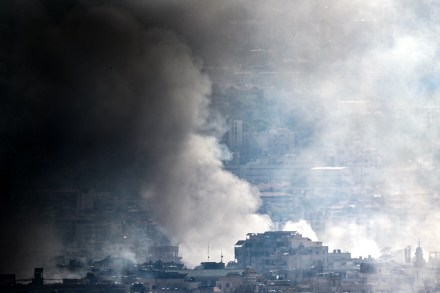
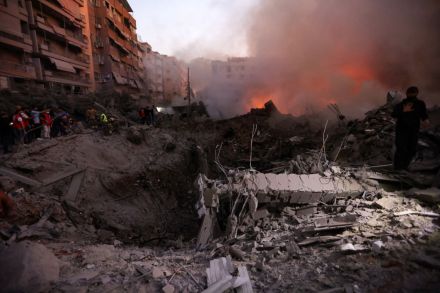
Operation Long Arm, the code name for Israel’s counter-terror strikes in Yemen, sends a message almost as forceful as the payload of its F-15s. Iran may have an extensive network of proxies through which to attack Israel but the IDF will go whatever distance necessary to defend itself. In this instance 1,200 miles to Al Hudaydah, a port city controlled by Ansar Allah, more commonly known as the Houthis, where a fuel depot was turned into a fireball on Saturday. If Operation Long Arm disrupts the Houthis’ activities significantly, the world will owe a debt to Israel, not that it is likely to be acknowledged It marks the first time Israel has hit Yemeni territory and comes one day after the Houthis assaulted Tel Aviv with an Iranian-manufactured drone, killing one and injuring ten.

Europe should prepare for president Vance

From our UK edition

Foreign policy will have been low on Donald Trump’s list of considerations when deciding to anoint JD Vance as his running mate. The Ohio senator, a former detractor turned loyalist of the Republican nominee, is now close with Team Trump, and Team Trump rewards loyalty above all else. Vance is also a populist and speaks to the very voters (white, non-graduate, rust belt) Trump must attract if he is to return to the Oval Office. Vance’s relationship with Trumpism has been a complicated one but his selection can be seen as a legacy pick that consolidates the Maga agenda’s hold on the Republican party for several more election cycles.

The National is a paper in need of help

From our UK edition

Since its launch in Scotland in 2014, the National newspaper has made a name for itself for several reasons, none of them particularly good. It is not merely partisan in the way many British newspapers are, strongly supportive of one party and editorialising thunderously from the front page through to the opinion pages. At the height of Nicola Sturgeon’s premiership, the National was closer to a hymnal such was the reverence with which the SNP leader, her government and its policies were recorded. Back then, it was hard to distinguish the paper’s news articles from SNP press releases, except that press releases were slightly less sycophantic. And less Photoshopped, since for the first few years of its existence the paper was known for its unique splashes.

What explains Trump’s silence?

From our UK edition

As the Democrats go into a very public meltdown about Joe Biden’s fitness to be their presidential candidate in November, there is an unusual sound emanating from Donald Trump: silence. In the 2016 campaign and across four years in the White House, Trump proved himself incapable of message discipline, venting against fellow Republicans on social media and turned press conferences into rambling denunciations of the latest character to displease him. This behaviour regularly handed Democrats and journalists the chance to shift the news cycle from issues difficult for them (e.g. immigration) and onto issues difficult for the GOP (e.g. Trump’s intemperance and Republican infighting). Few presidents have so routinely undermined their own momentum.

Labour’s disturbing devotion to devolution

From our UK edition

One of the defining themes of the new government will be devolution. Sir Keir Starmer and Angela Rayner’s plan, according to the Labour manifesto, is to ‘transfer power out of Westminster, and into our communities.’ It’s a signal of the priority they place on these reforms that the Prime Minister and his deputy hosted English regional mayors at Number 10 this morning to discuss how this power transfer will take place.  The new government should be holding out central government as the mechanism for delivering the changes it has promised The manifesto pledged to ‘deepen’ devolution settlements for combined authorities while ‘encouraging’ councils to merge and assume additional powers.

Meet Labour’s elite Scottish MPs

From our UK edition

Scottish Labour has won 37 of the 57 seats north of the border, an increase of 36 on the 2019 result. This is the party’s best showing in Scotland since 2010 and comes nine years after losing all but one of their seats to the SNP. Labour will be sending its most impressive crop of Scottish MPs to Westminster in a generation. Leading the pack is Douglas Alexander, the new MP for Lothian East. A protege of Gordon Brown, he was MP for Paisley and Renfrewshire South from 1997 to 2015, serving as transport and later Scottish secretary under Tony Blair and international development secretary under Brown.

The election result could kill Scottish independence for a generation

From our UK edition

The exit poll puts the SNP on ten seats. That is very much at the low end of the spectrum of expectations among the Nationalists. The party won 48 out of 59 Scottish seats in 2019. There are 57 constituencies north of the border, and if John Swinney has managed to win only ten of those, he and his rank and file will be bitterly disappointed. On the ITV results programme, Nicola Sturgeon stuck the boot in, describing the exit poll as ‘the grimmer end of expectations for the SNP’ and said the party’s campaign failed to put forward a ‘unique selling point’.  Swinney, formerly Sturgeon’s number two, stepped forward in May to replace her immediate successor Humza Yousaf, following 13 disastrous months in charge of the devolved Scottish government.

Nigel Farage is not the future

From our UK edition

Nigel Farage is the most misunderstood politician in Britain. Vilified by the liberal media as ‘far right’ and mistaken by nationalists as a kindred spirit, the Reform party leader doesn’t fully comport with the pub bore caricature sketched by his enemies nor with the blokey everyman persona lapped up by his admirers. He is a wilier, more elusive beast, as his comments on the French elections remind us. Speaking to UnHerd ahead of the first results, Farage warned that victory for the RN would be a ‘disaster’, saying the party would be ‘even worse for the economy than the current lot’.  Dis-moi que ce n’est pas vrai, Nigel! It’s a statement sure to have friend and foe alike twisting themselves into political pretzels.

Kemi Badenoch shouldn’t stoop to David Tennant’s level

From our UK edition

David Tennant’s acceptance speech at the British LGBT Awards was replete with all the telltale signs of ‘Celebrity Activist Syndrome’. He didn’t feel he deserved an award; his views were just ‘common sense’ and ‘human decency’. He has found a cause that just happens to confirm that he is a really great guy, which is the best kind of cause if you ask me. The cause in question is gender identity ideology, for which Tennant has become a prominent activist, though his activism mostly seems to involve wearing a variety of T-shirts with surly slogans. And while trans lives matter, it seems others don’t, for Tennant also used his gong show gushfest to say that such awards would be necessary ‘until we wake up and Kemi Badenoch doesn’t exist anymore’.

How we should deal with Just Stop Oil

From our UK edition

One need not cast around for signs that Britain is no longer a serious country, but the indulgence with which Just Stop Oil is treated stands out more than most. The doomsday cult has now sprayed Stonehenge in orange cornflour to protest our failure to shutter every industry in the land and relocate the entire population to a cave. Apologists for these insufferable toerags wave away objections, sighing that it’s just cornflour and no long-term damage has been done. Don’t mistake these excuse-makers for libertarians. The Venn diagram of people who are relaxed about Just Stop Oil’s methods and would also be relaxed if a group called Just Stop Immigration were using the same methods is two circles that will never intersect.

The incoherence of Labour’s Palestine stance

From our UK edition

The Labour manifesto commits the party to recognising a Palestinian state. It frames this as ‘a contribution to a renewed peace process’. This rationale is as dishonest as the commitment is foolhardy. It is a reminder that progressives will not learn from history if the lesson offends their political sensibilities.  The manifesto claims that statehood is ‘the inalienable right of the Palestinian people’. Is this true? An international law scholar would tell you that oppressed peoples or those living under military occupation have a right to self-determination. But does self-determination necessarily equal statehood? Could it be achieved by a different model, such as political autonomy in confederation with an Arab state?

The Scottish Tories won’t accept Faragism

From our UK edition

Douglas Ross was not a game-changing leader of the Scottish Conservatives in the way Ruth Davidson was but he announces his resignation as the game is being turned on its head. North of the border the Tories are seeing their vote hold up even as the electoral fortunes of their Sassenach brethren implode. They could come out of this election with more seats than the six they went into it with. But they are not captains of their own fate and Ross’s departure will only call attention to that.  Ross has had a tenure that at times seemed cursed and at others lucky. He had to handle the Scottish blowback from Boris Johnson and partygate, Liz Truss’s mini-Budget and mini-premiership, and Rishi Sunak’s unpopularity with Scots.

Sunak is out of touch, and always has been

From our UK edition

Rishi Sunak says it was a ‘mistake’ to leave the 80th anniversary commemorations for D-Day early. That’s one way to describe ditching a memorial to the liberation of Western Europe to record an election interview for the telly. We have heard the various reasons as to why this was such an error. It was dreadful judgement. Terrible optics. Anathema to the very Silent Generation and Baby Boomer voters his election campaign is tailored to. But while I have no designs on defending him, I suspect this is just who Sunak is. As one highly astute commentator, who isn’t above saying ‘I told you so’, once observed: ‘He combines the perception he is out of touch with the fact of actually being out of touch.

Why is Douglas Ross standing for parliament again?

From our UK edition

Not content with being a referee and leader of the Tories in Scotland, Douglas Ross seems bent on making himself even more unpopular with the punters. In doing so, he has alighted upon David Duguid, the Conservative MP for Banff and Buchan since 2017, who wrestled that once true-blue redoubt back from the SNP after 30 years of Nationalist incumbency.  Duguid, who served as a minister under Boris Johnson and Liz Truss, was preparing to stand again, under his seat’s new name of Aberdeenshire North and Moray East, when he was struck by illness and spent four weeks in intensive care.

Farage’s milkshake attack and the perils of progressivism

From our UK edition

Much worse than the fact of a banana milkshake being chucked over Nigel Farage is the inevitable discourse it has occasioned. This has mostly involved progressives finding it very funny and others trying desperately, and unsuccessfully, to reason with them. This is as good a time as any to reiterate a point I hope to drive home to all those who belong to a rival political tradition to progressivism, be they right-wingers, liberals, social democrats or Marxists. That point is this: you can’t reason with a progressive. Not because they are irrational, although some are, but because progressivism operates outwith the philosophical and ethical confines of these other ideologies.  It will do no good to appeal to questions of public safety (‘What if it had been acid?

Starmer will win the election, but Sunak won the debate

From our UK edition

Full disclosure: I went into the ITV election debate wanting and expecting Sir Keir Starmer to walk all over Rishi Sunak, but from my sofa the Prime Minister looked like the clear winner. How so? He kept it simple: he would cut taxes, Sir Keir would hike them up by £2,000; he would stick illegal migrants on a plane, Sir Keir would spring them onto a high street near you; he wouldn’t force you to make expensive green upgrades to your house, Sir Keir would rip out your boiler with his own bare hands then hand you a bill. It was ruthless, fear-mongering stuff, but I suspect it will have resonated with some viewers.  The Prime Minster was especially adept – read: shamelessly sly – about turning his failings into doubts about his opponent.

The taxman has failed Britain’s poor

From our UK edition

Today we are witnessing a significant failure of the UK state. This morning, the personal finance campaigner Martin Lewis reported that around 30 per cent of families had not received their latest child benefit payment. HMRC, which administers the payments, said it was ‘working to resolve the issue’ and advising claimants to ‘continue to check your bank account throughout the day’. This evening, HMRC said that 500,000 claimants had been affected. Child Benefit is worth £24 per week for the eldest child and £15.90 for every child thereafter. These sums will seem trivial to those with means but to poor and low-paid families they are a financial lifeline.

Matheson’s suspension has come at a terrible time for the SNP

From our UK edition

The Scottish parliament has voted to suspend former SNP cabinet minister Michael Matheson for 27 sitting days and dock his salary for 54 calendar days. It comes after Matheson was found to have broken the MSP code of conduct on expenses and use of parliamentary resources. Matheson ran up an £11,000 mobile data bill during a family holiday in Morocco and tried to have the taxpayer pick up the tab. Despite initially claiming no knowledge of how such a large bill was incurred, he later said that his sons had run up the charges while using the device’s hotspotting function to stream Celtic football matches.  The vote broke down 64 in favour of sanctioning Matheson, with 63 abstaining.

Which seats are the Scottish Tories targeting in the election?

From our UK edition

The Scottish Conservatives were facing a difficult election this summer but SNP leader John Swinney may have thrown them a lifeline. In choosing to attack Holyrood’s standards committee for proposing a 27-day suspension for nationalist MSP Michael Matheson, Swinney has put his party on the wrong side of public opinion. Matheson was censured for running up an £11,000 data bill on his parliamentary iPad during a family holiday in Morocco and trying to have the taxpayer cover it. Swinney claims the standards process was prejudiced by one of the committee’s members and says he will oppose its recommendations. This has been a welcome surprise for the Scottish Tories. A senior party figure tells me: ‘Matheson has huge cut-through.

John Swinney is making a mess of the SNP’s election campaign

From our UK edition

Humza Yousaf lasted just over 400 days as SNP leader. Will his replacement John Swinney get that far? The question arises so soon into his tenure because of Swinney’s decision to oppose the suspension of a former cabinet colleague. Michael Matheson resigned as health secretary in February after the taxpayer was left with an £11,000 bill for iPad data usage incurred while he was on a family holiday in Morocco. After initially claiming ignorance as to how the bill was run up, Matheson later claimed that his sons had hotspotted the data to watch football matches. Yousaf stood by Matheson, calling him a ‘man of integrity’, a locution the opposition seized on to accuse the SNP hierarchy of putting mates before rules.