Sophia Gaston

Sophia Gaston is the UK Foreign Policy Lead at the ASPI think tank and a Research Fellow at King's College London.

Britain shouldn’t wait for America to ban TikTok

From our UK edition

TikTok's success provides a striking example of Western complacency towards its own survival. After a decade shaped by the disruptive influence of American social media behemoths such as X and Facebook, our governments have permitted the stratospheric growth of a China-owned platform with an even greater capacity for malign influence. With Beijing’s intentions for global economic and military dominance growing clearer by the day, the deteriorating geopolitical landscape has laid bare just how wilfully naive the West has been towards adversaries playing a sophisticated long game.

Was Peter Mandelson the right pick for ambassador to the US?

From our UK edition

22 min listen

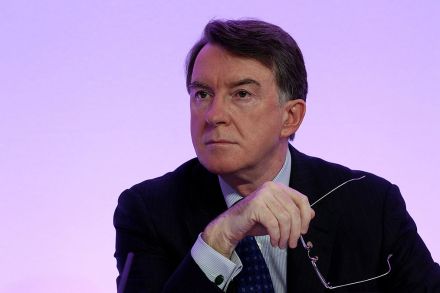
‘An absolute moron’ – those were the words used by Chris LaCivita, a senior campaign advisor to Trump, to describe Peter Mandelson. Lord Mandelson is Keir Starmer’s choice for the next ambassador to the US, but Trump may yet refuse his letters of credentials. How wise is this appointment at the dawn of an uncertain era of US-UK relations? Cindy Yu talks to James Heale and Sophia Gaston, UK foreign policy lead at the security think tank ASPI. Produced by Cindy Yu.

What’s behind Starmer’s ‘reset’ with Europe?

From our UK edition

16 min listen

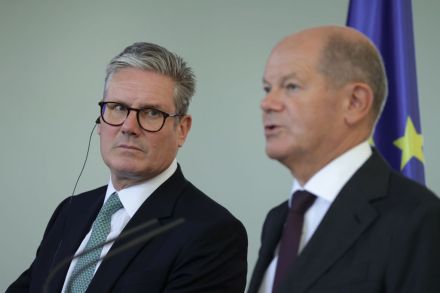
Keir Starmer has been in Germany today visiting Chancellor Olaf Scholz, before heading to Paris to meet President Macron. This is part of his plan to 'reset' relations with Europe - but how close does he want to get to the EU? And, given Brexit wounds are still raw, what's achievable?  James Heale is joined by Katy Balls and Sophia Gaston, head of the foreign policy unit at Policy Exchange to discuss. Produced by Megan McElroy and Patrick Gibbons.

Keir Starmer’s first foreign policy tests

From our UK edition

18 min listen

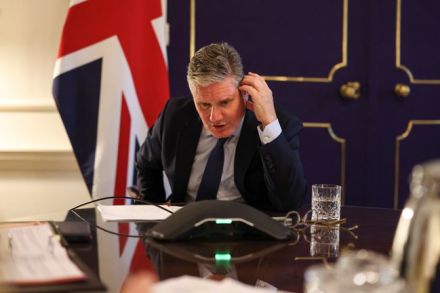
After successful showings at NATO and Blenheim Palace Keir Starmer is facing his first foreign policy tests, with big developments in Ukraine and in the Middle East. On the one hand, Ukrainian troops are continuing push into the Kursk region of Russia and on the other it looked last night that Iran had ramped up preparations for a possible invasion of Israel. Keir Starmer made a phone call last night to Tehran urging them to 'refrain from attacking Israel', warning against a 'serious miscalculation'.  Also today, Tory leadership hopeful Tom Tugendhat gave a press conference and took the opportunity to criticise the government response to the riots. Is he the law and order leadership candidate?

Has Nato been a success for Starmer?

From our UK edition

18 min listen

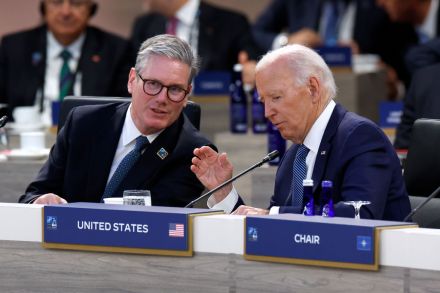
Keir Starmer is on his first big diplomatic trip to Washington, attending the Nato summit. He has called on member countries to increase defence spending, had a meeting with Volodymyr Zelensky, and enjoyed a dinner with Joe Biden - all in his first week of the job. How is the trip going, are there any tensions arising, and has it been a success for the new PM?  Oscar Edmondson discusses with James Heale and Sophia Gaston, head of foreign policy at Policy Exchange.

Has Israel lost British support?

From our UK edition

13 min listen

The killings of three British aid workers in Gaza has caused fury across the board in Westminster, with Rishi Sunak conducting a candid phone call with Benyamin Netanyahu last night. Today, the question is over whether the UK should ban arms sales to Israel in a bid to influence Jerusalem's hardline approach to Gaza. Has Israel lost the support of the UK, and western countries more widely? James Heale talks to Isabel Hardman and Sophia Gaston, head of foreign policy at the think tank, Policy Exchange. Produced by Cindy Yu.

How is Cameron’s comeback coming along?

From our UK edition

13 min listen

As problems in the Middle East and war on the continent dominate the headlines, David Cameron has been front and centre in his new role as foreign secretary. Is his experience coming in handy? Is he Rishi's 'prime minister abroad'?  Katy Balls speaks to Craig Oliver, director of communications at No. 10 during the Cameron era, and Sophia Gaston, head of foreign policy at Policy Exchange.  Produced by Max Jeffery and Oscar Edmondson.

What is Israel’s army capable of?

From our UK edition

17 min listen

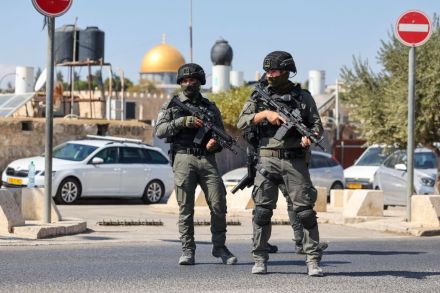
James Heale speaks to foreign policy expert Sophia Gaston and defence correspondent Sean Rayment about what could be Israel's next steps, the strength of their military and how much political backing they have worldwide.

Does China care what Britain thinks?

From our UK edition

62 min listen

In 2010, David Cameron and George Osborne ushered in what they called ‘a golden era’ with China, the world’s rising superpower. They argued that Britain could be China’s best friend in the West. Thirteen years later, after a global pandemic, up to a million interned in Xinjiang, and a Communist Party General Secretary seemingly keen to roll back democratic progress in the mainland and in Hong Kong, that policy looks ill-thought-out, at best. But are we at risk of swinging the other direction now, going from ignorance to hysteria within a handful of years? Did we get China wrong, and do we keep getting China wrong? Is Britain now losing influence in China?

Aukus is a gamechanger

From our UK edition

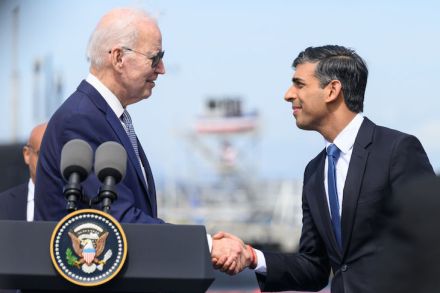
Aukus is one of the most significant security pacts in modern history. It marks a bold new era in how we think about our alliances and our national resilience. Brits are on board with the pact: 64 per cent are confident about its ability to make us safer; a similar number (65 per cent) think it will make the UK more competitive towards China. After 18 months of intensive research and negotiations, the Aukus trilateral pact is finally taking shape. An elegant solution has been found for Australia’s submarine deficit, with Rishi Sunak joining the American and Australian leaders in San Diego in the United States to announce the launch of a state-of-the-art SSN-Aukus submarine project.

Is Rishi right about China?

From our UK edition

16 min listen

Today Rishi Sunak's diplomacy is taking centre stage. He is currently in San Diego for talks with President Biden and the government has just released its refreshed Integrated Review, which includes strengthened language on China, the Russia-Ukraine war and science and tech. Cindy Yu speaks to Katy Balls and Sophia Gaston, head of foreign policy at the think tank Policy Exchange.  Produced by Cindy Yu and Oscar Edmondson.

Does Europe need to get used to dealing with Russia?

From our UK edition

14 min listen

During the Cold War, the US saw Russia as global threat number one. But with China looming large on the world stage its focus is shifting. This leaves Europe to take the lead in dealing with Putin's desires on Ukraine. Katy Balls talks to James Forsyth and Sophia Gaston the director of the British Foreign Policy Group about the growing tensions on the continent.

The world will welcome the new ‘Global Britain’

From our UK edition

Just what does ‘Global Britain’ actually mean? In the five years since the UK’s foreign policy was thrown into chaos after the EU Referendum, this question has reverberated without reply. In the publication of its Integrated Review of the UK’s Defence, Security, Development and Foreign Policy today, the UK Government has finally put its cards on the table. ‘Global Britain’ is no longer simply a slogan, but a roadmap underpinning a fundamental shift in our international ambitions. The Global Britain set out in the Review is a dynamic, forward-looking, tech-savvy nation, in which our domestic and international resilience is seen as one.

The price of an ‘Australian-style’ quarantine system

From our UK edition

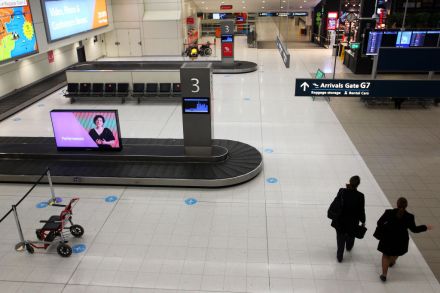
Richard Curtis’s iconic Love Actually airport scenes may fall on the wrong side of saccharine, but they capture something of the human story at the centre of the travel experience. As the government pursues an ‘Australian-style’ hotel quarantine scheme for the UK’s borders, we should not lose sight of these human moments. With the UK’s hospitals stretched to the limit and the population’s patience wearing thin, it is tempting to envy Australia, where images of seaside holidays and packed summer festivals filter out from the antipodes, shimmering like a desert mirage. Like many of its counterparts in the Asia-Pacific, Australia moved swiftly in the early phases of the pandemic to shut its borders, and imposed hotel quarantine systems for all arrivals.

Did Australia’s China-scepticism prepare it for Covid-19?

From our UK edition

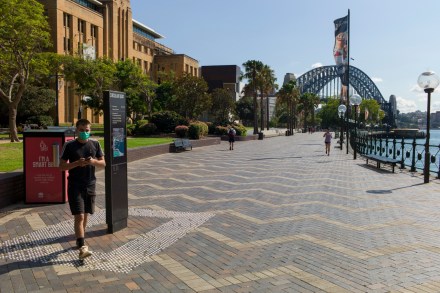
As Britain struggles through the eye of the coronavirus storm, it is difficult not to cast our eyes across the world and compare our fate with that of our friends and allies. One nation in particular stands out – Australia – seemingly on course yet again to assume its role as ‘The Lucky Country’. It's tasteless to say, but Australia has had ‘a good crisis’ – it’s one of the few nations to emerge relatively unscathed from the pandemic’s deadly grip and has recorded just 75 deaths so far. Now Sydney’s famous beaches are re-opening this week, and visitor restrictions on care homes are being relaxed. Australia’s performance is especially intriguing given its geographic proximity to Asia.

The West is failing to rise to the challenge of coronavirus

From our UK edition

Having apparently shaken off the first phase of the coronavirus pandemic, the Chinese Communist Party’s propaganda machine is now in full swing. One of the more preposterous conspiracy theories they are peddling is that the spread of the disease was a deliberate attempt at subterfuge from the American government. As in the middle of the tragic Aids epidemic in the 1980s, geopolitical conspiracy theories are running rife, and overwhelmed national governments are desperate to find someone to blame for the crisis. The notion that the United States somehow contrived to unleash such a contagious and pernicious virus on its economic rival, however, is simply absurd.