Simon Cook

Simon Cook

Simon Cook is a data analyst at the TaxPayers' Alliance. He was previously The Spectator’s associate editor (data)

Labour MPs need a reality check on Britain’s ballooning benefits bill

From our UK edition

'No one votes Labour to cut the welfare state. People vote Labour to grow the welfare state. That’s the role of the party.' That's what John McTernan, Labour strategist, said on Coffee House Shots last week. He’s absolutely correct, of course. But the ballooning cost of the benefits bill means that Labour now faces an uncomfortable decision, for which many of its MPs seem ill prepared. The total cost for Personal Independence Payments (PIP) alone is expected to reach £35 billion by the end of this decade, up from £16 billion in 2019-20 and £26.5 billion in 2024-25. The total benefits bill, including the state pension, universal credit and other benefits, could hit £324 billion by 2030.


Pensioners have never had it so good

From our UK edition

British pensioners are wealthier than ever. New figures from the Office for National Statistics, analysed by The Spectator’s data hub, show pensioner savings soaring whilst stagnating for those in work.  When the coalition government brought in the triple lock in 2011, it had a noble purpose – to protect pensioners from falling behind. The state pension had failed to keep pace with earnings, leaving many struggling. The ratchet effect – linking pensions to inflation, wage growth or 2.5 per cent, whichever was higher – promised to solve this. But almost 15 years later, has it delivered? And at what cost? Last week the ONS released its mammoth review of household wealth in Britain, with new data covering the pandemic years from 2020 to 2022.

Which president granted the most pardons? 

From our UK edition

Joe Biden has bowed out of the White House with a slew of presidential pardons. Today they have been awarded to Anthony Fauci, General Mark Milley, a bunch of family members and an assortment of investigators from the 6 January riots – but Biden also controversially pardoned his son Hunter a month ago, despite promising not to. The presidential pardon has been a part of the constitution since the start – something that the Founding Fathers thought worth keeping from the British monarchy. Historically it’s been quite sparingly used. Most presidents pardoned no more than a few hundred through the first hundred years of the US – with the exception of the aftermath of the Civil War.

Why don’t we have enough teachers in critical subjects?

From our UK edition

A sobering reminder of the challenges facing Britain’s education system is the persistent failure to recruit enough teachers in critical subjects. Each year, the Department for Education publishes its targets for teacher training alongside the actual recruitment figures – and this year’s report showed an ongoing tale of two disciplines. Take the humanities. History in particular has outperformed its targets in the last few years with a healthy pipeline of new teachers. Perhaps that’s a lasting legacy from The Rest is History. English and RE, as well as others like geography, have also fared well. More concerning is the fall off in teachers of modern languages.

How does the NHS tackle eight million missed appointments?

From our UK edition

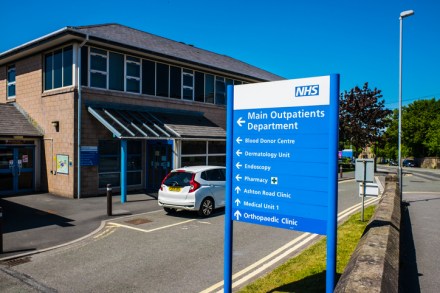
One of the perennial scapegoats of the NHS is the patient who doesn’t turn up for their GP appointment. The headlines write themselves: millions of pounds wasted and other patients can’t get seen. But while missed GP visits have become a symbol of inefficiency, a far bigger – and often overlooked – problem lies within our hospitals. Every day, there are more than 300,000 outpatient appointments at hospitals, from MRI and breast scans to plaster casts and blood tests. And every day, 20,000 patients don’t turn up. On the surface the data looks like a success story for the NHS, with the percentage of appointments that patients miss gently falling over the last decade.

Why do so many private school students get extra time in exams?

From our UK edition

Are independent schools gaming the system to give a disproportionate advantage to their pupils in exams? That’s one possible inference from a new data release from Ofqual (the Office of Qualifications and Examinations Regulation) on access arrangements for school exams. The release sheds light on adjustments designed so that students with disabilities aren’t disadvantaged in assessments. This might include, for example, papers in braille for a blind student or allowing a student with dyslexia to use a word processor. Giving a pupil 25 per cent extra time to complete an exam is the most common adjustment schools can provide.

Did lockdown make children overweight?

From our UK edition

Every year, the government weighs and measures children in Reception (ages 4-5) and Year 6 (ages 10-11). The National Child Measurement Programme isn’t always popular with parents but it gives us priceless public health information on hundreds of thousands of children. With such a robust data set, it gives us the ability to look at how children change over time and test some of the theories that get thrown around about childhood growth and obesity. During the summer, a report from the Food Foundation claimed that the average height of five year olds was falling and had been since 2013. Gordon Brown thundered that this was down to ‘food bank Britain’ and experts previously ascribed this to government austerity in the 2010s.  But is this actually true?

Is staff sickness crippling the NHS?

From our UK edition

Some £22 billion of the £40 billion in tax rises the Chancellor announced this week will go straight to the NHS – an NHS that was already better funded than at any point in its history. It seems that no matter how many cash injections – huge or enormous – the health service gets, its problems continue. Could staff sickness be part of the problem? I’ve crunched the numbers for The Spectator’s data hub and this is what I found. The NHS is a notoriously stressful place to work and The Spectator’s analysis of sickness data for hospital and community services staff shows the toll it takes – as well as the huge variation between different roles.

Boosters give 88 per cent protection against hospitalisation

From our UK edition

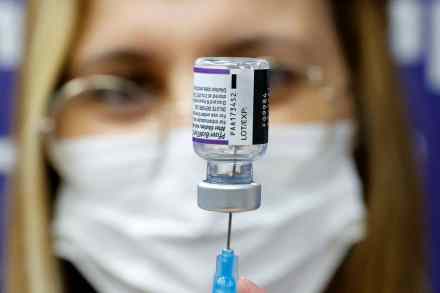
The good news picture continues to build for Omicron. Late on New Year’s Eve, the UK Health Security Agency released an update to their estimates for vaccine effectiveness, and for the first time they’ve been able to give a picture of how well vaccines protect against hospitalisation from Omicron. The figure is strong: 88 per cent. This bodes well for a country with the highest booster uptake in Europe (94 per cent of over-60s are now boosted) and the study should offer reassurance ahead of Monday’s decision on whether to impose more restrictions on England. First of all, this chart shows protection against symptomatic disease. Oxford/AstraZeneca is ineffective against Omicron for symptomatic infection.

Covid is surging. So why is intensive care bed usage falling?

From our UK edition

Omicron is sending Covid case numbers surging ( a new high of 189,000 cases reported yesterday) and hospital admissions along with it. But another important piece of data, intensive care admissions, shows a significant fall. This is early data, but worth noting as it may be part of an important trend. And it adds context to comments by Chris Hopson, Chief executive of NHS Providers, that the system may be better prepared than case numbers suggest. First let’s look at London; the Omicron epicentre. Hospital figures are rising fast - in part due to patients who are being primarily treated for something else (blue, below - that is now true for a third of Covid hospital patients in England). But look at critical care beds.

Working out length of hospital stay for Covid patients: a technical note

From our UK edition

Length of hospital stay is a crucial metric, but hard to do with much accuracy unless each patient is certified Omicron or Delta. The closest proxy we have right now is information on patient stay and there are graphs for two cohorts: those admitted from 1 May (third wave) and from 1 December. The graphs were published in the CO-CIN study dated 22nd Dec (Fig 8). The younger age groups are at the top. Those who were discharged on the left, those who died on the right. The line drawn on each chart shows 14 days on, and indicates what percent of patients were discharged or had died by that point. First, those from 1 May… And the December ones are below. From simply looking at the charts, there seems to be a shift towards lower values.

Is Omicron now falling in South Africa?

From our UK edition

Man makes Covid predictions and God laughs. Yet with the stakes this high in Britain, every bit of real-world data is useful. That’s why South Africa is so important: it’s a country with a well-digitised healthcare sector that we have to thank for sequencing the Omicron variant, and has been first to experience the impact. That’s why its figures, released daily, are being watched so eagerly world over. Right now, there are two questions: is Omicron now falling? And if so, what conclusions can we draw? The epicentre is Gauteng province: home to Johannesburg, Pretoria and about a quarter of South Africans.