Sergey Radchenko

Sergey Radchenko

Sergey Radchenko is the Wilson E. Schmidt Distinguished Professor at the Johns Hopkins School of Advanced International Studies. He is the author of the newly published To Run the World: the Kremlin’s Cold War Bid for Global Power (Cambridge University Press, 2024).

The Ukraine war pessimists were proven right this year

From our UK edition

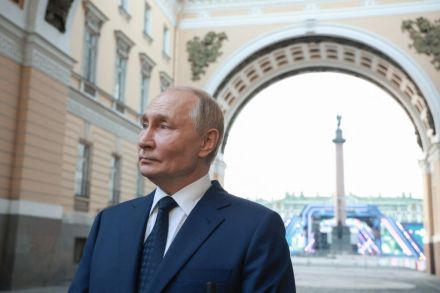
As the Russian-Ukrainian full-scale war nears its fourth anniversary, Vladimir Putin looks confident, even cocky. It is not that he has achieved great breakthroughs on the battlefield. The Russians have managed, haltingly, to occupy a little more of Donbas, but one would have to zoom in on the map to see these gains, which amount perhaps to 1 per cent of the (now hopelessly ruined) Ukrainian territory – paid for with hundreds of thousands of lives of Russian soldiers. True, these things are never linear, and no one could rule out that this war of attrition will still lead to Ukraine’s military defeat. Putin probably feels that the goal is within his reach, or, if he doesn’t, he would like us to think that he does because such perceptions – i.e.

Will Trump fall for Putin’s trap?

From our UK edition

29 min listen

Donald Trump has met both Vladimir Putin and Volodymyr Zelensky this week, raising hopes of progress in ending the Ukraine war – but is it really a breakthrough, or a trap? US deputy editor Kate Andrews speaks with associate editor Owen Matthews – author of this week’s cover story Putin’s Trap – and Sergey Radchenko, professor at Johns Hopkins. They discuss why Putin’s charm offensive may be designed to paint him as the 'reasonable' negotiator, leaving Zelensky isolated, and whether Europe or Trump himself will fall for it.

Putin hasn’t made any real concessions yet

From our UK edition

After the jaw-dropping spectacle of the Putin-Trump summit in Alaska, there was another full day of theatre on Monday as Trump hosted European leaders and President Volodymyr Zelensky at the White House. Yet the results of this three-day diplomatic pageant are embarrassingly modest. In the absence of a breakthrough on this important question, Trump’s diplomacy is little more than a fireworks show One of Trump’s trumpeted achievements is Russia’s alleged agreement to western security guarantees for Ukraine. It was President Trump’s special envoy Steve Witkoff who first announced this breakthrough, with some fanfare, in an interview with CNN’s Jake Tapper.

Trump was naive to think he could negotiate with Putin

From our UK edition

President Donald Trump’s creative diplomacy in the Ukraine conflict – which entails bullying the victim and making unilateral concessions to the aggressor – has achieved its latest non-result. After a telephone conversation that lasted for an hour and a half, Trump failed to convince his Russian counterpart Vladimir Putin to accept the US proposal for an unconditional ceasefire. The war continues. Putin attempted to dampen expectations shortly before the call. Speaking to a gathering of Russian businessmen earlier in the day, he predicted that sanctions on Russia would not go away. 'These are not temporary or targeted measures; this is a mechanism of systemic, strategic pressure on our country,' he said.

Putin can still defeat Ukraine

From our UK edition

After Ukraine accepted America’s 30-day ceasefire proposal, all eyes are on Russia’s reaction. Will Vladimir Putin – who, as President Trump has incredulously claimed, has all the cards, and at the same time no cards at all – go along with the US proposal, or choose to snub it? To answer this question, it is important to understand what Putin is trying to do. On the one hand, he did not spend hundreds of billions of dollars on this war, sacrifice hundreds of thousands of lives, and put Russia’s entire economy on a war footing in order to claim a devastated strip of territory in eastern Donbas. Putin wants to reassert effective control over Ukraine, something he can claim as his life’s work and his legacy for Russia.

Donald Trump’s shameful betrayal of Ukraine

From our UK edition

The American President has pioneered a new form of diplomacy: betrayal by tweet. The mean-spirited, autocrat-indulging Donald J. Trump has in a Truth Social post called President Volodymyr Zelensky a ‘dictator’, falsely accused him of scamming America out of billions dollars of military aid, and demanded that he ‘better move fast or he is not going to have a Country left.’ By ‘moving fast,’ the US President presumably means Zelensky’s immediate agreement to the recently leaked plan that would hand the United States a $500 billion stake in Ukraine’s rare earth minerals. Zelensky has so far refused to accept a plan that would amount to a colonial sacking of Ukraine, already battered and brutalised by the Russian invasion. In return, Trump has promised ‘peace.

Putin isn’t done yet with the Middle East

From our UK edition

Ten years ago, Putin saved Bashar al-Assad from certain defeat. Russia’s intervention raised Putin’s profile in the Middle East, and gave him some ground to claim that Russia was still a ‘great power’. Assad’s fall shows that claim was without foundation. Distracted by the war in Ukraine, Putin has been unable to save his client, even if the Russians whisked Assad out of the country and provided him with political asylum.  It is too early to speak of Putin’s strategic defeat in the Middle East It is, however, too early to speak of Putin’s strategic defeat in the Middle East. For now, at least, Russia still has its naval facility at Tartus and an airbase in Hmeimim. It has several thousand servicemen in Syria.

What will Putin do about Biden’s parting gift to Ukraine?

From our UK edition

At the very moment most people seem to have forgotten of his existence, President Biden has slowly but purposefully shuffled across Vladimir Putin’s latest red line in Ukraine. After months of President Zelensky’s tireless pleas, the United States has finally given Kyiv a green light to use American missiles (ATACMS) for strikes deep inside Russia. Putin may well decide that it is safer to swallow his pride and pretend nothing has happened Reports indicate that Biden’s permission applies in the first instance only to the Russian and North Korean troops deployed in the Kursk region.

Why should Putin negotiate?

From our UK edition

In just a few months we will mark the third anniversary of Russia’s invasion of Ukraine. The war has resulted in hundreds of thousands of casualties, and has left millions displaced. Ukraine’s infrastructure – in particular the energy infrastructure – is in shambles. The costs of recovery will likely be in the trillions of dollars. And still, there is no end in sight. As the war drags on, calls for negotiations are becoming louder. President Volodymyr Zelensky has been trumping up support for his Victory Plan. The details are unclear – presumably the ‘plan’ is to negotiate new military aid and viable security guarantees for Ukraine in return for the promise of a ceasefire and a probable forfeit of the occupied territories.

What Nigel Farage gets wrong about the Ukraine war

From our UK edition

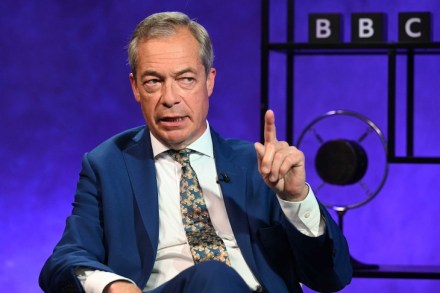
‘We [the West] provoked this war [in Ukraine],’ Nigel Farage recently declared on BBC Panorama, blaming Putin’s invasion of the neighboring country on the ‘ever eastward expansion of Nato and the European Union’. He later doubled down on his claims, arguing that Putin’s behavior in Ukraine was ‘reprehensible, but…’ Farage of course is not alone in explaining Putin’s invasion of Ukraine by blaming Nato and the EU. For a start, Putin himself has done so repeatedly. Putin and Farage clearly see eye-to-eye on this point.

Tiananmen Square remade the modern world

From our UK edition

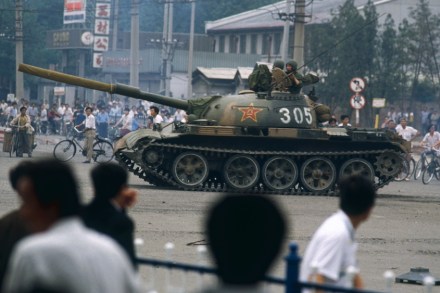
Thirty-five years ago today, China’s leaders ordered tanks into Tiananmen Square to disperse a student encampment. The death toll was never made public; it is likely that several thousand people were killed.  June 4, 1989 planted the seeds of a much darker, more complicated world than we in the West cared to fathom The brutal suppression of the pro-democracy protesters came as a shock and was an aberration. After the fall of the Berlin wall, Communist regimes toppled one after another, mostly peacefully. Only Tiananmen spoiled the celebratory mood.  June 4, 1989 planted the seeds of a much darker, more complicated world than we in the West cared to fathom. Beijing waited, and learned, and gathered strength. It first emerged as the world’s workshop.

Hope for Russia has died with Navalny

From our UK edition

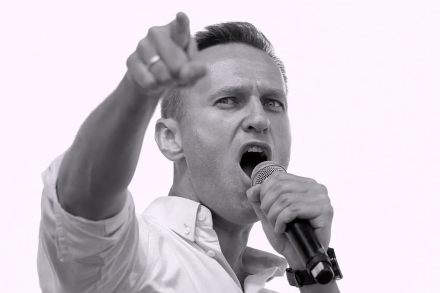
It was brave. It was foolhardy. It was almost unbelievable. After his near-fatal poisoning by the Russian Federal Security Service, Alexey Navalny returned to Russia. He was taken away as he disembarked from the plane in Moscow, and thrown into prison on a made-up pretext. After three years of torture, Navalny has been done away with. The Russian prison authorities have reported his death from an unspecified cause.  Putin’s regime has murdered another opposition leader, and not just any. Navalny, like no one else in Russia, stood for the unlikely promise of change. His charisma, his humour, his clarity of vision, and, above all, his awe-inspiring disdain for Putin’s gangster state, made Navalny into a larger-than-life figure, a David, laughing in Goliath’s face.

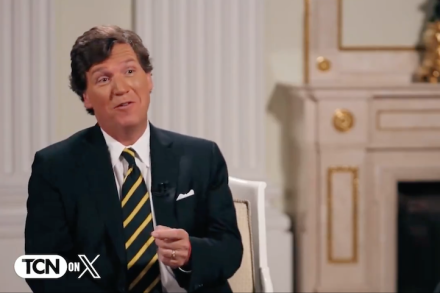
Tucker Carlson failed Putin’s history class

From our UK edition

They say that he who sups with the devil should have a long spoon. But, driven by vanity and unconstrained by any understanding of Russia’s history or politics, Tucker Carlson slurped up the intoxicating broth of Vladimir Putin’s falsifications this week in his interview with the Russian president. Carlson took to Moscow well. His Russian hosts rolled out the red carpet, fawning over him with an admiration and servility that betrayed their sense of exasperation at being long shunned by the West. They saw him as a glittering American Prometheus who might just be gullible enough to take the fire of Russian disinformation back home. It was not the first time Putin has played this trick on his interlocutors Putin was different from his lieutenants.

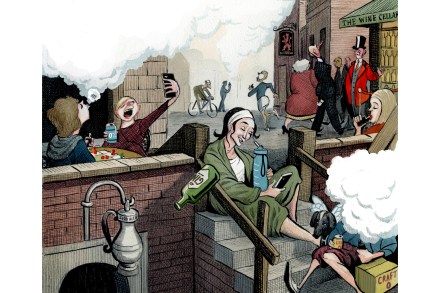
How Britain sobered up

From our UK edition

36 min listen

This week:  The Spectator’s cover story looks at how Britain is sobering up, forgoing alcohol in favour of alcohol free alternatives. In his piece, Henry Jeffreys – author of Empire of Booze – attacks the vice of sobriety and argues that the abstinence of young Britons will have a detrimental impact on the drinks industry and British culture. He joins the podcast alongside Camilla Tominey, associate editor of the Telegraph and a teetotaler. (01:27) Also this week: could Mongolia be the next geopolitical flashpoint?

The reason Xi and Putin liked Henry Kissinger

From our UK edition

On Henry Kissinger’s passing, Xi Jinping published a letter, extolling this ‘old friend of China’ as a man of ‘outstanding strategic vision’, whose exploits not just benefited the relationship between China and the United States, but also ‘changed the world’. Xi’s tribute reads like an indictment of the current lamentable state of Sino-American relations (clearly by design). Xi presents Kissinger as a model statesman that China would like to have in place of the current US foreign policy elite.  Russia’s Vladimir Putin, too, sent a rare letter of condolences, praising Kissinger as an ‘outstanding diplomat, wise and farsighted statesman’, who pursued ‘a pragmatic foreign policy’ and helped broker détente.

Zelensky is in a serious bind

From our UK edition

The recent spat between Kyiv and Warsaw over grain – with Ukraine suing Poland at the WTO – has come at bad time. In normal times, a trade dispute (however meaningful for those directly affected) would barely register. At a time of mortal danger, however, rifts between allies are grounds for profound concern.   For Poland’s right-leaning Law and Justice Party (PiS), banning the sale of Ukrainian grain is an electoral matter. With a mid-October parliamentary election it may well lose, the populist PiS wants to appease Poland’s rural constituencies (the party’s base) by being seen to be protecting farmers from a deluge of foreign grain.

This failed coup will be just the beginning

From our UK edition

Yevgeny Prigozhin has just exposed the full extent of Vladimir Putin's weakness. In less than 24 hours, the leader of the Wagner mercenary group made extraordinary progress - taking control of the southern Russian city of Rostov-on-Don, the headquarters of the Southern Miliary District, and posing the most serious challenge to Putin’s leadership. The president did not look all-powerful, but unable to control Prigozhin as he said his 25,000 troops were willing to march on Moscow. Back on 9 May, when Prigozhin's challenge to Vladimir Putin first became evident, I argued in The Spectator against the idea that Putin was ‘in charge’ of the situation.

Putin’s acolytes can smell blood

From our UK edition

Yevgeny Prigozhin, standing in the darkness next to a row of bloodied dead bodies, was shouting obscenities. With his yellowish, unnaturally hairless face contorted in primordial hatred, there was something about his appearance that seemed decidedly horrific. Prigozhin may well be positioning himself for Putin’s likely downfall and the eventual (and probably very nasty) succession struggle The look goes with his reputation. The head of the notorious Wagner (which cut its teeth as a mercenary force in Africa and the Middle East), Prigozhin is known for his untamed brutality and deep cynicism, and for his ability and willingness to get his hands dirty, or bloody.

It’s time to talk about Nato membership for Ukraine

From our UK edition

There was a time when Ukraine’s accession to Nato was a fantasy. It wasn’t just that Ukraine was dismally poor, politically unstable, or highly corrupt – though all these factors played a role. Nor was it just that Ukraine’s rusting, unwieldy post-Soviet wreck of an armed force was not exactly Nato material.   The bigger reason was Russia. The West wanted to indulge Russia and to partner with it. It wanted Russia to know that while its claims to a special sphere of influence in Ukraine could not be publicly accepted, they could and would be tacitly respected if Russia learned to behave.  Russia’s brutal invasion of Ukraine upended all that. The Kremlin has burned bridges to the West, blatantly, with great relish, and without remorse.

Why Putin won’t take Hitler’s way out

From our UK edition

The last time Europe fought a major war, there was no shortage of planning. We knew what peace meant. Winston Churchill and Franklin Roosevelt issued their Atlantic Charter in August 1941, before the Allied victory was anywhere close. This was followed by more meetings and conferences, including in Tehran in 1943 and later at Yalta, in Crimea, in 1945. The fighting never stopped, but there was a lot of thinking about the future of Germany, Europe and the new world order.  This sort of thinking is less evident today with Ukraine. Maybe it’s because Russia’s war in Ukraine, as bad as it is, isn’t yet a world war. It is happening some place out there, in ruined towns that few have ever heard of, and fewer still really care about. People are dying, but they are not us.