Sebastian Payne

Podcast: the disaster of the SNP’s illiberal, one-party state

From our UK edition

The SNP’s eight years in government have been devoid of much scrutiny but in many areas, it has been a disaster. On the latest View from 22 podcast, Adam Tomkins from Glasgow University discusses this week’s Spectator cover feature with Kevin Pringle, the SNP’s former head of communications. Why are Police Scotland, the NHS north of the border and Scotland's education system failing to work properly? How has the independence argument stopped the nationalists being held to account? And are the opponents of independence overstating their criticisms about the SNP’s time in government?

John McDonnell will meet his seven economic advisers…soon

From our UK edition

The status of Labour's council of seven economic advisers is becoming a little clearer. Following Danny Blanchflower’s revelation that John McDonnell didn't consult him about the fiscal charter, another adviser has said the team has yet to meet — and it wasn't even the shadow chancellor's idea.

Does John McDonnell bother speaking to his economic advisers?

From our UK edition

Jeremy Corbyn faces a major test of his leadership today as the government’s fiscal charter will be voted on in the Commons. John McDonnell has U-turned and decided the party will oppose the bill but plenty of Labour MPs are expected to rebel by abstaining on the vote. Although the bill will pass without Labour's support, the size of this rebellion will reveal how poisonous the atmosphere among Labour MPs has become. The U-turn has made Labour look like a bit of a joke. The shadow chancellor has tried to explain why he has changed his mind but the question remains: why did he back the charter in the first place?

Shambolic Diane Abbott laughs off Labour’s fiscal charter U-turn in bizarre interview

From our UK edition

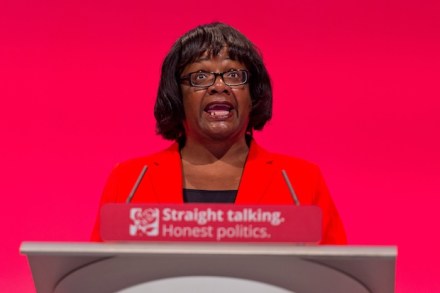
John McDonnell’s U-turn on backing the government's fiscal charter is just the sort of inconsistent positioning some in Labour fear will destroy the party’s reputation under Jeremy Corbyn. No one from the shadow treasury team was willing to speak on the Today programme about the U-turn so it was left to seasoned media performer Diane Abbott, now the shadow international development secretary, to defend the party’s position. In a rather bizarre interview, Abbott claimed that Labour was not in a shambles: ‘No, no, no, I think we’re in the right position to oppose Osborne’s mismanagement of the economy’.

The hardest word: Tom Watson still won’t apologise for smearing Leon Brittan

From our UK edition

Tom Watson, Labour’s embattled deputy leader, delivered a statement to the House of Commons this afternoon on accusations about the former home secretary Leon Brittan - which proved to be baseless. In response to a point of order by Sir Nicolas Soames, the Conservative MP for Mid Sussex, Watson delivered the following statement about the Brittan allegations which were later dismissed by the police. Watson acknowledged that people might have been angry with his language but did not apologise for his actions: 'I understand the honourable and right honourable members feel aggrieved that Leon Britain was interviewed by the police and that they’re angry with my use of language.

Revealed: why Nigel Farage is distancing himself from Arron Banks

From our UK edition

Nigel Farage appears to have u-turned about backing one Brexit campaign. At the party’s recent conference in Doncaster, the Ukip leader said he would be standing ‘hand in hand’ with Arron Banks and his Leave.EU group. But on the Sunday Politics yesterday, he gave equal weighting to Vote Leave, the other Brexit effort which launched on Thursday evening out of the Business for Britain campaign group: ‘I support both of them. I listened to what Vote Leave had to say last week. They're a Westminster based group, making business arguments. Arguing, as I've done in this interview, for us to be free to make our own trade deals. That is of value. ‘Leave.EU is an entirely different thing, aiming at a completely different audience.

Chaos at the ‘Stronger in Europe’ launch as Stuart Rose drops ‘quitters’ jibe

From our UK edition

The launch of the Britain Stronger In Europe (BSE) campaign this morning was embarrassing and shambolic. Comments briefed out by Sir Stuart Rose, the ex-M&S chief who is chairing the BSE campaign, included a section about patriotism and labelled those campaigning for a Brexit as 'quitters': ‘Those who want us to leave Europe would risk our prosperity, threaten our safety and diminish our influence in the world. We know our economy would take a hit, we just don’t know how bad it would be. The Quitters cannot say how our diminished status would impact on our relationship with the US or China or the Commonwealth countries. Leaving Europe is taking leap into the dark. It’s just not worth the risk.

‘Britain Stronger in Europe’ launches with celebrities and a dose of patriotism

From our UK edition

The campaign for Britain to remain in the EU, now titled ‘Britain Stronger in Europe’, is launching today with a swish video and scary speech. Sir Stuart Rose, the former CEO of Marks and Spencer, will claim say that every Briton is £450 better off thanks to our EU membership — a claim the Leave camps will undoubtedly counter with their own figures. And just in case you weren't sure, Rose says 'the choice facing us in this referendum is the biggest in a generation'. But what is most notable is Rose’s patriotic language. He will say: 'To claim that the patriotic course for Britain is to retreat, withdraw and become inward looking is to misunderstand who we are as a nation.

Podcast: Conservative conference review

From our UK edition

This year's Conservative conference has been very successful event for the party — at least by its own measures. In this week’s View from 22 podcast, James Forsyth, Isabel Hardman and I look back at the Tories’ gathering in Manchester and why the party has been so united. Who gave the best speech of conference? Has David Cameron marked out a success strategy to take the Tories through the next five years and into government again after 2020? Have Boris Johnson’s leadership ambitions been boosted thanks to his rip-roaring speech? Is Theresa May now on the naughty step for her immigration remarks? And how has the political landscape changed, if at all, over conference season?

Podcast special: David Cameron’s conference speech

From our UK edition

It's been a good week for the Conservatives, topped off by one of the best speeches   David Cameron has ever given. James Forsyth, Isabel Hardman and I discuss the Prime Minister's keynote address in this View from 22 podcast special — looking the new policies and themes he has laid out, the direction we can expect to see the Tories heading in and his strong attacks on Jeremy Corbyn. Can Steve Hilton's influence be seen in the text? And does this mark a new era for Cameron's leadership?

Ruth Davidson: the Tories need to be more than ‘decent technocrats’

From our UK edition

Ruth Davidson has secured her place as one of the most interesting politicians in the Conservative party. In her speech to Tory conference this morning, the leader of the Scottish Conservatives had the crowd in the palm of her hand with strong attacks on the SNP and another independence referendum. She argued that the Tories are the only party representing unionists north of the border: ‘every cross in the Scottish Conservative box is a vote backing Britain and defending Scotland’s place in it’. But the most interesting part was her compelling vision for the future of the party.

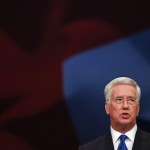
Michael Fallon: Russian air strikes in Syria are ‘extremely unhelpful and dangerous’

From our UK edition

Michael Fallon has been touring the broadcast studios this morning to send Russia a warning about its bombing campaign in Syria. On the Today programme, the Defence Secretary said Putin's actions are complicating an already difficult situation: ‘What it does do is complicate an already difficult situation and make it very much more dangerous because these planes are not being co-ordinated with the rest of the campaign and more importantly than that, the strikes don’t seem to be for the most part strikes against Isil. They are strike against other groups who’ve been fighting Assad and designed to prop up the Assad regime, the dictatorship in Syria, which of course has been the cause of Isil in the first place.

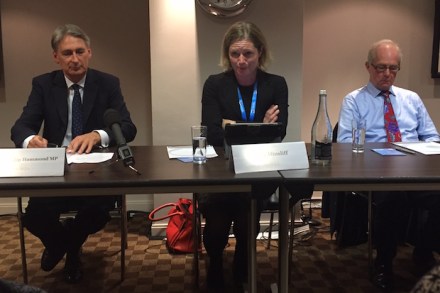
Philip Hammond: ending freedom of movement would be ‘political suicide’ for Eastern European countries

From our UK edition

Philip Hammond this evening hinted he doesn’t think Britain is going to get any fundamental reforms on freedom of movement. The Foreign Secretary, appearing alongside Tory grandee and Peter Lilley at a Demos fringe event, argued that Eastern European countries have an ‘emotional ownership’ to their EU membership in a way Britain does not: ‘Because of the emotional linkage with their own freedom from Soviet slavery and the ability of people in Eastern Europe to travel for the first time in their lives, a deeply emotive thing, no political leader in Eastern Europe is going to support the end of freedom of movement. It would be domestic political suicide.

George Osborne: Corbyn is not the cause of Labour’s problems

From our UK edition

George Osborne was interviewed by Kath Viner, editor of The Guardian, this afternoon and offered some interesting thoughts on Jeremy Corbyn. The Tories have generally kept schtum about the rise of the new Labour leader, focusing instead on the message that he is a danger to Britain’s national/economic security. Echoing the thoughts of Labour’s Jon Cruddas, the Chancellor said Corbynmania is not about the man himself: ‘I don’t think it’s actually about personalities in this sense which is, you know, Jeremy Corbyn is not the cause of the Labour party’s problems, he is a symptom.

Podcast special: Boris Johnson’s conference speech

From our UK edition

Boris Johnson's speech to the Conservative conference in Manchester has gone down a storm. Fraser Nelson, James Forsyth, Isabel Hardman and I discuss the return of Boris in this View from 22 podcast special — looking at how the Mayor of London managed to articulate conservative themes through humour, his jibes at George Osborne and David Cameron and what his successful address means for his chances of becoming Tory leader.

Michael Gove: ‘social progress has always been a Conservative cause’

From our UK edition

Michael Gove may have left the Department for Education but he hasn’t lost his reforming zeal. In his Tory conference speech, the Justice Secretary revealed that his inspiration in pursuing criminal justice reforms is Winston Churchill — and not because of his role leading Britain through some of its darkest hours: ‘The man who was, perhaps, our greatest Prime Minister was also a truly great Home Secretary. He argued that there should be “a constant heart-searching by all charged with the duty of punishment, a desire and eagerness to rehabilitate and an unfaltering faith that there is a treasure, if you can only find it, in the heart of every man”.

Conservative conference 2015: Tuesday fringe guide

From our UK edition

Every morning throughout party conference season, we’ll be providing bur pick of the fringe events on Coffee House. The Tories' jive in Manchester rolls on today and the fringes are filled with many of the same faces from yesterday, talking about obliquely-titled events. Nicky Morgan and Sajid Javid are popping up all over the place, but there are plenty of other speakers worth scouting out. Title Key speaker(s) Time Location Lifelong learning and training: turning rhetoric into reality Nick Boles 10:30 Novotel Centre, Rylands Suite How can this government deliver genuine competition in the energy market and keep bills low?

Matt Hancock: we should govern for those who voted Miliband, not the egg throwers

From our UK edition

Matt Hancock has a list of three things the Tories need to do to win again in 2020. At a Westbourne Communications fringe event, the Cabinet Office Minister (one of the few senior Tories to appear at fringes today) said the Tories should use their mandate from the 2015 election to prove they are the party of government and can be trusted to run the country over the next decade. This is how he believes they can do it: 1. Making sure we deliver effectively: Hancock said the government must show in five years time that the country is going in the right direction and some of the ‘deep seated problems’ have been solved.

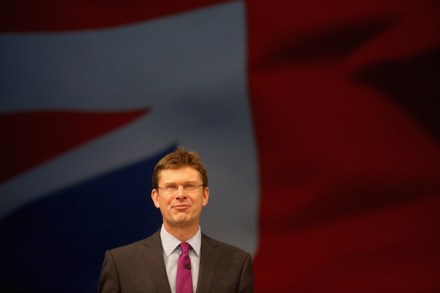
Greg Clark’s softer approach to building more houses in a ‘Conservative way’

From our UK edition

The most striking thing about Greg Clark’s speech to Tory conference today was how different his rhetoric was on house building to George Osborne. Osborne likes to talk of confrontation, of standing up to small ‘c’ conservative voters who block development, and of winning a battle with the shires (see today’s Mail front page). But Clark tried to use more conciliatory language, speaking wistfully of the ‘joy’ of his own homes: ‘ Close your eyes and picture all the homes you’ve lived in – then what you see is the story of your life. For me it began with my mum and dad’s bungalow where I grew up. Then the thrill of walking into the first room of my own at university – with the shabby furniture and the musty smell.