Sebastian Payne

Detoxifying profit in education

From our UK edition

Profit and education are still two words that should only be put together with caution. The coalition has long-accepted this is a toxic area, as typified by Nick Clegg in September when he proclaimed: ‘Yes to greater diversity; yes to more choice for parents. But no to running schools for a profit; not in our state-funded education sector.’ But as Fraser argued last year, we need profit-making schools to spread the benefits of Michael Gove’s reforms to the most deprived children. To straddle this divide, Policy Exchange has proposed a halfway solution today: social enterprise schools.
Prescott’s pitch for the police commissioner job

From our UK edition

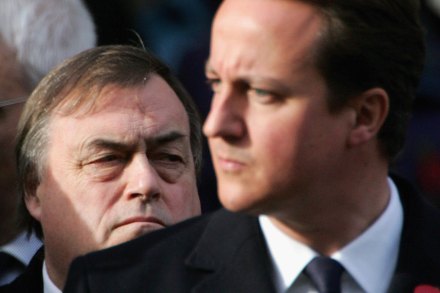
How strange — John Prescott is fast becoming the poster boy for elected police commissioners. He appeared on the Today Programme earlier to explain why he's putting himself forward for that very job in his home of Humberside. But has he acquiesced to Tory thinking? Don't bet on it. As he told John Humphrys, he doesn't actually support the legislation, but he does believe that Labour should have a man in the fight: ‘The Labour Party didn’t like this legislation and I voted against it, but once there is an election the party isn’t going to stay out of it and they will want to see it doesn’t go the way they feared it might go.’ Which probably explains why Prescott sees the role of elected police commissioners as quite limited.

Curb your enthusiasm, kids

From our UK edition

Iain Martin has flagged upan article from the latest Times Educational Supplement, in which a Norfolk sixth-form teacher bemoans overenthusiastic pupils. Yes — you read that right. In the article, Jonny Griffiths highlights the ‘other aggravation’ in a teachers’ life: ‘Sometimes ambitious children need to slow down. It is 4pm. My weary colleagues and I are slowly unwinding in the maths office, when there is a knock on the door. Could I have a quick word with Jonny, please?” says Michael in a bright, nervous voice. I don’t sigh, but inwardly I think, “Is that my ‘quick’ or yours?”’ And that's just a fraction of it.

Ken’s gaffe and what it tells us about his campaign

From our UK edition

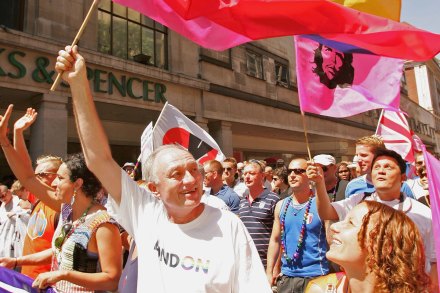
We now have the first major gaffe of the 2012 London Mayor race and to everyone's surprise it wasn't Boris. Ken Livingstone granted an extraordinary interview to the New Statesman, where his comments on the incumbent mayor, Margaret Thatcher and his work ethic have caused a decent stir. However, it is the thoughts on homosexuality in the Conservative Party - 'the Tory party was riddled with it like everywhere else is' - that have prompted outrage. He was claiming hypocrisy, but instead came off bitter and twisted. The pro-Boris politicos are delighted - Ken's true colours have been exposed, they say, and Labour should deselect him at once. But they shouldn't overstate the case. Ken has been supporting gay rights for years now, so probably deserves some benefit of the doubt.

Brits sceptical of Syria intervention

From our UK edition

Britain’s response to Syria so far has been uncertain and cautious. A YouGov poll today suggests that the public is keen for this hands-off approach to continue. When presented several possible offences, the public responds with almost universal disapproval. A measly 9 per cent would support sending in British and allied troops to overthrow President al-Assad. Only 16 per cent would support providing arms to the rebels and 18 per cent support sending in troops to protect civilians. The only modicum of support is for the proposed no-fly zone. But, although a majority would agree with the zone, less than half believe it is necessary right now, with 26 per cent believing it may be useful in the future.

Higher weekend mortality is not down to Saturday night drunks

From our UK edition

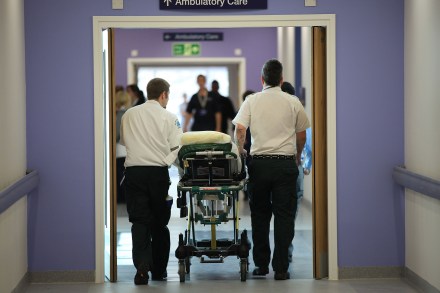
You're more likely to die if admitted to hospital during the weekend. It's a shocking truth, and one that's explored further in the Journal of the Royal Society of Medicine today. Last year, as Pete blogged at the time, the 2011 Dr Foster Hospital Guide discovered that emergency patients are 10 per cent more likely to die if admitted at the weekend. Today's report goes further than that, and finds that patients are 16 per cent more likely to die if admitted on a Sunday as opposed to a weekday — for all admissions, not just emergency. It's a finding that undermines the idea that the increased mortality rate can be put down to more drunks staggering into A&E at the weekend.

The politics hovering over the Falklands

From our UK edition

With HMS Dauntless and now Prince William gliding across the Atlantic to reinforce Britain's claim on the Falklands, there's no denying that tensions with Argentina have been raised. But let's not get carried away. As Admiral Sir John Woodward reminded us last week, the latest round of defence cuts rules out, or at least undermines, a British counter-invasion. The deployment of our shiniest boat is, in reality, the sum total of what Britain can do to scare off any invasion. And there could be another barrier to the government's hawks, other than resources: namely, the Lib Dems. Nick Clegg did try to rally support for our cause on a trade mission to Brazil eight months ago, but it’s unlikely Cameron's partners are enthusiastic for this sabre-rattling over the Islands.

Thieves of Westminster becoming more brazen

From our UK edition

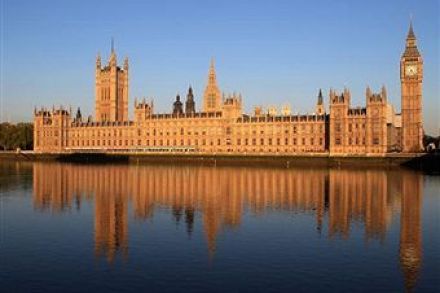
Yesterday, Keith Vaz received a response to a written question he filed to John Thurso regarding thefts on the parliamentary estate. Having lost an iPad and a laptop from his office, Vaz was keen to see if petty crime is a problem on the estate. Thurso’s response appears to confirm that it is. The catalogue of listed crimes highlights wide ranging theft in Westminster over the past few years. There have been 106 reported incidents in the past six years alone, with a definite upward spike in the past year. A record 40 incidents have been reported so far in 2011, increasing rapidly as the year has gone by. Laptops were the most popular item to be stolen – with 31 reported as stolen, 25 in 2011 alone.

There’s life in print yet

From our UK edition

On Boxing Day, Fraser blogged on whether the iPad and other mobile devices will save British journalism. His view peered into the future, but what about the market today? Fraser points to The Times’ Christmas Day edition, the first of the paper that was available purely in electronic form. Along with Apple and News International’s iPad-only 'Daily' newspaper to be launched next year, this represents a landmark achievement that could signal the beginning for the future of journalism. Or it could represent an industry collectively hurtling towards a brick wall. Online journalism has now been with us for a decade – but, strikingly, no one has taken the issue of making money from it seriously.

Live-blogging the protests

From our UK edition

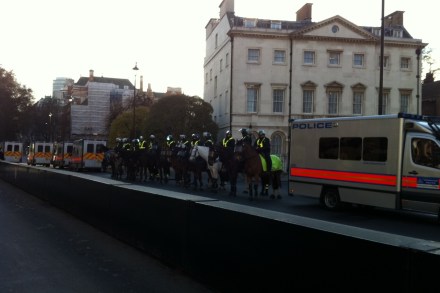
1540: Heading back to Spectator HQ but it's blocked off. They appear to be kettles in parliament square. The horses appear to be keeping the crowd back. Fence is being thrown around again. 1530: Milbank is full of police vans, they have to put them somewhere. Police are turning away people from Parliament Square. Police are using riot-proof cameras for evidence. 1455: The Met are shouting and trying to get everyone back on the planned route, but the crowd are beyond caring. A bystander pointed out Parliament Square is being used (more likely destroyed) for the first time in months. 1445: A view from a parliamentary researcher: "Life goes on inside the Palace of Westminster.

It was Brown’s system that failed

From our UK edition

Martin Vander Weyer examines who should be held responsible for the Northern Rock crisis and finds that as much as any individual, the system that Gordon Brown put in place in 1997 should be held responsible. Martin Vander Weyer The search for suspects goes on, the theories become more bizarre by the day, and yet no one’s quite sure whether there’s really a body. I speak of course of Northern Rock. Is it dead on its feet, creditworthiness destroyed, business model incapable of withstanding the stormy market conditions ahead, its management humiliated? Or will it now stagger on under its Treasury guarantee and award chief executive Adam Applegarth and his team a round of handsome bonuses at the end of the year to recognize their fortitude?