Sara Wheeler

Sara Wheeler is the author of Terra Incognita.

Alone on a wide, wide sea

Some years ago, when I stepped from an unstable boat onto Juan Fernández island, a friendly man took my bag and introduced himself as Robinson. Ten minutes later, I found a room to rent. The homeowner’s first name was Crusoe. Get the idea? Although Defoe set his story hundreds of miles away, near the mouth of the Orinoco, Juan Fernández was where the real Crusoe, the Scottish sailing master Alexander Selkirk, spent four years and four months in the company only of goats. Andrew Lambert has had the very good idea of writing a kind of historical biography of the 15x5-mile lump of volcanic rock 415 miles off the coast of Chile (he includes the other two smaller islands in the archipelago).

Northern lights | 2 June 2016

‘The only use of a gentleman in travelling,’ Emmeline Lowe wrote in 1857, ‘is to take care of the luggage.’ My sentiments entirely. The extract from Unprotected Females in Norway reprinted in this book recounts Lowe’s travels with her mother round the Dovrefjeld in the centre of the long country. Tramping through the valleys wearing mosquito veils, ‘solid plaid skirts’ and hobnail shoes, the pair reckoned that the only essentials were a driving whip and a fishing rod. Lowe (who published anonymously) is a spirited companion on the verdant plains and the snowy peaks, and her pleasure in the long boreal gloaming leaps infectiously from the page.

Frozen beards and hot tempers

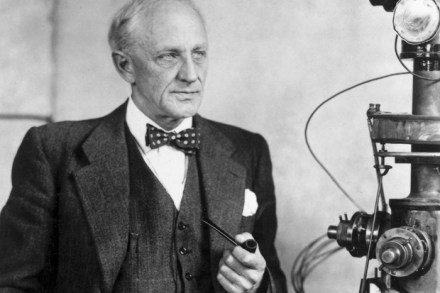
Born in New South Wales in 1888, George Finch climbed Mount Canobolas as a boy, unleashing, in the thin air, a lifelong passion. When he was 14, the family emigrated to Europe. There, as a young man, Finch excelled both as an alpinist and a student, enrolling at the prestigious Zurich Federal Institute of Technology, where he won a gold medal which he subsequently melted down to buy ropes and belays. He was six feet two, with broad shoulders and blue eyes, and he played the piano beautifully. In 1912 he moved to London to work as a research chemist, joining the Fuel and Refractory Fuels team at Imperial College the following year. From the outset, he upset convention in the climbing fraternity.

Spectator books of the year: Sara Wheeler wallows in a witty grammar memoir

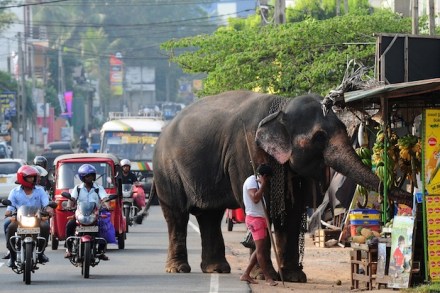
My Book of the Year is Between You & Me: Confessions of a Comma Queen, a grammar memoir by Mary Norris, a copy editor at the New Yorker for 30 years (Norton, £15.99). Anyone who loves language will wallow in this book. Working with the greats (Roth to McPhee) and digressing on the foibles of the serial comma, Norris infects every line with wit and wisdom. In the travel department I commend Elephant Complex: Travels in Sri Lanka by John Gimlette (Quercus, £25), a gripping account of an under-reported island. As for fiction, I pick John Banville’s The Blue Guitar (Viking, £14.99) — perhaps for the tone of elegiac melancholy as the protagonist faces the sorrows and indignities of late middle-age.

The writing on the wall | 20 August 2015

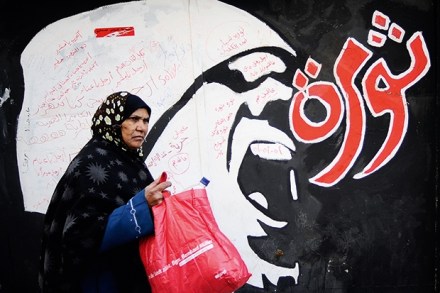
‘Every day’, writes the foreign correspondent Wendell Steavenson in this account of the 2011 Egyptian revolution, ‘see-sawed between joy and death.’ She covered the 18-day cataclysm and stayed on in Cairo for another 18 months to report its aftermath, filing for the New Yorker among other outlets. The title refers of course to Tahrir Square, the heart of the conflict, a place ‘shaped like a giant teardrop with a traffic circle in the centre’. Steavenson’s previous books include The Weight of a Mustard Seed, a portrait of a Ba’athist general in Saddam’s Iraq; she also reported on the fall of the Soviet Union.

A new world in the making

Alexis de Tocqueville is a prophet for all seasons, continually reinterpreted as the zeitgeist shifts. He sailed to Jacksonian America to compile a report on the prison system, and ended up writing a meditation on the nature of democracy that remains in print after 160 years. In this latest addition to the fertile field of Tocquevillian studies, Arthur Kaledin analyses the Frenchman’s character and thought before, during and after his nine-month tour around the still partially formed USA. De Tocqueville set off in 1831 in the company of his friend Gustave de Beaumont.

Lost horizon

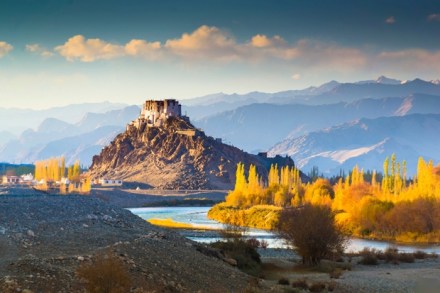
Sikkim was a Himalayan kingdom a third of the size of Wales squeezed between China, India, Nepal and Bhutan. I was there once in April, when the sky was cornflower blue. When Britain withdrew from India the last ‘Chogyal’, or king, battled for his country’s independence, but Mrs Ghandi won the war, and Sikkim is an Indian state now. It’s a sad story, as Andrew Duff’s subtitle suggests, but one representative of 20th-century geopolitics. This dense book — Duff’s first — places Chogyal Thondup Namgyal at the centre of the story and focuses exclusively on the period from the 1950s to the 1970s.

Into the blue

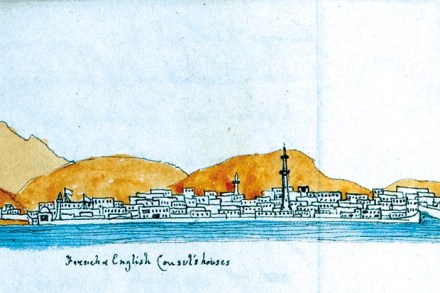
Jenny Balfour Paul is an indigo dye expert. She has written two books on the subject, and lectures around the world. A librarian alerted her to the mention of the colour, and the plant it comes from, in the journals of a long-forgotten sailor and indigo hand. That day a ten-year love affair began. Thomas Machell was born near York in 1824, a son of the manse. At the age of 16 he went to sea, scrubbing the decks of a merchant ship. After numerous adventures he settled in India, initially working for the Bengal Indigo Company, then transferring to plant and harvest coffee in Kerala. He was a curious, observant man who became fluent in both Arabic and Hindi, and, unlike many servants of the Raj, travelled widely off the beaten track.

The lure of fool’s gold

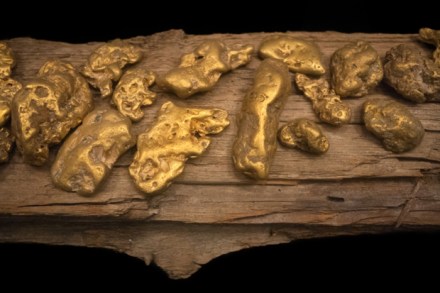
In 2008, the price of gold lofted above $1,000 an ounce for the first time in history, inspiring a rush of small-scale panners to head for the diggings with hope in their hearts. As the price of the metal fell and rose again — it nearly touched $2,000 an ounce in 2011 — journalist Steve Boggan contracted a touch of gold fever himself. He set off for California to find out who these chancers were. And to find some gold. I’ve taken Route 49 through inland California — Coloma to Sonora. The largely empty highway, which slices through heartbreaking landscape, is named of course after the fabled ‘Forty-niners’, and you can still smell, in those small towns with their jails and saloons and crummy hotels, the romance of possibility, the human capability to bet against all odds.

The greatest American Arctic disaster

In the course of the 19th century, various flotillas of expeditions hastened to the polar regions in little wooden ships which sooner or later expired in the pincers of an ice floe while crewmen ate their shoes. These stories bear retelling for our own age, and Hampton Sides does well to identify the gruesome story of the USS Jeanette, which ended in the greatest American Arctic disaster ever. The idea began with James Gordon Bennett Jr, the proprietor of the New York Herald (the largest circulation daily in America) and a flamboyant character who enjoyed riding round Manhattan in the nude. He had already sponsored numerous expeditions and popularised the now standard technique of creating news, the more sensational the better. (The phrase ‘Gordon Bennett!’ was minted for him.

A paralysed landscape

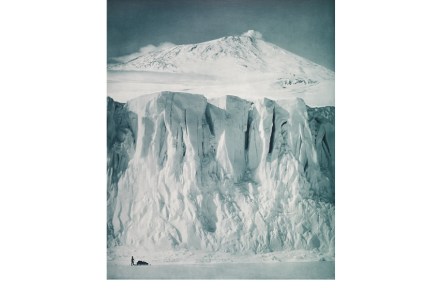
‘Very, very, very sexy’, a field-researcher scratches in his Antarctic notebook. He is describing a meteorite the size of a £1 coin that he has just picked up off the ice. The episode, recounted in Gabrielle Walker’s hugely informative book, reveals the passion of intrepid polar scientists. From the enthusiasm and diligence on display in these pages, one senses that the author shares their feelings. With a PhD in natural sciences and a solid career in science journalism, Walker is well placed to tackle the wide range of polar disciplines. She calls the Antarctic a ‘science playground’, and has visited five times, kneeling over holes in the ice with many of the world’s leading researchers.  The book is structured geographically.

Way out west

This year America celebrates the cent-enary of Mark Twain’s death. This year America celebrates the cent-enary of Mark Twain’s death. He is the nearest that country gets to a national treasure, with a hefty bibliography to show it: the University of California Press’s 70-volume Works and Papers represents but a fragment, and in June Penguin published an entire book on the food Twain ate. Now here comes Roy Morris Jr with a contribution covering Twain’s pre-fame journeys among the mines and saloons of the western frontier. What does it add? Samuel Clemens (as Twain was born) worked as an itinerant printer and a Mississippi riverboat pilot before a reluctant stint as a Confederate guerilla at the outbreak of civil war.

The iceman cometh

True North: Travels in Arctic Europe, by Gavin Francis This is an old-fashioned travel book of the linear variety. Roaming the northern fringes of Europe with a tent and a nose for a story, Scottish doctor Gavin Francis looks beyond the icebergs and the stunted willow seeking ‘a back country of the imagination where myth and reality intertwined’. Beginning at Unst, the northernmost of the Shetlands, Francis sets out to ‘follow a route that Europeans had taken towards what they once saw as the very limits of the world’. Heading by ferry to the Faroes, he continues to Iceland, Greenland, the snowy hinterland of Scandinavian Finnmark, and finally Svalbard, the Norwegian archipelago that includes Spitzbergen.

Lust in a hot climate

This sprightly book recounts the life of Idina Sackville, the author’s great-grandmother. A glamorous aristocrat with a penchant for scandal, she married and divorced five times and was a protagonist of the Happy Valley set, the coterie of dim and adulterous cocktail-swiggers who achieved notoriety in inter-war Kenya (pronounced Keenya). Idina was not beautiful — according to Frances Osborne she possessed ‘a shotaway chin’ — but she had what it took. Painted by Orpen and photographed by Beaton, she epitomised the androgynous, indifferent chic of the age.

The year of the rat

‘Ah,’ Robert Sullivan exclaims in this artful book, ‘the excitement, the nail-biting and palpably semi-wild thrill of ratting in the city!’ An otherwise apparently sane American writer and journalist, Sullivan chose to spend four seasons observing the rats in New York’s Eden’s Alley, five blocks from Broadway. Settling down with night-vision binoculars, a folding chair and a thermos, he catalogued the behaviour of ‘his’ rats as they scuttled over soot-peppered ice or foraged through bags of restaurant detritus literally fuming in the volcanic heat of a New York summer. His aim, he said, was ‘to arrive at some truth about rats’. The book that emerged embraces all aspects of Rattus norvegicus.

Serving Christ and colonialism

Fergus Fleming is the author of three volumes of narrative history, the best of which, Barrow's Boys, gives a rollicking account of 19th-century Arctic exploration. Now he has lighted on the 'conquest' of the Sahara, and it is a gripping saga, little known beyond the popular image of a kepi-wearing French officer riding into the desert on a white camel while hordes of Tuareg mass silently on the horizon. The Sword and the Cross begins with a trot through the history of Algeria, or the Barbary Coast as it was known to white men, and of Ottoman North Africa in general.