Sara Wheeler

Sara Wheeler is the author of Terra Incognita.

A mighty river with many names: adventures on the Amur

The Amur is the eighth or tenth longest river in the world, depending on whom you believe. The veteran travel writer and novelist Colin Thubron reckons 2,826 miles the best estimate. In these pages he makes an arc-shaped journey from source to mouth: Mongolia to the Pacific via Russia and China. The author travels on horseback, buses, pontoon rafts, boats, trains and in taxis and the vehicles of strangers. Starting in late August, he breaks off in Khabarovsk, the largest city on the Amur (population 500,000), returning home to London when the river freezes. As book and journey progress, the Amur changes its name and gender.

A story of women and weaving – a new retelling of the Greek myths

What are myths for? Do they lend meaning and value to this quintessence of dust? Like religion, perhaps they help us battle through. In weighing this issue, Charlotte Higgins demonstrates again why the Greek variety have never lessened their grip on the western imagination. She structures her material around eight women — Athena, Alcithoë, Philomela, Arachne, Andromache, Helen, Circe and Penelope — and in particular around the scenes they weave. ‘I wanted the form of my chosen stories to be expressive in itself,’ she writes in the introduction. And it is. She draws in particular on the rich visual culture that has survived in ceramics, sculpture and frescoes.

The strangest landscapes are close to home

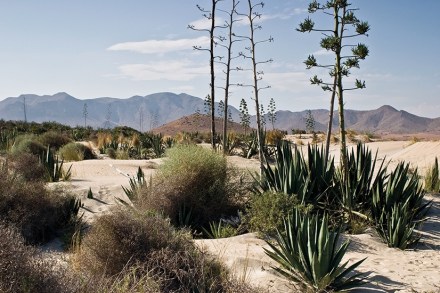
This pleasant volume, the author announces in the introduction, is ‘not a nature book, or even a travel book, so much as a book of fantasy: four small pilgrimages into imagination’. In its pages Nick Hunt unfurls his sleeping bag under a pink moon, breakfasts on a raw white onion and meditates both on what remains and on what we have lost. Outlandish is divided into four parts, each covering a short walk through a uniquely unusual landscape: Arctic tundra in the Cairngorms; a remnant of primeval forest straddling Poland and Belarus (‘the closest thing that Europe has to a true jungle’); the continent’s ‘only true desert’, in Spain’s south-eastern Andalucía; and the grassland steppes of Hungary. What unites the four?

Does William Barents deserve to have a sea named after him?

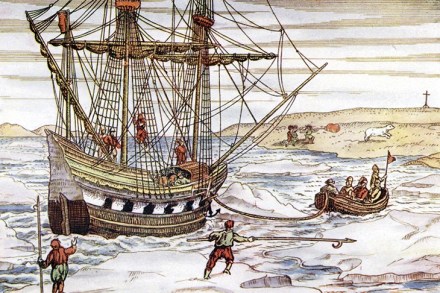
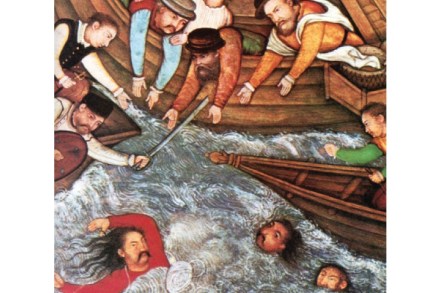
Narratives of frozen beards in polar hinterlands never lose their appeal. Most of the good stories have been told, but in Icebound Andrea Pitzer fills a gap, at least for the popular reader in English, with the story of the 16th-century Dutch mariner William Barents. He sailed further north than any man before him and lives still, on the map, with an eponymous sea off the northern coasts of Norway and Russia. In 1594, during the third decade of his country’s war with Spain, Barents voyaged to the unknown Nova Zembla (‘New Land’ in Dutch), planning to find a route to the fabled riches of Cathay. The notion of a navigable northern ocean had tantalised explorers since the Ancient Greeks, and geographers in Amsterdam thought the North Pole would be warm.

Sybille Bedford — a gifted writer but a monstrous snob

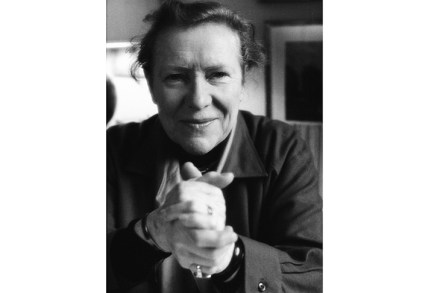
Sybille Bedford died in 2006, just short of 95. She left four novels, a travel book, two volumes of legal process and a memoir. Selina Hastings has written a wonderful biography, with lashings of lesbian lovers, which provides a soundtrack to one version of the 20th century. Born German in 1911, Bedford grew up in a schloss in Baden’s Feldkirch, near the French border, her father a Bavarian Catholic baron and old soldier, her mother a beautiful and unstable bolter. ‘Her childhood,’ writes Hastings, whose previous books include lives of Nancy Mitford, Somerset Maugham and Evelyn Waugh, ‘was both intellectually inspirational and... emotionally deprived.’ Both parents were wealthy.

Iceland is bursting with cabinets of curiosities

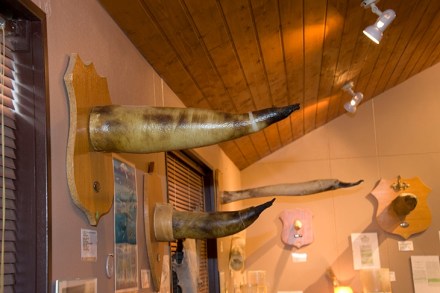
Competition is stiff among museums in Iceland. The Phallological Museum in Húsavík, devoted to the penis, stands tall in a crowded field: 265 museums and public collections operate in a country of 330,000 — a population, incidentally, with the highest literacy rate in the world. A. Kendra Greene, an American writer and artist, has worked in a number of museums, and her affection for them is touching. Indeed, it is the blurred edge between a few shelves in a front room and a civic institution that originally drew her to northern latitudes. She writes of Iceland: I have never known a place where the boundaries between private collection and public museum are so profoundly permeable, so permissive, so easily transgressed and so transparent as if almost not to exist.

Is it true that men navigate better than women?

Some years ago I participated in a late-night Radio 3 show on exploration and travel. When I left the studio with my fellow contributors, both distinguished explorers, we got lost in the bowels of Broadcasting House. Round and round the dimly lit corridors we trudged, and only after talk of bivouacking did we finally reach a lift and escape. Michael Bond, formerly the senior editor at New Scientist, has produced Wayfinding, an excellently researched popular science book which explains how people — including experienced travellers — get lost, and why some individuals have superior navigational skills than others.

The exotic Silk Road is now a highway to hell

This engaging book describes the Norwegian author’s travels round the five Central Asian Stans — a region where toponyms still make the heart beat faster: Samarkand, Bukhara, Tashkent. Fittingly, given the means by which foreign powers have harmed the Stans, Erika Fatland begins her story with the disastrous methane spill which Soviet geologists caused in Turkmenistan in 1971. But it seems that however malign exterior forces have been, these countries are perfectly capable of — if not experts in — producing ghastly politicians themselves. Saparmurat Niyazov, known as Turkmenbashi, emerges top of a hotly contested field of nutters. He declared himself a prophet, and banned dogs from Ashgabat because he didn’t like their smell.

Whatever happened to glasnost and perestroika?

This is a timely book. It addresses the challenges of a fractious and fractured Europe. The first word of the title means ‘truth’ in Russian, and the author’s point is that we have collectively lost sight of that essential commodity. Rory MacLean, whose previous books include Stalin’s Nose, Under the Dragon and Falling for Icarus, retraces in reverse a journey he made 30 years ago. Starting in Moscow this time and ending in London, his aim is ‘to understand what had gone wrong’ since the heady optimism following the fall of both the Soviet Union and the Berlin Wall: ‘I wanted to learn how refugees, the dispossessed and cyberhackers had been used by nationalists.

Gales and Gaels — sailing solo from Cornwall to the Summer Isles

This is the story of a solo voyage in a 31ft- wooden sailing boat called Tsambika. Philip Marsden pilots his sloop along the west coast of Ireland, then the west coast of Scotland. The Summer Isles lie at his journey’s end, but in fact he is unable to land, owing to unfriendly headwinds — hence those islands ‘must remain in the imagination of the book’s subtitle’. An award-winning writer whose previous books include Rising Ground: A Search for the Spirit of Place, Marsden was a competent sailor before the off (his grandfather taught him), but ‘had never skippered a boat to anywhere I couldn’t reach by lunchtime’. His achievement is all the more impressive as he claims to be ‘not naturally practical’.

Ninety degrees north

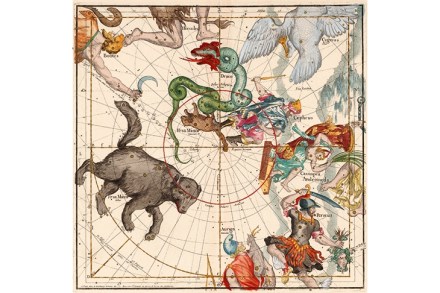
Having spent too much of my life at both poles (writing, not sledge-pulling), I know the spells those places cast. Michael Bravo promises to reveal something of that enigma, claiming at the outset of his book: ‘I will treat the mysterious power and allure of the North Pole in a way you will not have seen before.’ The volume is one of an interesting series on the cultural history of natural phenomena, that includes a title on Fire, and another on Swamp. Bravo structures his book around the struggle of navigators and philosophers to make sense of the strange powers of the North Pole, beginning with the ancients of Greece, Egypt, India and Persia.

Too clever by half

This book — the title is from Pasternak —is billed as ‘literary fiction’. The narrator, a Russian gambler and drinker who has settled in the West, leaves his rich American wife of two decades when he falls hard for a Russian prostitute he meets in London (‘the first and last love of my life’). Andrei Navrozov has worked as an editor and journalist (he has written for this magazine) and published several books, including a poetry collection with the same title as his new volume. As the subtitle indicates, he and his narrator are keen on self-deprecation — a sure sign that one thinks oneself frightfully clever.

Via dolorosa

Guy Stagg walked 5,500 km from Canterbury to Jerusalem, following medieval pilgrim paths, and he records the expedition in The Crossway. It was a journey from darkness to light, as the author, who suffers from mental illness, looked for redemption. It was also a considerable feat, especially as Stagg proclaims lugubriously at the outset: ‘I’m not much of a walker!’ He stayed in convents, monasteries, in his tent, in disused schools or the homes of strangers, and, later, in mosques. He crossed the Alps in winter in order to make Rome for Easter, and it took him six days to clear the Apennines. On the trail, he reflectsa good deal on what he has been through — a breakdown, suicide attempts, the nature of mental illness.

Are you going to Appleby Fair?

Damian Le Bas is of Gypsy stock (he insists on the upper case throughout his book). His beloved great-grandmother told him stories in the Romani tongue of atchin tans, ‘the stopping places’ where families would put up for the night in wagons and hazel-rib tents. Le Bas makes a year-long journey round Britain, exploring these places and the lore behind them. It was a voyage, he says, from the fixed community he grew up in to ‘the world of wagons and tents that passed in the decades before I was born’. In those years, four generations of his family had a pitch at Petersfield market, where they sold flowers. Le Bas is interested in the Gypsiness that has survived the ‘transition from nomadic to settled life’.

Flitting from flower to flower

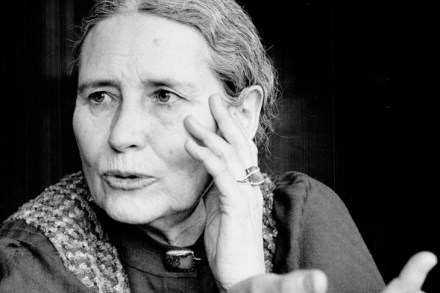
‘I am interested only in stretching myself, in living as fully as I can.’ Lara Feigel begins her thoughtful book with this assertion by Anna Wulf, the protagonist of Doris Lessing’s The Golden Notebook, and it rather sums up the whole endeavour of the volume. Feigel weaves close readings of Lessing’s prose, both fiction and non-fiction, with accounts of her own self-stretching. Feigel, an academic, had read Lessing as an undergraduate, but, returning to her in her thirties, she discovered in the books a stimulating discussion about ‘how as a woman to reconcile your need to be desired by men with your wish for sexual equality’. She is particularly interested in the way Lessing ‘placed sexual fulfilment at the centre of women’s lives’.

In the land of the Thunder Dragon

This charming collection of individual photographic portraits of Bhutanese citizens intentionally highlights the two central features of the kingdom today: cultural tradition and the encroachment of modernity. The photographer A.J. Heath lived in Bhutan for a year. Over three weekends he set up an open-air studio in the main square of the capital, Thimphu, and invited people in to be snapped. The subjects, mostly young, range from teenagers to a miner and a royal bodyguard. Opposite each picture Heath reproduces the questions he asked his subjects, and how they replied. The conversations reflect the duality I mentioned earlier: Heath asks for example what makes people feel Bhutanese.

The greatest survival story

This is the story of a 16th-century Portuguese knight and mariner who survived alone on a lump of volcanic rock in the South Atlantic for 26 years. The island was St Helena, and Fernão Lopes is the ‘other exile’ of the book’s title, in contrast to Napoleon, who pitched up 300 years later. But Lopes’s lonely sojourn was self-imposed. He was born in Lisbon in Portugal’s Golden Age, when Manuel I embarked on an ambitious period of expansion and ushered his nation into the ranks of the great European powers. Lopes was not of noble line, but had a good education and rigorous military training and rose to become a servant of the king, sailing to India in 1506 as an officer in a 15-ship armada with the explorer Tristao da Cunha.

The curse of the Yeti

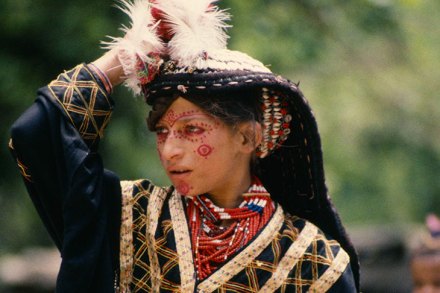
This book, according to its author Gabi Martínez, is ‘a non-fiction novel’. It tells the story of Jordi Magraner, a Morocco-born Spaniard who grew up in France. A largely self-taught zoologist and naturalist, Magraner worked on humanitarian convoys in Afghanistan before devoting his life to searching for the Yeti among the Kalash people in the Hindu Kush. He was, according to Martínez, ‘Proud. Enigmatic. Multifarious. Pagan. Passionate. A beast.’ The book opens with his murder (which remains unsolved). The Yeti, possibly a version of Neanderthal man, are the monsters of the title. In north Pakistan they are known as barmanu. These bipeds never make an appearance. But Magraner kept the faith.

Spectator Books of the Year: A celebration of the London Library

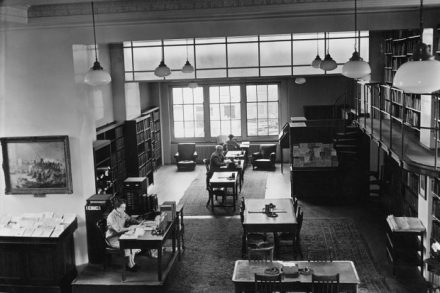
Far and Away: How Travel Can Change the World is a collection of pieces by the American essayist Andrew Solomon (Chatto, £25). From Moscow to Mongolia, Antarctica to Afghanistan, Solomon observes the world and reflects what he sees both on himself and on his own country. Resilience, hope, flux: Solomon has an outsider’s eagle eye. A dazzling volume. I also enjoyed On Reading, Writing and Living with Books (Pushkin Press, £4.99). This slim tome is among the first of a gorgeous new series culling extracts from the shelves of the London Library, an institution which celebrates its 175th birthday this year. Authors anthologised include Virginia Woolf and George Eliot. In half an hour, this book delivers the fruits of many days cruising the stacks in St James’s Square.

Up where the air is clear

Robert Twigger’s father was born in a Himalayan hill resort and carried to school in a sedan chair. His son, born in 1965 and long fascinated by the region, has produced a social and cultural history of the mountains. It is a hybrid volume — and why not? Twigger leaves no mountain path untouched in his bookish reportage. Topics covered in this long book include crustal formation and destruction, the pre-Buddhist Bon religion (even today 10 per cent of Tibetans are Bon-worshippers), shamans, yeti, Colonel Francis Younghusband (‘the first mountaineer’), altitude sickness (which fascinates Twigger), the 19th-century exploration of Nain Singh, that bloody annoying Madame Blavatsky and much else.