Sam Leith

Sam Leith

Sam Leith is literary editor of The Spectator.

Carlo Rovelli: Anaximander, from the archives

49 min listen

The Book Club has taken a short summer break and will return in September with new episodes. Until then, here’s an episode from the archives with the theoretical physicist Carlo Rovelli. Carlo joined Sam in March 2023 to discuss his book Anaximander and the Nature of Science and explain how a radical thinker two and a half millennia ago was the first human to intuit that the earth is floating in space. He tells Sam how Anaximander’s way of thinking still informs the work of scientists everywhere, how politics shapes scientific progress and how we can navigate the twin threats of religious dogma and postmodern relativism in search of truth.

Can W.H. Auden be called a war poet?

Nicholas Jenkins takes, as a point to navigate by in this rich and ingenious study of the early Auden, a remark by the poet’s friend Hannah Arendt. Auden, she said, had ‘the necessary secretiveness of the great poet’. You can’t always trust what Auden, in his prose and in his later interviews, claimed to have been getting at in the poems. And in Jenkins’s account, you can’t even trust what the poems think they’re getting at. Jenkins seeks to put Auden back in his own time, and embed the verse in his life. Auden said in public, for instance, that the first world war had little effect on him; and it’s seldom explicitly referenced in the verse. But in Jenkins’s version he’s a war poet.

Adam Higginbotham: Challenger

50 min listen

Sam's guest in this week's Book Club podcast is Adam Higginbotham, whose new book Challenger: A True Story of Heroism and Disaster on the Edge of Space describes the 1986 space shuttle disaster that took the lives of seven astronauts and, arguably, inflicted America's greatest psychic scar since the assassination of JFK. He tells Sam about the extraordinary men and women who lost their lives that day, the astounding engineering involved in the spacecraft that America had started to take for granted, and the deep roots and long aftermath of the accident.

Can video games be funny?

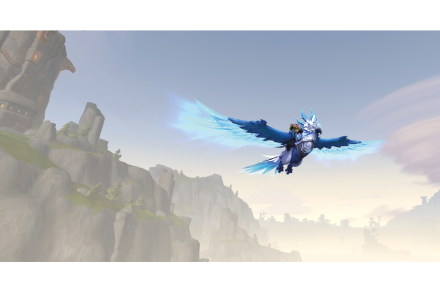
Grade: B+ Games can be exciting, puzzling, scary, competitive and – occasionally – moving. Can they be funny? Not often. But this lovingly crafted indie cartoon adventure has a creditable bash at it. The protagonist is an oval-headed yellow homunculus in a shirt and tie, as if Family Guy’s Stewie Griffin, Dilbert and a minor Simpsons character had been squished in a particle collider. He is dispatched to the fictional Yorkshire town of Barnsworth by his boss to do... something. But the mayor won’t meet him so he finds himself wandering around the town. ‘Thank goodness you’re here!’ say various townspeople in ee-bah-gum accents, before inviting you to help them out of some absurd pickle. It’s not clear why they’re so pleased to see you.

Nathan Thrall: A Day In The Life of Abed Salama

35 min listen

My guest in this week's Book Club podcast is Nathan Thrall, author of the Pulitzer Prize winning book A Day In The Life of Abed Salama – which uses the story of a terrible bus crash in the West Bank to describe in ground-up detail the day-to-day lives of Palestinians living under Israeli occupation. Speaking to me from Jerusalem, Nathan tells me why he believes it's right to call Israel an 'apartheid state', how the bureaucracy of the Occupied Territories made the fatal crash 'an accident that wasn't an accident'; and what he thinks needs to change to bring hope of an end to the conflict.

David Baddiel: My Family

41 min listen

My guest on this week’s Book Club podcast is the writer and comedian David Baddiel, talking about his new book My Family: the Memoir. He talks about childhood trauma, what made him a comedian, and how describing in minute detail his mother’s decades long affair with a slightly crooked golfing memorabilia salesman is an act not of betrayal but of loving recuperation.

What we didn’t learn from the Manchester Airport police ‘attack’

There’s a famous 1986 TV advert for the Guardian (remember when newspapers had TV adverts?) which shows you footage of a rough-looking skinhead pelting down the street and appearing to grab at the briefcase of a startled-looking city gent. Just as the viewer is digesting this scene and drawing the conclusion that suits his or her prejudices, the screen cut away to another, wider shot: the young man, as we discover, wasn’t trying to mug the older man, but was wrestling him out of the way of a pallet of bricks collapsing overhead. Despite the improbable, Wile E. Coyote quality of the imagined peril, it was a cute idea for an ad. We read into a snippet what we choose to read.

Neil Jordan: Amnesiac

47 min listen

Sam Leith's guest on this week's Book Club is the writer and film director Neil Jordan, who joins the podcast to discuss his new book Amnesiac: A Memoir. He talks, among other things, about writing for the page and the screen, the uses of myth, putting words into the mouths of historical figures, seeing ghosts in aeroplanes, being ripped off by Harvey Weinstein, and failing to persuade Marlon Brando to play King Lear.

The CrowdStrike crash was an act of God

CrowdStrike. What a name. It sounds, doesn’t it, like exactly what it’s meant to prevent? And a cloudstrike, in the sense of a bolt from the blue, is exactly what the company produced: millions and millions of Windows PCs simultaneously succumbed to the Blue Screen of Death, as a company whose whole raison d’etre is averting internet catastrophe caused one. The biggest, supposedly, in history.  Is it in bad taste to say that the great internet outage of July 2024 was, in some respects, just a little bit funny? Plainly, it wasn’t funny if you were trying to book a GP appointment, or trying to pass through an international airport, or had a lot of money in, say, CrowdStrike shares. But there was undeniably a sort of festival atmosphere amid all the chaos.

Roger McGough: Collected Poems 1959-2024

35 min listen

My guest in this week's Book Club podcast is Roger McGough, whose new The Collected Poems: 1959-2024 anthologises a poetic career 65 years long and counting. Roger tells me about revisiting his old work and making it new, why he's 'not being serious' about the future of Poetry Please, and how he narrowly missed being on the Pyramid Stage at Glastonbury.

It wasn’t just Trump who dodged a bullet. It was all of us

Hard not to think that that’s the election in the bag for The Donald. Surviving an assassination attempt was always going to be a bounce in the polls, no question. Trump not only survived one but – improbably enough, given he’s a 78-year-old man and he was surrounded by a passel of burly, supposedly highly trained security guys whose only job was to put him on the deck and sit on his head till the fun was good and over – fought his way to his feet and had the presence of mind to raise a fist of defiance and shout ‘fight, fight, fight,’ to his supporters. I don’t think it’s an exaggeration to say it might well have been the end of America as we know it Fair play to the man.

Completely batty: Vampire Therapist reviewed

Grade: B+ Looter-shooters, match-three games, dragons and spaceships... Sometimes you despair of video games doing the same thing again and again – and then a lone developer gets a severe bump on the head and produces something completely batty.  Vampire Therapist is a comedic adventure-story therapy-simulation starring a vampire, except he’s also a cowboy, and he’s training to be a cognitive behavioural therapist in the backroom of a German nightclub under the tutelage of a 3,000-year-old bisexual vampire who was romantic with Marcus Aurelius back in the day.  Our hero was a bad vamp in the Wild West for many years, you see, but he fell in with the Transcendentalists and learned to ‘walk a better path’. Now he hopes to persuade others to do the same.

Michael Nott: Thom Gunn’s Cool Queer Life

29 min listen

My guest on this week's Book Club podcast is Michael Nott, author of the new biography Thom Gunn: A Cool Queer Life. He tells me about the poet's early trauma, his transatlantic identity, his unconventional family and his compartmentalised life, part teaching and writing, part sex, drugs and rock and roll.

Let’s give Keir a chance

I don’t know about you, but I had an odd sort of election. The bits that I thought were going to thrill and excite me did not; and the bits that I thought couldn’t thrill and excite anybody made me feel quite emotional. That is, I gave up on the live coverage at about half two in the morning. Not even the prospect of watching Liz Truss get her cards seemed as appealing as a few hours’ kip. The 1997-style jubilation I might have expected to feel, as a representative of those keen to give Labour a shot at governing, just wasn’t there.  But the following day, as announcements of ministerial and cabinet posts trickled out, I felt genuinely buoyed up. You may – we may – dislike the ideological slant of some of these appointments.

Keir Starmer channeled Obama in his first Downing Street speech

In his first speech from the Downing Street lectern, Sir Keir Starmer was setting out to reaffirm those qualities that won him the election. That was a relatively low bar to clear – he just had to give the impression that he was neither a crook nor a maniac – and he cleared it with ease. Here was a solid, sensible, ostentatiously humble speech delivered with persuasive but unshowy emotion.  Starmer was punctilious about showing grace in victory. Just a few days ago, he was deriding Rishi Sunak as a selfish chancer who had enriched himself 'betting against Britain' in his financial career; today, he was keen to 'pay tribute' to the outgoing PM’s 'dedication and hard work', and to the 'extra effort' that will have gone into earning a place as the first British-Asian PM.

Kathleen Jamie: Cairn

24 min listen

In her new book Cairn, the Scots poet Kathleen Jamie sets a capstone of sorts on her trilogy of short prose collections Findings, Surfacing and Sightlines. She joins me on this week’s Book Club podcast to talk about why she hesitates to call herself a nature writer, how prose found her late in life, and why whale-watching isn’t what it used to be. Produced by Patrick Gibbons.

Why is Putin really trying to interfere in the UK election?

Who says Britain is no longer a Great Power? To those of a declinist cast of mind, it must stand as a rebuke that, even with everything else on his plate, Vladimir Putin still regards our elections as worth interfering in. And, what’s more, those elections are so important that the Aussies are taking enough of an interest in them to consider that Russian interference newsworthy.   Russia may be trying to influence our elections, which as I say is flattering and all, but they aren’t trying very hard At the same time as it’s heartening that the Australian Broadcasting Corporation considers this a big deal it’s also, I suppose, a little dismaying that our own Broadcasting Corporation didn’t seem to notice. But there we are.

Åsne Seierstad

48 min listen

My guest for this week's Book Club is the journalist and author Åsne Seierstad. She tells me about her new book The Afghans: Three Lives Through War, Love and Revolt; how and why she constructed a novelistic narrative about real-life people and events, and what her encounters with human rights activist Jamila, Taliban commander Bashir and thwarted student Ariana can tell us about the past, present and future of that troubled country. Produced by Patrick Gibbons.

Michael Gove is right to compare the betting scandal to partygate 

Poor old Rishi Sunak. You would have to have the proverbial heart of stone not to feel, at least, a bat-squeak of pity for the man at this stage. First there was that poignant press conference in the rain, then the D-day kerfuffle, the flock of sheep in Devon who snubbed him when he tried to feed them, the series of ill-advised visits to chocolate teapot factories and pubs called things like ‘The Last Chance Saloon’, and now this...

Mark Bostridge: In Pursuit of Love

41 min listen

My guest on this week’s Book Club podcast is Mark Bostridge. In his new book In Pursuit of Love: The Search for Victor Hugo’s Daughter, Mark describes his quest to uncover the traces of Adele Hugo and the doomed love affair which cost her her sanity. He tells me how Adele’s story chimed in poignant ways with his own life and what it taught him about the unstable emotional contract between biographer and subject.