Ruaridh Nicoll

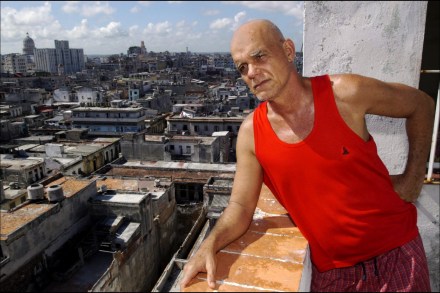
Ruaridh Nicoll is the former editor of the Observer Magazine and the author of two novels, White Male Heart and Wide Eyed.

The marvels of Cuba’s national botanic gardens

From our US edition

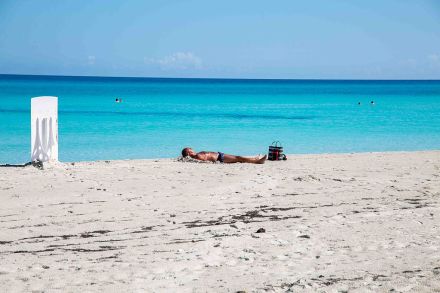
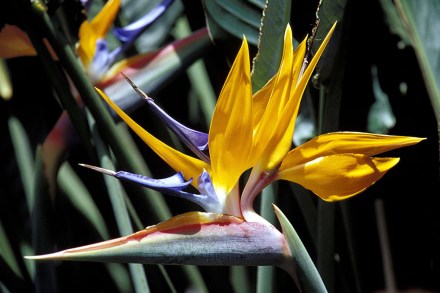
The last time I visited Cuba’s national botanic gardens, there was a wedding in a tucked-away corner by the Japanese pool. The happy couple stood at the water’s edge as jacanas – Jesus birds – walked the lily pads behind them. I have been thinking about that couple, as we’ve just heard that the botanics have closed due to the oil blockade the US is imposing on the island. The gardens were an escape in a collapsing city, not that we could still reach them, as there is no fuel. I have a small boy, Santiago, and it’s hard to entertain him in these trying times. On calm days, there is the beach, the beautiful miles of sand to the city’s undeveloped east, but with an empty gas tank, that too is out of reach.

Road-tripping across blockaded Cuba

From our US edition

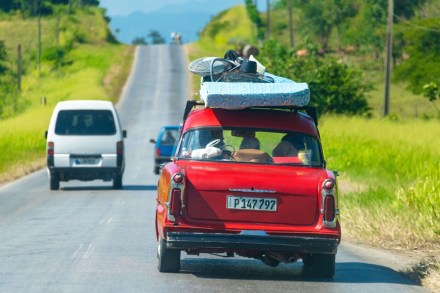
My wife Camila doesn’t drive, but she does direct. Studying the map, she’ll say, “This road!”, and before I know it, we’re off down some track, startling locals who haven’t seen a “yuma” – technically an American but really any foreigner – for years. Cuba is a country that lends itself to country road adventure. Besides drinking daiquiris, it’s perhaps my favorite thing to do. And it’s what I miss most now that it’s impossible: the US oil blockade that began in January means there is no gasoline. ‘Is this ceviche the red snapper or the snook?’ I asked. The waiter shrugged, ‘Once it’s ceviche it’s hard to tell’ Few others seem to do it.

Ruaridh Nicoll, Angus Colwell, Mary Wakefield, Philip Hensher & Nicholas Farrell

34 min listen

On this week’s Spectator Out Loud: Ruaridh Nicoll reads his letter from Havana; Angus Colwell takes us through an A-Z of London horrors; Mary Wakefield points out the glaring flaw in Keir Starmer’s 'cohesion plan; Philip Hensher reviews an increasingly reflective Alan Bennett; and finally, Nicholas Farrell reflects on Jeffrey Epstein, Silvio Berlusconi – and nudists in Italy. Produced and presented by Patrick Gibbons.

Inside blockaded Cuba, life is getting odder by the day

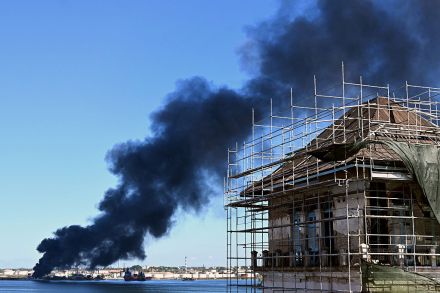
It’s nearly two months since Donald Trump signed an executive order imposing a total oil blockade on Cuba, and life is becoming odder. At the weekend, in a down-island town called Moron, teenage kids burnt down the local Communist party headquarters. Meanwhile, here in Havana, we’re awaiting the arrival of the Irish hip-hoppers Kneecap at the head of a humanitarian relief armada carrying solar panels. I live in a rooftop apartment. At night, it’s a good spot from which to look out over a city that once sent up music and light but is now as dark as a desert. The oil blockade, designed to either force the bankrupt Communist government into major reform or the population to rise up against them, is worsening what were already terrible blackouts.

Life under blockade in Havana

From our US edition

Now, I’m here to write about life in Havana, about daiquiris, fishing and salsa. But it’s fair to say life in Cuba has been getting a bit intense. Not as tense as it is elsewhere, but we’re very definitely on the list of countries where the US wants regime change. Washington has cranked up its 64-year trade embargo on the island into an all-out oil blockade. Donald Trump said he is hoping to conduct a “friendly takeover” of the island. The Habanos cigar festival, which I had been planning to write about, has been “postponed.” So I find myself pushing aside my notes on the ever-higher prices of Behikes, instead scribbling the word, “siege” on my page. It all seems a little medieval.

havana oil blockade

America’s immigration officers are among the most welcoming (except ICE)

From our US edition

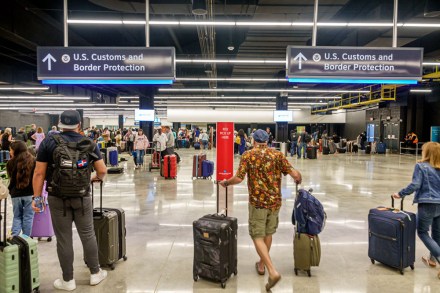
A frisson of fear tends to run through non-Americans when they face immigration in the United States. For years, young Brits have been warned prior to their first trip: “When you meet the immigration officer, don’t make jokes!” To boys cultivated to be insouciant in Britain’s posher schools, this usually means approaching the booth nervously repeating, “Don’t say bomb, don’t say bomb” – hopefully under their breath. However, I’d say the officers guarding America’s borders are among the most welcoming, and sometimes even funny, I’ve met – I’m excluding ICE, who sound awful. It’s often a surprise given I’m usually arriving from a country firmly on America’s State Sponsors of Terrorism list: Cuba.

How to eat in Cuba

From our US edition

My apartment in Havana is on a rooftop overlooking the sea, which sounds grand and penthousey, but it’s not – it’s the former caretaker’s hut. It also sits above my parents-in-law’s place, which offers challenges, but does mean that most days I wander down for lunch. When I first moved in, I didn’t speak Spanish and so would enjoy these meals in ignorant bliss, smiling winningly as I guzzled down pork, rice and beans. I tried not to ask my now-wife to translate because I didn’t want to interrupt what I imagined were hugely erudite discussions; she’s a literary professor and her parents are both philosophers. Slowly, though, I began to understand, Spanish revealing itself like a song on the wind.

Hurricane season in Cuba

From our US edition

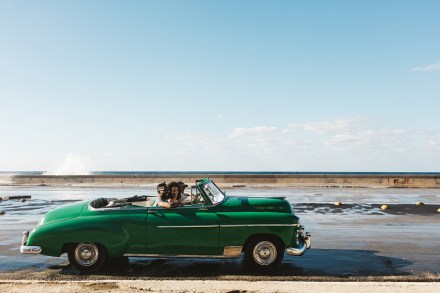
A cold front blew in off the Florida Straits, sending waves over Havana’s famous corniche, the Malecón, and announcing what has traditionally been the end of the hurricane season. After 13 named storms, it seems as if the 2025 season finale was Hurricane Melissa, a humdinger. She paused south of Jamaica, getting herself into a lather, before killing 32 on that lovely island and causing at least $7 billion of damage. Fortunately for Cuba to the north, Jamaica’s mountains plucked the murder from Melissa’s eye – but she still cut a devastating trail through this bigger island’s eastern reaches a day or so later.

Hurricane Melissa

In Cuba, a revolution is over

From our US edition

If you’ve ever thought of visiting the crocodile-shaped island of Cuba, or run into someone recently returned from sultry nights in the country’s salsa halls, there’s a good chance you’ll have heard the phrase “See it before it changes.” And I don’t mean because of Hurricane Melissa. The idea is that the centrally planned communist state, one of the last on Earth, will soon morph into America and a balmy Brigadoon full of people unencumbered by money, modern cars or Alexa will evaporate. I think most people, if they knew what Cubans have endured, wouldn’t use that phrase, which is up there in its lack of tact with “they’re poor but they’re happy.

cuba havana

Christopher Caldwell, Gus Carter, Ruaridh Nicoll, Tanya Gold, and Books of the Year I

34 min listen

On this week’s Spectator Out Loud: Christopher Caldwell asks what a Trump victory could mean for Ukraine (1:07); Gus Carter argues that leaving the ECHR won’t fix Britain’s immigration system (8:29); Ruaridh Nicoll reads his letter from Havana (18:04); Tanya Gold provides her notes on toffee apples (23:51); and a selection of our books of the year from Jonathan Sumption, Hadley Freeman, Mark Mason, Christopher Howse, Sam Leith and Frances Wilson (27:08).  Produced and presented by Patrick Gibbons.

The dark side of life in Cuba

The first scent of trouble came when Cuba’s government ordered all its non-essential workers home. By packing them off (and there are plenty of them, given Cuba is one of the world’s last centrally planned communist states) the government hoped the island’s exhausted national power grid would get a breather. It didn’t work, the main power station crashed, and Cuba went dark. At first, I didn’t think it was a big deal. Power cuts in this all-but-bankrupt state have long been a daily scourge. But it turns out there’s a categoric difference between 20 and 24 hours of blackout. I came to Cuba in 2018 for a three-month stay and here I am, now married with a three-year-old son. Friends call this my ‘Cuban midlife crisis’, which I resent.

Cuba libre: why Cubans have reached breaking point

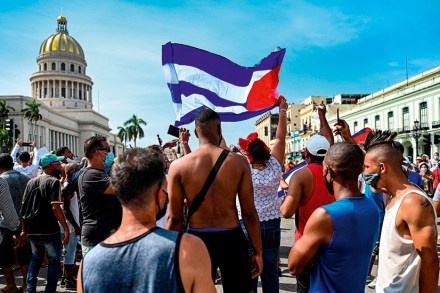
Havana There is an astonishing patience in the Cuban people, born of endless waiting. When a store has, say, chicken, people queue, often for days. But on Monday, outside the Zanja police station in central Havana, people weren’t waiting for food. They were waiting — patiently — for news of family members who had been arrested during unprecedented protests at the weekend. The demonstrations flared like a petrol fire. Cubans had settled down for lunch, many preparing to watch the Euro 2020 final, when news spread of a march in the town of San Antonio de los Baños on the outskirts of Havana.