Ros Altmann

Capitalism is the best system, but it has been undermined by Quantitative Easing

From our UK edition

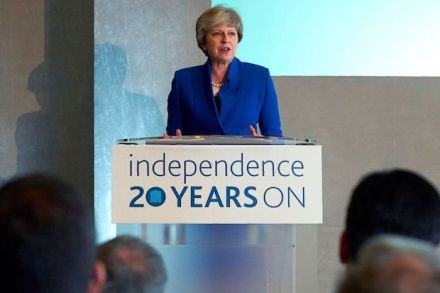
The Prime Minister spoke today at the Bank of England to celebrate its 20 years of independence. But she has failed to recognise the irony of trumpeting the virtues of capitalism in the seat of monetary policymaking which has, for the past ten years, undermined many of the principles on which capitalism is based. In theory, the central bank operates independently of Government, but in practice, its unconventional monetary policies have acted as a democratically unaccountable arm of the Treasury. It is understandable that, in the face of the 2008 financial crisis, policymakers were looking for new ideas to save the banking system.
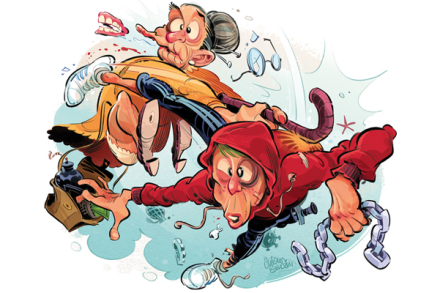
Eight reasons to get rid of the state pension triple lock

From our UK edition

A parliamentary committee has concluded that the triple lock on the state pension has to go because it is "unsustainable" and "unfair" on younger families. The pledge means that each year, parts of the state pension will be increased by either inflation, earnings or 2.5pc - whichever is the higher. When I served as pensions minister, my experience led me to believe a double lock would be better. Here's why:- Triple lock has been used by politicians and Government to cover up pension policy failures: I discovered, as a Minister, that when people raised problems about any aspect of pensions policy, the official reply was that the Government had the triple lock.

What about savers and pensions? Ten thoughts on today’s rate cut

From our UK edition

Today's rate cut and announcement that there will be more QE means more pain for UK pensions - yet the Bank of England statement seems to completely ignore the pension impacts of its policies. Estimates suggest pension deficits are now approaching £1trillion - which, surely, cannot be sustainable. Here are some thoughts on the today's decision to cut the interest rate to 0.25pc and to rev up QE again. Lower rates make pensions more expensive: The amount of money that is needed to pay promised pensions over future decades depends on how much return one is expected to earn on the money set aside for pensions right now. The lower the future expected returns, the more money must be put in today.

Ros Altmann: IDS is out to inflict “maximum damage” on Tory leadership

From our UK edition

I am extremely shocked by the news of Iain Duncan Smith’s resignation and the way he has behaved. Having worked alongside him as a minister in the Department for Work and Pensions, I have seen that he championed the very package of reforms to disability benefits he now says is the reason he has resigned. I simply cannot understand why he suddenly chose to quit like this when it was clear that Number 10 and the Treasury had told him they were going to pause and rethink these measures. I’m particularly saddened that this really seems to be about the European referendum campaign rather than about DWP policy. From a personal perspective, for months I have been silenced by him and what I have said has been strictly controlled.

George Osborne’s annuity plan explained

From our UK edition

George Osborne has today said that he’ll allow people to sell their annuities for cash, and will consult on how best to establish a market for second-hand annuities.  This move will be popular with many of the five million or more who have been forced to buy these annuities in recent years. Here's what you need to know. 1. Annuities have become worse value but people still forced to buy as there was no other way for many to take money out of their pension funds.  The rules required anyone who wanted to withdraw some cash from their pension savings to ‘secure an income’ and if they did not have very large amounts in their fund, they had no other option – they had to buy an annuity. When interest rates crashed, so did the annuity payout.

Seven things you need to know about George Osborne’s abolition of the pensions death tax

From our UK edition

The good news on pensions just keeps on coming. Today, at the Conservative Party Conference in Birmingham, George Osborne will today announce the abolition of the draconian 55 per cent pension death tax. There'll be no inheritance or income tax if funds passed on as pension. There had been expectations of this being cut, perhaps to 40 per cent, but the Chancellor has decided to abolish this altogether. I gather this wasn't due to be announced until the Autumn Statement on 3 December, but the Chancellor has brought the news forward to gather some positive headlines. A chunk of his speech has been trailed: "People who have worked and saved all their lives will be able to pass on their hard-earned pensions to their families tax free.

Ten things that have gone badly wrong in the British insurance industry

From our UK edition

UK insurers have been under fire since George Osborne's Budget, and many must be reeling from the shock of it all.  Suddenly the landscape seems to have changed.  No longer will people be forced to buy annuities, and suddenly people have a lot more options. As an observer who has for so long campaigned on behalf of customers, it has been heartening to witness such regulatory action at long last, yet nevertheless astonishing to see how long it has taken for meaningful intervention from the Regulator on behalf of customers.  The time for change has arrived. Here are ten things that have gone wrong in the UK insurance sector. 1. Failure to understand end-customers and flawed profit models:  It seems to me there are two fundamental issues.

Ten reasons to welcome George Osborne’s pensions revolution

From our UK edition

After so many years of waiting for good news on pensions and savings, suddenly so much comes at once.  Like the proverbial Number 13 buses, a whole raft of policies has all come at once - and they are good news. It's also a brilliant Budget for Tory election prospects of course.  The devil of some of this will be in the detail but overall this is just good news all round.  And will even bring in more tax for the Chancellor short-term as pension lump sums will deliver higher tax revenue than taking small amounts of income or delaying annuity purchase. Here's my take. 1.