Rory Sutherland

Rory Sutherland

What if Oxford PPE graduates on TV were made to wear pink conical hats?

From our UK edition

You can’t discuss racial inequality without using the N-word. And you can’t debate social justice without adding the C-word and the F-word as well. In this case the N-word is Nepotism, the C-word is Credentialism and the F-word is Favouritism. What is often overlooked in the debate about social justice is that inequality of opportunity need not arise from the exercise of negative preferences but from a mildly positive, unintended bias operating in reverse. Inequality of opportunity need not arise from the exercise of negative preferences Q. What is, at birth, the best predictor that you will become a doctor? A. Having a parent who is a doctor. Hence there are very many doctors from BAME backgrounds, but not in the expected ratio of B, A and ME.

Cars weren’t invented for transportation, but conversation

From our UK edition

When I first heard Abba’s magnificent 1982 swansong ‘The Day Before You Came’, I’d never come across the Americanised use of the verb ‘make’, meaning ‘reach’. So the line ‘I must have made my desk around a quarter after nine’ baffled me. Given the Swedish obsession with self-assembly furniture, I even wondered whether Björn was using the word conventionally, and Ms Fältskog was in fact kneeling on the floor aligning Tab A with Groove C, while looking for the elusive Allen key with which to attach the castors.

What should you charge for a virtual conference?

From our UK edition

From time to time, every industry must adapt to some inconvenient technological advance. Suddenly, some part of what you offer can be reproduced or distributed in a new form. The temptation is to ignore the issue and hope it goes away. But if you don’t act, eventually some competitor, existing or new, surely will. Reinvention is a painful process. Hollywood’s reaction to the advent of television followed the five stages of grief: denial, anger, bargaining, depression, acceptance. The same emotions played out in the response of the music industry to the arrival of digital downloads and streaming. Churches will have noticed that online congregations are larger than physical ones In retrospect, some of this looks absurd.

The £39.99 gadget that will transform how you work at home

From our UK edition

Hours of googling have left me unable to find the essay on domestic horticulture, written by a Victorian aristocrat, which contains the legendary sentence: ‘Any garden, of whatever size, should contain at least three acres of mature woodland.’ And though that seems a high bar to set, in times like this, millions of Brits have suddenly discovered that nothing beats a bit of outdoor space. Indeed, unless you are Dennis Nilsen, there’s never been a worse time to buy a top-floor flat. So to help remote workers restock your vitamin D, here’s some gadgetry which can get you out of the spare bedroom and into the sunshine. Never, ever reveal that self-isolation is enjoyable.

The stupidity of the ‘spare bedroom’

From our UK edition

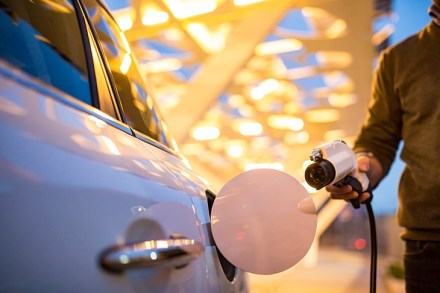
The Tesla Model 3 is an astounding achievement, but one thing baffles me: why do electric cars lack even the most basic tea-making equipment? I can’t be the only Briton to wonder why you would travel around on top of a 75kwh, 360v lithium-ion battery without having the facility to plug in a kettle. Or indeed power an off-the-grid shack for a few days. I have become oddly obsessed with questions like this because of the many lockdown hours I have spent watching bizarre YouTube videos. One remarkable series concerns the tiny house movement, where people seek to simplify and declutter their lives by moving into little wooden huts.

Did the behavioural scientists have a point?

From our UK edition

For all the abuse heaped on the Behavioural Insights Team early in the crisis, let’s not forget that the only three immediate solutions proposed by the combined ranks of the scientific establishment were, um, behavioural. People were encouraged to wash their hands with soap for 20 seconds, to stay home where possible and to keep two metres away from those outside their household. And we adopted this advice in our millions, long before any mandate had been issued. It would be wrong, when modelling the spread of this disease, to overlook the effect of voluntary preemptive action. My last visit to London was on 12 March, 11 days before we were made to stay indoors. It was already a ghost town. Some elderly relatives had been self-isolating from the beginning of the month.

Have you caught the remote-working bug?

From our UK edition

One of the few benefits to emerge from this pandemic is that the world’s population has been given a crash course in complexity. If nothing else, many people may have learned why it makes sense to plot infection rates on a logarithmic scale, and a few may even have learned to use the word ‘exponentially’ in its true sense, rather than as a synonym for ‘a lot’. I hope this proves an enduring lesson. Because, in truth, very little in life can be understood properly without first understanding such concepts, since barely anything involving humanity changes in a linear way.

Croquet is the perfect sport for social distancing

From our UK edition

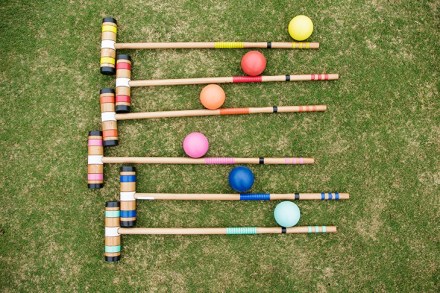
In Mr Alton’s absence, I thought readers might want a column about sport. The problem is that I’m largely indifferent to most sports. But I will berate the All England Club for cancelling the Wimbledon Championship. Fair enough, I can see that tennis might be a problem what with all the loud, virus-spreading grunting, but I think it’s time we reminded them they are the All England Lawn Tennis and Croquet Club. Shockingly, last time I went there on a corporate jag, I could see no evidence of the superior game being played. Yet croquet is a game where social distancing poses no problems.

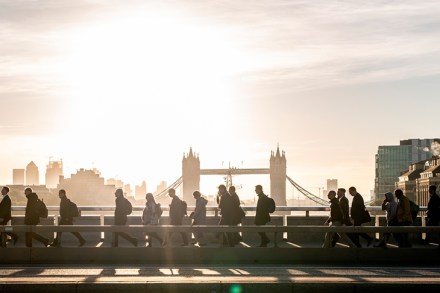
Is this the end of commuting?

From our UK edition

The brother of a friend in Durban was once given a generous donation by a wealthy aunt. ‘I hate to see you just hanging around indoors all day. Buy an old Land Rover. Go and see the real Africa.’ The brother took the money but bought an enormous television instead. When my friend visited, he found him watching a wildlife documentary in glorious high-definition Technicolor. ‘Why would I want to go and see Africa when I can bring Africa in here?’ he explained. I have a certain sympathy for this stoner approach to life. The ability to travel within your own mind seems to be a great gift — something to be cultivated. Instead we disparage it with terms such as ‘couch potato’. Yet it is really a mark of superior intelligence.

What bees can teach us about efficiency

From our UK edition

The newspapers are full of stories about how small groups of engineers from Formula 1 teams have been able to design, prototype and manufacture essential health equipment incredibly quickly. So why aren’t organisations allowed to perform such super-human feats of brilliance the rest of the time? Or to put it another way, why is it that companies and governments always call on McKinsey when they could call on McLaren? Why is it that companies and governments always call on McKinsey when they could call on McLaren? One obstacle might be the boredom threshold. If you are used to a high-octane life on the Grand Prix circuit, a three-hour meeting with healthcare regulators might leave you wanting to bite your arm off.

Ad infinitum: 200 years of Spectator adverts show how little changes

From our UK edition

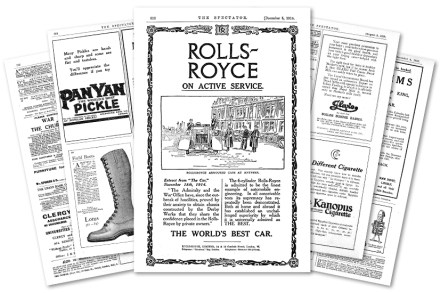
A conventional hierarchy of print media would put serious journalism at the top. Far beneath that would be tabloid journalism. And then at the very bottom would be advertising. Except, in one respect, I think that order should be reversed. Yesterday’s advertising is much more interesting than yesterday’s serious journalism. I suspect this is because advertising, like tabloid journalism, reflects what people really care about — and always have done. Gossip. Sex. How to attract the opposite gender. What car to buy. Health complaints. Miracle cures. Death. Money. The Beckhams. The Windsors. The new 55in QLED 4K television. At last relief from embarrassing itching.

The keys to ending lockdown – introverts and brown M&M’s

From our UK edition

Once we’ve flattened the curve of infection with mass self-isolation, the next debate will concern how to soften the restrictions on movement and work without causing a second wave of the pandemic. Behavioural science, abused as it has been to date, may be useful in formulating the new rules for social behaviour. That’s because it is no good simply to come up with rules which are optimal in epidemiological terms: such rules might well be too complicated for people to follow, and impossible to encode in habits or social norms. Instead you need cautious rules-of-thumb which are both simple and visible. For rules to work, it helps if it is immediately apparent when someone is breaking them.

My Japanese toilet has made me a lockdown hero

From our UK edition

Compared with every other household chore, progress in bum-wiping has been glacially slow. It’s only in living memory that schools and institutions stopped using something called Izal, a box of medicated toilet wipes similar in texture to greaseproof paper, and thus spectacularly ill-suited to its purpose. It was characteristic of the Britain of my childhood, where things were made gratuitously unpleasant on purpose, since to do anything nice was seen as effeminate. The Muslim world is far ahead of us here. In most Islamic countries a toilet cubicle comes with a bum gun — a kind of handheld spray. Yet in the supposedly enlightened Anglophone world we think dry paper is fine.

NHS workers deserve our applause – but so does the telecoms industry

From our UK edition

Next time there is a highly deserved round of public applause for NHS workers, do add one additional clap for the tele-communications industry for — so far — keeping the show on the road. High-speed broadband, for those lucky enough to have it, has made self-isolation more tolerable, and may have significantly reduced the impact of the disease in Britain. I say this because, for several weeks before it became mandatory to stay indoors, a large number of people did so voluntarily. That includes me. Ever since my grandfather contracted jaundice and so avoided landing at Suvla Bay in Gallipoli, there has been a proud family tradition of calling in sick at the first sign of a sniffle.

The world’s best virology lab isn’t where you think

From our UK edition

If you ever doubt how clever evolution can be, remember that it may take a year or more for the brightest minds on the planet to find and approve a vaccine for the coronavirus. Yet 99 per cent of otherwise healthy people seem to have an immune system that can crack the problem in under a week. When I posted this on Twitter, I got a little abuse from a few strange people who thought I was calling scientists dumb. Quite the reverse. 99 per cent may be too high a figure, but it is surely evidence of some bizarre superintelligence within the human body that many of us can do unconsciously something that the combined brains of the world’s pharmaceutical industries so far cannot match.

The trick that will let you have a conference call from your home phone

From our UK edition

For the past 12 years, Roger Alton and I have shared this half page like Box and Cox: he writes fortnightly about sport and I write fortnightly about technology. Normally it would be Roger’s turn this week to cover sport. Unfortunately there isn’t any. So we’ve reached an agreement. For now, while there’s no longer any sport, I may write a little more frequently about technology. Then, in six months’ time, if there’s no longer any technology, Roger can write more frequently about the newly popular sports: bare-knuckle pugilism, dog-fighting and Mad Max-style steel-cage jousting. He could even throw in some nostalgic pieces recalling the golden age of football, when fans could still afford to throw toilet rolls on to the pitch.

Will quarantine for travellers become normal again?

From our UK edition

It wasn’t a coincidence that the US government chose Ellis Island as an immigration station. The crucial word is ‘island’. Had the RMS Titanic missed that fateful iceberg in 1912, she would eventually have taken up station at a quarantine area at the entrance to the Lower Bay of New York Harbor, to await medical inspectors who would board the ship from a cutter. The quarantine exam would have been performed aboard, but only for first- or second-class passengers (US citizens were exempt). These would have been inspected for cholera, plague, smallpox, typhoid fever, yellow fever, scarlet fever, measles and diphtheria. A few might have been marked to be sent to Ellis Island for further examination.

Why the BBC licence fee makes sense

From our UK edition

A consensus seems to be forming that the BBC licence fee is for the chop. In a digital age, the reasoning goes, we should not be forced to subscribe to huge bundles of content, with no choice over what we pay for and what we don’t. This argument, intriguingly, is both true and false at the same time. It is worth remarking that Netflix and Spotify succeeded by adopting a very similar model to, er, the BBC What’s true is that technology has removed two constraints which made the licence fee necessary in the first place. At the BBC’s outset, the airwaves were limited, creating a monopoly. Moreover it was impossible to charge for specific content: anyone with a wireless set could freely enjoy anything on air. Other than advertising, a licence was the only option.

The simple trick that will hugely boost your phone coverage

From our UK edition

In the recent debate over Britain’s 5G infrastructure, one dog didn’t bark in the night. At no point did anyone dare suggest that, regardless of the supplier, upgrading our mobile networks to 5G might be premature. In saner parts of the economy, an investment requires something called a ‘use case’ or a cost-benefit analysis. In other words, you need to provide some immediate benefits which will arise as a result of your investment. Anything that can be dressed up as next-generation technology is somehow spared that tedious level of scrutiny. All it takes is for the techno-consulting complex to claim that ‘without this we risk being left behind’ and next thing you know there’s a blank cheque.

The real reason I am against HS2

From our UK edition

Some years ago, two British supermarket chains needed to place a large order for replacement trollies. They had to decide what ratio of full-depth and shallow trollies to order, and how best to allocate them between stores. One of them amassed mounds of demographic data and tried to construct an elaborate optimisation model. The second took a different approach: ‘We already employ people to collect trollies in the car parks — so why don’t we ring them and ask what they need?’ The second approach worked much better. How often are problems best solved not centrally but by devolving decisions to people on the ground? How often are problems best solved not centrally but by devolving decisions to people on the ground?