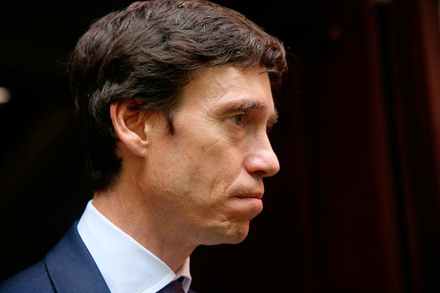
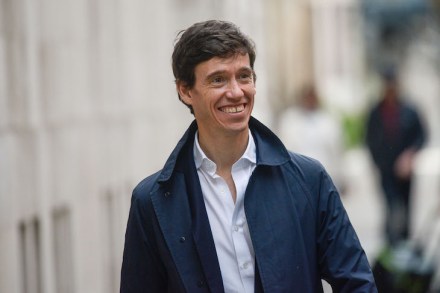
Rory Stewart

Christmas II: Dominic Sandbrook, Philip Hensher, Steve Morris, Christopher Howse, Michael Hann & Mary Killen

From our UK edition

41 min listen

On this week’s special Christmas edition of Spectator Out Loud – part two: Dominic Sandbrook reflects on whether Lady Emma Hamilton is the 18th century’s answer to Bonnie Blue; Philip Hensher celebrates the joy of a miserable literary Christmas; Steve Morris argues that an angel is for life, not just for Christmas; Christopher Howse ponders the Spectator’s enduring place in fiction; Michael Hann explains what links Jeffrey Dahmer to the Spice Girls; and, the Spectator’s agony aunt Mary Killen – Dear Mary herself – answers Christmas queries from Emily Maitlis, Elizabeth Day, Rory Stewart and an anonymous Chief Whip of Reform UK.  Produced and presented by Patrick Gibbons.
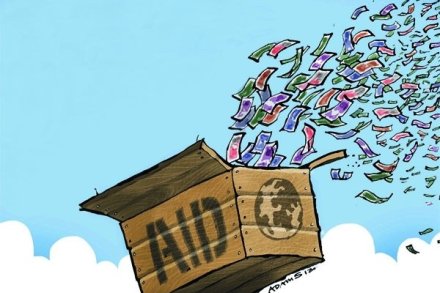
Podcast special: the global role of British aid

From our UK edition

45 min listen

Putin’s invasion of Ukraine shocked the world. Whilst fighting is happening in Europe, repercussions have been felt around the globe. Disruption to trade and supply chains means a rapidly worsening outlook for international development, making it harder to reach those that need support the most. Meanwhile the UK’s Covid recovery and the growing fiscal blackhole have forced Britain to make tough decisions on where our money goes, throwing into question our position as a world leader when it comes to international development and, with it, the reputation of ‘global Britain’.  Britain has always been a nation with a global mindset. But in times of crisis, do we need to reprioritise our commitments?

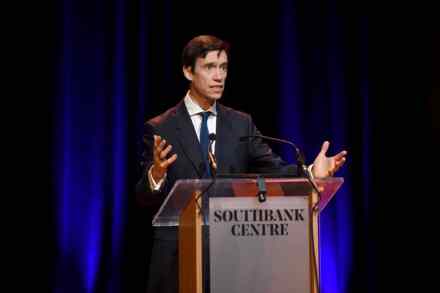
With Rory Stewart

From our UK edition

17 min listen

Former Tory MP, Rory Stewart, has played many roles throughout his life. An academic, a diplomat, and a soldier. Rory is currently a senior fellow at Yale University's Jackson Institute for Global Affairs.On the podcast, he talks about eating sandwiches on a homemade raft as a boy in Malaysia, his university days spent talking to girls in Pizza Express and his revelation that he doesn't really like pudding.

Afghanistan’s troubles can’t only be blamed on the Taliban

From our UK edition

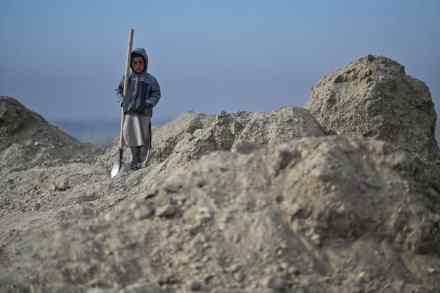
In 2001, I spent part of a hard winter in a remote village near Bamiyan in the Afghan central highlands. The Taliban government had just fallen. The village was ringed with landmines. Neighbouring village had been razed to the ground by retreating militia, the roof-beams were charred, the buildings empty, and the survivors had fled to refugee camps in Iran. There was no electricity, no schooling for girls and little for boys. The nearest clinic was three days’ walk away and there were no medicines when you reached it. People made what little cash they had from archaeological looting and child labour. When I returned to the valley, at the end of last year, it was difficult to recognise the place.

As prisons minister, I saw how bad things really are on the inside

From our UK edition

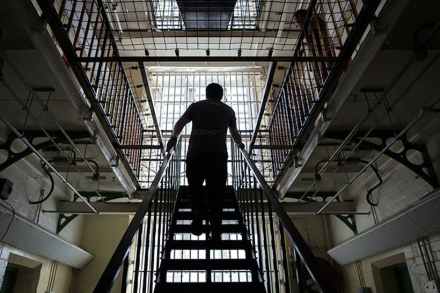
What happened on Streatham High Road last weekend was exactly what I had feared during my time as prisons minister: a recently released convict mounting a terror attack. It was the second incident of this nature in Britain in three months, but the truth is we are lucky that there have not been more like it. When I was appointed prisons minister in January 2018, I was introduced to the full scale of the problem. In one wing of a prison in Liverpool, half the windows were broken. Prisoners could stick their hands straight out to take drugs from drones. In Lewes, an X-ray scanner — which was meant to detect what prisoners were smuggling back into the cells — had been defunct for seven months.

Rory Stewart: How will Brexit be remembered when my son gets to my age?

From our UK edition

I still live in the same house, in London, in which I lived as a baby. I walk my five-year-old son every morning to the same school, on the same route that I took 43 years ago, holding my father’s hand. We sing Gilbert and Sullivan in the same bedroom. I am whacked with a sword in the same garden square in which I once whacked my father. And the picture of me in red velvet knickerbockers can be superimposed over the picture of my son in his Batman costume — each of us seated at the same corner of the same dining room, peering gloomily at the two candles on our birthday cake. What will London look like when my son is the age I am now?

How can I get Trump to be rude about me?

From our UK edition

From Rory Stewart Q. I am running for Mayor of London, and had hoped I could get people to focus on practical questions: do you feel safer than four years ago? Is your commute better? But many seem to think the role is largely ceremonial and it is not fair to blame the current mayor when things go wrong. And many are impressed that he stood up to Trump. So my question is, how can I persuade Trump to send rude tweets about me? (If he is really rude, I might win — and thus get the chance to improve the signalling on the Piccadilly line.) A. Voters are coming round to preferring a leader who is patently good, rather than just the enemy of someone patently bad. There is no need for a firefight with Donald Trump.

Rory Stewart: Am I still a Conservative?

From our UK edition

My parents gave me a subscription to The Spectator in 1984, when I was 11. When I was 12, I wrote a letter to the editor, criticising the progressive views of the Bishop of Durham, and Charles Moore — who had just become the editor at the age of 27 — published it under the headline ‘Very young fogey’. Who knows what a weekly diet of The Spectator did to my impressionable mind? Is Taki responsible for my taking up martial arts? Or Roger Scruton for my views on ugly buildings? I think it was the book reviewers, so unintimidated by even the grandest book, who made the greatest impression.

Real and imagined danger

From our UK edition

What was the Cold War? For Professor John Lewis Gaddes, it was a conflict between two incompatible systems, democracy and communism, each with a different vision of liberty and human purpose. The result was a potential third world war, in which we risked being crushed by dictators or destroyed by nuclear weapons. And the US saved us. ‘The world,’ he writes, ‘I am quite sure, is a better place for the conflict having been fought in the way that it was and won by the side that won it. For all its dangers, atrocities, costs, distraction and moral compromises, the Cold War was a necessary contest.’ Andrew Alexander disagrees. And Alexander — who has long exposed the myopia and self-deception of the establishment — should be taken seriously.