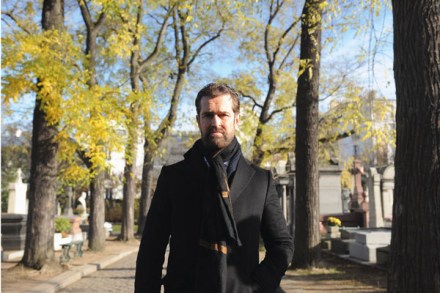
Roger Lewis

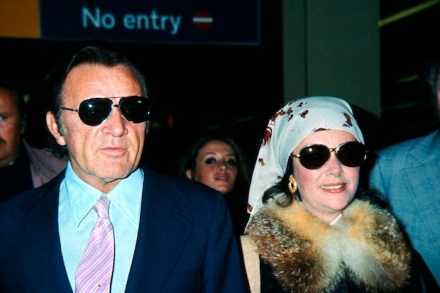
Roger Lewis is the author of The Life and Death of Peter Sellers and Erotic Vagrancy: Everything about Richard Burton and Elizabeth Taylor.

‘Social distance shaming’ is getting nasty

From our UK edition

The Queen said in her address to the nation that what’ll get us through the lockdown and its ramifications will be our traditional British good humour. I’m not certain. Tempers are beginning to fray — and as we are looking at another week, minimum, of house imprisonment, I predict disaster. It is getting quite tense out there. A day or so ago my wife and I, peaceable elderly folk, were bumbling along the promenade, here on the south coast. A jogger went past, shouting at us: ‘Effing morons!’ On his way back past us, he again said: ‘Effing morons! Take exercise!’ Had I a gun, I’d honestly have shot his head off. Joggers are always vile anyway, and the ones wearing face masks are the worst.

Homage to Clement and La Frenais, the writing duo who transformed British comedy

From our UK edition

Ray Galton and Alan Simpson remain pre-eminent as writers of television comedy, but their closest rivals Dick Clement and Ian La Frenais — still with us and in their eighties — always possessed more variety. Until I’d wolfed down this genial memoir I’d not known that the script-writing-and-directing duo had adapted Iris Murdoch’s A Severed Head for the screen. They also developed Lucky Jim as a television series and found Kingsley Amis pie-eyed, maudlin and testy, ‘jealous of his son’s success’. They wrote The Jokers and Hannibal Brooks for the disgusting Michael Winner (who once told a starlet: ‘What this part does not require is a diploma from Rada. What it does require is a great pair of tits.

As Luck Would Have It, by Derek Jacobi – review

From our UK edition

Alan Bennett once overheard an old lady say, ‘I think a knighthood was wasted on Derek Jacobi,’ and I know what she means. It’s strange how he has always been singled out for prizes and high honours — why not Ronald Pickup, Charles Kay, Edward Petherbridge, Frank Finlay or the late Jeremy Brett? Ian Richardson absolutely hated him — just couldn’t contain his envy and incredulity, at least in my presence. Though I’ve never been able to believe in Jacobi on stage or screen as a villain or as a passionate lover, by being fundamentally unthreatening (and shrewd), he is esteemed — just like the Emperor Claudius, his signature role.

Love your enmities

From our UK edition

Grudges make the world go around, according to Sophie Hannah. They are ‘an important and fascinating part of human experience’, which ought to be ‘protective, life-enhancing and fun’. I think this overstates the case somewhat, as I can’t see any pleasurableness, though I am aware that my own ability to harbour resentments is possibly pathological and blood-soaked. The first thing I do each day is scan the obituary pages to see if any enemy has met with a fatal accident — and I fully understand Auden’s line about hearing with satisfaction, much later in life, of ‘the death by cancer of a once hated school master’. Not that being dead lets anyone off the hook.

Biografiends

From our UK edition

I saw a biopic about Morecambe and Wise recently. The actors impersonating the comedians were not a patch on the originals — how could they be? You need a genius to play a genius. I often wonder if my own HBO Peter Sellers movie would have been improved if someone fiery, of the calibre of Gary Oldman or Sacha Baron Cohen, had been cast instead of Geoffrey Rush, who was muffled under prosthetic make-up. But my point is, biopics seldom come off, and nor do biographies. Indeed, it is a reprehensible and misguided genre. Privacy is violated, creative achievements are explained away, and great men and women are unmasked as sneaky, predatory, cruel and ordinary. Humphrey Carpenter wrote all his biographies — of Auden, Britten and Ezra Pound — in this way.

Broken dreams | 19 October 2017

From our UK edition

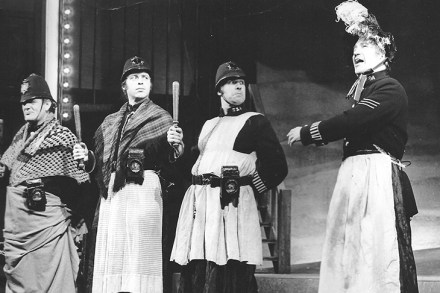
In the expensive realm of musical comedy, it’s impossible to predict what will take off and what will crash and burn. Oliver! ran for 2,618 performances, but no other Dickens adaptation has succeeded— and Oliver! had to overcome a reluctant producer who’d suggested it could be much improved with an ‘all-black cast’. And would Lionel Bart’s plan to cast Elizabeth Taylor as Nancy, Richard Burton as Bill Sikes, and Spike Milligan as Fagin have helped or hindered the longevity of his show?

Spectator books of the year: Roger Lewis recommends his own unwritten books

From our UK edition

I wish I could pull off the Anthony Burgess stunt and recommend books of my own — Erotic Vagrancy, about Burton and Taylor, and Growing Up With Comedians, about, well, comedians. Both are doing well on Amazon and have garnered wonderful reviews. They are clearly my most successful and esteemed achievements. Unfortunately, neither title actually exists as such and no words have been written. The publishers jumped the gun with their announcements — though in our ‘virtual’ world perhaps this no longer matters. A book I do have physically in my hands, which I enjoyed immensely, is David Hare’s The Blue Touch Paper (Faber, £20), which is as phosphorescent as a Larkin poem.

They sought paradise in a Scottish field — and found hunger, boredom and mosquitoes

From our UK edition

Dylan Evans, the author of this book, was one of those oddballs who rather looked forward to the apocalypse, because it promised ‘challenging times ahead’. If, in the not too distant future, famines and droughts more or less wipe us out, that will be our own fault for allowing population levels to reach an unsustainable nine billion — the predicted figure for 2050. How much better the planet will be with a select handful living in their villages of yurts, log cabins, teepees and straw-bale huts, the children gambolling happily ‘amidst the bracken and the trees’. The air will be cleaner. Wildlife ‘will make a comeback’. Neighbours will help each other out. People will be fitter as a result of their manual labour.

Spectator books of the year: Roger Lewis on hating Sheridan Morley

From our UK edition

Sheridan Morley was an old enemy of mine, so I was thrilled to see him brilliantly denounced and called to account by Jonathan Croall in his first-class book about writing a book, In Search of Gielgud: A Biographer’s Tale (Herbert Adler Publishing, £10.95). Morley is called an ‘arrogant, self-important and spectacularly lazy hack’, whose work was ‘sycophantic and severely lacking in depth’. One almost feels sorry for the old boy. Staying with the theatrical theme, Covering Shakespeare by David Weston (Oberon Books, £14.99) is a highly recommended rollicking account of being a jobbing actor.

A Stratford Stalin: the nasty, aggressive and stupid world of Joan Littlewood

From our UK edition

If Stalin had been a theatre director he’d have resembled Joan Littlewood. What an outstandingly unpleasant woman she was — yet I must admit it was fun making notes on her spitefulness. Few escaped her scorn and derision: Sybil Thorndike (‘a shocking actress’), Rachel Kempson (‘she had a face like a scraped bone’), Laurence Olivier (‘not trying’), T.S. Eliot (‘thin gruel’), Daniel Massey (‘a dud’) and John Gielgud (‘voice wanking’). Rather wonderful that last one, let’s be honest. Joan dismissed every one of the Redgraves (‘How do these untalented people make it?’) and when she saw Flora Robson, Cedric Hardwicke and Ralph Richardson, she was ‘appalled’.

Paul Merton’s is the most boastful autobiography in years

From our UK edition

Has there ever been a nun or a priest who wasn’t a bent sadist? Because here we go again. At school Paul Merton was terrorised by a nun who, in her black outfit with a white band, ‘looked like an angry pint of Guinness’. She walloped the future comedian if ever she detected an imaginative strain in his English compositions. ‘You can’t write about things that aren’t true,’ asserted this believer in the actuality of virgin births and rising from the dead. For stating that Beethoven invented rice pudding and Mozart baked the first crème brûlée, Merton was told he’d ‘poisoned the minds of your classmates with your ridiculous stories’. Of course, Merton has been poisoning and entertaining us ever since.

The mad, bad and sad life of Dusty Springfield

From our UK edition

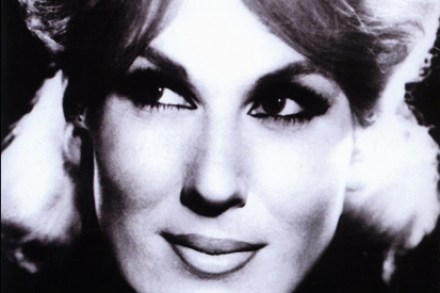
Call me a crazy old physiognomist, but my theory is that you can always spot a lesbian by her big thrusting chin. Celebrity Eskimo Sandi Toksvig, Ellen DeGeneres, Jodie Foster, Clare Balding, Vita Sackville-West, God love them: there’s a touch of Desperate Dan in the jaw-bone area, no doubt the better to go bobbing for apples. It is thus a tragedy that Dusty Springfield’s whole existence was blighted by her orientation, which explains ‘the silence and secrecy she extended over much of her life, and her self-loathing’. One glance at her chin should have revealed all — but the Sixties was not a fraction as liberated and swinging as people now assume.

Charlie Chaplin, monster

From our UK edition

No actual birth certificate for Charles Spencer Chaplin has ever been found. The actor himself drew a blank when he went on a rummage in Somerset House. The latest research suggests that he was born ‘in a gypsy caravan in Smethwick, near Birmingham’. But surely the truth has been staring people in the face ever since the Little Tramp first popped on the screen: Chaplin is the lost twin of Adolf Hitler. Peter Ackroyd almost suggests as much. Both men first drew breath in April 1889. They had drunken fathers and nervous mothers. There were patterns of madness and illegitimacy in the family tree. They were short and sported an identical moustache. They had marked histrionic skills, each man ‘appealing to millions of people with an almost mesmeric magic’.

The harrowing, inspiring life of Andrew Sachs

From our UK edition

Comedians always like to claim that they started making jokes after childhoods made harsh by poverty; that at a formative age they were tormented by appalling cruelty and neglect. Griff Rhys Jones had to leave Wales at the age of six days, for instance. Nevertheless, the Chaplin family could afford a maid in Kennington. The Leeds of Alan Bennett and the Morecambe of Victoria Wood always sound cosy — as does the Hadley Wood of Eric Morecambe; and there was not much wrong with Barry Humphries’s salubrious Melbourne, though I concede it has been knocked flat by ‘developers’ since. But with Andrew Sachs the horrors were very real. Aged eight, ‘I stood open-mouthed as a number of men, wielding wooden clubs, shattered the front of a shoe shop.

The abstract art full of ‘breasts and bottoms’

From our UK edition

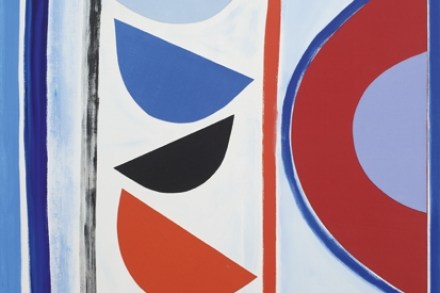
Is there any such thing as abstract art? Narratives and coherent harmonies seem to me always to emerge from the shapes and colours. Picasso’s cubist planes, as critics have noticed, usually disclose wine bottles, mandolins and bread baskets upon a table — icons of his Catholic childhood. The red and black slabs of Mark Rothko are our planet as mapped from outer space. Jackson Pollock created mad spiders’ webs. Klee is full of farmyard animals. Piet Mondrian’s grids are Holland’s dikes and polders. Our own best abstract artist was Terry Frost. Here again the semicircles and thin looping lines are as representational, as ascertainable in the real world, as any horse by Stubbs or cloud by Constable.

A Rogues’ Gallery, by Peter Lewis – review

From our UK edition

Like Mel Brooks’s character the Two Thousand-Year-Old Man, Peter Lewis has met everyone of consequence. Though he doesn’t mention being an eyewitness at the Crucifixion, he was told by T.S. Eliot that working in a bank was quite nice (‘I never thought about poetry in the day’). Frankie Howerd wanted Lewis to give him a massage (‘I have this trouble, a hernia, you see. Gives me a lot of discomfort’); Diana Dors confessed to him that she’d rather watch television than go to orgies (‘but I had to become a sex symbol on tiger rugs and in mink bikinis’); and Samuel Beckett made his excuses and fled (‘Sorry, I just have to go to the lav’).

What Fresh Lunacy is This?, by Robert Sellers – review

From our UK edition

Midway through this startling book, Robert Sellers asks himself a question with such apparent seriousness I barked with laughter: ‘Was Oliver Reed an alcoholic?’ A more pertinent enquiry would be: ‘Was the man ever capable of drawing a sober breath?’ What Fresh Lunacy is This? is the monotonous chronicle of a nasty drunk whose ‘explosions of pissed aggression’ filled every waking hour, culminating in a deranged session, while filming Castaway in 1986, when he attacked an aeroplane. Reed would gulp 20 pints of lager as a way of limbering up. He’d then switch to spirits and the cycle of fighting and carousing would begin.

The Diana effect

From our UK edition

My favourite joke of all time concerns Diana Dors, whose real name was Diana Fluck. She was invited back to Swindon, her birthplace, to open a fete. The vicar, terrified he’d mispronounce her name, mispronounced her name. ‘We have with us today Diana Dors, whom many of you here in Swindon will remember as Doris Klunt.’ Diana’s ambition was to have ‘a big house, a swimming pool and a cream telephone’. She achieved these, plus psychopathic husbands, bankruptcy and an early death from cancer. It is a wonderfully sleazy and vivacious tale, told in po-faced fashion by Niema Ash in Connecting Dors (Purple Inc Press, £14.99).

The darker side of Dawn

From our UK edition

I like Dawn French when she is playing a sinister nurse much more than when she’s a jolly vicar. As her new novel, Oh Dear Silvia (Michael Joseph, £18.99) is set in a hospital, her darker side is gloriously indulged. We are at the bedside of the comatose Silvia, who has fallen off a balcony. Or was she pushed? Siblings and offspring trot to the ward; each chapter offers an internal monologue or confession — a gallimaufry of recriminations, alliances and reconciliations. What complex interactions there are with somebody who doesn’t move or say a word! Nevertheless, ‘somewhere deep inside the brain of this paralysed body there is life.’ New Age Jo is my favourite character.

Burning his bridges

From our UK edition

They have mostly achieved eminence, the original cast members who appeared on stage or in the film adaptation, 30 years ago, of Julian Mitchell’s homoerotic spy fable Another Country. Kenneth Branagh has his coveted knighthood, Daniel Day-Lewis and Colin Firth have won Oscars — and Rupert Everett? I’m not quite sure what has happened to Rupert Everett. He never quite caught on as a leading man, despite being strapping. He was so languid, you felt his co-stars had to organise their movements in order to nudge him awake, jostling him into coming up with a reaction. It was only when in drag as Miss Fritton, Alastair Sim’s old role in the St Trinians films, that his eyes began to sparkle — and Everett at last came alive as an actor.