Roger Kimball

Roger Kimball

Roger Kimball is a US columnist for The Spectator, the publisher of Encounter Books and the editor and publisher of the New Criterion.

Russiagate was worse than we thought

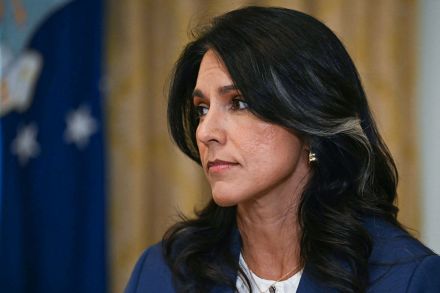
Yesterday, I wrote about the revelations with which Tulsi Gabbard, Donald Trump’s Director of National Intelligence, electrified the world.  We had all grown up chewing on the Russia Collusion Delusion, and most of us were happy to have that political enormity pass through the usual emunctory processes and be deposited in some far off midden or compost heap.   But Tulsi showed that, however expert we thought ourselves about the subject, that great precautionary motto – "things are always worse than they seem”– was pertinent even here.

Russiagate

I have a bone to pick with Tulsi Gabbard

I have a bone to pick with Tulsi Gabbard. I had thought, six months into Donald Trump’s second term, that I could safely say “sayonara” to the Russia Collusion Delusion and all its works. I started to count how many columns I had written about that embarrassing effort to destroy Donald Trump, but gave up. The answer is: many.   I had hoped I had finished with the subject forever. But now the president’s Director of National Intelligence, that same T. Gabbard, has weighed in with what she rightly describes as “historic” evidence of a plot, directed by Barack Obama with various high-ranking lieutenants, to undermine the first Trump administration.  Is there anything new in her evidence? Some say no, not really.

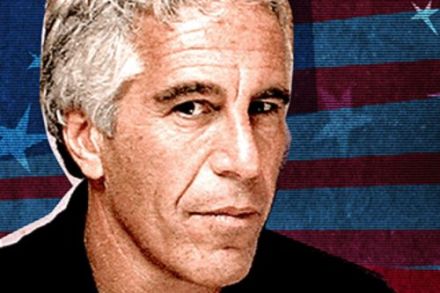
Is Epstein the new Russiagate?

From our UK edition

28 min listen

Freddy Gray is joined by Spectator writer Roger Kimball. They delve into the Epstein claims, the media's handling of the story, Trump’s economic agenda, and whether the MAGA movement is holding strong or starting to splinter.

The mullahs mean their threats

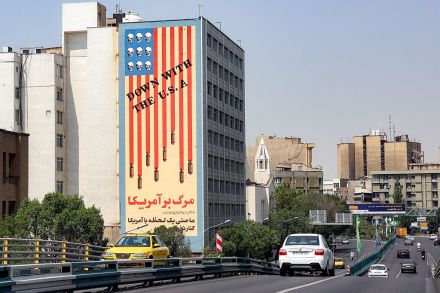
I write at the very beginning of July. Where I live in Connecticut, people are unpacking flags and bunting in preparation for the July 4 festivities. Elsewhere, the trumpets sounding to accompany Donald Trump’s triumphant announcement of a ceasefire between Iran and Israel have subsided. It is clear that the President dearly wants peace. So does Israel. For its part, Iran wants the extermination of “the Zionist entity” and, beyond that, the eventual extinction of the “Great Satan,” America. How do I know? Iranian spokesmen keep telling the world just that. I wonder if Salman Rushdie has reached out to Trump now that he has joined the exclusive club of those upon whom the lunatics in charge of Iran have explicitly pronounced a fatwa – a death sentence.

Iran
Le Veau d'Or

The wait is worth it at Le Veau d’Or

The story of the golden calf is preserved in Exodus 32. Moses had gone up into the mountains to see a man about the law. He tarried. The people grew restless. Eventually they turned to Aaron, Moses’s elder brother, and said, “How about it?” Aaron could see trouble brewing as well as the next chap. “There’s lots of gold in them there earrings,” he said, looking around at the multitude. “Give me the gold and I’ll make you something to worship.” Hence the golden calf, which the people rallied round, much to the irritation of Moses and the higher authorities when they caught wind of it.

Elon Musk is America’s dumbest smart person

Anyone who has perambulated through the groves of academe has encountered dumb smart people. They are clever, intellectually nimble, but they lack what Aristotle called φρόνησις and what the rest of us call “street smarts” or “practical wisdom.” In academia, dumb smart people often appear to be merely quaint or eccentric. In the realm of politics, they appear first as an exciting novelty, then as a destructive if naive force, cynically manipulated by the very people they hoped to replace.  In 1992, the billionaire Ross Perot epitomized the dumb smart political actor when he ran as an Independent candidate against George H. W. Bush and Bill Clinton. He pretended to provide an alternative to both Bush and Clinton. In reality, Perot guaranteed Clinton’s victory.

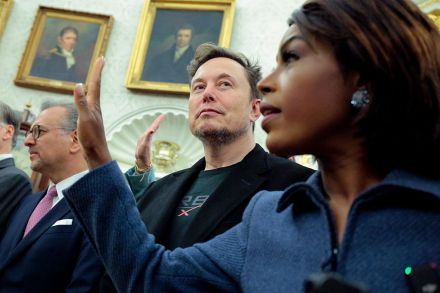
Elon Musk in the Oval Office (Getty)

On Iran, trust Trump’s instincts

What now? After the daring and what everyone is describing as a “flawlessly executed” attack by the United States on Iran’s hardened nuclear facilities Saturday night, Macbeth’s words must be on the minds of many: “If it were done when ’tis done, then ’twere well / It were done quickly.” Things did not work out so well for the Thane of Cawdor, as Macbeth then was. But even though his attack was not “the be-all and the end-all” he wanted, everyone who wishes for peace must second his opening argument.

Trump

Trump is putting ‘America First’ by ignoring the MAGA punditocracy

Political imbrioglios often take on the character of theological controversy. Back in the 6th century, the wise men of the Western Church, pondering the Trinity, decided to make an addition to the Nicene Creed. The Holy Spirit, they determined, proceeded not simply “ex Patre” (“from the Father”) but also “filioque,” “and from the son.” No big deal, right? Wrong. For reasons I shall refrain from dilating on now, the Eastern Church repudiated the addition. Controversy raged for centuries. Indeed, what became known as the “filioque controversy” culminated, in AD 1054, in the Great Schism between the Eastern Church and the West. For most of us mortals, the controversy now seems arcane, not to say bootless. But at the time it was a matter of life and death.

Trump

We should rejoice in Trump’s military parade

Today, you can choose to follow your inner adolescent and search for one of the Soros-funded “No Kings” protests cropping up wherever the number of Democrats is high and the collective IQ is low. Alternatively, you can pop down to the draining swamp of Washington, DC and watch the United States Army commemorate its 250th anniversary with a snazzy military parade among patriotically inclined Americans.If you think I have loaded the dice somewhat with charged rhetoric, you’re right. The whole “No Kings” wheeze is just anxious left-wing grandstanding that is as desperate as it is ineffectual. There is no Saint George Floyd around to act as a pretext this time.I have no doubt that those protests will be lavishly covered by the Irrelevant Media Complex.

Parade

Is Biden’s autopen mightier than the sword?

Whom do you suppose wrote this: “Let me be clear: I made the decisions during my presidency. I made the decisions about the pardons, executive orders, legislation, and proclamations. Any suggestion that I didn’t is ridiculous and false”?  The one person I can assure you did not write it is its supposed author, former president Joseph R. Biden, who by the way is suffering from metastatic prostate cancer.  Moreover, pace Biden’s suggestions, it is clear that he did not sign many of the myriad “pardons, executive orders, legislation, and proclamations” issued over his name.

Joe Biden’s puzzling legacy

The commentariat is awash with experts on prostate cancer. What precipitated this sudden acquisition of specialized medical expertise? Why, the announcement that former president Joe Biden is suffering from stage four of the big PC which, the news reports are gasping, has metastasized to his bones. Let me pause to join Donald Trump in expressing my best wishes to the former president for “a fast and successful recovery.” Let me also recall how suddenly the world became populated with epidemiologists after the Wuhan flu led Anthony Fauci, Deborah Birx and the entire bureaucratic establishment to discover their inner totalitarian hankerings. The revelation about Biden’s health is a sort of synecdoche for a much larger universe of pain.

Biden
shooting

Wine highlights from a weekend shooting party

Do you know Charlotte Mulliner’s charming poem “Good Gnus”? It was transcribed by P.G. Wodehouse in his short story “Unpleasantness at Bludleigh Court.” I went shooting with friends last weekend at a magnificent rural fastness in a semi-secure, undisclosed location near Millbrook, New York. Although we were shooting clays, not pheasants or other fauna, the opening of “Good Gnus” nevertheless floated into my mind like a tocsin with its irrefragable psychological insight.

The DoJ is wise to deploy the False Claims Act against colleges

Like Papal encyclicals, many statutes are known by the opening words of their Latin formulation. One that I just learned about is known as a “Qui tam” action. By itself, it is an enigmatic expression, since it just means “Who so” or “Who as.”   If you look it up, though, you will discover that “Qui tam” is shorthand for “Qui tam pro domino rege quam pro se ipso in hac parte sequitur,” which makes much more sense: “Who prosecutes in this matter both for the King and for himself.” That tam, as is often the case, is balanced with quam, “as x, so y.” Spinoza contains a famous example toward the end of the Ethics: “Sed omnia praeclara tam difficilia quam rara sunt”: “For all things excellent are as difficult as they are rare.

Pam Bondi

Kilmar Abrego Garcia is no martyr

In the matter of Kilmar Abrego Garcia and his all-expenses-paid sojourn in El Salvador, there has been a goodly quota of posturing all around. Or, rather, there has been understandable outrage and intransigence on the part of the Trump administration. There has also been wild, almost comic posturing on the part of Democrats and their megaphones held up by the media. There are 195 countries in the world today. It is unfortunate, or at least complicating, that the Trump administration settled on El Salvador as the country to which to deport Garcia, whose wife was granted a temporary protective order against him in 2021, according to Maryland court records. Garcia has admitted to clambering into the US illegally in 2012, though he has never been convicted of any crime.

Garcia
beaujolais

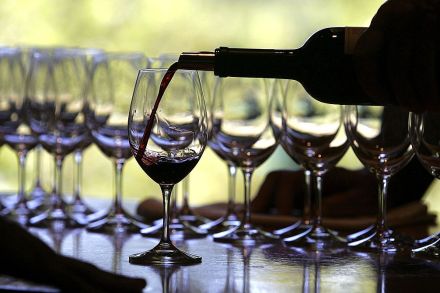
Beaujolais is the ideal summer wine

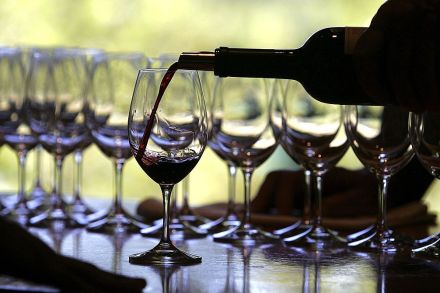
It’s been a while since we have traveled to Beaujolais, that ancient wine growing region along the Saône River north of Lyon. Since summer is nigh, it’s time for another visit. Beaujolais is an ideal summer red wine. It is almost always made exclusively from the Gamay grape, a cross between Pinot Noir and an ancient white varietal called Gouais. It is light, flowery, full of pleasing acidity and fruitiness, satisfying by itself and notably food friendly. Of course, anyone who writes about Beaujolais these days has to begin by issuing a little advisory, like the Surgeon General’s warning on packs of cigarettes and certain medications. A few decades back, Beaujolais was plagued by scandal.

Pay no heed to the misleading Trump approval ratings

When it comes to Donald Trump and his achievements during his first 100 days, who are you going to believe, the New York Times or your lyin’ eyes?  By “the New York Times,” incidentally, I do not mean just that one woke media outlet masquerading as a source of news.  No, I take the Times as a metonym for the entire propaganda industrial complex, the giant dispenser of politically correct nostrums and seismically sensitive Keeper of the Narrative.  Thus it is that the Times is a reliable dispenser not of that sort of information we denominate “news” – that is, what is actually happening and who is involved in making it happen.

What the left calls ‘chaos,’ the rest of us call ‘winning’

They never learn, the libs. Back in 2016, they provided hours of entertainment assuring themselves that Donald Trump would “never be president” (“take it to the bank,” said Nancy Pelosi, who in another galaxy, long, long ago was speaker of the House). Patriotic citizens, eager to instruct the public about the dialectic of hubris and nemesis, stitched together many joyful compilations of Hollywood celebrities, ditto-head news readers and Democratic politicians intoning that party line.  Then, after the impossible mutated into the inevitable and Trump was elected, the narrative shifted to “the walls are closing in on Donald Trump.” If it wasn’t Russia, Russia, Russia it was Stormy Daniels, putatively shady business deals or putative efforts at insurrection.

‘Signalgate’ is another nothingburger

I predict that by the time you read this, the press-fabricated entertainment known as “Signalgate” will be but a memory – a fond memory for those addicted to round-the-clock media frenzy, department of anti-Trump shenanigans. For the more responsible members of the populace, it will seem like an overheard squabble among angry children in some forlorn government-funded schoolyard.  What, after all, was “Signalgate?”  From one perspective, it was like a piranha-infested pool into which chunks of meat or perhaps a hapless Bond villain had been tossed. The resulting frothy tumult made it impossible to see what was happening. You only knew that the fish were frantic and the half-eaten protein shredded.   Such things happen from time to time in America.

waltz groupchat
alsatian wine

Is Alsatian wine primarily French or German?

Among the minor aporia bedeviling the universe is a question about Alsatian wine. “What is it?” someone asks. “Wine from Alsace,” comes the answer. “But where is Alsace?” This is where things get fraught. The answer is not latitude and longitude (for the curious, Grok offers 48.57º N and 7.75º E for Strasbourg, a plausible anchor for the area). The answer is not found in geography either. “West of the Rhine and east of the Vosges mountains” is all well and good. But it does not impinge upon the real question, which is a question of identity. Not to belabor the point, but should we think of Alsace as primarily French or primarily German? With that, as Jeeves might have said to Bertie Wooster, rem acu tetigimus.

Give Trump’s tariffs a shot

So the big question is: will it work? Will Trump’s protectionist policies, announced with some fanfare at a Rose Garden event at the White House yesterday, increase American prosperity? Or will they harm the economy?  Opinion on that matter is sharply divided. In one corner we have the free traders. They are wringing their hands and warning about higher prices, disruption of international trade and a trade war no one can win.  In the other corner are – what to call them? Most are not “anti-free traders” or “economic protectionists” (though some are).  Let’s call them “fair traders.” They like the idea of free trade – in theory. What they don’t like is the ethic of “free trade for thee but not for me.