Roger Kimball

Roger Kimball

Roger Kimball is a US columnist for The Spectator, the publisher of Encounter Books and the editor and publisher of the New Criterion.

The bloodthirstiness of the left is not new

From our US edition

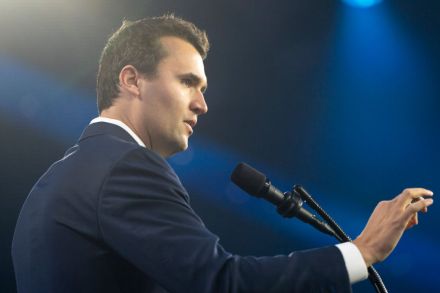
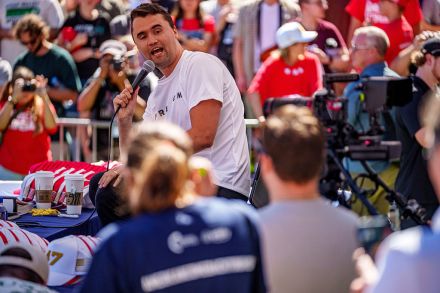
The savage assassination of Charlie Kirk at a Turning Point rally at Utah Valley University yesterday prompts me to wonder, as I have often wondered, what is the leading characteristic of the left? There are several candidates. Intolerance is one. A rancid and anchorless do-goodism – think of Dickens’s Mrs. Jelleby and her “telescopic philanthropy” – is another.   But on balance I think that the late Australian philosopher David Stove was right: the leading characteristic of the left it is bloodthirstiness. Behind all the emollient rhetoric about brotherhood and equality, bloodthirstiness is the left’s most reliable calling card.   That is one reason that the nearly instant emission by prominent Democrats of their opposition to violence rings so hollow.

Charlie Kirk

Trump’s battle against the tyranny of lawfare

From our US edition

A buzzword of the moment is “lawfare.” What is lawfare? It’s one of those portmanteau words that Lewis Carroll taught us about. A combination of “law” and “warfare,” “lawfare” is distinctly less clever an invention than “chortle” – one of Carroll’s coinages, my beamish boy, which combines the words “chuckle” and “snort.” The word “lawfare” apparently dates back to the late 1950s, though the phenomenon – using and abusing the law in order to conduct political warfare – has come into its own only in the past couple of decades. The fact that there is now an eponymous website devoted to the subject is but one patent of its currency.

lawfare
Burgundy

The best bargain burgundies

From our US edition

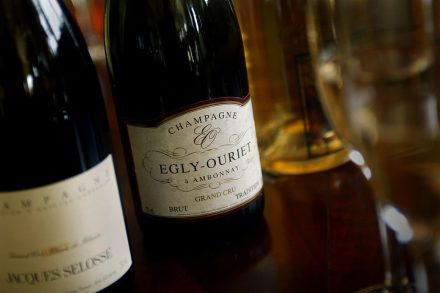
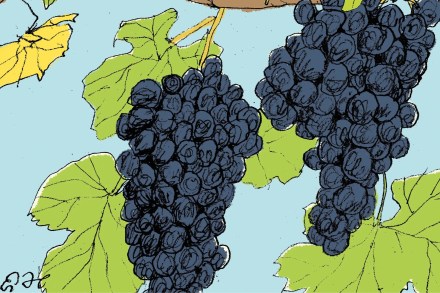
Apropos the subject of this column, videlicet, wine, a friend told me an arresting story about the once-famous British theater critic and playwright Kenneth Tynan (1927-1980). Sometime in the 1960s, when the prickly Gamal Abdel Nasser ruled Egypt, Tynan went sailing on the Nile. One night, he came ashore to enjoy dinner at the Luxor Hotel. The wine list was impressive. He ordered a famous bottle that cost practically nothing. The head waiter swept over to tell him, so sorry, they’d drunk the wine out. Tynan manfully looked again at the list and asked for the second best bottle. Alas, the waiter replied, that wine, too, had been exhausted. “Well, what do you recommend?” Tynan asked. To which the answer was: “We have no wine of any kind.” That hasn’t happened to me yet.

Poland’s Nawrocki heralds a more mature populism

From our US edition

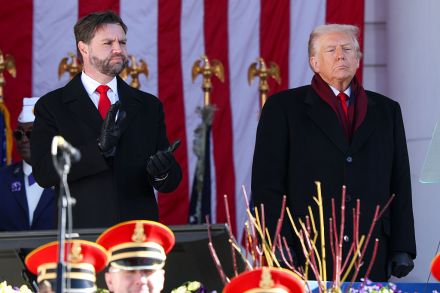
Yesterday, September 3, President Trump welcomed Karol Nawrocki, the newly inaugurated president of Poland to the White House. It was a stirring occasion, replete with a surprise military fly-over of F-16 and F-35 fighter jets flying in “missing man” formation to honor  Major Maciej “Slab” Krakowian, the Polish pilot who died in a crash in Radom, Poland, last Thursday.  Nawrocki, who narrowly won the presidency in June, is often described as “the Polish Trump.” It’s an accurate epithet. Nawrocki is as much a “Poland First” president as Trump is an “America First” president. The 42-year-old historian (Nawrocki holds a PhD in history) supports a list of policy initiatives that could have come right out of the MAGA playbook.

Nawrocki Trump

Trump is liberating the Smithsonians from ‘Woke’

From our US edition

Back in March, Donald Trump issued an executive order called “Restoring Truth And Sanity To American History.” Its aim was to counter the “revisionist movement” in our cultural institutions that sought “to rewrite our Nation’s history, replacing objective facts with a distorted narrative driven by ideology rather than truth.”   Exhibit number one was the Smithsonian Institution, the sprawling agglomeration of museums, libraries, historical landmarks and assorted educational centers in and around Washington DC with affiliate institutions in 47 states.  Founded in 1846, the Smithsonian was the culmination of an earlier movement, supported by such luminaries as Thomas Jefferson, James Madison and John Quincy Adams, to “promote science and the useful arts.

Smithsonian (Getty)

Trump must end the National Endowment for Democracy once and for all

From our US edition

Readers of J. K. Rowling’s Harry Potter entertainments will recall that the number-one bad hat, Tom Marvolo Riddle, AKA Voldemort, had a clever way of preserving himself. Rightly worried that the forces of good might try to destroy him, the Dark Lord devised a way of infusing living bits of himself into various objects and people. The resulting magical charm was called a “Horcrux.”   “If the body of a Horcrux owner is killed,” we read in a Potter gloss, “that portion of the soul that had remained in the body does not pass on to the next world, but will rather exist in a non-corporeal form capable of being resurrected by another wizard.” Nice work if you can get it.

Cambridge University should be ashamed of itself for honoring Angela Davis

From our US edition

Remember Angela Davis? Few people under fifty do. Was Cambridge University counting on that historical ignorance when it decided to honor Angela Davis with an honorary degree?   In case you, Dear Reader, are a little fuzzy about Davis, I note for the record that the former Black Panther and two-time vice-presidential candidate on the Communist Party ticket with Gus Hall is the recipient of many honors, including the Soviet Union’s Lenin Peace Prize.  Cambridge University, of course, has long demonstrated a certain fondness for Commies, as the names “Kim Philby,” “Guy Burgess” and “Anthony Blunt” remind us.

Trump borders

Trump has the resolve to defend the West

From our US edition

There is never a dull moment in the second, more cheerful reign of Donald Trump. I am writing from London, but was in France last week, picking my way through various battlefields and cemeteries in and around Verdun, Bastogne (think “Easy Company” and “Battle of the Bulge”), and Reims. Well-informed readers will know, as I did not, that “Reims” is not pronounced as its letters might suggest but rather as a nasalized “Reince.” I have always associated the place with champagne, and I am pleased to say that the city capitalizes on the association. But one point of interest had nothing to do with that magical elixir. Reims was also the location of General Dwight D. Eisenhower’s headquarters at the end of World War II.

Russiagate was worse than we thought

From our US edition

Yesterday, I wrote about the revelations with which Tulsi Gabbard, Donald Trump’s Director of National Intelligence, electrified the world.  We had all grown up chewing on the Russia Collusion Delusion, and most of us were happy to have that political enormity pass through the usual emunctory processes and be deposited in some far off midden or compost heap.   But Tulsi showed that, however expert we thought ourselves about the subject, that great precautionary motto – "things are always worse than they seem”– was pertinent even here.

Russiagate

I have a bone to pick with Tulsi Gabbard

From our US edition

I have a bone to pick with Tulsi Gabbard. I had thought, six months into Donald Trump’s second term, that I could safely say “sayonara” to the Russia Collusion Delusion and all its works. I started to count how many columns I had written about that embarrassing effort to destroy Donald Trump, but gave up. The answer is: many.   I had hoped I had finished with the subject forever. But now the president’s Director of National Intelligence, that same T. Gabbard, has weighed in with what she rightly describes as “historic” evidence of a plot, directed by Barack Obama with various high-ranking lieutenants, to undermine the first Trump administration.  Is there anything new in her evidence? Some say no, not really.

Is Epstein the new Russiagate?

28 min listen

Freddy Gray is joined by Spectator writer Roger Kimball. They delve into the Epstein claims, the media's handling of the story, Trump’s economic agenda, and whether the MAGA movement is holding strong or starting to splinter.

The mullahs mean their threats

From our US edition

I write at the very beginning of July. Where I live in Connecticut, people are unpacking flags and bunting in preparation for the July 4 festivities. Elsewhere, the trumpets sounding to accompany Donald Trump’s triumphant announcement of a ceasefire between Iran and Israel have subsided. It is clear that the President dearly wants peace. So does Israel. For its part, Iran wants the extermination of “the Zionist entity” and, beyond that, the eventual extinction of the “Great Satan,” America. How do I know? Iranian spokesmen keep telling the world just that. I wonder if Salman Rushdie has reached out to Trump now that he has joined the exclusive club of those upon whom the lunatics in charge of Iran have explicitly pronounced a fatwa – a death sentence.

Iran
Le Veau d'Or

The wait is worth it at Le Veau d’Or

From our US edition

The story of the golden calf is preserved in Exodus 32. Moses had gone up into the mountains to see a man about the law. He tarried. The people grew restless. Eventually they turned to Aaron, Moses’s elder brother, and said, “How about it?” Aaron could see trouble brewing as well as the next chap. “There’s lots of gold in them there earrings,” he said, looking around at the multitude. “Give me the gold and I’ll make you something to worship.” Hence the golden calf, which the people rallied round, much to the irritation of Moses and the higher authorities when they caught wind of it.

Elon Musk is America’s dumbest smart person

From our US edition

Anyone who has perambulated through the groves of academe has encountered dumb smart people. They are clever, intellectually nimble, but they lack what Aristotle called φρόνησις and what the rest of us call “street smarts” or “practical wisdom.” In academia, dumb smart people often appear to be merely quaint or eccentric. In the realm of politics, they appear first as an exciting novelty, then as a destructive if naive force, cynically manipulated by the very people they hoped to replace.  In 1992, the billionaire Ross Perot epitomized the dumb smart political actor when he ran as an Independent candidate against George H. W. Bush and Bill Clinton. He pretended to provide an alternative to both Bush and Clinton. In reality, Perot guaranteed Clinton’s victory.

Elon Musk in the Oval Office (Getty)

On Iran, trust Trump’s instincts

From our US edition

What now? After the daring and what everyone is describing as a “flawlessly executed” attack by the United States on Iran’s hardened nuclear facilities Saturday night, Macbeth’s words must be on the minds of many: “If it were done when ’tis done, then ’twere well / It were done quickly.” Things did not work out so well for the Thane of Cawdor, as Macbeth then was. But even though his attack was not “the be-all and the end-all” he wanted, everyone who wishes for peace must second his opening argument.

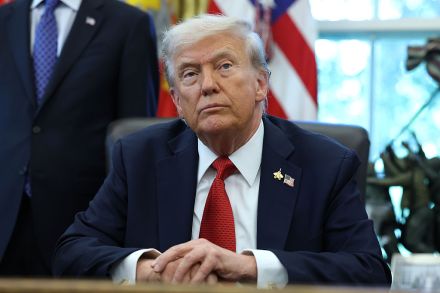
Trump

Trump is putting ‘America First’ by ignoring the MAGA punditocracy

From our US edition

Political imbrioglios often take on the character of theological controversy. Back in the 6th century, the wise men of the Western Church, pondering the Trinity, decided to make an addition to the Nicene Creed. The Holy Spirit, they determined, proceeded not simply “ex Patre” (“from the Father”) but also “filioque,” “and from the son.” No big deal, right? Wrong. For reasons I shall refrain from dilating on now, the Eastern Church repudiated the addition. Controversy raged for centuries. Indeed, what became known as the “filioque controversy” culminated, in AD 1054, in the Great Schism between the Eastern Church and the West. For most of us mortals, the controversy now seems arcane, not to say bootless. But at the time it was a matter of life and death.

Trump

We should rejoice in Trump’s military parade

From our US edition

Today, you can choose to follow your inner adolescent and search for one of the Soros-funded “No Kings” protests cropping up wherever the number of Democrats is high and the collective IQ is low. Alternatively, you can pop down to the draining swamp of Washington, DC and watch the United States Army commemorate its 250th anniversary with a snazzy military parade among patriotically inclined Americans.If you think I have loaded the dice somewhat with charged rhetoric, you’re right. The whole “No Kings” wheeze is just anxious left-wing grandstanding that is as desperate as it is ineffectual. There is no Saint George Floyd around to act as a pretext this time.I have no doubt that those protests will be lavishly covered by the Irrelevant Media Complex.

Parade

Is Biden’s autopen mightier than the sword?

From our US edition

Whom do you suppose wrote this: “Let me be clear: I made the decisions during my presidency. I made the decisions about the pardons, executive orders, legislation, and proclamations. Any suggestion that I didn’t is ridiculous and false”?  The one person I can assure you did not write it is its supposed author, former president Joseph R. Biden, who by the way is suffering from metastatic prostate cancer.  Moreover, pace Biden’s suggestions, it is clear that he did not sign many of the myriad “pardons, executive orders, legislation, and proclamations” issued over his name.

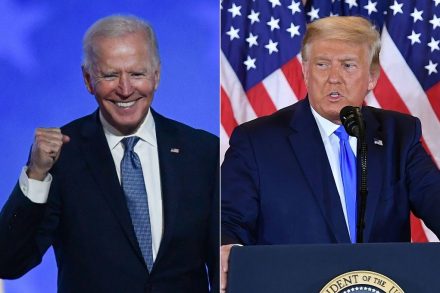
Joe Biden’s puzzling legacy

From our US edition

The commentariat is awash with experts on prostate cancer. What precipitated this sudden acquisition of specialized medical expertise? Why, the announcement that former president Joe Biden is suffering from stage four of the big PC which, the news reports are gasping, has metastasized to his bones. Let me pause to join Donald Trump in expressing my best wishes to the former president for “a fast and successful recovery.” Let me also recall how suddenly the world became populated with epidemiologists after the Wuhan flu led Anthony Fauci, Deborah Birx and the entire bureaucratic establishment to discover their inner totalitarian hankerings. The revelation about Biden’s health is a sort of synecdoche for a much larger universe of pain.

Biden
shooting

Wine highlights from a weekend shooting party

From our US edition

Do you know Charlotte Mulliner’s charming poem “Good Gnus”? It was transcribed by P.G. Wodehouse in his short story “Unpleasantness at Bludleigh Court.” I went shooting with friends last weekend at a magnificent rural fastness in a semi-secure, undisclosed location near Millbrook, New York. Although we were shooting clays, not pheasants or other fauna, the opening of “Good Gnus” nevertheless floated into my mind like a tocsin with its irrefragable psychological insight.