Roger Kimball

Roger Kimball

Roger Kimball is a US columnist for The Spectator, the publisher of Encounter Books and the editor and publisher of the New Criterion.

The crusade to abolish ICE is as pathetic as it is misguided

From our US edition

What’s the single most moronic pop song? I know that the competition for that title is stiff. Different judges will have different worthy candidates. High up in my pantheon of awfulness is John Lennon’s emetic 1971 effusion “Imagine.” Everything about the song is repulsive, starting with its dangerously faux-naive politics (do you have your air-sickness bag handy?): Imagine there's no countries It isn't hard to do Nothing to kill or die for And no religion, too Imagine all the people living life in peace To which I respond with Rudyard Kipling’s “The Gods of the Copybook Headings”: They promised perpetual peace. They swore, if we gave them our weapons, that the wars of the tribes would cease.

David Lynch and the new Trumpian counter culture

From our US edition

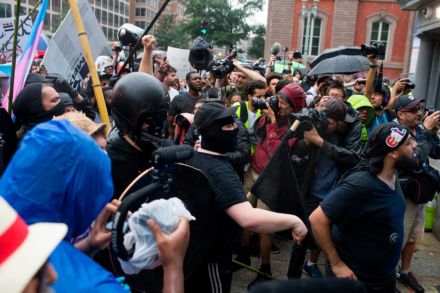
What is it that Kanye West and David Lynch know that escapes the intelligence of Stephanie Wilkinson, owner of the restaurant that refused to serve White House Press Secretary Sarah Sanders? It’s the same thing that escapes the intelligence of the people camping out in front the apartment of Trump aide Stephen Miller, passing out “Wanted” posters and screaming “fascist.” Even as The Resistance™ enters the aphasic, “Maxine Waters” phase of senile dementia—probably abetted, it turns out, by Russian mischief makers—little shoots of sanity are sprouting up in some unlikely places.

Why does the commentariat so despise Trump’s success?

From our US edition

While the Anti-Trump Mandarins of the Commentariat (ATMC, for short) are busy untwisting their knickers after the President’s historic summit meeting with the Tubby Tyrant of North Korea, I have an important real-estate tip to pass along: beach-front property in North Korea. Keep your eye on it. As Trump said yesterday in his wide-ranging press conference following his meeting with Kim Jong-un, that stretch of land between China and South Korea would be an ideal spot for luxury hotels and condos, if only Kim would stop shooting off cannons there. “If only.” Bear that in mind, as Donald Trump assuredly will, as you chuckle over the incongruity of “beach-front property” in close proximity to the words “North Korea.

Sorry Ron Radosh, Spygate really is the biggest political scandal in the history of the United States

From our US edition

I am pretty sure it is not intended to be an exercise in comedy, but there are a few amusing passages in my friend Ron Radosh’s latest anti-Trump effusion. Writing about the scandal that President Trump and others have denominated “Spygate,” Ron writes that:  . . . it is becoming apparent that the FBI source (since exposed as academic Stefan Halper) was not put into Trump’s campaign for political purposes but was part of a legitimate counterintelligence operation investigating Russia’s election interference in the U.S. elections and involved three of his campaign aides, Carter Page, George Papadopoulos, and Sam Clovis, whom Halper interviewed.

Disney is considerably more repulsive than Roseanne

From our US edition

Oh my God!  Someone said something you don’t like!  Cancel his (or her) show!  Pronounce anathema upon him (or her).  Topple the statues, chisel off the names, enact the machinery of  damnatio memoriae! Apparently that’s what’s happening as I write to Roseanne Barr, the actress who had the dual temerity to 1) revive her eponymous television show in an intermittently pro-Trump modality and 2) emit a tabasco tweet about the horrible Valerie Jarrett, President Obama’s chief counsellor. Are you ready? Are you sitting down?  Are the children in another room? Here’s the tweet: “Muslim brotherhood & planet of the apes had a baby=vj.” Uh oh.  Was the tweet in bad taste? Indubitably. Was it racist? Yep.

For your eyes only: A short history of Democrat-spy collusion

From our US edition

Who what where when why? The desiderata school teachers drill into their charges trying to master effective writing skills apply also in the effort to understand that byzantine drama known to the world as the Trump-Russia-collusion investigation. Let’s start with “when.” When did it start? We know that the FBI opened its official investigation on 31 July 2016. An obscure, low-level volunteer to the Trump campaign called Carter Page was front and centre then. He’d been the FBI’s radar for a long time. Years before, it was known, the Russians had made some overtures to him but 1) they concluded that he was an “idiot” not worth recruiting and 2) he had actually aided the FBI in prosecuting at least two Russian spies.

Iran’s malevolent mullahs have been well and truly Trumped

From our US edition

The only time I met Donald Trump was at a small event for politically mature journalists at the White House last April. After milling about with my fellow scribes in the press room—it’s a lot smaller and shabbier than it looks on TV, like Jim Acosta—we were ushered into the Roosevelt Room near the Oval Office. The President, secretary of commerce Wilbur Ross, and a few aides (Steve Bannon, Michael Anton, Reince Priebus: wot larks!) soon joined us. After a brief presentation, the President took questions. Mine was about Iran.   During the campaign, I noted, the President had regularly decried the Joint Comprehensive Plan of Action, i.e, the 2015 Obama Iran deal in which the U.S.

Robert Mueller is out of control. He should be shut down. Now.

From our US edition

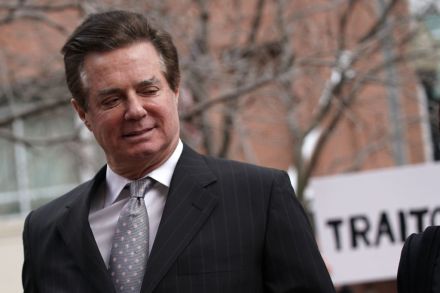
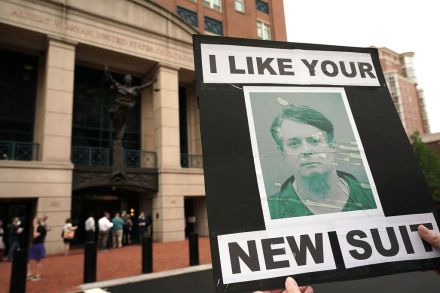
Pop quiz: how many branches of government are there in the United States? If you said “Four,” go to the head of the class. As of May 17, 2017, the traditional three branches of  Congress, the Executive, the Judiciary, are joined by the Office of Robert S. Mueller III, Special Counsel in charge of destroying the president. It’s been a fun year. It’s not everyone, after all, who so thoroughly commands the police power of the state that he can order a predawn, guns-drawn raid on people he doesn’t like. Usually, that drama is reserved for dangerous criminals—terrorists, murders, major drug dealers. But Paul Manafort, a businessman, was close to Donald Trump, so he and his wife got the SWAT-team treatment on suspicion of a white-collar crime.

Trump is like those martial arts experts who use their opponents’ own strength against them

From our US edition

Is Donald Trump intemperate? You betcha. The latest episode in the Trump Reality Show was his twenty-minute fugue, via telephone, on Fox & Friends Thursday morning. It was a breathless, manic performance in which the President inveighed against “leakin’, lyin’ James Comey,” the Justice Department, and the murderous regime of Iran. He dilated on the prospects for peace and denuclearization of the Korean peninsula. He talked about the travails of his personal lawyer Michael Cohen, whose home, hotel room, and business have been raided by the FBI. He also, in response to one question, graded his job performance at the 1 year, 3 month mark: A+. The word that many commentators employed to describe the President’s comments was “unhinged.

The media believes that Macron’s visit was a Gallic triumph and a blow for Trump. That’s wrong.

From our US edition

Absorbing the handholding—we were not party to anything so standoffish as handshakes here—the kisses, and the hugs, I thought of Paradise Lost: “They hand in hand with wand'ring steps and slow,/ Through DC took their solitary way.” I quote from memory. Macron and Trump, Donald and Emmanuel: the state visit was nothing if not a bromance, at least in its pas de deux. I think it was in Ars amatoria that Ovid recommends that suitors take every opportunity to touch the objects of their interest. If you are sitting at the games with your date and a speck of dust—or dandruff—falls on her dress, flick it off with your hand. If no speck of dust falls, flick it off anyway. Then she’ll be perfect.

James Comey really seems to believe that he embodies the law

From our US edition

Inquiring minds want to know: What is James Comey’s favourite snippet from Gilbert & Sullivan? My candidate is this bit from one of the “susceptible” Chancellor’s songs in Iolanthe: “The law is the true embodiment/ Of everything that’s excellent/ It has no kind of fault or flaw/ And I my Lords embody the law.

Why the Democrats won’t win big in November

From our US edition

Is a big blue Democratic wave poised to sweep the Republicans out of Congress in the 2018 mid-term election? To listen to much of the media, you might think so. A couple of weeks ago, the Washington Post quoted Nate Silver, the Yoda of Dem pollsters, who suggested that the “Democratic wave in 2018 may be swelled substantially by the enthusiasm gap into a tsunami.” Last month, when the conservative Democrat Conor Lamb eked out a narrow victory over Rick Saccone in a special Congressional election in Pennsylvania, CNN gleefully reported that “Lamb’s performance is ominous for Republicans as the November midterm elections approach.

Why John Bolton is no warmonger

From our US edition

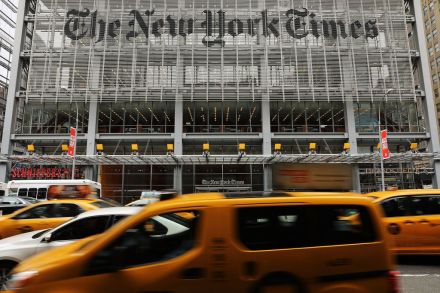
The hysteria from the Left over Donald Trump’s appointment of John Bolton as National Security Advisor to replace Lt. General H. R. McMaster has been partly hilarious, partly alarming to behold. From The Guardian in this country to The New York Times, CNN, Slate, Salon, and beyond in the United States, we are presented with a scarecrow figure who makes Jack D. Ripper in Dr. Strangelove look like Albert Schweitzer after a nap. 'Yes', screamed an editorial in The New York Times, 'John Bolton Really Is That Dangerous'. Bolton is a 'hawk’s hawk', an 'extreme ideologue' and 'warmonger' whose appointment 'scares people' and 'puts us on a path to war'.

False flag

One of the most memorable moments of the 2012 presidential debates came when the candidates were asked what they believed to be the chief national security threat facing the United States. Mitt Romney said ‘Russia’. Barack Obama thought that was ridiculous. ‘The 1980s are now calling to ask for their foreign policy back,’ Obama retorted, to the general hilarity of the panel and much of the audience. But that was before Hillary Clinton, the candidate whom Obama had anointed to win in 2016, performed the impossible and lost to Donald Trump. All of a sudden it was Russia, morning, noon, and night. Donald Trump must have ‘colluded’ with the Ruskies. It was the only answer to the otherwise imponderable question: how could Hillary Clinton lose?

Trump is working

In London last week I had the opportunity to talk about President Donald Trump with several politically mature friends. Most were sceptical, even slightly appalled, by him. It was my task to help them overcome this prejudice. I am delighted, dear reader, to attempt the same service for you. I was not always a fan. For most of the 2016 campaign, I supported Ted Cruz, a choice that many thought only marginally less bad than Mr Trump. But politics is the art of the possible and it turned out that the only two possibilities were Donald Trump and Hillary Clinton. For me, that meant that the only possibility was Donald Trump. Why? First of all, Clinton was the most corrupt serious candidate in history. Her elevation would have tainted the presidency beyond recall.

Splendid isolation | 22 September 2007

It is not surprising that Edward Hopper (1882–1967) is an immensely popular artist. His pleasing deployment of colour and easy-going presentation of the paraphernalia of everyday life give his work an immediate warmth and likeability. His muted palette, careful modulation of hues, and soft-edged precision are a recipe for visual charm. Considered simply as aesthetic objects, Hopper’s pictures make few demands: they are, on the contrary, quietly inveigling, almost seductive in their plain-as-day obviousness. And if we’ve never seen diners or drugstores or city streets exactly like the ones that Hopper paints, we’ve seen ones that remind us of them — or vice versa.

Museum without a soul

Roger Kimball on how Yoshio Taniguchi has transformed New York’s Museum of Modern Art We are told that our individualist art has touched its limit, and its expression can go no further. That’s often been said; but if it cannot go further, it may still go elsewhere.André Malraux, The Voices of Silence ‘An institution,’ said Emerson, ‘is the lengthened shadow of one man.’ In the case of the Museum of Modern Art, the man in question is Alfred H. Barr (1902–81). Barr founded MOMA (the acronym by which the museum is universally known) in 1929.