Roger Alton

Roger Alton

Roger Alton is a former editor of the Observer and the Independent. He writes the Spectator Sport column.

Roger Alton’s highlights from a magical year in sport

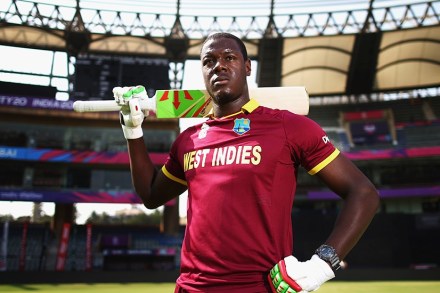
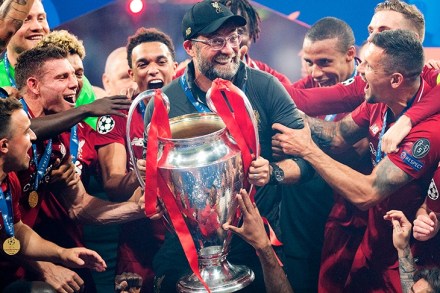
We don’t half take a lot for granted. We may look up to the Aussies, kowtow to the Americans and look on in awe at the Chinese, but we’re not doing too badly ourselves. To judge from the papers, we’re a nation of fatties who when not pigging out on Pringles on the sofa are waddling down the high street looking for drugs. But it turns out we’re pretty good at sport: cricket World Cup winners, rugby World Cup finalists, women’s football World Cup semi-finalists. It was English teams who contested the Champions League final, after two mesmerising semis when Liverpool thumped Barcelona and Spurs defeated Ajax in the last seconds of added time. At home, Liverpool continue to dazzle under a charismatic manager who has made the Kop his own.

Only now are we seeing what an extraordinary figure Bob Willis was

Maybe it’s just an age thing, but the death of Bob Willis has left me — and, I am sure, a whole generation of cricket lovers — feeling more than usually bereft. Since when has the passing of a sports-person triggered quite such an outpouring of genuine emotion? But only now are we seeing quite what an extraordinary figure he was. And it wasn’t just cricket: he loved Bob Dylan, Wagner and wine, as should all right-thinking folk. He was a huge, gangling figure with arms like windmills and an awkward ungainly action once described as being like a first world war biplane taking off into a headwind. He bowled very fast and usually seemed to be starting his run-up from beyond the boundary. God knows what it was like to face him: pretty scary, I imagine.

Why Ben Stokes should win Sports Personality of the Year

Oh those lazy, hazy, Stokesy days of summer: how long ago they seem now. When England won the cricket World Cup — or scraped it anyway — in July, and pulled off the unlikeliest of Ashes Test wins on that blazing Leeds day in August, Ben Stokes loomed as a greater certainty to be the BBC’s Sports Personality of the Year than Vladimir Putin to win a Russian election. Don’t think we can be so sure now — about Stokesy, that is. He’s odds-on favourite from the shortlist of six contenders for the award announced by the BBC this week, but it is his misfortune that by the time this silly old competition comes round each year, the cricketing heroics of the summer have gathered so much dust they have pretty much disappeared from view.

England’s rugby team are embarrassingly sore losers

Sports events come and go, but good manners, as William of Wykeham might have put it, last for ever. Or the lack of them. Which is why the surly, petulant behaviour of most of England’s rugby players after losing the World Cup final was so disgraceful. Refusing to wear the medals presented to them (by Sir Bill Beaumont, for heaven’s sake, a man who knows a bit about losing as well as winning), or hastily discarding them, standing around scowling, and then failing to bow in unison to the Japanese people who had created such a marvellous tournament. It was all pretty shameful. The rugby fraternity loftily dismisses this as being because the team care too much and felt they had let down the nation.

Seven things we’ve learned from the rugby World Cup

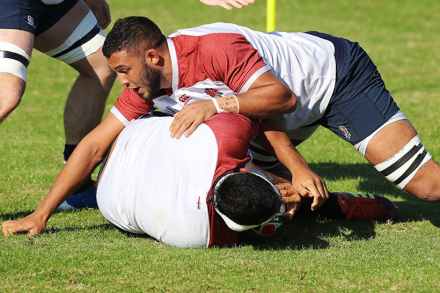
New Zealanders can teach the world a lot about sportsmanship. Steve Hansen after last Saturday’s All Blacks defeat by England in the World Cup semi-final showed the uncomplaining loser can be just as impressive as the triumphant winner. As he put it: ‘Winning’s easy…[but] when you lose… you have to show humility, do it gracefully and be honest about it. Sometimes you have to bite down on your gumshield and suck it up.’ The Springboks have put rugby back several decades. Big, beastly, and brutal, they made the first half of their semi-final with Wales almost unwatchable. Afterwards the Wales hierarchy talked about losing the ‘arm-wrestle’: but why are Wales trying to arm-wrestle?

Seven things we’ve learned from the rugby World Cup

New Zealanders can teach the world a lot about sportsmanship. Steve Hansen after last Saturday’s All Blacks defeat by England in the World Cup semi-final showed the uncomplaining loser can be just as impressive as the triumphant winner. As he put it: ‘Winning’s easy…[but] when you lose… you have to show humility, do it gracefully and be honest about it. Sometimes you have to bite down on your gumshield and suck it up.’ The Springboks have put rugby back several decades. Big, beastly, and brutal, they made the first half of their semi-final with Wales almost unwatchable. Afterwards the Wales hierarchy talked about losing the ‘arm-wrestle’: but why are Wales trying to arm-wrestle?

The joy of Japanese-style rugby

Proud son of Wexford he may be, and of doughty farming stock too, but the heart sinks at the prospect of seeing yet again Tadhg Furlong, all 20-odd stone of him, emerge from a pile of bodies laying siege to the opposition line to lumber over for a try. Ireland’s brand of suffocating rugby has been effective but uninspiring over this World Cup. And without wishing to offend our cousins across the Irish Sea, the heart sinks at the prospect of Furlong, Stander and the rest of the boyos possibly putting out a free-running (if so far slightly untested) New Zealand in the second of this weekend’s mouth-watering quarter-finals. Those interminable multi-phase pick-and-go assaults might be part of rugby but they are sure as hell not great to watch.

Why rugby is a perfect match for Japanese culture

The ITV set for the channel’s thunderingly good coverage of the Rugby World Cup is more Japanese than anything in Japan. And after the Brave Blossoms’ quite sensational victory over the Irish team — until recently rated world No. 1 — we need more Japaneseyness. More sushi. More Hiroshige. More Hokusai. We should never lose sight of how remarkable Japanese rugby is. The country has had a love affair with the game for more than 150 years. It’s all about konjo — the Japanese word for discipline, endurance, sacrifice, sincerity, courage, strength. There’s the samurai warrior for you: not somebody to mess with but deeply honourable too.

Farewell, Garry Richardson. We’ll miss you

A day of sporting shocks this Sunday past. As if the news of Tracey Horrobin’s bewitching performance with the ball to give Ambridge victory in their grudge match against Darrington wasn’t enough, then out of a clear blue sky, one of the best broadcasters in the country announced that he’d be standing down. For anyone interested in sport, Garry Richardson’s Sportsweek was unmissable. In a dignified little farewell at the end of his last show, Richardson said how much he had enjoyed it and paid generous tribute to everyone who had made it possible. Why should this matter? In an age where sport is expanding like a barrage balloon on steroids, Richardson could cut through the chaff to shine a light on what mattered.

Will Ben Stokes be the greatest cricketer of all time?

Feeling depressed about politics? I hope not. Politicians don’t shape the world: they are the furniture movers, not the furniture makers. It is inventors, scientists, philosophers, craftsmen, artists and poets who influence our lives. And sports people of course. Which means it’s time to think about Ben Stokes again. The Test Match Special lunchtime guest on the Saturday of the Headingley Test was Joe Simpson, ace climber and cricket-lover, and author of the epic Touching the Void. There’s not much Joe doesn’t know about coming back from the dead, and some of it must have rubbed off on Stokes. The most extraordinary moment of that extraordinary innings came when Stokes reached his century.

Bring out the biltong for Labuschagne, an Ashes hero

Funny, the things cricketers put on their bats. England’s Jos Buttler has ‘Fuck it’ written at the top of his blade to remind him it’s only a game (or something like that). Australian Marnus Labuschagne, who for my money was one of the great heroes of the Ashes Test at Lord’s, has the image of an eagle drawn on the bottom of his bat. It’s to remind young Marnus of one of his favourite Bible passages, Isaiah 40:31: ‘For those who hope in the Lord, He shall renew their strength. They shall soar on wings like eagles; they shall run and not grow weary, they shall walk and not be faint.’ It has the edge over ‘Fuck it’, but each to his own.

Stop booing Steve Smith – he’s a hero

During the World Cup (remember that?), Virat Kohli, the very model of a modern major cricketer, appealed to Indian fans not to boo the returned Australian players. It would be nice to think that Joe Root might call for something similar over the next few days from the increasingly egregious English supporters. Current boo-boy tactics haven’t worked particularly well so far. Part of the problem has been the sanctification of Edgbaston as if it was the cricketing equivalent of Notre Dame. Now the sight of a lot of pissed-up Brummies dressed as parrots and chanting ‘Championes, championes…’ seems to be England’s contribution to the summer game. Besides anything else, the swing into cricket of practically mind-dead football chanting is just depressing, no?

What does the future hold for cricket?

The name Cameron Delport might not be immediately familiar, but his exploits last week could mean more for the future of cricket than the electrifying events of the World Cup final. Delport is a burly, well-inked British-South African from Durban, and a few days ago he smacked 129 off just 49 balls to steer Essex to victory over Surrey in their T20 Blast encounter at Chelmsford. More specifically, at the Cloudfm County Ground; once the home of Graham Gooch, Keith Fletcher and Nasser Hussain, now happily sponsored by a facilities management business. (I don’t really know what that means either, but it’s what the ‘fm’ stands for. Not a radio station.) Delport is now one of those itinerant T20 players of no fixed abode, but plenty of air miles.

Rocket’s science

A chum was in Waitrose a year or two back, and was bending down with some difficulty to look at the sandwiches when he realised the sprightly elderly chap next to him, eyeing up the cheese and celery, looked very familiar. It was the greatest tennis player of all time, the one and only Rod Laver, the Rockhampton Rocket himself. They had a pleasant chat, for the Rocket is nothing if not affable, and Laver agreed to call my pal’s tennis coach and say: ‘Hi, it’s Rod Laver here.’ The coach didn’t believe him, of course, but it was true. When you saw the ecstatic reaction of Centre Court last week as Laver, now 80, was presented with a special Wimbledon trophy you realised how lucky we are that he is still with us, and still charming everyone.

A very aggressive tackle

Forty years ago the football transfer market went crazy: the British record was broken four times in 1979, more than in any other year before or since. A lot of this was down to Malcolm Allison at Manchester City, who shelled out a record amount for a teenager (£250,000 for Steve MacKenzie, an apprentice at Palace) and £1.45 million to bring Steve Daley from Wolves. That was later, unkindly but not inaccurately, described as ‘the biggest waste of money in football history’. Allison continued to spend money like a drunk in a bar; something the club never recovered from until it became part of the sovereign wealth portfolio of one of the richest countries in the world.

Victories for Rafa, Rory and rain

Hardly any men can hit a tennis ball on clay better than Dominic Thiem. Unfortunately he ran into one who could in the French Open final last Sunday. It is worth reflecting on the extraordinary scale of Rafael Nadal’s achievement, besides his ability to rock a very stylish yellow T-shirt. This was his 12th win in 15 attempts at Roland Garros and one of his three ‘failures’ was a withdrawal in 2016 with a wrist injury. That’s two defeats in 15 years on the most punishing grand slam surface. Has there ever been a blend of athlete and venue to rival it? Rafa’s savage spin on the forehand has always been his greatest weapon, along with his remorseless strength and fitness. But now his attitude and intensity have become, if possible, even more ferocious.

England vs the rest of the world

Well, you have come a long way baby. As the whizz-bang hoopla of the cricket World Cup strides into view at the Oval, take a look back nearly 50 years to the very first limited overs international played in 1971. It was between Australia and England in Melbourne; 40 eight-ball overs a side, on what would have been the last day of a Test that had been rained off. Australia won with six overs to spare. The names on the team sheet are not those you would associate with breathless one-day hitting: Boycott, Edrich, Fletcher, Lawry and Stackpole. The run rate was pretty painful: England scored at below four an over and Ian Chappell hit the solitary six for Australia. England managed a grand total of just eight fours. Happy days.

It’s the fans wot win it – so stop fleecing them

It is always possible to tell the difference between a bunch of Manchester City fans and auditions for the latest Dolce & Gabbana commercial. And in that uproarious packed stand at Brighton on Sunday, there were clearly quite a few folk who hadn’t gone without a meal for some time. But by golly we were a happy, relieved bunch. City supporters have been used to getting kicked in the face at the last moment for so long that no one really celebrated till the result was beyond doubt. ‘Why are you so nervous, you’re 4-1 up?’ ‘I know, but there’s five minutes to go,’ is a joke made for City fans.

Coronation Street is no match for Elland Road

Say what you like about Elland Road — and in my experience it is not a place to linger — but Leeds United is the soap opera that just keeps on giving. The sainted Marcelo Bielsa, their coach, has won himself massive plaudits and double page spreads in the press for the near-miraculous feat of making The Damned United vaguely likeable, even momentarily. Bielsa gifted Aston Villa a goal after Leeds had scored a controversial opener. Villa thought that play had stopped for an injury; Leeds didn’t kick the ball out, and scored. Cue general handbags, after which Bielsa ordered his players to let Villa score.

Master of manners – and the high seas

Something very odd happened on the Today programme the other morning. Amid the mountains of bombast that usually fill the Radio 4 airwaves at that time came the calm, modulated tones of a man speaking with great humour, wit and modesty of an extraordinary achievement. It was Sir Robin Knox--Johnston, on the eve of his 80th birthday, marking the anniversary of his greatest triumph. Almost exactly 50 years ago today he sailed his battered 32ft ketch Suhaili into Falmouth harbour — and history. He had become the first person to sail single-handed around the world without stopping. When Suhaili had slipped out of Falmouth in June the previous year it was almost unnoticed: when it returned it was to worldwide acclaim and crowds of tens of thousands.