Rod Liddle

Rod Liddle

Rod Liddle is associate editor of The Spectator.

The absurdity of ‘buffer zones’

The evangelical preacher Stephen Green has had his conviction upheld – for standing quite near an abortion clinic in Ealing with a Bible verse in his hands in protest last February. Remarkably, this act is illegal in the UK today. Green argued that he was not protesting about the women entering the clinic, but against the law which prevents him from doing that. The judge noted, however, that the verse Green was holding was Psalm 139/13: ‘For thou hast possessed my reins: thou hast covered me in my mother’s womb.’ Green is a devout man and that devotion, you might argue, is split equally towards God and self-publicity. But still.

The BBC vs Gregg Wallace

The last time I took my wife to watch Millwall play a home game, a gentleman a few rows in front of us took grave exception to the behaviour of an opposing player and identified him, very loudly, as the author of The Critique of Pure Reason – repeatedly and with venom. Having vented his spleen, he turned to sit down and caught sight of my wife. An expression of contrition spread across his face and he said to me in a conciliatory tone: ‘I am very sorry for using such language in front of your lovely lady.’ The apology, you will note, was to me, not to my wife. Such is the arcane concept of chivalry and decent manly behaviour down The Den. I accepted his apology with a smile.

Is Labour’s football regulator an own goal?

30 min listen

The Football Governance Bill is currently being considered in the House of Lords. It’s designed to establish an independent football regulator. No team in the football pyramid will be allowed to play professionally without the regulator’s permission. Does the Premier League really require these sorts of regulations? Will such a rigid system, and unprecedented powers, change the game for the better? Paul Goodman, Senior Fellow at Policy Exchange, wrote about the bill in The Spectator. He discusses alongside Rod Liddle, Spectator columnist, and Freddy Gray.

Can you win the Booker Prize without being able to write?

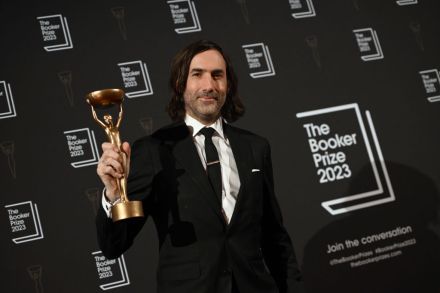
I mentioned a couple of days ago being underwhelmed by Orbital, Samantha Harvey’s Booker Prize-winning novel. But I am a glutton for punishment, and continuing to ignore my long-held practice of never reading Booker winners, I bought last year’s victor – Prophet Song, by Paul Lynch. As I mentioned, this is about a nasty right-wing government taking over in Ireland and being horrid to union officials. It didn’t sound quite up my street, but I thought I’d give it a go. And then I read the second sentence in the book: How the dark gathers without sound the cherry trees. I mean, hello? You’re trying too hard, mate. I know you’re meant to try, when you’re writing a serious novel. But the trick surely is not to let the trying show.

I hope you didn’t sign that petition

Did you sign it, then? And if so, what were your expectations? That Sir Keir Starmer would look at the figures and say – perhaps with a tinge of remorse – ‘Yup, that’s it, I’m bang to rights, we’ll have an election?’. Or were you simply hoping to annoy him? If so, I assume you are disappointed, because Sir Keir doesn’t look very annoyed to me. It turns out we are no better than those liberal lefties who can’t believe that other people have different views The petition to demand a general election on the grounds that the people who didn’t vote Labour on 4 July are upset at the result so far has almost 2.7 million signatures.

I made the mistake of reading a book that won the Booker Prize

I’ve just broken one of my own golden rules – never buy a book that has won the Booker Prize, because it will be crap. So I have only myself to blame. The rule of mine has held reasonably true, with a few exceptions, since the wonderful David Storey won it in 1976 for Saville.  The committee, whoever is on it, will always choose a book which accords with their asinine political beliefs, especially if it is a ‘warning’ kind of a book. It never used to be quite like that, but that’s how literature is these days. Write a book from a perspective unloved by the metro chattering class and you’ll be lucky to be published, never mind awarded a prize.

Is swimming racist?

I think we can all be delighted that, at last, the University of Leicester has taken action to end one of the real problems associated with swimming pools – the presence there of awful white people, swimming about all over the place. Odious, arrogant, pasty-faced white people with their mewling, stupid white children. White people doing the breast stroke and the crawl. White people climbing out of the pool looking horribly white. White people deliberately infecting the global swimming majority with their filthy white verrucas. The university, alongside the Unity Swimming organisation, is running segregated swimming sessions for black and ethnic minority people.

I liked John Prescott enormously

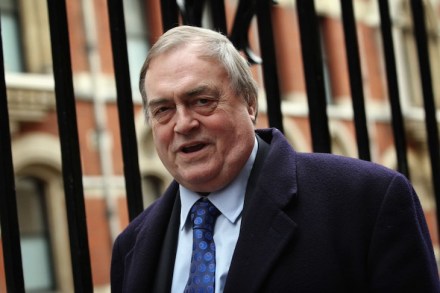
There was a time we all looked forward to on the BBC Today programme, back in the early years of Tony Blair’s first term as Prime Minister. Late July, early August. Blair had scooted off to San Gimignano, Mandelson was probably on a yacht with an oligarch, even Campbell was away battling his weird inner demons somewhere. And for about three or four weeks the country was run by John Prescott, as deputy PM.  As you are aware, there is a dearth of political stories in the dog days of summer. But with John in charge, all you had to do was ring up and suggest that a Labour Spad had said something nonsensical and bingo!

Labour’s Chinese takeaway

I was thrilled to learn that our government intends to enjoy an ‘open’ relationship with China – one of my favourite countries, as I am sure it is yours. Sir Keir Starmer announced this intention when he bumped into Xi Jinping at the G20 beano in Rio de Janeiro. He also said: ‘We want our relations to be consistent, durable, respectful, as we have agreed, avoid surprises where possible. The UK will be a predictable, consistent, sovereign actor committed to the rule of law.’ Those agreeable adjectives are all Keir’s – I didn’t slip any in, surreptitiously, Not even ‘predictable’, which I assume was there to reinforce the earlier commitment to not surprising the Chinese, perhaps by jumping out from behind a hedge and demanding the return of Hong Kong.

I have no time for Radio Four’s dross

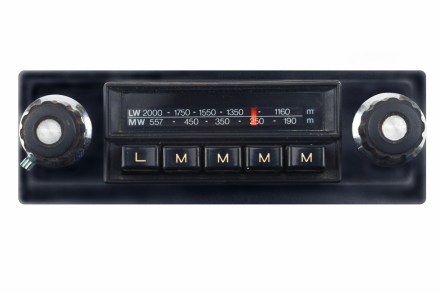
I switched the radio on in my car today and it went straight to the BBC World at One on Radio Four. I thought I’d tuned it to Radio Three but instead of a mellifluous tune I got Sarah Montague. I was on the bit of the A66 in Middlesbrough where it merges with the northbound A19 and it is a tricky interchange, with narrow lanes and huge growling lorries. I am mentioning all this as a means of explaining why I didn’t change channels straight away. I wanted to make sure I was on the Tees Viaduct and not headed to Teesport, you see. I needed to concentrate. That’s not really balance, is it? What I heard was an interview with a Palestinian bloke (described as a ‘playwright’) who lives in London but has family in Gaza.

Europe’s blind spot over anti-Semitism

You would think that we Europeans might have learned a thing or two about anti-Semitism over the past century or so – and perhaps come to understand pragmatically, if nothing else, that what begins with the vicious persecution of Jews usually moves on to murdering lots of other people, too. But no. Or if we did, then it has conveniently slipped our minds, as things tend to do in these complicated times. Or perhaps we think that the persecution of the Jews we are seeing right now in Europe is of a different marque to that which began in the early 1930s in Germany. Yes, it’s sort of anti-Semitism – but it’s of a nicer kind than that instigated by that psychotic little Austrian with the performative moustache. A little more excusable.

Goodbye to MC5, the holiest of rock’s holy cows

Grade: D+ Ah, the original Linkin Park, except even more spavined. MC5 came outta Detroit in the mid 1960s and their shrieking blues metal ur-punk was afforded unnecessary respect because of their agitprop politics. Sucking up to the Black Panthers and running a bit foul of the law can do wonders for a slightly below-average blues band whose songs had energy and attitude – but nothing else. Here they are, back with their first studio album in 53 years: thanks for the merciful interregnum, if nothing else. When I say ‘they’, I mean the half-decent guitarist Wayne Kramer and, on one or two tracks, their original drummer, Dennis Thompson.

Why Farage should – and shouldn’t – be UK ambassador to Trump

It is very kind of Nigel Farage to offer his services as a kind of intermediary between our government and the new American president. Keir Starmer certainly needs one, because protest though he might, nobody believes the line that Donald Trump is hugely impressed with the Labour government or that JD Vance has a new best friend in the magnificently dim David Lammy.

Does being right-wing make you violent?

I notice that the police are not treating the killings of those children in Southport as a terrorist attack. While the principal suspect has been charged with allegedly producing ricin and allegedly possessing a PDF document called ‘Military Studies in the Jihad Against the Tyrants: the al Qaeda training manual’, we have been told that no terror motive has been established.  The possibility that the perpetratoris a bit wacko is not allowable: it’s the politics that’s to blame My friend and colleague Douglas Murray dealt, admirably, with the Southport business last week.

Farewell, Quincy Jones – I’ll always remember you

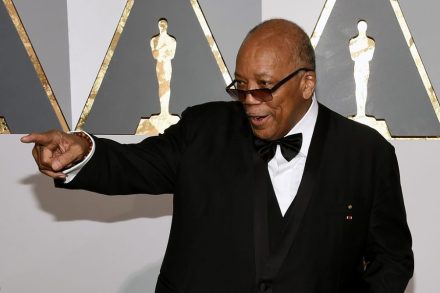
There are many reasons to remember Quincy Jones, who has died aged 91 in Los Angeles. Let me deal with just one. Jones was responsible for the soundtrack of one of the most remarkable films of the 1960s, In The Heat of The Night, which is still in my all-time top ten of movies. Directed by the peerless Norman Jewison (who also died this year, aged 97), the film is mostly remembered for the clever, nuanced performances from the two leading actors and the sometimes electric interplay between them – Rod Steiger as the tired, reflexively bigoted and lonely white sheriff of a small Mississippi steel town and Sidney Poitier as the suave, articulate, black detective from Philadelphia who is unfortunately deposited in this backwater and immediately accused of murder.

Why does ITV hate Trump?

It would be consoling to think that the BBC, alone among our supposedly unpartisan TV news providers, is guilty of hopelessly biased coverage of the US presidential election. This would conform to the increasingly popular notion that Auntie is in a place beyond redemption, unique in its iniquities. That notion may be true, but it is not true of its US election coverage. All of the news providers have been biased and the BBC is probably one of the least egregious of offenders. It would seem to me that all the broadcasters broadly concur that a second Trump presidency would be a disaster for the US, for democracy and for the world and that therefore the normal rules of balance are not applicable. They demonstrate this bias in the following four ways: Story selection.

The reparations racket

I have been trying to interest MPs of all parties in joining my call to persuade Barbados to say ‘thank you’ to Britain for the extra 17 years of life they enjoy as a consequence of their distant ancestors having been forcibly transported, hundreds of years ago, from Africa to the Caribbean. Nobody is quite biting my hand off at the moment, I have to say. They seem to think that the issue is a little ticklish right now. It would be difficult to make the charge of present culpability stick in any reasonable court of law, surely? I had mentioned the whole business on last week’s Any Questions? but the audience seemed too appalled even to boo and sat there with their middle-class jaws sagging open, as if they’d just been touched up.

The lessons of the Chris Kaba case

I wonder if we should join with the radical campaigning organisation Buy Larger Mansions (BLM) in order to protest about both the verdict in the Chris Kaba case and indeed the racism inherent in the Metropolitan Police? Perhaps we can get Gary Lineker and Alan Shearer to wear some BLM badges on Match of the Day and recreate the heady, exciting atmosphere of 2020 when white liberals in the US and here decided that George Floyd was a kind of combination of Toussaint Louverture and Rosa Parks, rather than a former criminal jailed eight times, including for robbery with a deadly weapon.

Should we prioritise the LGBTQI community when disaster strikes?

Are homosexuals and transgendered people more at risk from natural disasters than the rest of the population? I dare say there is a robust tranche of right-of-centre opinion which holds that they are indeed more at risk and that by and large this is a very good thing. Natural disasters are sometimes called ‘acts of God’ and those of a deeply conservative disposition may be inclined to see them as a punishment from the Almighty for grave transgressions of a sexual or gender nature. It is God doing what God does best – a spot of appropriate smiting.

Less Riot Grrl than Riot Lladies Who Lunch: Sleater-Kinney’s Little Rope reviewed

Grade: B- Given that Carrie and Corin are now in their fifties and one of them has settled down with a nice man, this is perhaps less Riot Grrl than Riot Lladies Who Lunch. You cannot expect fury to sustain itself for 30 years, not least when your band has long since ceased being an upstart revolution to the patriarchal rock order and has become instead a kind of indie heartland rock institution. This is Sleater-Kinney’s 11th take on that curiously bloodless American version of punk, a genre which is now comfortably mainstream. They never had quite the cuteness or pop sensibilities of, say, Veruca Salt: what marked them out originally was a disinclination to compromise.