Rod Liddle

Rod Liddle

Rod Liddle is associate editor of The Spectator.

Let Gary Lineker host Eurovision

So, the foreigners still hate us then. That was the first lesson to take away from the Eurovision Song Contest as our benighted entry, ‘What The Hell Just Happened’ by Remember Monday received not a single vote from the public, after being nestled in the top half via the jury vote. Mind you, it was an object lesson into how not to write a song: a reasonably interesting chorus spavined by a dull verse and inappropriate changes in time signature, which robbed it of all momentum. A lazily written song. So maybe the public was right – although throughout the voting there was the usual evidence of national enmities and friendships.

In defence of virgins

If we were really an island of strangers, as Sir Keir Starmer attested this week, then it might be OK. The real problem is that we have to interact with the bastards, so they cease being strangers and start being people who have a function in our lives. The old cliché had it that in the UK you were never more than ten metres from a rat and this is probably still true, except it’s five metres in Birmingham. But it is also true that you are never more than ten metres from a skank. A foreign skank, a British skank, makes no odds. Someone pig-ignorant and witless but possessed, nonetheless, of a kind of neolithic cunning. Probably tattooed, probably insistent that they shouldn’t be judged.

The repetitiveness made me cry with boredom: Mark Pritchard and Thom Yorke’s Tall Tales reviewed

Grade: B+ You are in the wrong hands here for what is a homage to this duo’s favourite electronic music. The only Radiohead album I like is the guitar-driven Pablo Honey (and I wasn’t terribly mad on that to be honest.) My inclination is to mark down the genre itself, for its wafting and beeping and farting portentousness, all the way back to Stockhausen. But I suppose one has to put such prejudices aside. What we have is Yorke’s anguished, puppy-dog falsetto, occasionally tenor and on one song contralto, with Pritchard’s sweeping aural soundscapes and clever but often annoying rhythms. At times the repetitiveness made me cry with boredom, but I do understand that repetitiveness is part of the shtick.

The Reformation is here

These are dark and bewildering days for Britain’s community of Good People, the ones who – insulated from material discomfort through large incomes and in many cases large inheritances – believe that everything can be accomplished simply by being kind and, further, by wearing one’s kindness as a badge which on the surface proclaims gentility and compassion but which, not very far below, is a polite voice insisting: ‘I am considerably richer than you, which is why I have these beliefs.’ These are the people who could not possibly vote Reform UK because it would be akin to having an avocado bathroom suite, or net curtains, or a bright-yellow Nissan Juke.

My apology to Reform

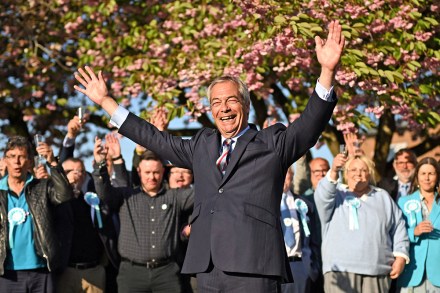
I have read countless commentaries explaining why we shouldn’t take Reform’s victories last Thursday too seriously. They are all wrong. I have the distinct impression that these were the most significant election results for a good few decades. Up here in the north, everyone I know voted Reform. More importantly, when I used to ask people how they voted, they would beckon me to one side and, through a cupped hand, whisper ‘Reform’. Now they say it out loud and proud. And the apology is because I had doubted Reform’s ability to climb above 30 per cent – the crucial figure. I also doubted that they were serious enough about the Blue Labour/SDP levelling-up stuff. And I doubted their ability to make serious inroads into local government. All of this was wrong too.

The worst thing Kneecap did? Apologise

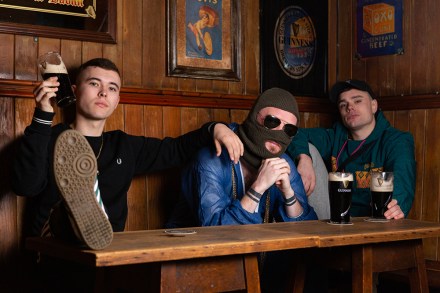
Going to Glasto this year with your little tent? I only ask because the average age of people who attend this extortionate smugfest is now not terribly distant from that of people who read this magazine. So it is possible that some of you are off to watch good old Neil Young, Nick Lowe and Gary Numan (the average age of headliners has almost tripled since the festival began in 1970) – and, of course, Kneecap, the British band who affiliate themselves with the Provisional IRA, Hamas and Hezbollah. But more about those lovable bhoys in a moment. The festival was truly counter-cultural for a handful of years.

The hidden violence behind the trans ruling

It is ten months since the then merely aspirant education secretary Bridget Phillipson addressed the important issue of where transgender people should go for a quick slash. Bridget was very much of the opinion that if you had a gender recognition certificate, then you should make for the cubicle which matched with whatever it said on that piece of paper, because it’s the ‘humane approach’. She added: ‘But I would expect that if you were someone that had gone through that formal process of recognition you are, to all intents and purposes, for legal purposes, regarded as being in a different gender, regardless of the sex into which you were born.’ This week, Bridget changed her mind.

Does Farage have a path to No. 10?

My contention was always that Reform UK would struggle to reach 30 per cent in the polls and, while the party is edging upwards, that still seems to be a ceiling. However, the latest MRP poll in the Sun suggests that, for Nigel Farage to become our next Prime Minister, the party need not gain much more support than it is currently attracting. The Sun had Farage on course to win 180 seats, largely by polling at about 30 per cent in some of the red wall constituencies. Labour and the Conservatives were each predicted to gain 165 seats. In such a finely balanced parliament, discussions about a Conservative–Reform deal would become otiose: a Reform–Conservative coalition would almost certainly emerge, regardless of any prior negotiations.

Sack the judges

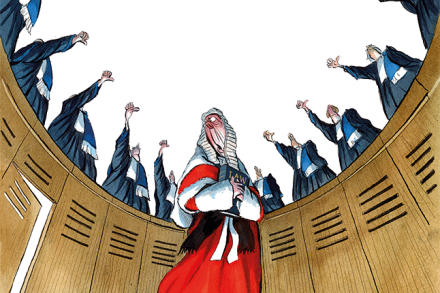
The population of the United Kingdom was increased this week by the arrival of two Albanian lesbians who have been given the right to remain here by an deputy Upper Tribunal judge called Rebecca Chapman. The women insisted that they would face persecution in Albania for their sexual preferences. This is despite the fact that Albania decriminalised homosexuality 30 years ago and in 2010 adopted a law that prohibits discrimination based on sexual orientation and gender identity.  Rebecca was not impressed, however, pronouncing Albania to be a ‘patriarchal, conservative society in which homophobic attitudes still exist, particularly in rural areas’.

An astonishingly good new album from Black Country, New Road

Grade: A Is that a kind of nod to Oasis in the album title? I can’t think of a band less like that grunting Manc convocation, except in the fact that BCNR are just about the biggest band in the country right now, as the Gallagher bros were all those years ago. Vocalist (of a sort) Isaac Wood has left and with him has gone the occasional temptations to stray into stadium bombast, à la Arcade Fire. Instead, with three females sharing vocals, we have evanescent chamber pop, occasionally buttressed by a certain glam swagger, almost always underpinned by plucked acoustic guitar and May Kershaw’s superb and imaginative piano. It is a beautiful album, from the sweet harmonies of ‘Besties’, to the Revolver-era McCartney of ‘Mary’.

British Steel and the death of dim-witted globalisation

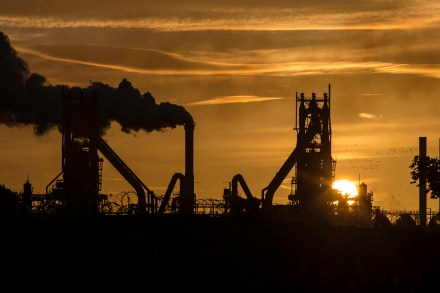
The dewy-eyed and rather dim-witted vision of globalisation is dead, I think for good. Labour is to effectively re-nationalise British Steel in Scunthorpe and in making the announcement that Parliament was to be recalled, Sir Keir Starmer said: ‘This afternoon, the future of British Steel hangs in the balance. Jobs, investment, growth, our economic and national security are all on the line.’ The crucial part of that sentence is ‘national security’: an acceptance that trade does not happen in a vacuum, separated from the rest of life. It was always contingent. It was never sensible to have the Chinese running our only virgin steel blast furnace, just as it was not sensible to allow the same country to run our nuclear plants.

The lunacy of Gillian Mackay’s abortion bill

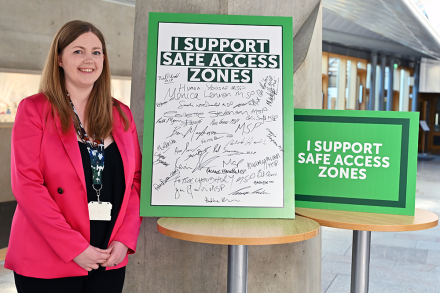
I had spent my life so far in blissful ignorance of a woman called Gillian Mackay. I mean, I knew she existed – but how she existed and what she did with her existence did not impinge because she was safely sequestered in that booby hatch of methadone, lady-men, corruption and pies which we know as ‘Scotland’ and thus would have no jurisdiction over my life. This is, I grant, a solipsistic attitude to have taken – and I realise that now it has been shattered. A new and unwanted homunculus has slipped into my life, then, and I fear it is time to talk about the smirking, pudding-faced Green MSP on account of her member’s bill, The Abortion Services (Safe Access Zones) (Scot-land), which has been enacted.

The BBC isn’t even pretending to be impartial about Trump

If, for some unfathomable reason, you missed Newsnight last night, do make sure you see, somehow, the interview between presenter Victoria Derbyshire and the former deputy assistant to Donald Trump, Sebastian Gorka. Derbyshire has had it coming for a long time. She believes it is sufficient, when interviewing somebody who takes a Trumpish view of the world, simply to screech her idiotic objections and prevent the interviewee from speaking at all. This happens every time a supporter of Trump is allowed on to her show. She is as bad as Maitlis, except without the charisma. Gorka refused to stand for it and told her three times to shut up – which, in the end, Derbyshire did while glowering like a smacked arse. “77 million Americans have spoken.

Who’s in charge here?

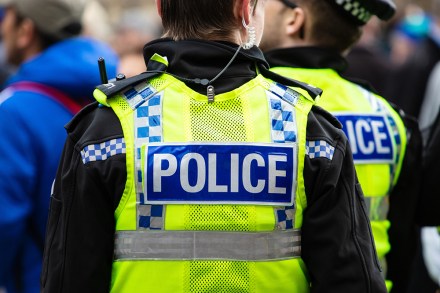
I heard the self-important whine of a police siren so pulled back the curtains a little to see what was happening. I was in a bed and breakfast in Royston, Herts, so I assumed the rozzers were on their way to handcuff someone who had been mildly disobliging about their child’s school on a social media site. But there, just down the high street, the coppers had pulled up outside a pub. They got out of their car and stood about a bit. Then another police car pulled up and then another. Coppers got out of them too, and stood about a bit outside the pub. There were a few drinkers also outside the pub and one bloke seemed to have fallen over. There was, so far as I could see, no trouble. Certainly not the sort of trouble that would demand three police cars and six coppers.

The beauty and brilliance of Cradle of Filth

Grade: B+ Satan’s devoted groupies Cradle of Filth are back with their shrieking, howling, portentous, Exorcist-style incantations, 30 years after effectively inventing the loser-boy goth-metal offshoot, black metal. They’ve got quite good at it. Rapid-paced minor-chord hard rawk, much as AC/DC might have churned out if someone had shown them some Edgar Allan Poe and told them who Wagner was. Except I’m not sure that AC/DC could manage heavy metal so relentlessly intricate, so utterly precise. As all the catchy, simple, heavy-metal riffs had been used up by about 1979, Cradle of Filth are forced into considerable complexity, which at times – ironically, in a genre that is largely despised for its musical conservatism – resembles what we used to call math rock.

Americans are right to hate us

In an Appalachian high school, the kids were set the task of writing about Europeans as part of their history curriculum. When the day came to hand in their work, the teacher took one boy aside and expressed displeasure about the sheer lack of effort he had put into his homework. ‘You have had three days, Bubba. And all you have written is “Europeans are bastards.” Would you please take your work back and expand it considerably by tomorrow.’ The following day the teacher approached Bubba for the finished article – and he took from the child an essay which read, simply: ‘All Europeans are bastards.’ I was told that joke when I was about 12 years old – so the timing makes it impossible for Bubba to have been J.D.

Is Keir Starmer a closet Tory?

Cindy Yu (CY): Slashing winter fuel allowance, keeping the two-child benefit cap, cutting foreign aid, cutting the civil service, axing NHS bureaucracy and slashing welfare spending. Rod, are we actually living under a conservative government? Rod Liddle (RL): No, because the Conservative government didn't do any of that, because they didn't have the appetite for it or the bravery. I've actually, in the last month, considered rejoining the Labour Party. It's a blue Labour Party, it reflects pretty much everything I ever wanted from the Labour Party. There are a few problems. I think Rachel Reeves is a problem. But other than that, I think Labour is doing things which will make it appeal to working class voters far more than it did in the first 100 days of its existence.

The shape-shifting Labour party

It is difficult to gauge who is the more discombobulated by the Labour government’s recent Damascene conversion to a political viewpoint roughly approximating to common sense – the Labour left, Reform or the Tory right. It is equally difficult to believe that the current administration is the same one which took office on 4 July last year, so wildly different is its apparent ideological viewpoint. You will remember Keir Starmer’s first 100 days without much affection, I suspect.

How to reform Reform

In early June last year I had a reasonably agreeable meal with a bunch of Reform UK activists at a restaurant in Guisborough – the main town in the seat which I would be contesting for the Social Democratic party, Middlesbrough South and East Cleveland. There were four of them, united primarily by one thing – a visceral loathing of the Conservative party. Beyond that they were basically anti-woke and economically dry, as we used to call it. But all that took second place to the animus against the Tories. I have met pink-haired, nose-ringed, utterly vacuous LGBTQI sociology students who were more kindly disposed to the Conservatives than this lot.

The weakness of Donald Trump

Forgive the mordant tone, but this article was written in a desolate post-industrial nightmare girdled by diversionary roads going nowhere aside from away from places. It is somewhere in middle England, where the West Country merges into the Midlands and the north into the south: it is essentially delocated, it is nowhere. There are 15 or so deserted light industrial units, vast metal hangars for storing stuff, acres of car-parking spaces and a few trees suffering from rickets or polio. There are also huge and very bright lamps shining in through my hotel window, betraying no evidence of their purpose other than to keep me awake, and in the foreground a continual mechanical hum, the source of which remains a mystery.