Robin Oakley

The switchers

From our UK edition

‘He’s such a good competitor. He works so hard and he deserves it,’ said his predecessor Lewis Hamilton after Nico Rosberg won this season’s Formula One drivers’ championship. Replied Rosberg,the new champion: ‘He’s a top man and a top driver. He’s like Robocop. I thought I could pull clear of him but he kept coming back.’ Well, actually, no. The quotes are real but the words were not uttered by Rosberg and Hamilton, whose championship is yet to be decided.
The master of Ballydoyle

From our UK edition

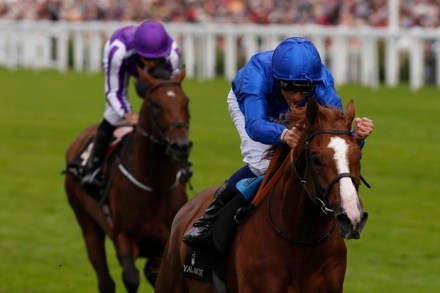
The only downside about going racing is irritation born of encountering pig ignorant people who talk through their pockets. Beside me at a Newmarket betting counter on Saturday shortly after Aidan O’Brien had once more dominated the big event of the day, not only winning the Dewhurst Stakes with his Derby prospect Churchill but taking second place as well with his 66-1 pacemaker Lancaster Bomber, was a disgruntled punter who told his companion sourly: ‘One day they’ll find out what he’s giving them.’ I was tempted to remind him of boxer George Foreman’s response when someone asked him if a fight had been fixed. ‘Of course it was fixed,’ he replied. ‘I fixed it with a right cross.

The turf | 29 September 2016

From our UK edition

There are few more compulsive reads in racing than the Kingsley Klarion, the in-house journal of Mark Johnston’s Middleham racing operation, which runs under the slightly ambiguous slogan ‘Always trying’. It is ambiguous not because anyone doubts that every Johnston runner is out on the racecourse striving to be first past the post but because the combatirobin ove Johnston is never short of an opinion, and sometimes those opinions have other senior figures in racing spitting feathers. Once of an opinion, he does not mind whose patience he tries.

The turf | 15 September 2016

From our UK edition

Say what you like about the St Leger — and I like it a lot — Doncaster’s finale to the British Classics rarely fails to provide a story. In 2012 it was Camelot’s narrow failure to become the first Triple Crown winner of the 2,000 Guineas, the Derby and the Leger since Nijinsky in 1970. Last year the filly Simple Verse was disqualified after being first past the post and then reinstated. This year it was both the dramatic tumble of the odds-on favourite Idaho mid-race and the last-gasp victory of Harbour Law, trainer Laura Mongan’s first-ever entry in a Classic.

Old-fashioned values

From our UK edition

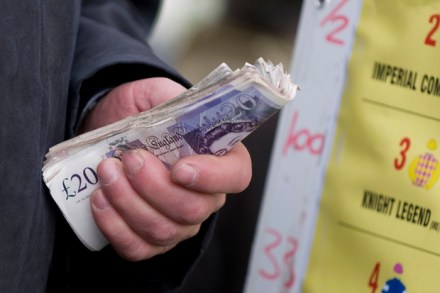
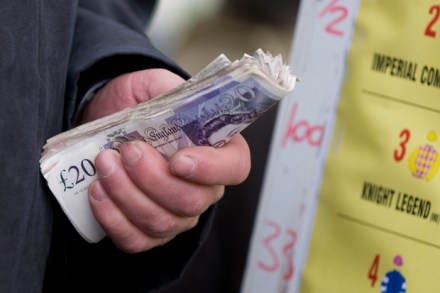
Bookmaking’s image has changed. Alongside the arrival of the betting exchanges, the evolution of the big names like Hills, Coral, Betfred and Ladbrokes into gaming operators rather than old-style bookmakers has seen the decline of the family firms where clients could be sure of the personal touch, total discretion and often half a point or so above the generally quoted odds. Most of the big firms have decided too that telephone betting is not for them, which is how I have (part accidentally) become — to Mrs Oakley’s surprise and potential alarm — a client of Fitzdares, a bespoke operation catering mostly for high-rollers and happy to be described as ‘the Annabel’s of bookmaking’.

Blessed be the humble

From our UK edition

After 30 years in racing it is a little late in Rab Havlin’s career to suggest that he will suddenly become a star. Havlin doesn’t do ostentatious. He is not a racecourse ‘name’, one of those riders towards whom sports-mad fathers propel their sons to seek a racecard autograph. To adapt Michael Gove’s Conservative leadership pitch, whatever charisma might be, Havlin doesn’t have it and nobody would ever associate him with glamour. What Rab Havlin does have, though, is the thoughtful dependability which has made him an integral part of John Gosden’s Newmarket winner-preparation factory.

The turf | 4 August 2016

From our UK edition

Sometimes the labels people give themselves are more than mere braggadocio. Cassius Clay (Muhammad Ali if you must) really was ‘The Greatest’. For me Tina Turner’s exultant ‘Simply the Best’ was never bettered in its genre, and Glorious Goodwood manages year after year to live up to the name it has happily exploited since it was coined by an alliteratively minded journalist before the second world war. Sponsorship does not always improve things but the additional funds now provided by Qatar have only enhanced Goodwood’s appeal.

The Brexit effect

From our UK edition

Perhaps the most surprising thing about Theresa May’s arrival at No. 10 is that it has given us back a prime minister who has owned a racehorse. Well, part of one anyway. Theresa the Merciless was once in a syndicate at William Muir’s friendly Lambourn yard which owned a grey called Dome Patrol, the winner of a couple of races back in the 1990s. At least it did better than Brexit, a two-year-old filly that finished sixth at Newbury on referendum day after being fifth the time before. Not exactly going in the right direction...

Six of the best | 7 July 2016

From our UK edition

I love Eclipse Day at Sandown, the first occasion in the year when the classy three-year-olds start taking on their elders. Over the years it has given us some great contests and added lustre to the careers of some great horses. In 1986 Dancing Brave confirmed in the Sandown feature how unlucky he had been not to win the Derby. In 2009 Sea The Stars won the race in the fastest time for 40 years as he made it one of his six Group One victories in six months. In 2000 the ever-combative Giant’s Causeway got back up to win by a head under George Duffield after being passed by Pat Eddery on Kalanisi in one of the toughest and most enthralling finishes I have ever seen.

On the money | 22 June 2016

From our UK edition

Forced to depart Ascot earlier than usual to fulfil a cruise lecture booking on the fjords, I hadn’t reckoned with June in Norway. It turned out to require anoraks and sweaters rather than shorts and suntan oil, although Mrs Oakley and I were better prepared than one lady passenger: having travelled without a scarf, she confessed that it was indeed her deftly folded nightie she had wrapped around her neck for warmth. At least a bit of book-signing went without a hitch, better than the time a young lady asked me to write ‘To Bubbles with love and kisses’ and then, when asked to pay for the signed volume, demurred, saying that she thought the books came free with the talk.

Girl power | 9 June 2016

From our UK edition

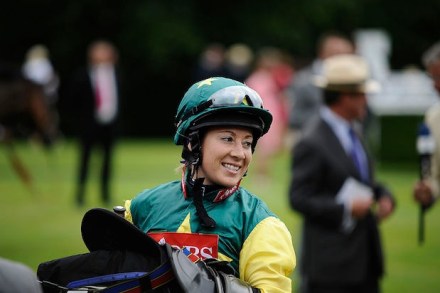
How much strength do you need to win a horse race? Do women have enough? And if they don’t should they be given an allowance to help them in one of the few sports where they compete professionally against men? The question came up as I shared a farmer’s platter with champion trainer Paul Nicholls in his Ditcheat local at the end of the jumping season. Paul is no softie: one of the things he most admires in Ruby Walsh is his toughness, win or lose, and the end was signalled for one young rider in the Nicholls yard because he came into the unsaddling enclosure in tears after a mistake. But, like the former champion jump jockey Sir Anthony McCoy, Paul believes that it is time to give the girls some assistance.

Royal Ascot

From our UK edition

It’s time to scuttle under a rock if you are a Folkestone or Cornish crab: 7,000 of them will be consumed in Royal Ascot week, along with 2,900 lobsters, 160,000 glasses of Pimm’s, 51,000 bottles of champagne and 30,000 chocolate eclairs. Better get your chopper booking in fast, too: 400 helicopters will descend on to the Berkshire course during the week. In purely racing terms, Royal Ascot isn’t quite yet a Dubai with rhododendrons. Invitational events like Sheikh Mohammed’s World Cup in March and the Hong Kong International race day in December pull in more worldwide equine stars, and Ascot doesn’t have a centrepiece race like the Derby, Grand National or Cheltenham Gold Cup.

The sport of kings

From our UK edition

Queen Victoria disapproved heartily of the racing set and of her son Bertie’s involvement in the sport. But she must have noted a dinner conversation with Bismarck reported to her by Disraeli. The German Chancellor had asked if racing was still encouraged in England. Never more so, said Disraeli, to which Bismarck responded: There will never be socialism in England. You are safe so long as the people are devoted to racing. Here a gentleman cannot ride down the street without 20 persons saying to each other, ’Why has that fellow a horse and I have not one?’ In England the more horses a nobleman has, the more popular he is.

Numbers game

From our UK edition

‘After a few decades of marriage a man ought to be able to recognise his own wife,’ Mrs Oakley observed a little tartly last Saturday when I picked her up post-Goodwood from Reading station after patrolling the concourse for 15 minutes. But if a woman buys herself a beanie to keep out the rain and buries herself behind A Month in the Country in the station café’s furthest corner he might be excused. Well, I thought so anyway. It has been excuses all round this week with three of our Twelve to Follow running unplaced while Brando, She Is No Lady and Mecca’s Angel all occupied the dreaded second place.

Twelve to follow | 12 May 2016

From our UK edition

It has been a little like scraping from the plate as slowly as possible the last traces of Mrs Oakley’s exquisitely sauced vitello tonnato; like draining reluctantly the last glass of our best Condrieu: this year I never wanted the jumps season to end. Sprinter Sacre came back to his best, Richard Johnson finally won the jockeys’ title, Paul Nicholls gutsily collected his tenth trainers’ championship. But if the joy of jump racing is continuity, the attraction of the Flat lies in its sense of renewal. As sleek would-be contenders started strutting their stuff in the Classic trials, as the first precocious two-year-olds bounded excitedly on to the scene, I remembered why I love the summer game too. Which will be the breakthrough stables this year?

Sandown thrills

From our UK edition

The difference between praying in church and praying at the racecourse, a gnarled old punter once said, is that at the track you really mean it. At Sandown last Saturday, the last day of the jumping season, all our prayers were answered: you simply could not have asked for a better day. One reason we were all there was to celebrate Richard Johnson’s first jockeys’ championship after 16 times finishing a good-tempered and sporting second to his friend A.P. McCoy. In between the autograph-signing, Dickie Johnson provided the perfect seasonal sign-off by winning the bet365 Oaksey Chase on Menorah for trainer Philip Hobbs in the familiar blue colours of Diana Whateley.

National review

From our UK edition

With great victories in Flat racing you witness hats-in-the-air exultation. You see the pride of trainers who nurtured the winner to full potential or of jockeys who timed their challenge perfectly. Sometimes you even spot the quieter satisfaction of the owners and breeders who framed the mating that brought it all about. But much of the joy springs not from the victory itself but from the oodles of cash the winner is now worth at stud. In jump racing that financial bonus is lacking and yet the raw emotion often seems ten times as intense, as we saw after Rule the World won this year’s Grand National. The winning trainer, Mouse Morris, was literally speechless.

My Cheltenham misery

From our UK edition

Everybody has their glory memory from Cheltenham this year. Some celebrate the extraordinary seven victories for the quietly confident Willie Mullins, together with such versatile horses as Douvan and Annie Power. Others will forever remember a misty-eyed Nicky Henderson greeting Sprinter Sacre after his Champion Chase victory enabled the most handsome idol in training to leap back onto his pedestal after two injury-dogged years. Then there was the Rolls-Royce supercharger effort that saw Thistlecrack surge clear of his field in the World Hurdle. I carry one other image, an image conjured up for me by the great French trainer François Doumen, who won a Gold Cup with The Fellow in 1994 after two agonisingly close defeats.

Farewell to Fergie

From our UK edition

Writing a Turf column before the Cheltenham Festival, as the Spectator schedule requires, which you are reading only after the four-day jump-racing bacchanal has concluded, was a problem. I could neither revel in the moments of glory some equine fighter pilots will have enjoyed nor reveal hard-luck stories behind others who did not make it. But after a frozen morning near Newmarket last week, watching one batch of Festival combatants going through their paces, I had one hope above all others: that before the Festival ended the words ‘Trained byJ. Ferguson, Cowlinge, Suffolk’ would have entered the official record beside at least one winner’s name. The great David Nicholson took 18 years to train his first Festival winner.

Nice guys do finish first

From our UK edition

Richard Johnson, possibly the nicest man to occupy a saddle and certainly the most modest, once said of his Irish rival Ruby Walsh, ‘Ruby never seems to fight horses. It never looks forced with him, he never throws the kitchen sink. But I do — metal ones and porcelain if necessary.’ There weren’t too many of us there to see it but there was a trademark kitchen-sink job in Warwick’s third race last Friday, the Listers Audi Novices’ Handicap Steeplechase, worth just £2,972 to the winner. Johnson’s mount Cheat The Cheater shared the lead much of the way but before the last turn the nine-year-old was passed by three horses who appeared full of running. Most jockeys would have given up then and waited for another day.