Robert Jackman

The best political shows to watch on Netflix

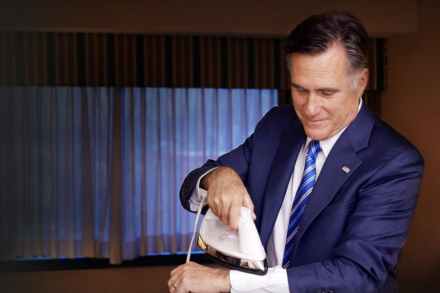
These days we political anoraks can usually get more than our fill of drama – and laughs – from the real world. Just look at what’s happening in Westminster – not to mention the White House. But what if you’re still craving more? Here’s our list of the best Netflix choices, including documentaries, dramas and comedies, for political obsessives. Mitt Through intimate access to Romney and his family on the campaign trail, Mitt seeks to present a more rounded picture of the man who failed to defeat Barack Obama in 2012. And the picture that emerges is a quietly moving one: a man of charm and kindness who never quite understood his own failure to bond with middle America.

How did Richard Herring become the comedy podcast king?

What does it mean to be a successful comic? Richard Herring isn’t sure. He’s been a ‘professional funnyman’ for nearly 30 years, yet — as he’s the first to admit — he’s largely unknown beyond the circuit. Even then he has doubts. ‘I’m never in those top-100 stand-up lists,’ he says, when we meet in Soho ahead of his new tour. He admits his old shows have largely been forgotten and he hasn’t been to an awards ceremony for decades. As promo strategies go, it’s a curious one. But then Herring is an odd one. In the late 1990s, he was part of a new wave of Oxbridge-educated fame-hungry young comics who exploded on to television.

Does decarbonisation make business sense?

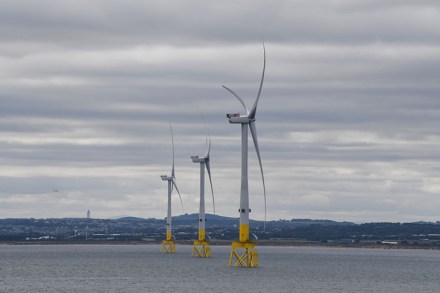
Over the past year, environmentalism has entered the political mainstream. In mainland Europe, a green wave has swept electoral politics with parties promising to take bold action on climate change stealing a march on their mainstream rivals. Closer to home the Conservatives – 15 years on from David Cameron’s green makeover - have sought to position Britain as a world-leader in the fight against climate change, committing themselves to the most ambitious decarbonisation goal in the developed world: to make the country entirely carbon neutral by 2050. But while going green might appeal to environmentally-conscious voters, can it really be done without serious costs to our way of life - and some unfair compromises along the route?

The fightback against the 5G conspiracy theorists

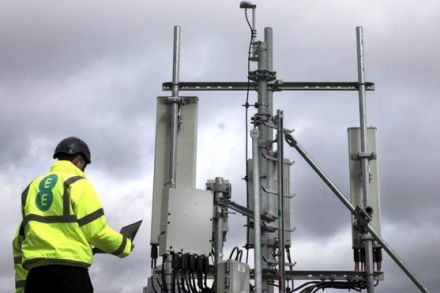
According to reports this morning, the government is planning to issue an order to all local councils forbidding them from stopping trials of 5G mobile broadband on the basis of what it considers to be unfounded safety claims. For those that not familiar, 5G (literally ‘fifth generation’) is the next wave of wireless internet which will apparently boost our connection speeds tenfold and increase the UK’s productivity by some £2bn a year. Yet three councils – Totnes, Glastonbury and Frome – are opposing local trials of 5G masts until they’re convinced it doesn’t present an increased cancer risk. The government wants them to think again. An increased cancer risk might sound pretty alarming.

How smart technologies can alleviate our social care crisis

When it comes to new technology, few concepts seem to get us quite as excited as the Internet of Things. The idea is simple: expanding internet connectivity to everyday items, from thermostats to fridges, thereby allowing them to communicate with our phones, computers and other devices. And it’s quickly taken off. Over the past decade the Internet of Things (or IoT as it is more commonly known) has moved from vision to reality. Head to any department store and you’ll spot everything from home fitness systems that sync your entire exercise routine to security devices which issue smartphone updates. Soon appliances will also be able to work in tandem with smart meters.

Smart futures

According to the latest figures, 14.9 million of us have had a smart meter installed at home. Perhaps you’re one of them, persuaded by the promise of cheaper energy bills and reducing your household carbon footprint. But what about the bigger case for smart meters? What exactly makes them so smart and what might a future where every household in Britain is using one — the so-called smart energy system — look like? Those are the questions we’ll be asking in this supplement. James O’Malley explores how smart meters will help us deal with large changes in electricity usage (in this case, the increasing take-up of electric vehicles), ensuring more demand doesn’t mean more fossil fuels.

Is it time to give up on the Ibsen adaptations?

Pub quiz question: what do John Osborne, Brian Friel and Patrick Marber have in common? The answer is they’ve all written their own versions of Hedda Gabler. Although none of them, it should be noted, to any particular critical acclaim. Is it time to give up on the Hedda adaptations altogether and just stick to the original? Or maybe opt for a different tack: why not let a woman have a go? Step forward, Cordelia Lynn, a 30-year-old playwright with three London productions under her belt. Having updated Chekhov’s Three Sisters for the Almeida this spring, she now turns her attention to Ibsen.

Claire’s Accessories

I was 17, studying for my A-levels in Great Yarmouth. Looking to defy my parents’ instruction to get a part-time job, I hit upon a cunning plan: why not apply to the shop least likely to require the services of a mopey teenage boy? That shop was Claire’s Accessories. Little did I know at the time that Claire’s — home of plasticky tiaras and tinsel wigs — was a retail empire at the height of its power. Five decades after it had arrived in America, Claire’s commanded some 3,000 outlets across the world and was present in more than 95 per cent of American malls. Its success had been built on one thing: ear-piercing.

What is the future of British airpower?

The UK has committed to its biggest defence project in a generation: the development of a sixth-generation fighter jet. The government says the project, dubbed Team Tempest, will secure Britain’s status as a leading military power after Brexit. It also says the jet will make use of space-ace technologies - ­including x-ray vision for pilots - to provide one of the most powerful defence capabilities on earth. Team Tempest Future Combat Air System concept. Picture courtesy of BAE Systems[/caption] But with the Ministry of Defence already strapped for cash, is the project feasible? Can the UK afford to keep its existing commitments - like the purchase of 140 new F-35s from America? And will Brexit make it more difficult to find European partners?

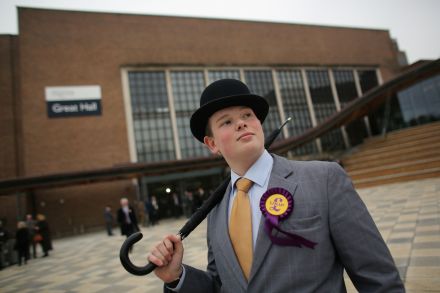
No wonder Ukip failed at the European elections

How does a party go from topping the European elections in 2014 to scraping just over three per cent of the vote, and losing every single MEP, within five years? Just ask Ukip, whose staggering decline is one of the most interesting subplots from this year’s elections. Some may quibble with the ‘Ukip wipeout’ analysis. They will say that the real Ukip - both its heart and structure - was rolled over to the Brexit party along with its former leader, Nigel Farage. And they’re partly right: in the last few years, all but three of Ukip’s 2014 MEPs quit the party. But the fact remains that Ukip still mounted a full slate of candidates and took these elections seriously. And it failed miserably.

Does the UK really have medical marijuana?

Has the UK really legalised medical cannabis? That was certainly how it was reported last winter when Sajid Javid, the Home Secretary, overhauled government policy to give more UK patients access to cannabis-based medicines. But now the groups that lobbied for those changes - and the parliamentarians that support them - say the new scheme is a disappointment,  benefiting only a tiny number of patients.  What’s really going on? That was the question that kicked off yesterday's Spectator cannabis briefing which brought together practitioners, politicians and legal experts to get to the bottom of cannabis policy in Britain. What’s changed? Who benefits? And where will it go next?

The Tories push on with their porn crackdown

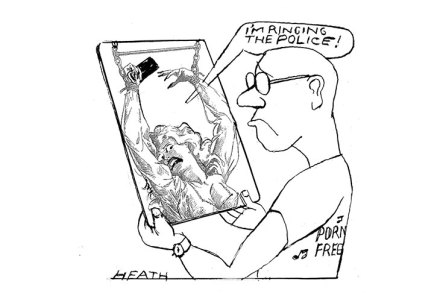
This afternoon the government announced the official launch date for its age-verification scheme for online pornography. As of 15th July, X-rated websites (or at least some of them) will have a three-month grace period to ensure that all UK visitors are over 18. If they fail to do so, the government will block them from UK servers entirely.   This so called ‘porn block’ has been in the works for some time. It's been dogged by criticism, with everyone from online privacy campaigners (who fear the potential repercussions of creating a giant database of porn-viewers) to LGBT campaigners (who say it disproportionately affects minority groups) calling for it to be scrapped.

When Fleabag was a play everyone slagged it off – except The Spectator

Over the past six weeks something odd has happened. Head to the culture pages of any newspaper and you can’t miss it: the increasingly frantic praise for Fleabag, Phoebe Waller-Bridge’s smash-hit sitcom, has reached crisis point. What started as a collective love-in is now full-blown hysteria. After Monday’s finale, critics resembled devotees of a religious cult as they rushed to outdo each other with their tributes. One was literally speechless: Fleabag having ‘raised the bar so utterly’ that ‘all one could do was shake one’s head in appreciation’. The Guardian, rarely outdone in these things, published a guide to help its readers ‘survive after Fleabag’. The commentariat, it seems, is truly smitten.

No ID, no entry

In just a few weeks, the government begins its crackdown on porn. From April, all UK-based internet users will be required to prove their age before accessing adult websites. And if they can’t? As they say on the doors, it’s no ID, no entry. Since the arrival of the internet, and then the smartphone, parents have fretted about how easy it is for children to watch porn, and the impossibility of enforcing age restrictions. In 2015, David Cameron included an age-verification scheme in his election-winning manifesto and, after some delays, Whitehall is now ready to go. But is the plan too intrusive? And is it even remotely feasible? Potentially, say the experts — just with some big caveats. So how will consenting adults access pornography in a post-block world?

Why ‘nice’ workplaces can be the nastiest of all

For those of us who have experienced life in a 'woke workplace', Toby Young’s Spectator cover story this week makes grimly familiar reading. My former workplace might even have a claim to be the worst of them all: Amnesty International. Some years before joining The Spectator, I worked a lowly communications gig at Amnesty's London HQ. And while it’s true that many individual researchers were brilliant (constantly making life more difficult for some of the world’s ugliest regimes), the organisation itself was, well, a bit of a mess. And for the exact reasons Toby describes. But perhaps the worst thing about these workplaces is that, for all their progressive language, they’re not actually terribly nice places to be.

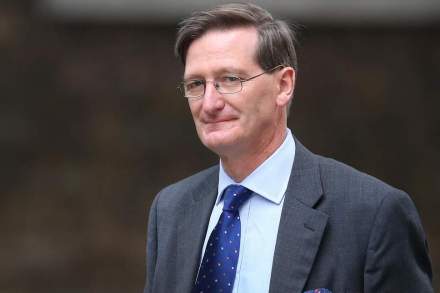
Eustice and Grieve go head-to-head on Brexit

Last week, George Eustice became the latest minister (the majority of whom have been Brexiteers) to quit the government, resigning in protest at Theresa May’s plan to give MPs a vote on delaying Brexit. In his first interview since leaving the government, Eustice, who held the post of farming minister, went even further, stating that farming bosses were ‘wrong’ to fear a no deal Brexit - a dramatic statement which puts him at odds with Environment Secretary and chief Brexiteer Michael Gove. Eustice isn’t the only former minister to flirt with no deal: both David Davis and Boris Johnson have suggested that no deal remains a better option than the government’s current plan and its much-discussed backstop.

When did the left gaslight itself?

From our US edition

Anyone who follows left-wing Twitter, or reads the more exotic NYT columns, might have noticed the rise of an increasingly fashionable new political language: therapy-speak. Just look at the weird self-helpy terms which now seem everywhere in political debate – phrases like ‘validate’, ‘call out’, ‘tone-policing’, ‘trivializing’ or ‘macroaggression’. Others are more specific – like ‘gaslighting’, an obscure psychological term which, as Megan McArdle notes, has become an obsession for the woke left.

therapists freud

Homegrown industry

If you were looking for an international drugs empire, Downham Market would not be the first place you’d think of. With a population of around 10,000, this sleepy Fenland town is probably about as typical as they come — typical, that is, apart from the smell. It was around two years ago that residents first noticed it: a distinctive pungent scent which seemed to hang on the wind before eventually engulfing the town for several days. Now locals say the gusts come and go. But when the odour first appeared, it was so strong that at least one resident phoned the police to complain about feeling nauseous. It turned out that the smell was coming from an 18-hectare cannabis plantation housed in some nearby industrial greenhouses.

Kamala Harris isn’t woke

From our US edition

Kamala Harris’s memoir, published this week, has reignited speculation that the senator has her eyes on a Presidential run. Harris – a self-made public servant with a solid record on progressive causes – should be a strong candidate for the Democratic ticket. Somehow, however, she isn’t. The former California Attorney General’s biggest problem is that the left has changed: rather than organizing around unions or the party itself, a large chunk of the Democratic base now mobilizes around identity issues. Some of these pet causes make a lot of sense; others less so. Either way, Harris breaches two of the big ones. First of all, she’s a career prosecutor – or as the new left like to put it, ‘a cop’.

kamala harris

Don’t write off the High Street just yet

IN ASSOCIATION WITH Over the past ten years, few industries have faced changes as dramatic as retail – and, in particular, the British high street. While the high street itself remains a much-loved institution, it seems that hardly a week passes without another reminder of the unprecedented changes – from consumer habits to technology – it currently faces. On one hand we hear stories about the challenges for British retailers – from squeezes in living standards to the closure of major chains like Toys R Us, it seems some of us have become conditioned to expect the worst. But at the same time there are the success stories – like the new wave of independent retailers, over half of whom say they are optimistic about the sector’s future.