Robert Jackman

Is Netflix losing the battle of the streaming giants?

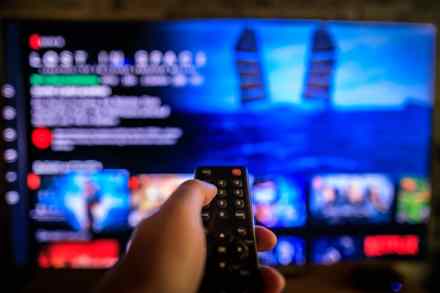
From time to time, Netflix’s marketing brains like to get a bit cute with the company’s past. ‘Don’t give up on your dreams – we started with DVDs,’ read one recent viral post. But while the streaming giant happily references its most famous transition, it’s much more coy (and probably wisely) when it comes to its latest one. It isn’t hard to see that 2022 Netflix is a very different beast to the one most of us signed up for. If you joined Netflix during its peak – e.g. somewhere in the long window between House of Cards and Tiger King – you would have likely bought into the idea of it being a one-stop shop for all things streaming. But has it really kept that promise?

Why Harry Hill’s little green aliens are popping up all over London

Sitting in a posh office overlooking the Royal Academy, the comedian Harry Hill is deploying one of his lesser known modes: introspection. ‘I suppose I’m one of a growing number of celebrities who do art,’ he says, one hand fiddling with his trademark oversized shirt-cuff. His point – which he returns to several times – is one of definition: as much as he enjoys making art, and as much art as he makes, he can never quite see himself as an artist. In his defence, he isn’t alone. After more than a decade as the face of one of the most-loved comedy shows this century, Hill can probably count himself among the ten most recognisable comics in Britain.

Could Stranger Things inspire your next American getaway?

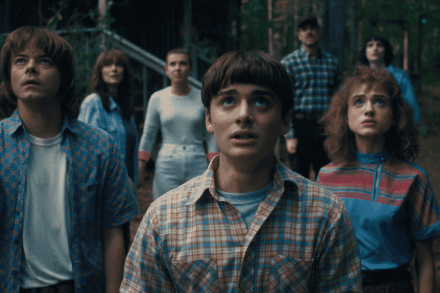
Great TV shows have a knack for immortalising their locations. Think what Fargo did for the otherwise unloved Dakotas, or Vince Gilligan turning New Mexico into the heart of the 21st century’s greatest neo-Western with Breaking Bad. While the Duffer Brothers’ Stranger Things might have secured its place on the podium of brilliant box-sets, could it also inspire your next US getaway? Admittedly, a show revolving around a terrifying alternate dimension might not seem a natural candidate for inspiring wanderlust.

Hollywood loves to self mythologise

Hollywood can appear self-satisfied and insular at the best of times, but it's been a rough few months even by Tinseltown standards. Judging by the slew of trailers that have dropped in recent weeks, this season in cinema land will centre on only one thing: biopics. From Madonna and Marilyn Monroe to Elvis (and even Hillary Rodham Clinton) it’s time for a barrage of films in which big stars play bigger stars – in return for your adoration.  Hollywood’s fixation on global fame might not be entirely new – Ben Kingsley’s turn in Gandhi is about to reach its 40th birthday, incidentally – but there’s no getting away from the fact that it has stepped up a gear in recent years.

Can a phobia therapist help conquer your fears?

According to the NHS, one in seven Britons lives with a phobia. But how many take the plunge and face their fear directly? Looking at the growth of bespoke phobia ‘experiences’ – in which sufferers get the chance to challenge their fear in a controlled environment – the number might be higher than you think. Our own Kate Andrews – now self-outed as a lifelong arachnophobe – has shared her experience of handling a tarantula as part of London Zoo’s Friendly Spider Programme. And she isn’t alone. A cursory glance at Google suggests that, just as the index of clinically-recognised phobias continues to expand year-on-year, so too does the list of courses to deal with them. Some of the most successful courses have been operating for years.

Netflix vs Apple: which streaming subscription offers best value for money?

Amid rising energy bills, the announcement that Netflix will hike its prices – with its basic package increasing by £1 a month to £6.99 – seemed to pass without too much fuss. But, as the cost of living crisis hits, many households will be looking at which subscriptions to prioritise. But with more of us subscribing to multiple streaming services (thanks, in part, to those spontaneous lockdown purchases) these extra costs have a habit of adding up – until you suddenly find yourself shelling out more than £50 a month on entertainment. All of which begs the obvious question: which streaming service gets you the most bang for your buck?

The nuclear bunker market is booming

As the spectre of nuclear war returns so does another very modern phenomenon: a spike in interest amongst the paranoid rich seeking to procure their own nuclear bunker. Over in Texas – already home to a vibrant culture of ‘preppers’ who spend their time planning for every shade of apocalypse – one creator of custom shelters, Rising S Bunkers, says it’s had a 700pc increase in interest in the last month. Made from long-lasting plate steel, their bunkers are designed to be buried under the average American yard. Of the five units sold last month, the largest fetched $240,000.

The enduring appeal of Peaky Blinders

What’s the next step for a macho gangland drama that’s already built a fanbase in some 183 countries worldwide? That’s right: a collaboration with one of the highest regarded companies in UK contemporary dance. When it opens in September at Birmingham’s Hippodrome theatre, The Redemption of Thomas Shelby – a 20-strong dance production from the South Bank’s Rambert Dance Company – will mark yet another cultural milestone for Peaky Blinders: the BBC’s historic drama about a gang of Brummie ruffians who ran parts of the city between the two world wars.

Drive My Car and the joy of quiet films

Every now and then you watch something that makes you realise how much the likes of Netflix have skewed our viewing habits. While the kings of streaming may have injected more money into Hollywood than ever before, they’ve also stacked the deck yet further in favour of the celebrity blockbuster, the big and the bombastic. Quieter, subtler films all too often disappear into the ether. You can understand Netflix's position. What better way to attract the fleeting attention of the scrolling viewer than with a glimpse of the likes of Leonardo Di Caprio or Benedict Cumberbatch? Throw in a big, juicy concept – like an imminent asteroid collision – and things are really looking up. But what about those would-be classics which fail the clickbait test?

This year’s best crime dramas

You've got to hand it to Ozark, Jason Bateman's showy crime series about a slippery financial adviser who becomes immersed with Mexican drug cartels. In the years since its debut, the narco drama (whose final season arrived on Netflix last week) has been on somewhat of a journey. And then some. When it premiered back in 2017 – with an opening episode in which Bateman's character, Marty Bird, goes from sexless marriage to a near-death encounter with a drug kingpin – its shtick felt too obviously derivative to be taken seriously. Here was a drama, you felt, that had been commissioned for one purpose: to serve as Netflix's 'next up' show for viewers who'd just binged Breaking Bad and couldn't be bothered to reach for the remote.

How I Met Your Father and the never-ending sitcom

If you're the type of person who pays attention to these things, you might have noticed Keir Starmer's new attack line. 'The joke isn't funny anymore, prime minister,' the Labour leader now tells Boris Johnson on a semi-regular basis – attempting to turn his opponent's clownish entertainer shtick from electoral strength to weakness. Leaving aside the merits of the jibe, this line has one major flaw in its central premise. Namely that the leader of the opposition is evidently still under the impression that comedy has a shelf-life – whereas all evidence from our streaming habits points to that not being the case. And then some. If anything, most of us are still laughing at the same things that tickled us ten years ago.

Russell Howard on keeping the laughter going

After more than a decade on comedy’s A-list, Russell Howard has a decent claim to being our best known ‘arena’ comic. Yet last July, in the midst of an already strange year, the rockstar comedian – used to selling out venues across Britain – found himself having to reconsider his definition of a stadium gig: as he performed to a sparsely-arranged audience of 2,000 spread across a 27,000 capacity football stadium. Tiny numbers by Russell Howard standards. But the gig itself still sits in a class of its own: as one of the largest live shows to take place in the gap between Britain's spring and winter lockdowns. Even for a workaholic comic, that’s quite a coup.

The best of this year’s Christmas TV

Sometimes you have to feel sorry for the BBC. Upon publishing its 2021 Christmas schedule, the corporation was quickly attacked by some of its more trenchant critics who pointed out that – shock horror – its Xmas day line-up was completely identical to last year’s. What kind of fools do they take us for, they cried. Yet this brutal accusation breaks down almost entirely when you look at the schedule and realise that the vast majority of these alleged ‘repeats’ are actually nothing of the sort – but rather entirely new episodes of the same old Christmas staples. Is that a problem? Maybe. But imagine the backlash if the BBC didn’t commission the likes of Call the Midwife and Strictly?

The return of the 90s

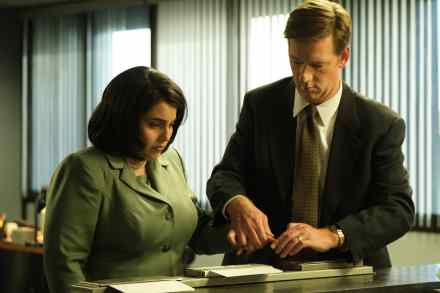
The 90s are back. From House of Gucci, Impeachment and the BBC's unmissable New Labour documentary, it's clear that this particular period is enjoying its turn in the cinematic limelight. For fans of the scandalous and surreal, this can only be good news. Hollywood has fixated on the 70s and 80s for years now which – while a boon to costume and wig designers – has begun to feel slightly repetitive. If drama commissioners are now shifting their gaze to the 90s, then we could be in for a wild ride. Admittedly, the 90s haven't exactly been absent from our screens recently. We've already had the superlative The People vs OJ Simpson (and its thematic follow-up The Assassination of Gianni Versace).

How Bake Off conquered America

From Gordon Ramsay to James Corden, predicting which Brits will make a splash in Hollywood has long been a fool's errand – even in the Netflix era. After all, what's the latest British export to conquer the greatest entertainment market on earth? The Great British Bake Off. Well, almost. Like Cary Grant (born in Bristol as Archibald Leach), our humble baking show needed a slight rebrand ahead of its launch stateside. Instead the show made its debut, in 2014, under a slightly different name: The Great British Baking Show. After becoming a ratings hit, the competition was then snapped up by a much bigger name altogether: Netflix. Within three years, the Baking Show had gone stratospheric: finally earning its place, last year, as one of the most streamed shows in America.

The problem with masks in theatres

As if our beleaguered prime minister didn't have enough to worry about, now comes another unhelpful headline. For on a mid-week trip to Islington's most fashionable theatre, the Almeida, Boris Johnson had the misfortune to be spotted – well, snapped – by another audience member after he had temporarily removed his face-mask. For the tutting Zero Covid fanatics of Twitter, this latest mask blunder is – of course – yet further evidence of the PM's reckless disregard for lives and safety. For anyone who’s stepped foot in a theatre, though, Johnson’s choice will be viewed much more sympathetically. For if there’s a more irritating place on earth to wear a mask than the theatre, I’ve yet to find it.

What to watch on Netflix this winter

Was the lefty comic Hannah Gadbsy right to call Netflix an ‘amoral algorithm cult’? Granted, the creator of Nanette (worth watching!) may have been referring specifically to the company’s decision to greenlight the latest Dave Chappelle special (also worth watching!) but her wider point – about the omnipotence of the Netflix algorithms – isn’t far off the mark. For evidence just look at the streaming giant's winter schedule, which is dominated, at least this month, by the release of Tiger King 2 (17 November). Do we really need a sequel to a one-time phenomenon which stopped being funny more than 18 months ago?

Why the home of Better Call Saul is worth a visit

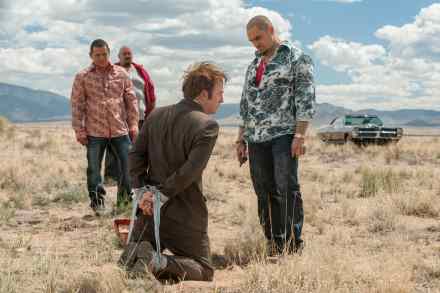
For all its critical success, Vince Gilligan's Breaking Bad – and its superlative follow-up Better Call Saul, which returns to Netflix soon for its final hurrah – boasts a more niche achievement to its name. Like only a handful of series before it – Twin Peaks being one of them – the neo-Western epic succeeded in making stars not just of its actors, but also its cinematic location: the humble city of Albuquerque. For years, the south western state of New Mexico – wedged between Texas and Arizona – had been luring film-makers with offers of generous tax subsidies.

Beyond Squid Game: the Korean dramas worth watching

Quickly becoming Netflix’s most successful series ever (with an estimated 111 million viewers worldwide), Squid Game has turned the spotlight on Korea as a cultural hotspot. That won’t come as a surprise to anyone who’s had half an eye on film reviews over the past years – with Korean films impressing both viewers and critics alike. Here are eight films and series worth watching, and where to catch them: Moving On, Mubi https://www.youtube.com/watch?v=h26X-DHrpr8 Our own film critic was surprised by how gripped she became by Moving On: a quiet – and deliberately understated – film about a family (a single father and two children) whose economic circumstances force them to move in with an elderly, and near silent, relative.

The BBC is right to reject David Hare’s Covid drama

If the BBC’s constant tension with various Conservative ministers weren’t enough, now it has another name on its list of critics. This weekend veteran playwright Sir David Hare launched an attack on the corporation for refusing to broadcast his Covid play – and for shunning dramas about the pandemic more generally. ‘It strikes me as so derelict,’ the long-term grandee of the National Theatre vented to the Observer. Does it now?